Lec. 3
Prepared by
Assistant lecturer: Kawther M. Galary
DPU/Shekhan/Public Health
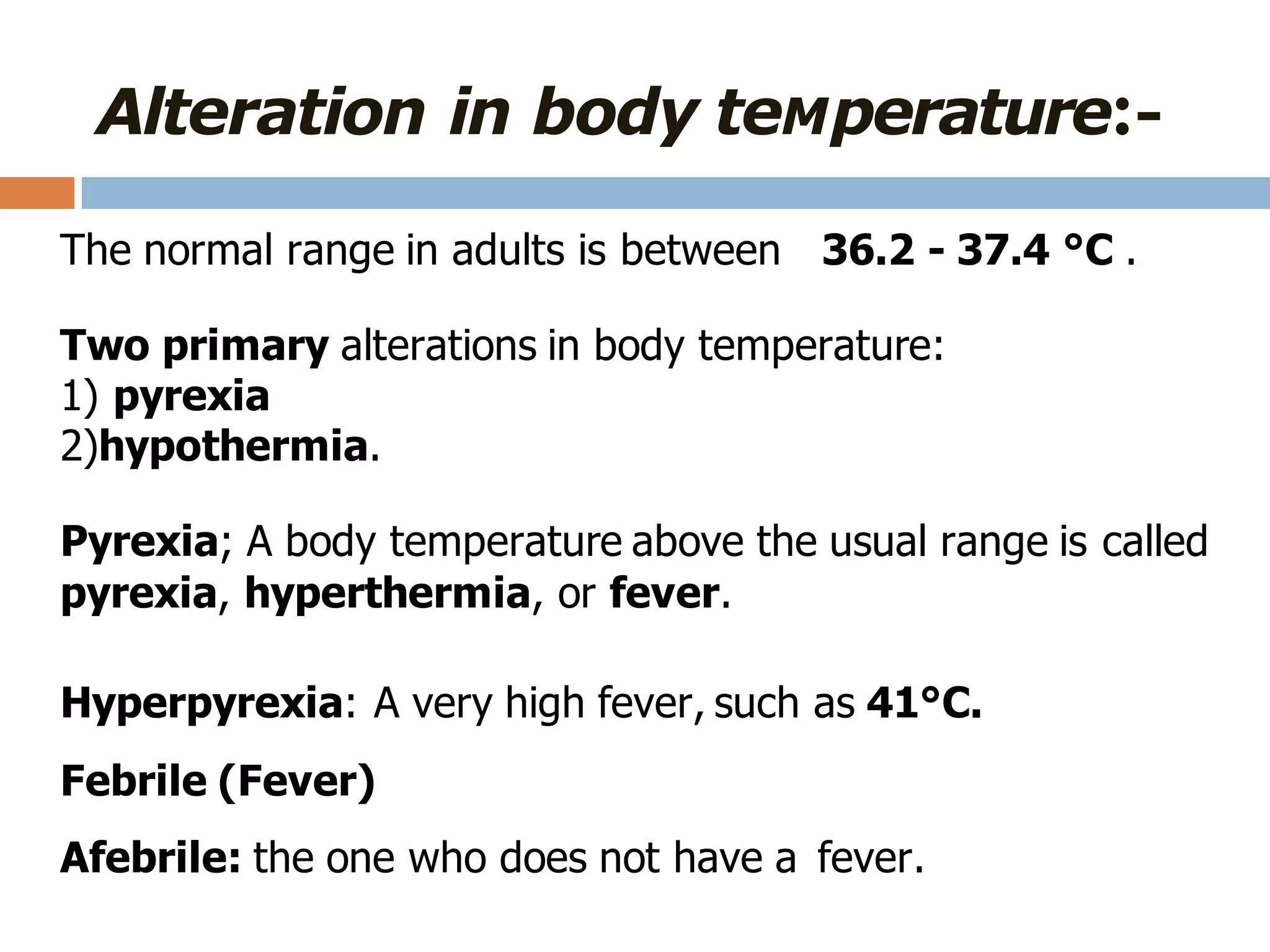
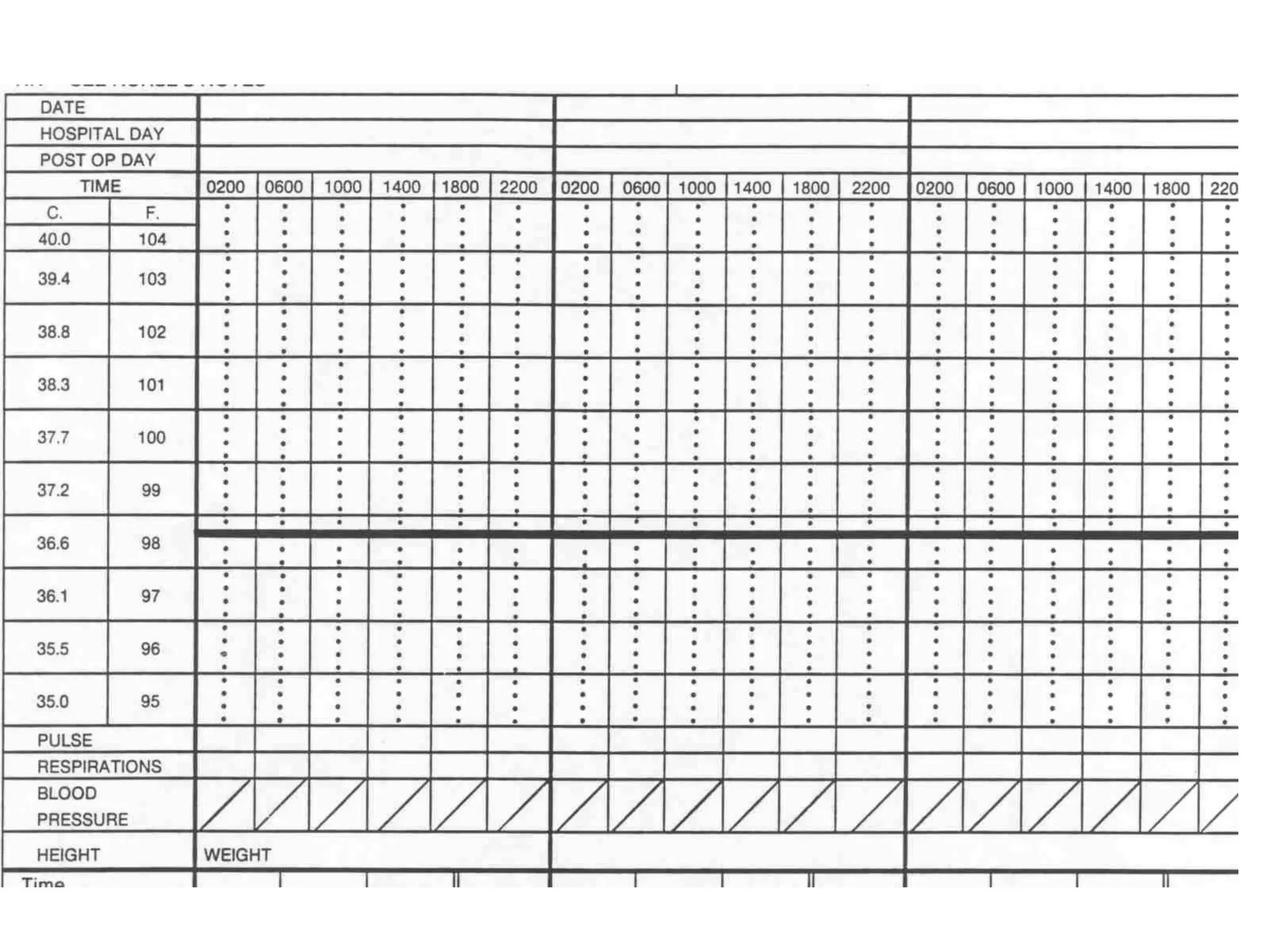
Alteration in body teMperature:-
The normal range in adults is between 36.2 - 37.4 °C .
Two primary alterations in body temperature:
1) pyrexia
2)hypothermia.
Pyrexia; A body temperature above the usual range is called
pyrexia, hyperthermia, or fever.
Hyperpyrexia: A very high fever, such as 41°C.
Febrile (Fever)
Afebrile: the one who does not have a fever.
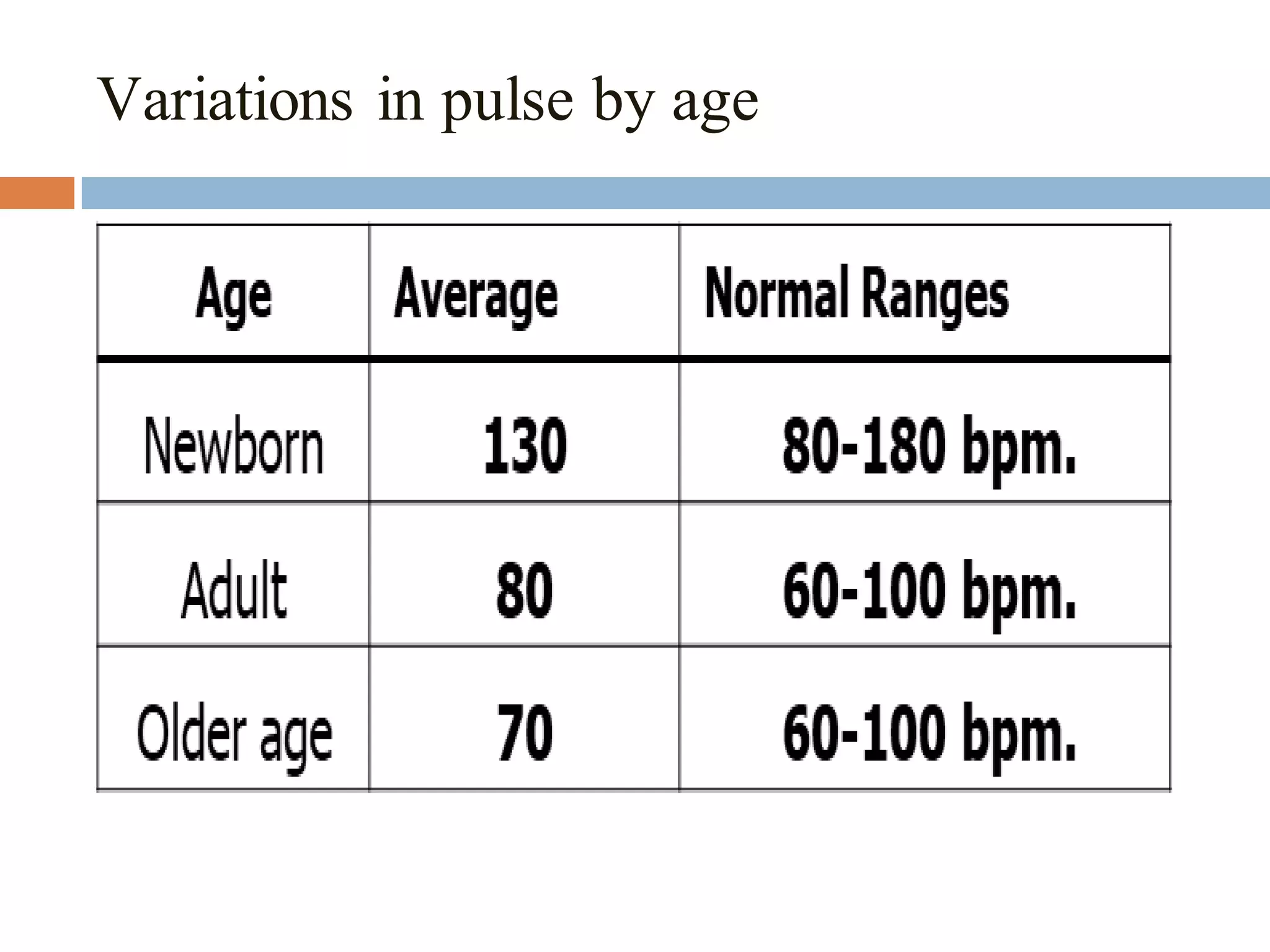
Variations in pulse by age
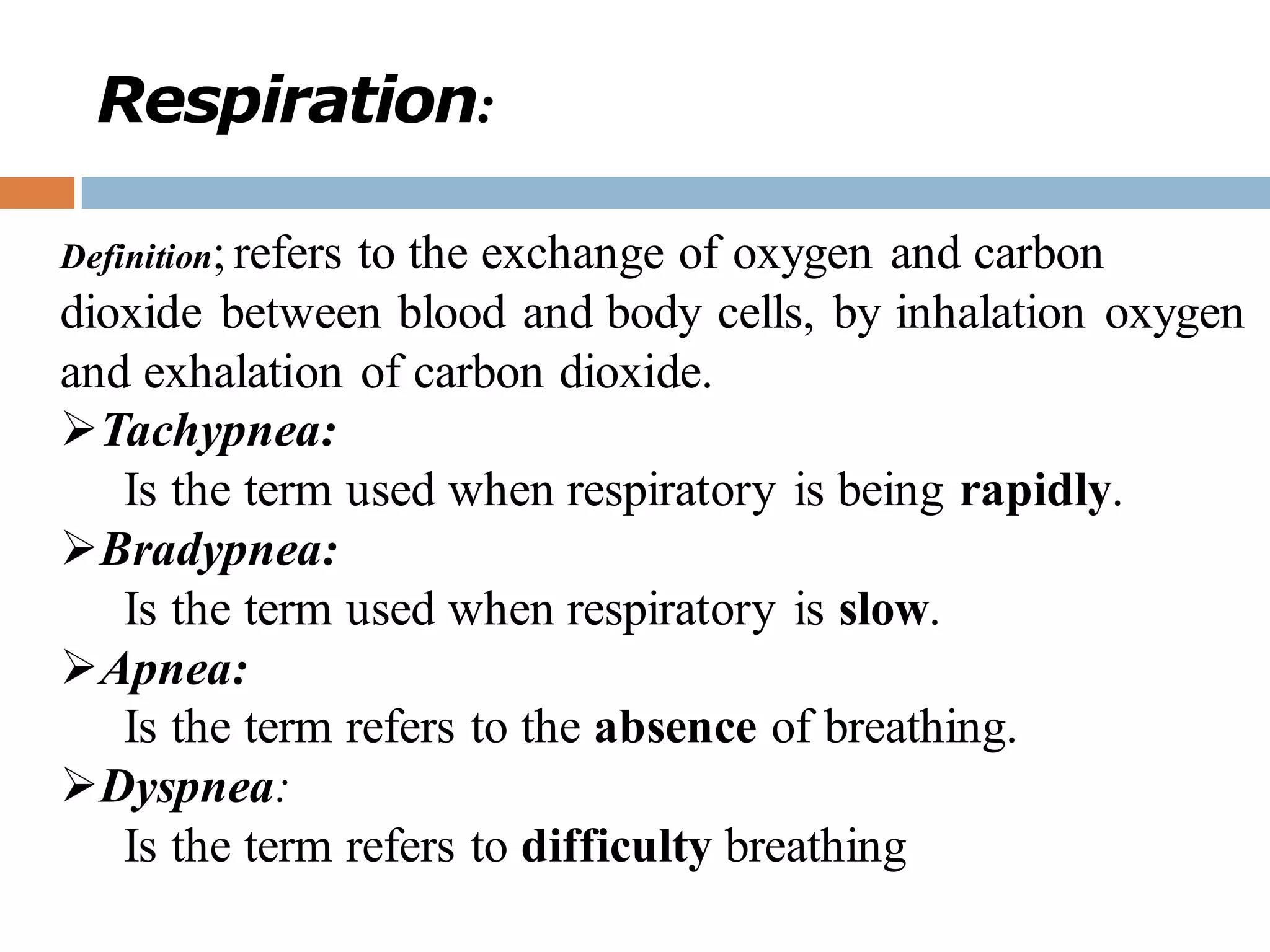
Respiration:
Definition; refers to the exchange of oxygen and carbon
dioxide between blood and body cells, by inhalation oxygen
and exhalation of carbon dioxide.
➢Tachypnea:
Is the term used when respiratory is being rapidly.
➢Bradypnea:
Is the term used when respiratory is slow.
➢Apnea:
Is the term refers to the absence of breathing.
➢Dyspnea:
Is the term refers to difficulty breathing
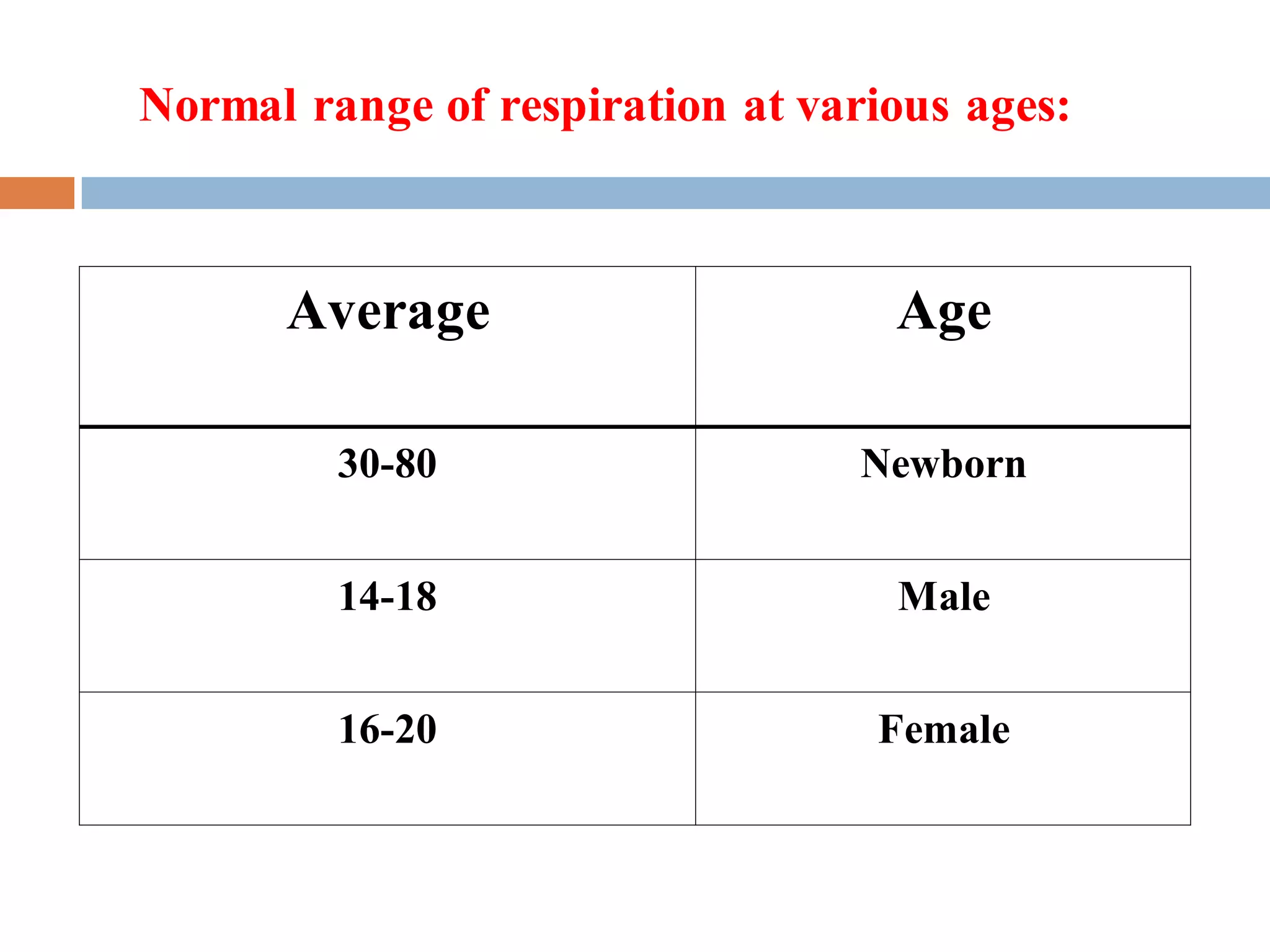
Normal range of respiration at various ages:
Average Age
30-80 Newborn
14-18 Male
16-20 Female
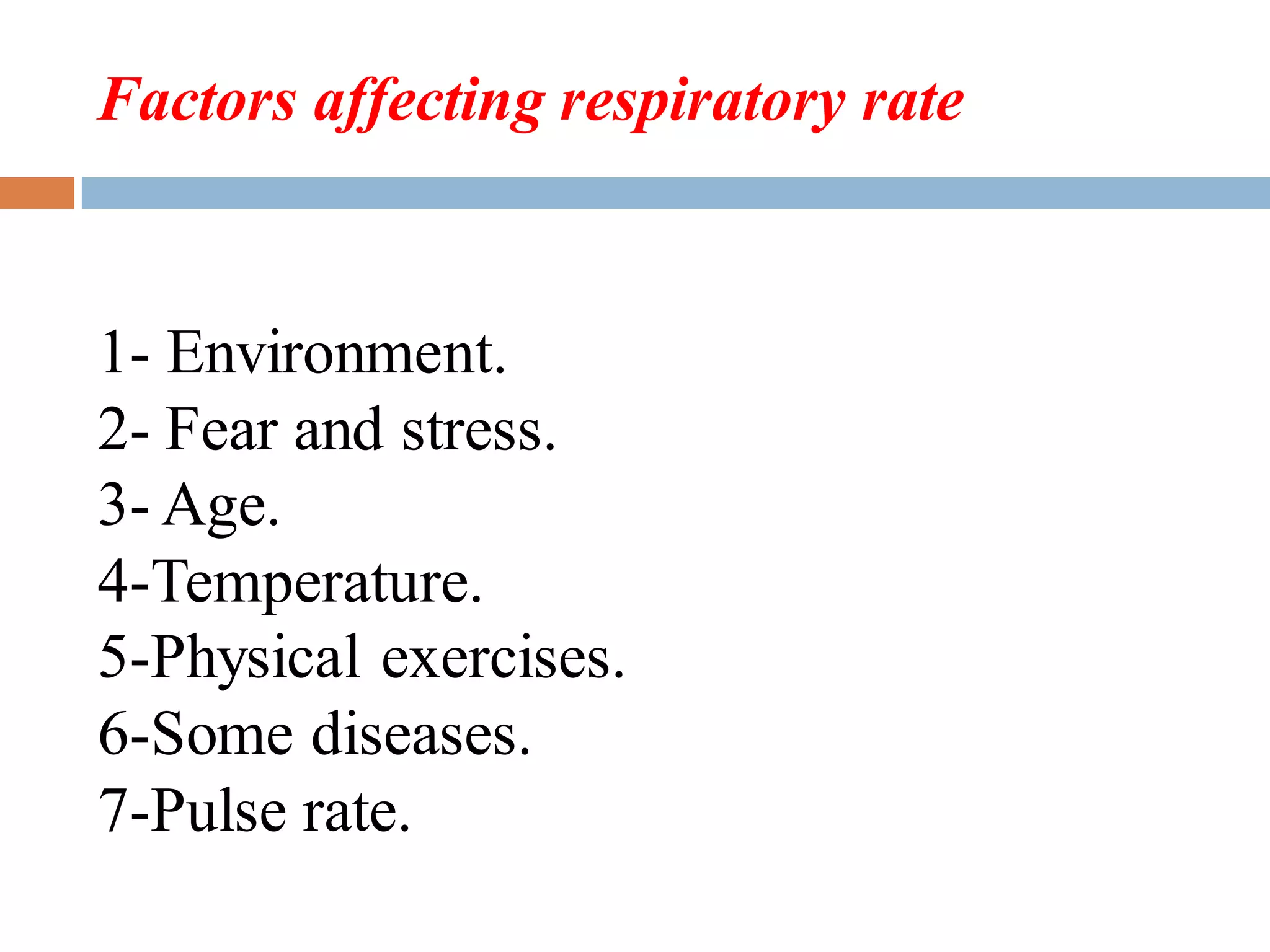
Factors affecting respiratory rate
1- Environment.
2- Fear and stress.
3- Age.
4-Temperature.
5-Physical exercises.
6-Some diseases.
7-Pulse rate.
Blood pressure
 What is blood pressure?
Blood pressure is a measure of the
force that the heart uses to pump
blood around the body.
Blood pressure is measured in
millimeters of mercury (mmHg)
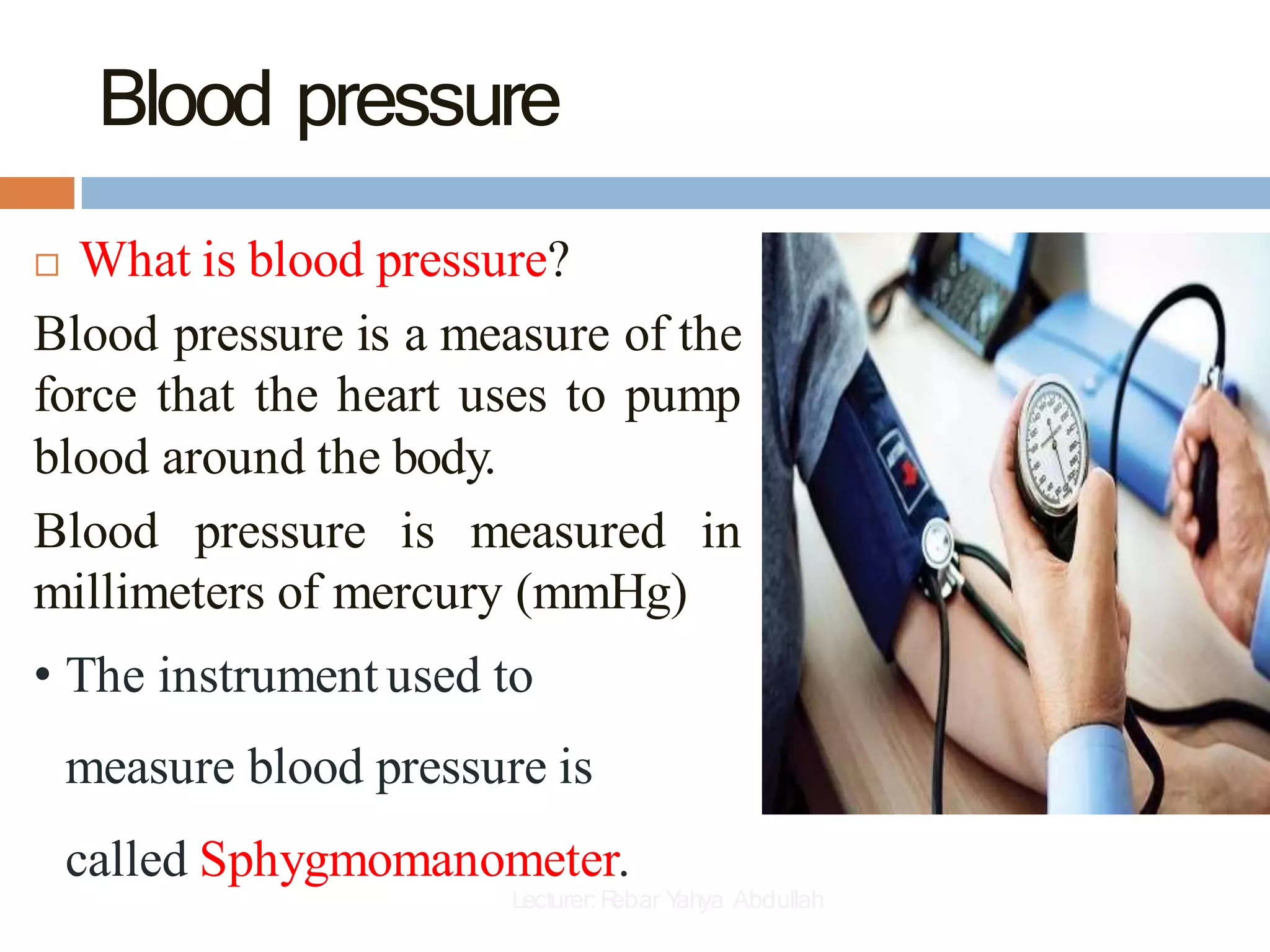
• The instrument used to
measure blood pressure is
called Sphygmomanometer.
Lecturer:R
ebar Y
ahya Abdullah
Blood pressure
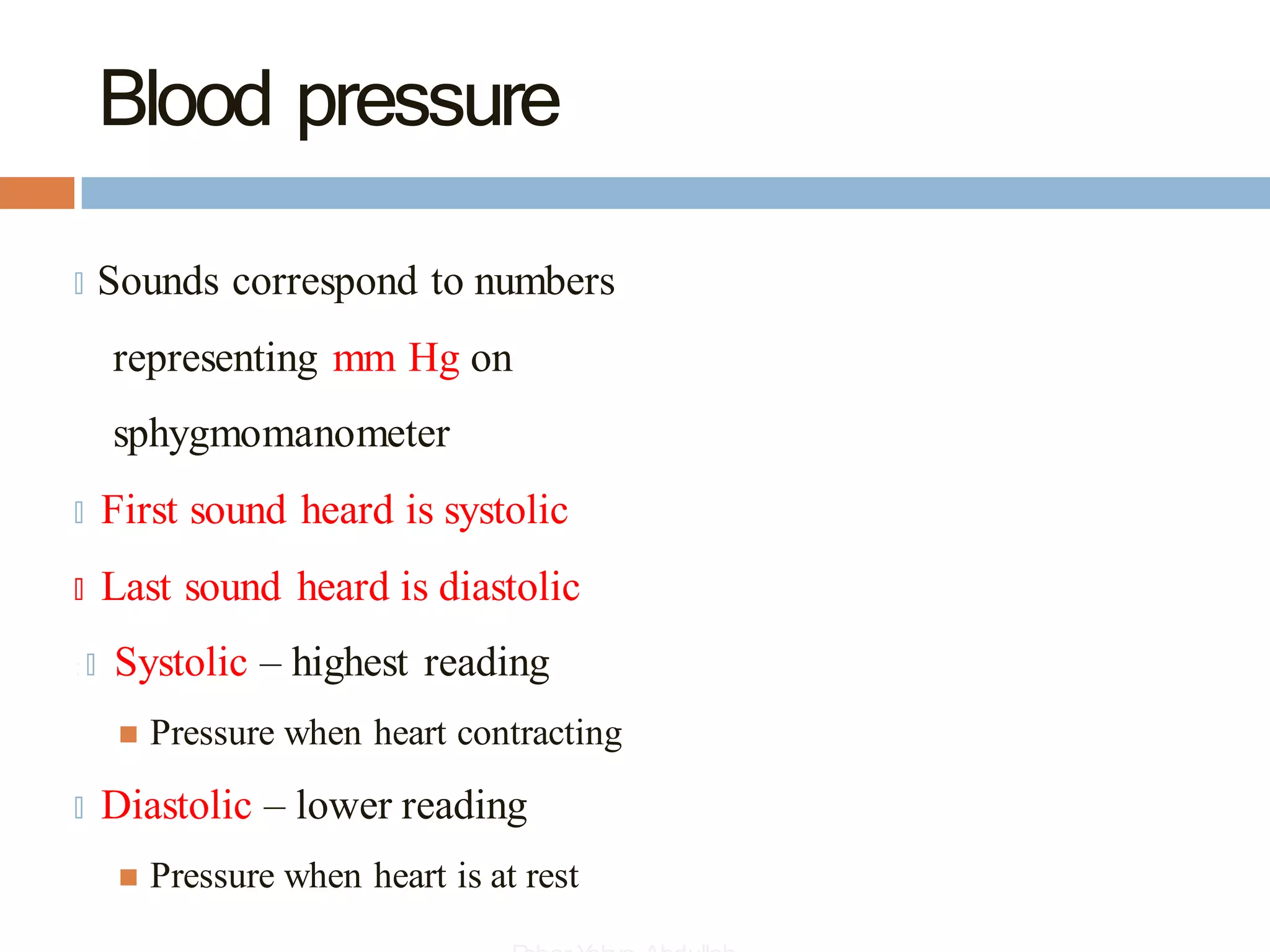
🞑 Sounds correspond to numbers
representing mm Hg on
sphygmomanometer
🞑 First sound heard is systolic
🞑 Last sound heard is diastolic
: 🞑 Systolic – highest reading
◼ Pressure when heart contracting
🞑 Diastolic – lower reading
◼ Pressure when heart is at rest
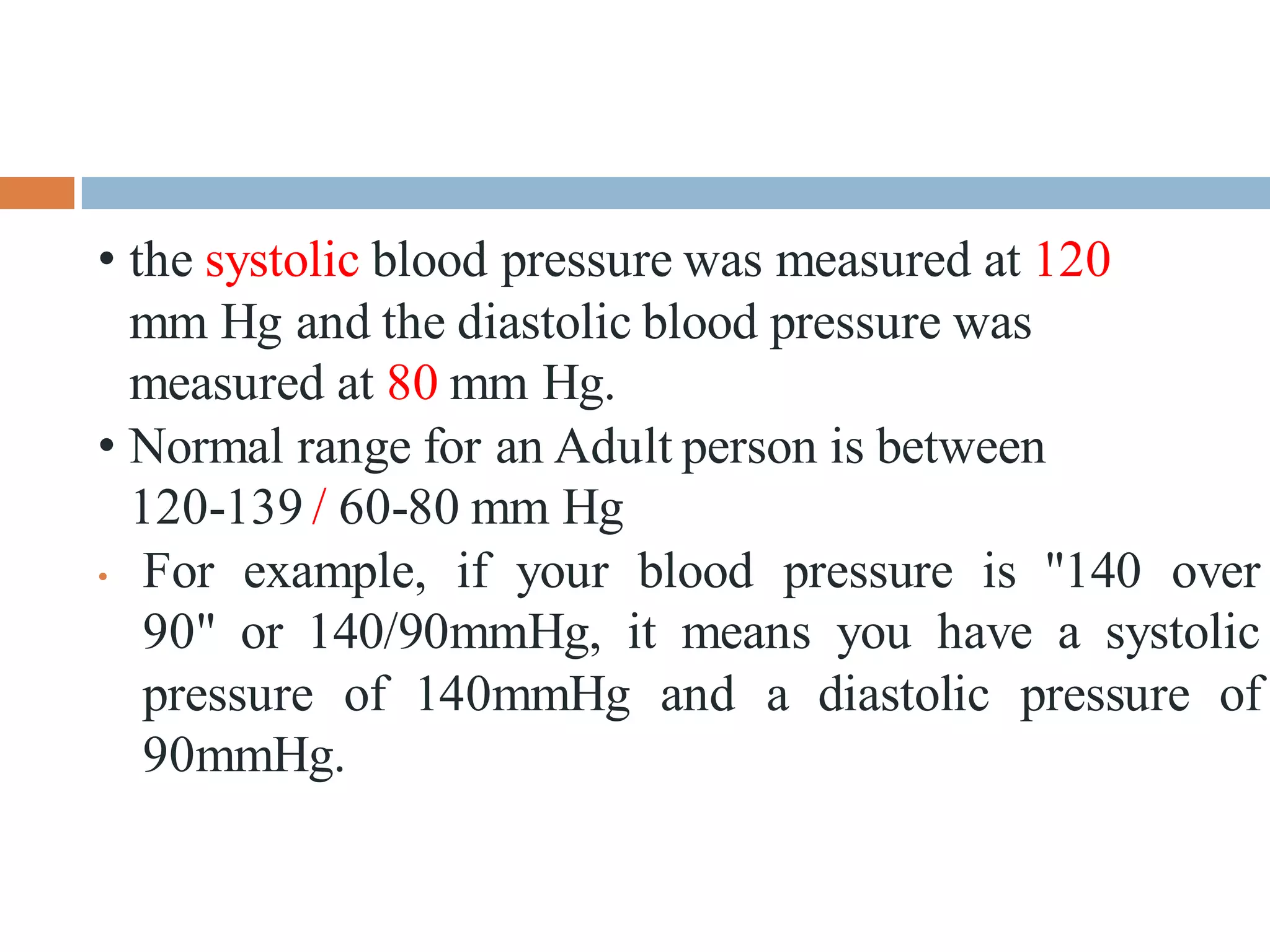
• the systolic blood pressure was measured at 120
mm Hg and the diastolic blood pressure was
measured at 80 mm Hg.
• Normal range for an Adult person is between
120-139 / 60-80 mm Hg
• For example, if your blood pressure is "140 over
90" or 140/90mmHg, it means you have a systolic
pressure of 140mmHg and a diastolic pressure of
90mmHg.
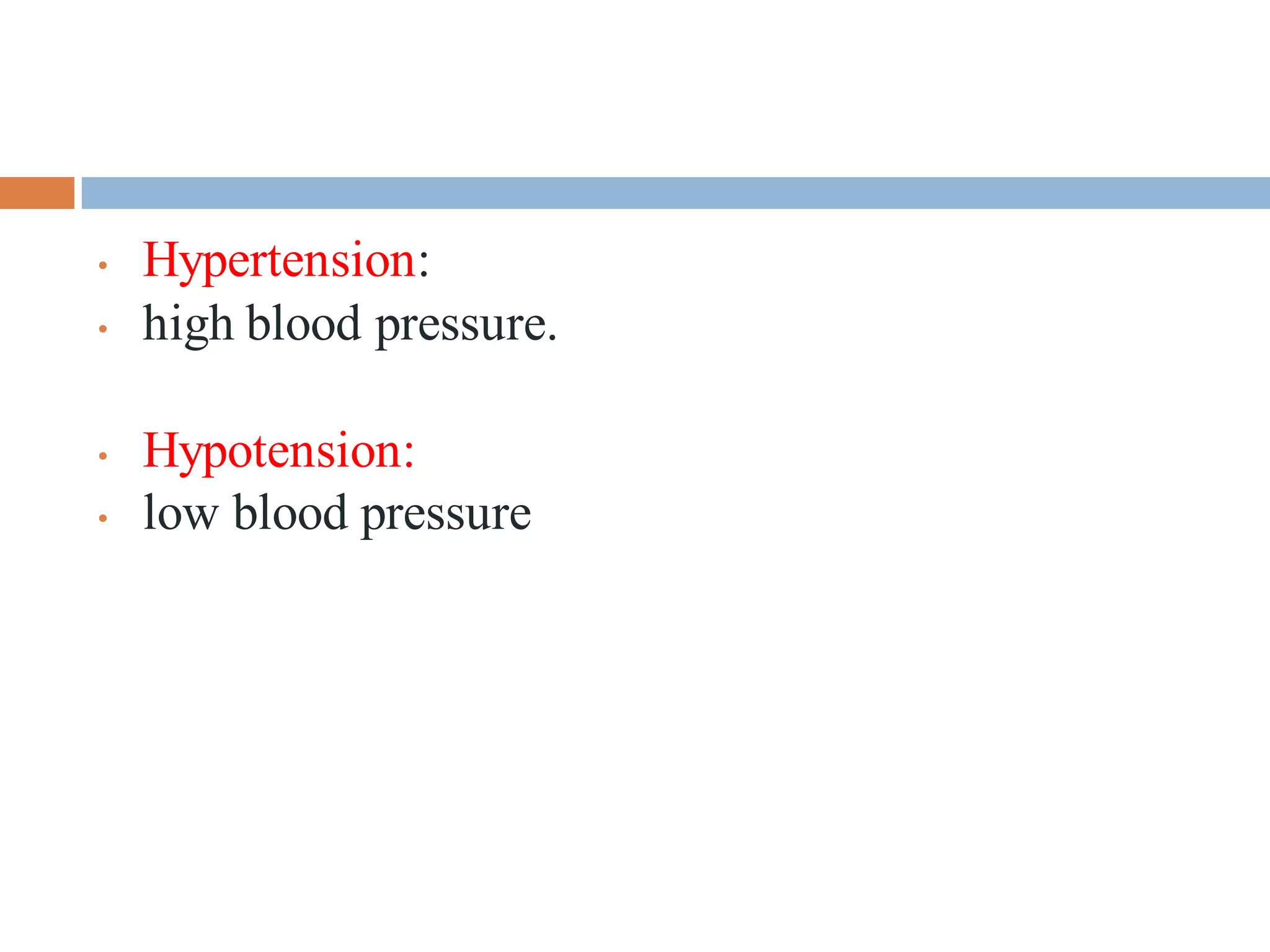
• Hypertension:
• high blood pressure.
• Hypotension:
• low blood pressure
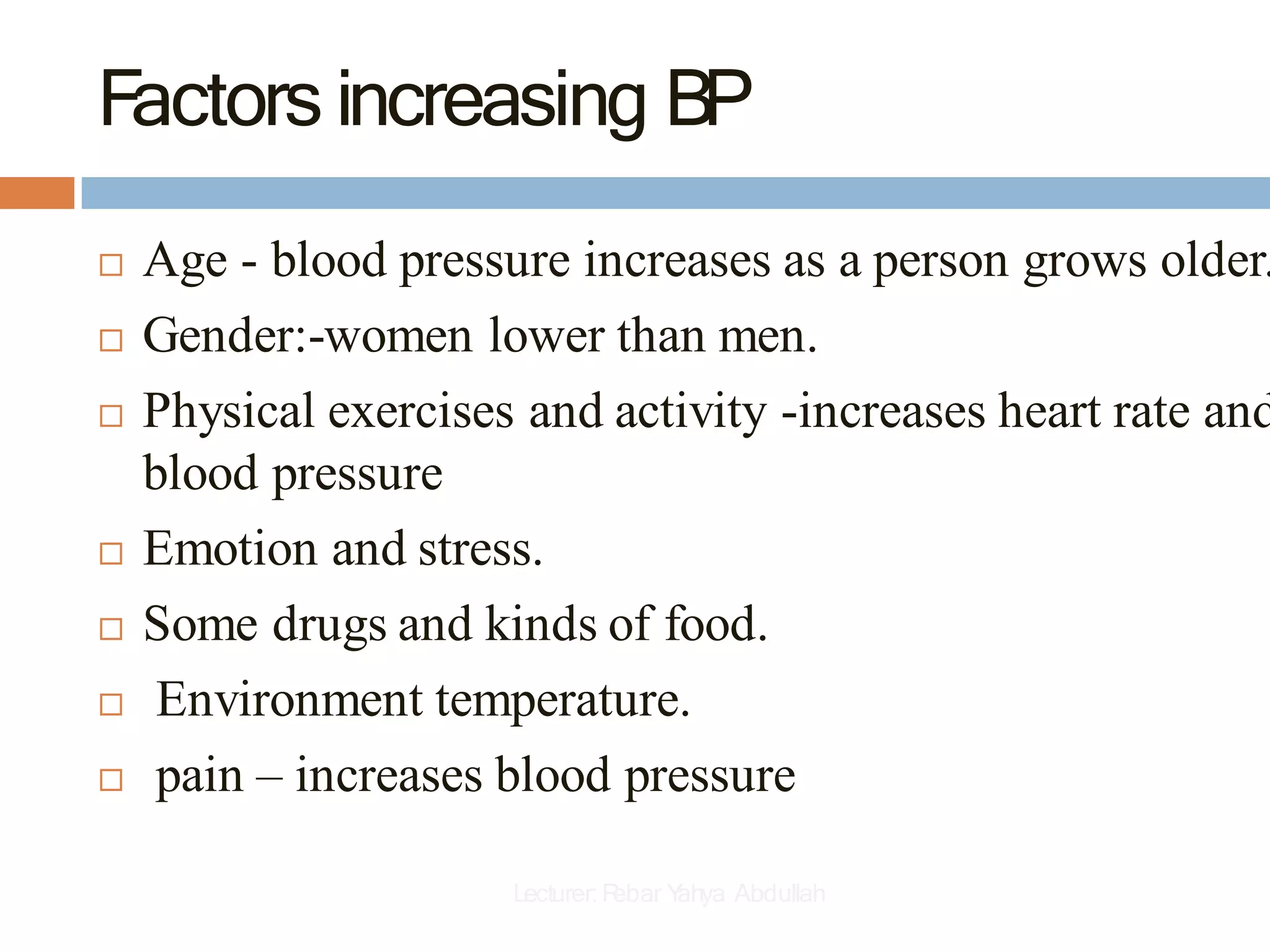
Factors increasing BP
 Age - blood pressure increases as a person grows older.
 Gender:-women lower than men.
 Physical exercises and activity -increases heart rate and
blood pressure
 Emotion and stress.
 Some drugs and kinds of food.
 Environment temperature.
 pain – increases blood pressure
Lecturer:R
ebar Y
ahya Abdullah
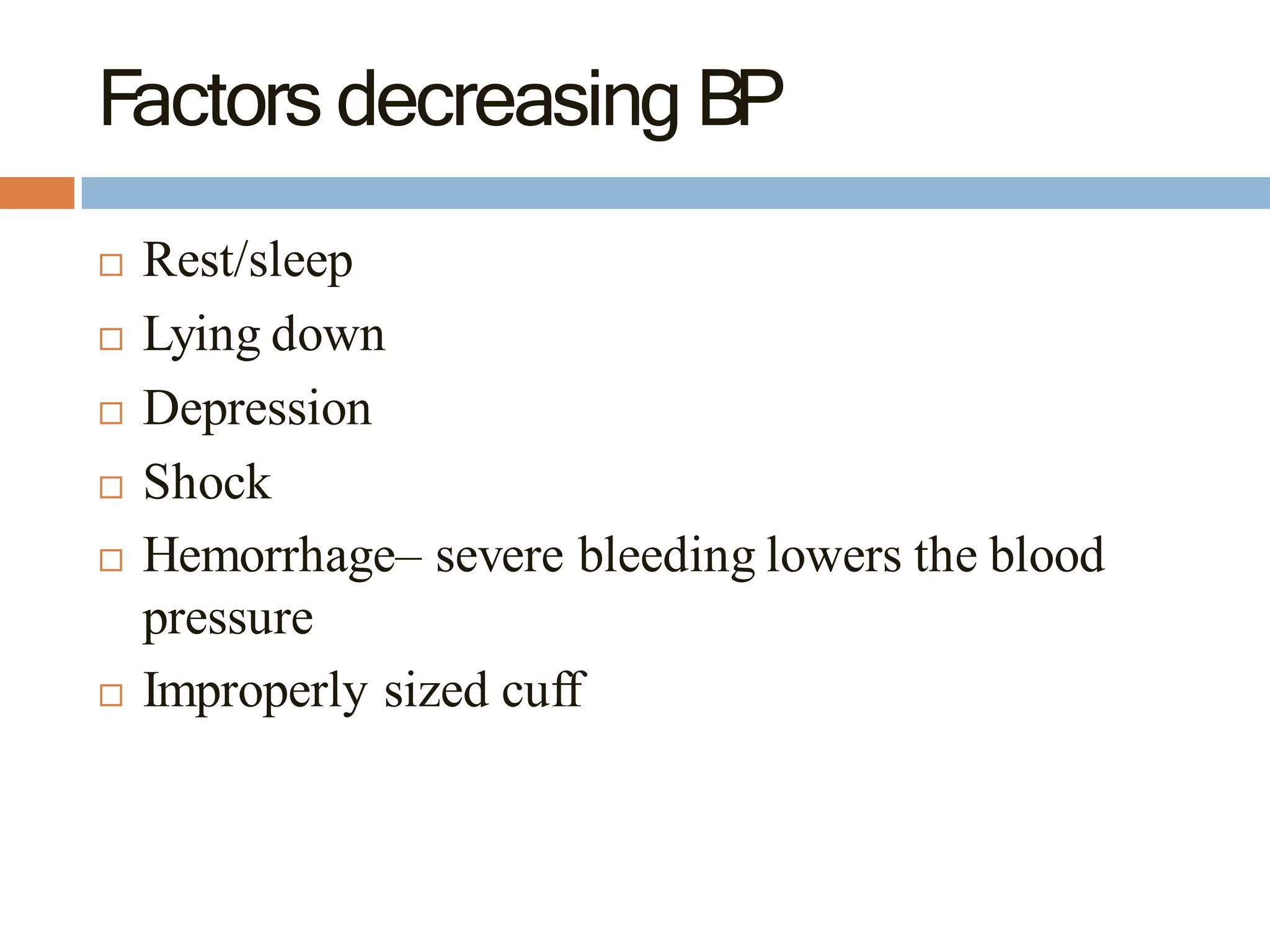
Factors decreasing BP
 Rest/sleep
 Lying down
 Depression
 Shock
 Hemorrhage– severe bleeding lowers the blood
pressure
 Improperly sized cuff
Guidelines for BP
🞑 Measure BP at the brachial artery
🞑 Do not use the injured arm, arm with IV, or casted
🞑 The resident should be at rest
🞑 Position the arm level with the heart
🞑 Apply the cuff to the bare arm NOT over clothing
🞑 Use the appropriatesize cuff.
🞑 make sure the room is quiet.
🞑 Position the sphygmomanometer at eye level
P
ain
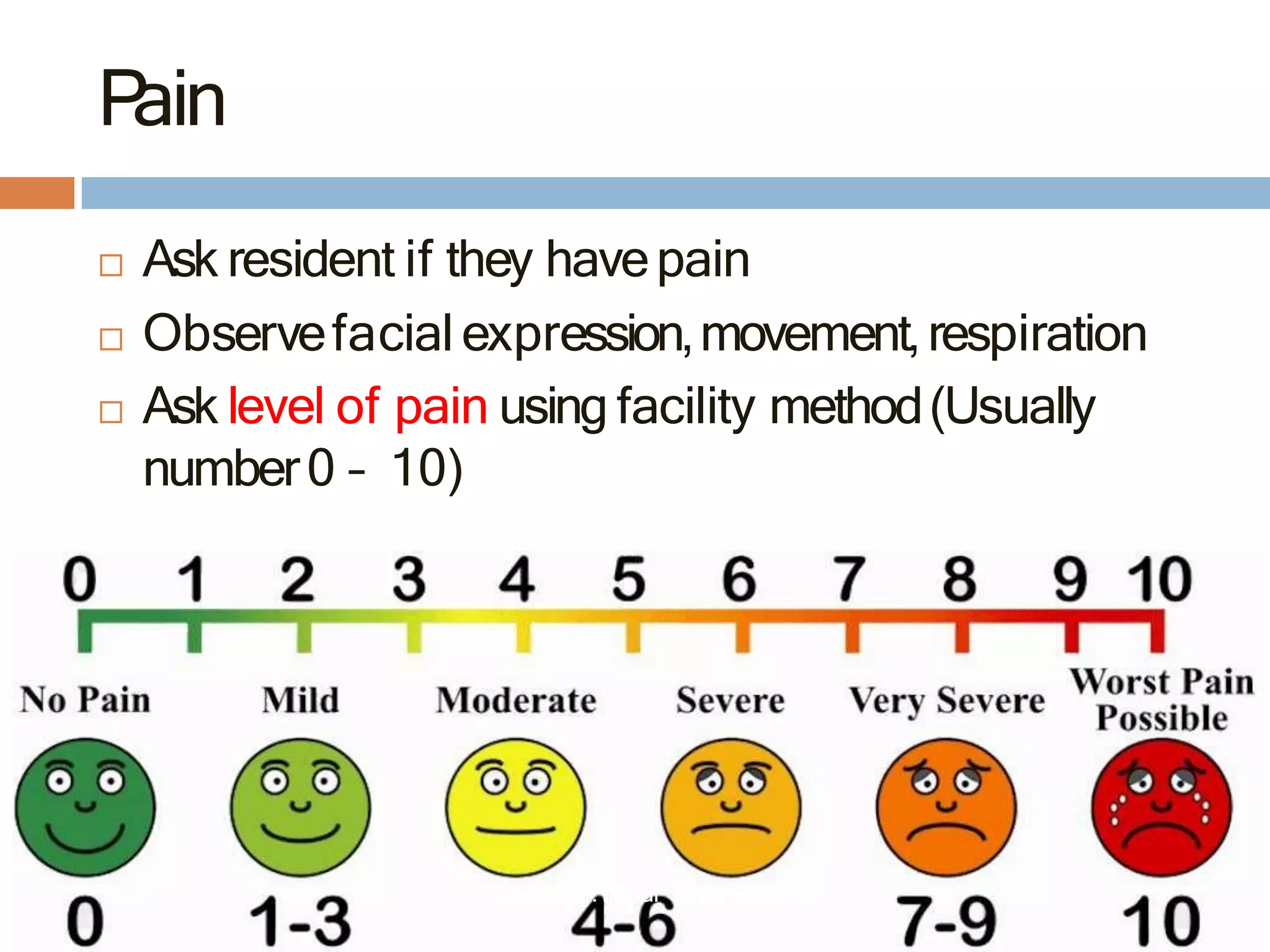
 Ask resident if they havepain
 Observefacial expression,movement,respiration
 Ask level of pain using facility method(Usually
number0 – 10)
Lecturer:R
ebar Y
ahya Abdullah
Types of pain
1. Acute pain – felt suddenly from an injury,
disease, trauma, or surgery
2. Chronic pain – lasts longer than 6 months. Pain
can be constant or occur on and off.
3. Radiating pain – felt at the site of tissue damage
and in nearby areas.
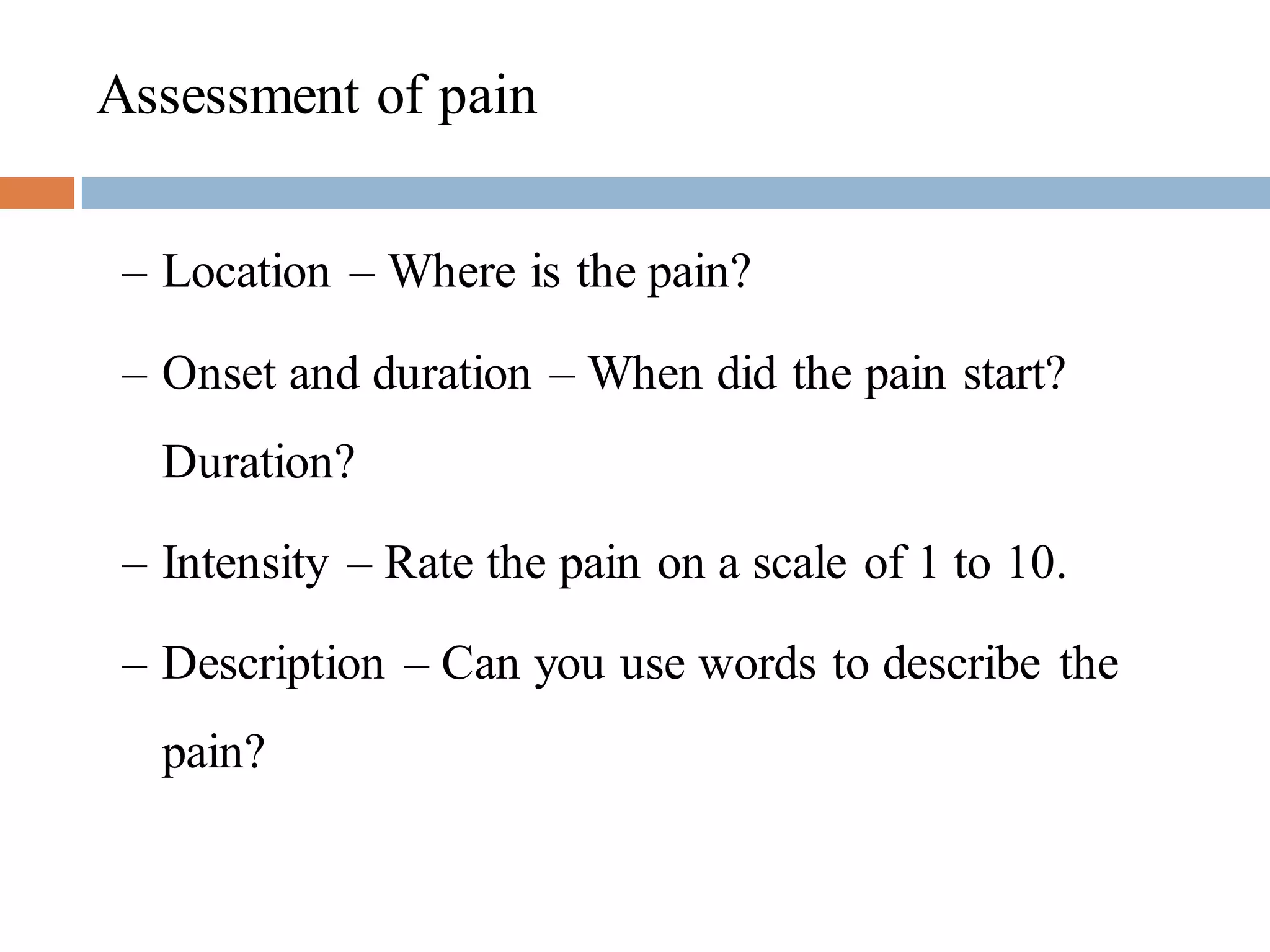
Assessment of pain
– Location – Where is the pain?
– Onset and duration – When did the pain start?
Duration?
– Intensity – Rate the pain on a scale of 1 to 10.
– Description – Can you use words to describe the
pain?
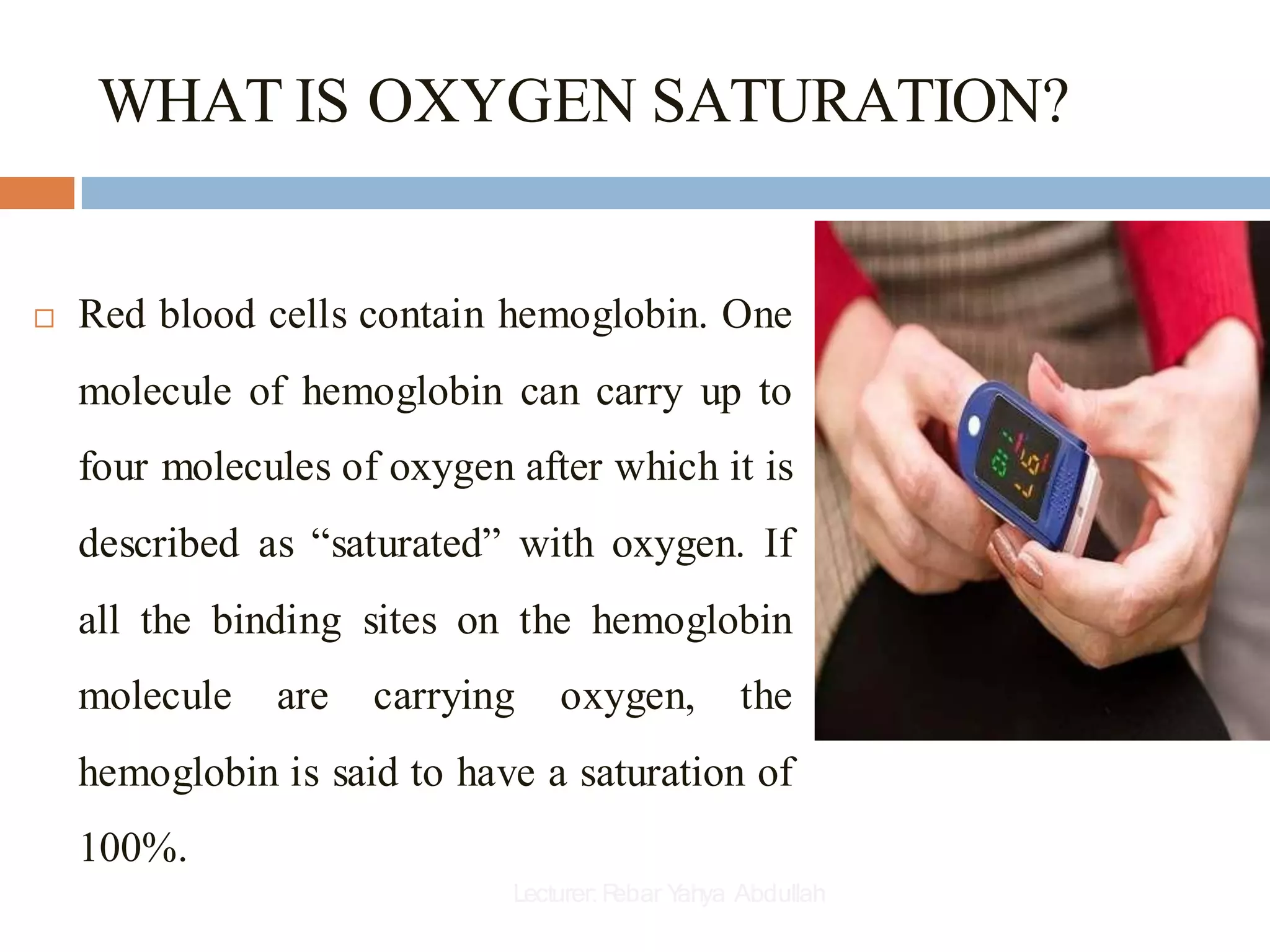
WHAT IS OXYGEN SATURATION?
 Red blood cells contain hemoglobin. One
molecule of hemoglobin can carry up to
four molecules of oxygen after which it is
described as “saturated” with oxygen. If
all the binding sites on the hemoglobin
molecule are carrying oxygen, the
hemoglobin is said to have a saturation of
100%.
Lecturer:R
ebar Y
ahya Abdullah
 Most of the hemoglobin in blood combines with
oxygen as it passes through the lungs. A healthy
individual with normal lungs, breathing air will
have an arterial oxygen saturation of 95% – 100%.
Lecturer:R
ebar Y
ahya Abdullah
 During anesthesia the oxygen saturation should
always be 95 - 100%. If the oxygen saturation is
94% or lower, the patient is hypoxic and needs to
be treated quickly.
 Asaturation of less than 90% is a clinical
emergency.
Lecturer:R
ebar Y
ahya Abdullah
Measurement of Arterial Oxygen Saturation
• SpO2 is a reliable estimate of O2 Saturation
• Measurement is affected if the extremity is cold,
edematous or if nail polish is present
(interference with light transmission)
Indications of taking Pulse OxiMetry
• Monitoring patients receiving oxygen
therapy
• Monitoring those at risk for hypoxia
• Postoperative patients.
Any questions?

lec. 3 RR and BP (1).pdf

  • 1.
    Lec. 3 Prepared by Assistantlecturer: Kawther M. Galary DPU/Shekhan/Public Health
  • 2.
    Alteration in bodyteMperature:- The normal range in adults is between 36.2 - 37.4 °C . Two primary alterations in body temperature: 1) pyrexia 2)hypothermia. Pyrexia; A body temperature above the usual range is called pyrexia, hyperthermia, or fever. Hyperpyrexia: A very high fever, such as 41°C. Febrile (Fever) Afebrile: the one who does not have a fever.
  • 3.
  • 4.
    Respiration: Definition; refers tothe exchange of oxygen and carbon dioxide between blood and body cells, by inhalation oxygen and exhalation of carbon dioxide. ➢Tachypnea: Is the term used when respiratory is being rapidly. ➢Bradypnea: Is the term used when respiratory is slow. ➢Apnea: Is the term refers to the absence of breathing. ➢Dyspnea: Is the term refers to difficulty breathing
  • 5.
    Normal range ofrespiration at various ages: Average Age 30-80 Newborn 14-18 Male 16-20 Female
  • 6.
    Factors affecting respiratoryrate 1- Environment. 2- Fear and stress. 3- Age. 4-Temperature. 5-Physical exercises. 6-Some diseases. 7-Pulse rate.
  • 7.
    Blood pressure  Whatis blood pressure? Blood pressure is a measure of the force that the heart uses to pump blood around the body. Blood pressure is measured in millimeters of mercury (mmHg) • The instrument used to measure blood pressure is called Sphygmomanometer. Lecturer:R ebar Y ahya Abdullah
  • 8.
    Blood pressure 🞑 Soundscorrespond to numbers representing mm Hg on sphygmomanometer 🞑 First sound heard is systolic 🞑 Last sound heard is diastolic : 🞑 Systolic – highest reading ◼ Pressure when heart contracting 🞑 Diastolic – lower reading ◼ Pressure when heart is at rest
  • 9.
    • the systolicblood pressure was measured at 120 mm Hg and the diastolic blood pressure was measured at 80 mm Hg. • Normal range for an Adult person is between 120-139 / 60-80 mm Hg • For example, if your blood pressure is "140 over 90" or 140/90mmHg, it means you have a systolic pressure of 140mmHg and a diastolic pressure of 90mmHg.
  • 10.
    • Hypertension: • highblood pressure. • Hypotension: • low blood pressure
  • 11.
    Factors increasing BP Age - blood pressure increases as a person grows older.  Gender:-women lower than men.  Physical exercises and activity -increases heart rate and blood pressure  Emotion and stress.  Some drugs and kinds of food.  Environment temperature.  pain – increases blood pressure Lecturer:R ebar Y ahya Abdullah
  • 12.
    Factors decreasing BP Rest/sleep  Lying down  Depression  Shock  Hemorrhage– severe bleeding lowers the blood pressure  Improperly sized cuff
  • 13.
    Guidelines for BP 🞑Measure BP at the brachial artery 🞑 Do not use the injured arm, arm with IV, or casted 🞑 The resident should be at rest 🞑 Position the arm level with the heart 🞑 Apply the cuff to the bare arm NOT over clothing 🞑 Use the appropriatesize cuff. 🞑 make sure the room is quiet. 🞑 Position the sphygmomanometer at eye level
  • 15.
    P ain  Ask residentif they havepain  Observefacial expression,movement,respiration  Ask level of pain using facility method(Usually number0 – 10) Lecturer:R ebar Y ahya Abdullah
  • 16.
    Types of pain 1.Acute pain – felt suddenly from an injury, disease, trauma, or surgery 2. Chronic pain – lasts longer than 6 months. Pain can be constant or occur on and off. 3. Radiating pain – felt at the site of tissue damage and in nearby areas.
  • 17.
    Assessment of pain –Location – Where is the pain? – Onset and duration – When did the pain start? Duration? – Intensity – Rate the pain on a scale of 1 to 10. – Description – Can you use words to describe the pain?
  • 18.
    WHAT IS OXYGENSATURATION?  Red blood cells contain hemoglobin. One molecule of hemoglobin can carry up to four molecules of oxygen after which it is described as “saturated” with oxygen. If all the binding sites on the hemoglobin molecule are carrying oxygen, the hemoglobin is said to have a saturation of 100%. Lecturer:R ebar Y ahya Abdullah
  • 19.
     Most ofthe hemoglobin in blood combines with oxygen as it passes through the lungs. A healthy individual with normal lungs, breathing air will have an arterial oxygen saturation of 95% – 100%. Lecturer:R ebar Y ahya Abdullah
  • 20.
     During anesthesiathe oxygen saturation should always be 95 - 100%. If the oxygen saturation is 94% or lower, the patient is hypoxic and needs to be treated quickly.  Asaturation of less than 90% is a clinical emergency. Lecturer:R ebar Y ahya Abdullah
  • 21.
    Measurement of ArterialOxygen Saturation • SpO2 is a reliable estimate of O2 Saturation • Measurement is affected if the extremity is cold, edematous or if nail polish is present (interference with light transmission)
  • 22.
    Indications of takingPulse OxiMetry • Monitoring patients receiving oxygen therapy • Monitoring those at risk for hypoxia • Postoperative patients.
  • 23.