Burnaby Mountain Secondary
 Guiding Principle: 
 All students have the potential to participate 
meaningfully in their learning community. 
 
 Our Mission: 
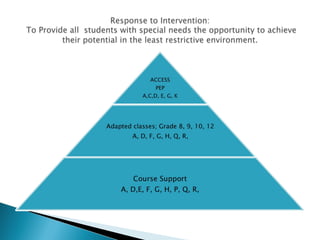
 To provide all students with special learning 
needs, the opportunity to realize their learning 
potential in the least restrictive environment.
 A Dependent Handicapped 
 B Deaf/Blind 
 C Moderate to Severe / 
Profound Intellectual Disabilities 
 D Physical Disabilities or 
Chronic Health Impairments 
 E Visual Impairment 
 F Deaf or Hard of Hearing 
 G Autism 
 H Severe Behaviour Disorders 
 Q Learning Disability 
 K Mild Intellectual Disability 
 P Gifted 
 R Moderate Behaviour 
Disorders 
Low Incidence High Incidence
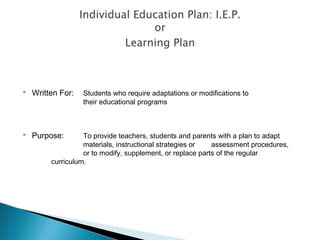
 Written For: Students who require adaptations or modifications to 
their educational programs 
 Purpose: To provide teachers, students and parents with a plan to adapt 
materials, instructional strategies or assessment procedures, 
or to modify, supplement, or replace parts of the regular 
curriculum.
 Learning outcomes of the prescribed courses are 
retained. 
 Adaptations are provided so that the student can 
participate meaningfully in the course. 
 Students are assessed using standards for the course 
(letter grades). 
 Students receive credit towards a Dogwood 
graduation certificate. 
 Students are eligible for adjudication; appropriate 
adaptations for Provincial exams. 
 Adaptations: extra time for assignments and tests, 
separate setting for tests, Kurzweil technology, 
computer, spelling is not penalized, copies of class 
notes, oral response, use of a calculator. 
 Learning outcomes of the prescribed courses are 
not retained. 
 Learning outcomes are specifically selected to 
meet the student’s special needs. 
 Modifications are provided so that the student can 
participate in the program. 
 Students are not assessed using letter grades; 
written comments. 
 Students do not receive credit towards a 
Dogwood graduation certificate. 
 Modifications: Less learning outcomes completed 
Adaptations Modifications
 
 The purpose of this class is to help students from all grades maximize 
their learning in a variety of ways. This is achieved both by focusing on 
the students' strengths and abilities and by providing support to compensate 
for their areas of need. 
 The course consists of three components: study skills, tutorial, and 
skill development. The eligibility of students for this class is determined by 
the School’s Resource Team. 
 A learner profile is developed for each student, facilitating collaboration 
with the subject teachers.
 Areas of strength that facilitate the student’s ability to learn: 
Academic, Learning Style, Executive Functioning Skills, Behaviour 
 Areas of concern that affect the student’s ability to learn: 
Academic, Executive Functioning Skills, Behaviour 
 Adaptations to Instruction/ and or assessment procedures: 
Technological Needs; Instructional Considerations; Assignments; 
Assessment 
 Reporting Procedures
Learning support services

Learning support services

  • 1.
  • 2.
     Guiding Principle:  All students have the potential to participate meaningfully in their learning community.   Our Mission:  To provide all students with special learning needs, the opportunity to realize their learning potential in the least restrictive environment.
  • 3.
     A DependentHandicapped  B Deaf/Blind  C Moderate to Severe / Profound Intellectual Disabilities  D Physical Disabilities or Chronic Health Impairments  E Visual Impairment  F Deaf or Hard of Hearing  G Autism  H Severe Behaviour Disorders  Q Learning Disability  K Mild Intellectual Disability  P Gifted  R Moderate Behaviour Disorders Low Incidence High Incidence
  • 5.
     Written For:Students who require adaptations or modifications to their educational programs  Purpose: To provide teachers, students and parents with a plan to adapt materials, instructional strategies or assessment procedures, or to modify, supplement, or replace parts of the regular curriculum.
  • 6.
     Learning outcomesof the prescribed courses are retained.  Adaptations are provided so that the student can participate meaningfully in the course.  Students are assessed using standards for the course (letter grades).  Students receive credit towards a Dogwood graduation certificate.  Students are eligible for adjudication; appropriate adaptations for Provincial exams.  Adaptations: extra time for assignments and tests, separate setting for tests, Kurzweil technology, computer, spelling is not penalized, copies of class notes, oral response, use of a calculator.  Learning outcomes of the prescribed courses are not retained.  Learning outcomes are specifically selected to meet the student’s special needs.  Modifications are provided so that the student can participate in the program.  Students are not assessed using letter grades; written comments.  Students do not receive credit towards a Dogwood graduation certificate.  Modifications: Less learning outcomes completed Adaptations Modifications
  • 7.
      Thepurpose of this class is to help students from all grades maximize their learning in a variety of ways. This is achieved both by focusing on the students' strengths and abilities and by providing support to compensate for their areas of need.  The course consists of three components: study skills, tutorial, and skill development. The eligibility of students for this class is determined by the School’s Resource Team.  A learner profile is developed for each student, facilitating collaboration with the subject teachers.
  • 8.
     Areas ofstrength that facilitate the student’s ability to learn: Academic, Learning Style, Executive Functioning Skills, Behaviour  Areas of concern that affect the student’s ability to learn: Academic, Executive Functioning Skills, Behaviour  Adaptations to Instruction/ and or assessment procedures: Technological Needs; Instructional Considerations; Assignments; Assessment  Reporting Procedures

Editor's Notes

  • #4 Total school count (198) + 7 in CO-OP District program; LOW (A-3, C-4, D-16, G-29, H-3) HIGH (K-2, P-36, Q-79 , R-12)
  • #5 Access & PEP Programs /school leaving certificate (Evergreen)/ functional skills/ work experience