Learning And Teaching In Primary Schools Achieving Qts Denis Hayes
Learning And Teaching In Primary Schools Achieving Qts Denis Hayes
Learning And Teaching In Primary Schools Achieving Qts Denis Hayes
Learning And Teaching In Primary Schools Achieving Qts Denis Hayes
Learning And Teaching In Primary Schools Achieving Qts Denis Hayes
1.
Learning And TeachingIn Primary Schools
Achieving Qts Denis Hayes download
https://ebookbell.com/product/learning-and-teaching-in-primary-
schools-achieving-qts-denis-hayes-2264880
Explore and download more ebooks at ebookbell.com
2.
Here are somerecommended products that we believe you will be
interested in. You can click the link to download.
Teaching In Primary Schools In China And India Contexts Of Learning
1st Edition Nirmala Rao
https://ebookbell.com/product/teaching-in-primary-schools-in-china-
and-india-contexts-of-learning-1st-edition-nirmala-rao-42601614
Joyful Teaching And Learning In The Primary School Denis Hayes
https://ebookbell.com/product/joyful-teaching-and-learning-in-the-
primary-school-denis-hayes-4715270
Changing Teaching And Learning In The Primary School Rosemary Webb
https://ebookbell.com/product/changing-teaching-and-learning-in-the-
primary-school-rosemary-webb-2322250
Teaching And Learning English In The Primary School Interlanguage
Pragmatics In The Efl Context 1st Ed 2019 Gila A Schauer
https://ebookbell.com/product/teaching-and-learning-english-in-the-
primary-school-interlanguage-pragmatics-in-the-efl-context-1st-
ed-2019-gila-a-schauer-10797868
3.
Teaching And LearningWith Technologies In The Primary School 3rd
Edition 3rd Edition Sarah Younie
https://ebookbell.com/product/teaching-and-learning-with-technologies-
in-the-primary-school-3rd-edition-3rd-edition-sarah-younie-56537980
Teaching And Learning Using Ict In The Primary School Marilyn Leask
https://ebookbell.com/product/teaching-and-learning-using-ict-in-the-
primary-school-marilyn-leask-1831044
Learning And Teaching In The Primary Classroom 1st Edition Maurice J
Galton
https://ebookbell.com/product/learning-and-teaching-in-the-primary-
classroom-1st-edition-maurice-j-galton-2339188
Assessment For Learning In Primary Language Learning And Teaching
Maria Britton
https://ebookbell.com/product/assessment-for-learning-in-primary-
language-learning-and-teaching-maria-britton-51814080
Teaching And Learning In Primary Care Hays Richard
https://ebookbell.com/product/teaching-and-learning-in-primary-care-
hays-richard-5745022
First published in2009 by Learning Matters Ltd
Reprinted in 2009
All rights reserved. No part of this publication may be reproduced, stored in a retrieval
system, or transmitted in any form or by any means, electronic, mechanical,
photocopying, recording, or otherwise, without prior permission in writing from
Learning Matters.
ß 2009 Denis Hayes
British Library Cataloguing in Publication Data
A CIP record for this book is available from the British Library
ISBN 978 1 84445 202 6
The right of Denis Hayes to be identified as the Author of this Work has been asserted by
him in accordance with the Copyright, Design and Patents Act 1988.
Cover design by Topics – The Creative Partnership
Project Management by Deer Park Productions, Tavistock, Devon
Typesetting by PDQ Typesetting Ltd, Newcastle-under-Lyme
Printed and bound in Great Britain by Bell & Bain Ltd, Glasgow
Learning Matters Ltd
33 Southernhay East
Exeter EX1 1NX
Tel: 01392 215560
info@learningmatters.co.uk
www.learningmatters.co.uk
10.
Contents
The author vi
1Teachers and teaching today 1
2 Characteristics of effective teachers 18
3 Planning, organising and managing 38
4 Effective questioning 62
5 Control, behaviour and discipline 79
6 Effective communication 94
7 Creativity and imagination 110
8 Exploring the Standards: lexicon 121
9 Meeting the Standards 141
10 The eternal teacher 156
Index 159
v
11.
The author
After spending17 years in a variety of primary schools, including two deputy headships, a
headship, as well as being a former Professor of Education at the University of Plymouth,
Denis Hayes is now an education writer and consultant. His principal interests relate to
classroom practice, the teacher’s role and the emotions of teaching. Denis is widely
published and has written numerous books, all with relevance to primary teaching. He
believes that the vast majority of primary teachers are motivated by altruism and the oppor-
tunity to influence young minds positively, such that teaching is as much a ‘calling’ as a
career. Denis has researched many aspects of motivation for teaching and trainee teacher
experiences on school placement.
vi
13.
1
Teachers and teachingtoday
Learning outcomes
To understand:
. recent trends in primary education;
. constituents of classroom interaction;
. the relationship between teaching skills and strategies;
. how creative teaching can be recognised and promoted;
. the part relationships play in effective teaching.
Introduction
Learning and Teaching in Primary Schools aims to inform, challenge and offer you, the
reader, opportunities to grapple with the complexities that attend regular systematic teach-
ing and innovative, creative teaching. Throughout the book there is an emphasis on human
interactions in classrooms, taking close account of the realities facing new and inexper-
ienced teachers. Threaded throughout the book are questions and dilemmas intended to
stir, stimulate and cut deep to the heart of the educational enterprise. If you are looking for
formulaic, conventional, ‘ready-made meal’ approaches to teaching, look elsewhere!
Chapter 1 sets the scene by introducing key terminology used throughout the book and
offering some insight into the educational issues that face teachers. Chapter 2 looks in
depth at the concept of an ‘effective’ or ‘good’ teacher and probes ways in which effec-
tiveness can be achieved. Chapter 3 engages with the fundamental issues associated with
organising and managing a group or class of pupils. Chapter 4 explores the knowledge
and techniques required to master the single most important interactive teaching skill, that
of questioning. Chapter 5 deals with the area of teaching that is often of greatest concern
to student teachers and newly qualified teachers, namely, maintaining discipline without
endangering a purposeful learning environment. Chapter 6 contains a lot of practical
advice about enhancing classroom communication and Chapter 7 interrogates creativity
and its twin cousins, imagination and spirituality. Chapters 8 and 9 deal specifically with
exploring and meeting the QTS Standards, which are simply referred to as Q Standards
throughout the book; thus: Q1, Q2, and so on. Chapter 10 concludes by asking whether
the job of teacher is truly worthwhile.
An essential part of being a teacher is to develop the habit of reflecting on what has taken
place in the classroom and consider helpful modifications to classroom practice. To develop
these skills Learning and Teaching in Primary Schools includes practical task boxes as well
as a number of Reflective task boxes, with statements and questions to challenge and extend
thinking. The statements are designed to be sufficiently provocative to stimulate the reader
to consider the related issues in depth and contemplate their implications for classroom
practice. In addition, Research summaries are offered throughout the book to provide a
window on recent education research and scholarship.
1
14.
The suggestions, descriptionsand advice given throughout the book are principally
concerned with the work of teachers but also have considerable relevance for the army
of teaching assistants (TAs) that support pupil learning. Education has always been a colla-
borative effort between parents, teachers and ancillary staff; this principle has gained
credence over the years and is now enshrined in legislation and education practice.
Recent trends in primary education (Q3a)
The rate of change in school policy and practice during the late twentieth and early twenty-
first centuries has been and remains extremely rapid. In recent years primary teachers have
had to implement a revised version of the National Curriculum, a structured approach to
teaching mathematics and literacy and an inclusive policy to accommodate emotionally
vulnerable pupils and those with disabilities. Schools have also had to increase substantially
the number of teaching assistants, provide ever more detailed reports to parents about their
children’s progress, play a greater role in training new teachers and demonstrate a commit-
ment to employing creative approaches to teaching and learning. New initiatives include
expanded opportunities for regular physical exercise, healthy eating, breakfast clubs, exten-
sion classes in literacy, homework clubs and facilities for children requiring pre- and post-
school supervision (extended schools initiative or ‘wrap-around’ provision).
The government has also stated its intentions to create ‘joined up’ provision for children and
young people up to the age of 19 years through its initiative, Every Child Matters: Change for
Children (DfES, 2005). The aim is for all children, regardless of their background or circum-
stances, to be supported in staying healthy and safe, achieving success, making a positive
contribution to society and learning how to handle their finances. As a result, the organisa-
tions involved with providing services to children (schools, police, voluntary groups and so
on) share information and work together to protect and empower children and young
people. The first Children’s Commissioner for England was appointed in March 2005 to
pay particular attention to gathering and promoting the views of those considered most
vulnerable. As part of the strategy, the under-19s are consulted about issues that affect them
individually and collectively.
Testing and assessment (Q11, 12, 13)
The present education system obliges schools to exploit all available means to ensure that
pupils attain the highest possible scores on national tests, for example through intensive
one-to-one coaching, rooted in the concept of ‘individualised learning’. In late 2005 the
Department for Education and Skills (DfES) introduced a new system called ‘Pupil
Achievement Tracker’ (PAT) that allows schools and local authorities (LAs) to import and
analyse their own pupil performance data against national data. There are four areas of
analysis available: school level analysis; pupil level value added; target setting; and question
level analysis. (The term ‘value added’ refers to the formally assessed improvement in pupil
national test scores.) As a result of these powerful external requirements dominating the
educational agenda, the prospect of failing to meet the necessary standards in mathematics
and English (specifically, in numeracy and literacy) has assumed such significance that it has
permeated school life, sometimes at the expense of more creative and spontaneous prac-
tice. Head teachers and governors anxiously examine the latest results. How has this year
group fared? Is there some year-upon-year improvement? Can dips in achievement be
explained to parents and the community? Yet all teachers know that groups of children
differ markedly from one year to the next; some classes contain a wealth of talented,
2
Teachers and teaching today
15.
highly academic pupilsand the sure prospect of good results; others have more than their
fair share of unexceptional or unmotivated pupils, with the inevitable impact on results.
The received wisdom about placing pupils in ability groups to facilitate targeted teaching,
tight monitoring and close assessment as a means of raising standards is now well estab-
lished in primary schools. This trend has led to a large amount of ‘setting’ in mathematics
and English, a procedure by which all the pupils in a cohort (or sometimes several year
groups) are divided into groups based on their achievement in the subject. However, there a
number of other factors that need to be taken into account when making judgements about
competence, such as the amount of effort they make and the extent to which pupils are
liberated to take greater responsibility in charting their way through the curriculum rather
than following a predetermined route. MacGilchrist (2003) argues that teachers need to
ensure that the classroom climate they create fosters a learning orientation in which it is
acceptable to take risks and make mistakes so that pupils develop a positive view of them-
selves as learners (p63).
Loosening the stranglehold on what is taught in school, the way it is carried out and the
assessments used to monitor pupils’ progress also has its pitfalls. Dadds (1999), for instance,
defines her view of a modern professionalism as lying somewhere between an unstructured
do-as-you-like individualism ... and the centralist do-as-you-are-told approach of today (p43).
Schools, in the meantime, continue to be judged on the basis of their ability to respond to
government priorities, as resistance invites scrutiny and monitoring by OFSTED (Office for
Standards in Education) inspectors. If inspection results are considered to be unsatisfactory
a school can be placed in ‘special measures’; if an improvement in standards is not noted
within a year or two, the school can be closed. Understandably, head teachers and gover-
nors are not willing to risk such sanctions and continue to comply with the government’s
wishes. Under such circumstances it requires high levels of self-confidence and a great deal
of personal commitment and energy for school leaders to sustain their personal values and
educational priorities.
Standardised teaching (Q5, 25)
Some education policy-makers assert that if the right teaching methods are used in conjunc-
tion with an appropriate curriculum, pupils will all prosper, regardless of their background
and disposition. Thus pupils in a mixed-age class in a small rural primary school, those in a
city centre school surrounded by high-rise flats, those in very large and small classes, those
containing large and small numbers of pupils with challenging behaviour, those in single-sex
classes and all other combinations have been brought under the edict of national expecta-
tions. The ‘one fit’ maxim has dominated the education system and brought consistency to
teaching methods and curriculum coverage, but it has also threatened the spontaneity and
innovation that was once held to be the province of primary teachers in England. Squires
(2004) argues that, while it is true that teaching methods are bound to include a substantial
procedural element, teaching is not methods but what we do with methods (p348). In other
words, even the plainest, least inspiring teaching method can, with a little imagination, be
transformed into something special. In 2006 the concept of national primary strategy
networks was launched, the purpose of which is to ensure that every primary teacher has
the opportunity to work with teachers from other local schools to strengthen pupil learning
and implement professional development programmes.
3
Teachers and teaching today
16.
Balancing enjoyment withacademic progress
Consider the following statement: ‘Although teachers may aspire to offer children a diverse and exciting
curriculum, supported by imaginative teaching and learning, such an approach is only justifiable if test
results are improved as a result.’
How might you explain to parents that although their children were highly motivated, creative thinkers
and enjoyed coming to school, their formal test scores were lower than hoped for?
Classroom implementation (Q1, 8, 15, 25)
Policy decisions, whether national, local authority or school-initiated, have to be interpreted
in the context of each classroom situation. Practitioners have to implement new initiatives,
guided by advice from government and attendance at training courses. For example, a
decision about using ‘synthetic phonics’ as the core strategy in teaching reading to be
employed in schools was made by the government early in 2006. Synthetic phonics is a
system based on teaching pupils letter sounds so that they recognise the different compo-
nents within a word. Training establishments have had to adjust their programmes rapidly;
teachers of younger pupils are obliged to attend relevant courses and answer questions
from parents who are anxious to ensure that their children benefit from the changes. It is
important to note that this process has taken place, regardless of whether teachers approve
of the new direction for teaching reading or not. The extent to which teachers wholeheart-
edly employ the newly configured method will depend on several factors, including pressure
from the head teacher and local authority, but teachers’ commitment to the efficacy of (in
this case) synthetic phonics is assumed, not invited. Teachers have no choice but to accept
externally imposed decisions and implement them professionally.
Advice offered to trainee teachers about demonstrating their competence in behaviour
management (Q2, 10, 31) provides another example of how external forms of guidance,
while useful for formulating principles, requires careful scrutiny if adoption of the new
strategy is to be anything more than formulaic. Trainees are said to be meeting the standard
if they are seen to be teaching assertively, maintaining a brisk pace to their lessons, setting
and maintaining high expectations, using their voice effectively, using praise and encour-
agement, asking carefully formulated questions and intervening in a timely way to maintain
or refocus pupils on task.
At first sight these suggested indicators of competence seem entirely reasonable. After all,
what teacher would object to the principle of high expectations, using the voice effectively
and intervening appropriately? On the other hand these ‘common-sense’ statements benefit
from close interrogation.
. Do teachers always need to teach assertively?
. Is a brisk pace necessarily conducive to a thoughtful, well-considered response from pupils?
. Where does encouragement end and praise begin?
. Should every question be carefully formulated?
. Does intervention always have to relate specifically to the task?
It could be argued that assertive teaching sometimes fails to take sufficient account of
sensitive pupils’ needs because they become alarmed by the adult’s forceful manner.
4
Teachers and teaching today
17.
High expectations assumethat the teacher is always the final arbiter of acceptable achieve-
ment, whereas there is considerable merit in promoting pupil self- and peer-assessment.
The requirement to maintain a brisk pace can turn into a gallop unless it is moderated by
pauses, time to reflect and probing questions. Many practitioners reserve their praise for
pupils’ genuine effort and perseverance rather than for mere engagement with the work.
Again, many questions arise spontaneously out of the work as opposed to being pre-
designed. Finally, it is sometimes the case that adult intervention should be withheld to
allow a pupil to grapple with problems and try out different approaches rather than relying
on the teacher for immediate answers. So whereas the broad thrust of the advice offered in
the guidance is uncontroversial, its interpretation relies on a thoughtful consideration of each
point and its implementation has to take account of prevailing classroom priorities.
There have been encouraging signs that central policy-makers are now aware that flexibility
of teaching approach is not only acceptable but also highly desirable if teachers are to use
the full scope of their talents and initiative. The government’s strategic document for primary
schools, Excellence and Enjoyment (DfES, 2003) advocates greater creativity in primary
education and insists that teachers should have a considerable degree of latitude in
lesson planning and implementation. The creativity website established through the DfES
(www.naction.org.uk/creativity) asserts that an increased emphasis placed on critical think-
ing skills in schools will enable pupils to focus more on their creative talents.
RESEARCH SUMMARY RESEARCH SUMMARY RESEARCH SUMMARY RESEARCH SUMMARY
Critical thinking
Fisher (2003) argues that clarity about what is involved in critical thinking is important.
She concludes that it includes the ability to:
. articulate a contextual awareness of one’s own position through identifying the impact of one’s own
influences and background;
. identify one’s own values, beliefs and assumptions;
. consider other perspectives or alternative ways of viewing the world;
. identify how one’s views can have a particular bias that privileges one view over another;
. perceive contradictions and inconsistencies in one’s own story or account of events;
. imagine other possibilities and envision alternatives.
Despite the assertion that creativity is the route to higher standards and the government’s
legitimisation of creative approaches in teaching and learning, some teachers are tentative
about employing innovative practice for fear of jeopardising national test results by
deviating from ‘teaching to the test’. Instead, they adopt a more tactical approach by
expending considerable effort in teaching set lessons in numeracy and literacy, using
highly structured teaching with predetermined tasks and activities that are locked into
the stated learning objectives. Pupils are given numerous practice examples to ensure
that they have (say) grasped the correct procedures for working out a mathematical
problem or employing the correct vocabulary in scientific writing. Assessment tends to
be rigorous, based firmly on the principle of ‘correct equals acceptable; incorrect equals
unacceptable’. Failure to achieve the anticipated standard of work results in ‘booster’
strategies such as additional adult one-to-one support, extra tuition and the reinforcement
of previous work by repeated practice.
Teachers and teaching today
5
18.
It is notdifficult to see that focusing on a ‘mastery of content and revision of concepts’
approach sits somewhat uneasily with an enquiry-based, investigative approach where
pupils are encouraged to explore, innovate and collaborate to find solutions (plural) rather
than the solution (singular). Learning outcomes and assessment of pupils’ understanding
and competence in such a problem-solving environment are, of course, far less predictable
than in a strictly objectives-driven one. There appears to be something of a divide between,
on the one hand, the encouragement for teachers to be adventurous and, on the other hand,
the use of an assessment system that relies on systematic forms of teaching to prepare
pupils for success in tests. As Campbell (2005) cannily notes, it is ironic that when our future
may be dependent upon adults who are creative, original and able to use their own initiative
– as well as being literate and numerate – that primary schooling may be restricting the
development of those [very] qualities (p6, my addition). These tensions and opportunities
exist in every primary school for every teacher.
Initial teacher education and training (Q7a, 16)
Teacher training has not been immune from the criteria-driven agenda and trainee teachers
(‘trainees’) are assessed on the basis of performance criteria under the umbrella term,
Standards. The Standards for the award of qualified teacher status are outcome statements
that set out what an aspiring teacher should know, understand and be capable of doing, with
particular regard to their classroom practice. The Standards fall under three main headings:
(1) Professional attributes (2) Professional knowledge and understanding and (3)
Professional skills. The professional attributes standards incorporate relationships with chil-
dren and adults; communicating and working with others; personal professional
development. The professional knowledge and understanding standards incorporate teach-
ing and learning; assessing and monitoring; subjects and curriculum; literacy, numeracy
(maths) and ICT; achievement and diversity; health and wellbeing. The final section, profes-
sional skills, incorporate planning; teaching; assessing, monitoring and giving feedback;
reviewing teaching and learning; learning environment; team-working and collaboration.
Class management requires an ability to exercise appropriate discipline, and mentors and
tutors responsible for initial teacher training have been given guidance about the character-
istics of good practice (TDA, 2007).
There are many Standards covering the key areas of professional attributes, some of which
are simply expressed, others of which contain several strands. Chapters 8 and 9 provide a
Standards lexicon, plus a comprehensive analysis of their content and how to successfully
meet the requirements. Attention to the Standards offers insights in respect of the ability to:
. be a positive adult influence in the classroom;
. understand what has to be taught and why;
. plan sessions systematically but not inflexibly;
. teach in a way that motivates the pupils and maintains control;
. assess pupil progress and offer them constructive feedback;
. deal effectively with pupils who need special provision;
. liaise with teachers and assistants as a useful team member;
. relate formally and informally to parents;
. make a contribution to wider school life;
. listen, learn, evaluate and implement advice from colleagues.
Teachers and teaching today
6
19.
Any trainee consideredsatisfactory or better in these ten areas should have no fear about
failing to match the criteria for success, though there may be minor points to address. On the
very rare occasions that a trainee has severe problems on school placement, it is most
commonly associated with poor class management, inadequate paperwork or failure to
respond to advice.
Evidence and confirmation that Standards
have been met (Q14, 15, 16)
Evidence that teaching Standards have been satisfactorily met is gained through a process
of (a) the student teacher demonstrating competence, together with (b) a tutor or teacher
confirming that the evidence is valid. It is important to note that evidence is not the same as
proof. Whereas evidence allows for professional judgement, discussion and flexibility, proof
is absolute, with no room for manoeuvre.
Demonstrating each of the Standards can be found in a variety of forms and many of them
are interdependent. Furthermore, as every teacher is constantly striving to improve practice,
it is hardly surprising if identifying a single piece of evidence that demonstrates compliance
turns out to be a shallow and unrealistic exercise. For instance, it would be ridiculous for a
student to claim that s/he had ‘met’ the Standard Q1 about high expectations of pupils by
producing a tutor’s commending written feedback after a particular lesson if, on most other
occasions, low expectations prevailed. Again, it would make a mockery of the Standards if a
student’s solitary attendance at an after-school club were advanced as evidence of meeting
Standard Q32 about contributing to corporate life. It is easy for trainees to become hooked
on the notion that they must find a single piece of confirmatory evidence that a particular
Standard is, so to speak, ‘in the bag’. In practice, accumulating evidence of meeting the
majority of Standards has, necessarily, to be based on the most recent events to show that
competence or acquiring specific knowledge has not only been reached at some point in the
past, but is presently active. See Chapters 8 and 9 for further details.
There are several significant people that every trainee needs to impress on school placement
and employing a number of seminal strategies ensures that the relationship is fruitful.
. Smile and make regular eye contact.
. Learn classroom routines and pupils’ names quickly.
. Listen carefully to advice and act on it.
. Volunteer to assist at every opportunity.
. Be positive and enthusiastic.
. Give the teacher ‘space’ to do her/his job.
. Express gratitude when the teacher sacrifices time.
. Try hard to implement the teacher’s suggestions.
. Help with organising the room and tidying.
. Look and sound as if teaching is a joy.
The purpose of learning (Q10, 14, 17)
The commitment of the teacher to the pupil rather than merely to the subject that is taught is
important, but the commitment of the pupil to the process of learning is vital. Some teachers
are uneasy that a culture of competition and formal testing might have had an adverse effect
Teachers and teaching today
7
20.
upon pupils’ moraleand enthusiasm for learning. In addition, though instances of challen-
ging pupil behaviour in schools may simply reflect a breakdown in commonly held societal
norms, it might be due in part to an education system that rewards pupils (and teachers)
who meet designated arbitrary targets, with less emphasis on the need for pupils to feel
valued and accepted as individuals. Educational progress is formally measured in terms of
pupils’ ability to gain examination success, but the sheer joy of learning should be a source
of inspiration that eclipses any single measure of achievement.
Learning is most effective when it is supported through careful listening, the employment of
tactile senses, enquiry-based activities, peer discussion, practising skills and reinforcing
knowledge. While the oft-repeated claim that each pupil only learns in one particular
mode (cerebral, practical, visual or tactile) is over-simplistic, it is true that some pupils
employ one mode more effectively than another. Thus innovative and imaginative learners
learn well if they use the full range of their senses and are able to clarify their thinking by
asking questions. Analytical learners process information by examining a range of possibi-
lities, thinking deeply and reflecting carefully on the issues to develop and shape their own
ideas. Pragmatic learners speculate and make tentative suggestions before discovering if
their ideas work in practice. Dynamic learners learn best by experimenting with ways in
which they can use their present knowledge and offering insights about new possibilities.
Teachers have to be aware of these learning preferences when they plan lessons, including
the needs of pupils with special educational needs (SEN) and those for whom English is an
additional language.
Classroom experience should give pupils a unique viewpoint from which to make connec-
tions between the subject taught and the rest of the world. Teachers engender a vibrant
learning climate if they read as widely as possible in fields other than their own, talk about
their own experiences to pupils and encourage them to do the same. In turn this desire to
discover and construct meaning leads to depth of understanding. Teachers must also be
sensitive to the fact that the construction of meaning is context-dependent and individual to
each pupil; as a result, on occasions pupils may not be learning precisely what teachers
intended them to learn.
A curriculum based on the principle that learning is for living, not merely for knowing,
reflects a conviction that education is not only for the purpose of producing future workers
and compliant citizens, but for developing thinking, reasoning and cooperative people,
sensitive to their own and others’ needs. Despite advances in technology, government
interventions, policy decisions and discussions about teaching methods that have saturated
educational debate over the past decade, the essence of primary education remains
unchanged. Its heart lies in providing learning opportunities that motivate pupils from all
backgrounds, such that they are stimulated and sustained by a powerful sense of purpose
and individual and corporate fulfilment. The maxim ‘All for one and one for all’ may sound a
little quaint but it still characterises the best form of learning found in primary schools.
RESEARCH SUMMARY RESEARCH SUMMARY RESEARCH SUMMARY RESEARCH SUMMARY
Learner-centred education
White (2002) argues that in a genuinely learner-centred education system pupils are encouraged to
explore, discover and develop an understanding of the things that amaze and mystify them, guided by
well informed and sensitive teachers, liberated to pursue ideas, grapple with uncertainties and explore
8
Teachers and teaching today
21.
possibilities. Teachers thenhave reason to be confident that: In equipping their charges with different
kinds of understanding, with aesthetic sensitivity, with dispositions towards self-directedness and
accomplishment they were enriching their [pupils’] lives. (p444)
Interactive teaching (Q1, 17, 25a, 25c, 31)
For anyone who works in a school it is impossible not to interact with pupils and colleagues
throughout almost every moment of the day (Burns and Myhill, 2004). It is, however, the
quality and effectiveness of the interactions that is important, whether in a teaching situation,
a casual encounter in the corridor or talking to a parent in the playground. One important
aspect of interaction that receives only brief mention in this book is the role that information
technology plays in learning, which, though significant, is the subject of specialist texts (e.g.
Gage, 2005).
A general definition of interaction is that it consists of an encounter in which both the
instigator and the receiver of an action share an experience, with the emphasis on ‘action’
and ‘share’. The experience may be practical (such as completing a task), emotional (such as
offering reassurance) or physical (such as a pat on the back). As used in this book the
expression ‘classroom interaction’ is broadly synonymous with communication and refers
in the main to a range of person-to-person verbal encounters, formal and informal (see
Chapter 6). A lot of communication is non-verbal (such as a wave, a nod or a scowl)
suggesting that teachers can increase their effectiveness with careful attention to the unspo-
ken as well as spoken messages that they convey to pupils. Non-verbal communication is
frequently used in conjunction with speech; for example, a teacher might verbally approve a
pupil’s behaviour and reinforce it with a bright smile.
Interaction that has an educational purpose tends to take place at two levels. First, ordinal
interaction is unidirectional, usually from adult to child, for example where the teacher gives
an explanation about procedures. Second, reciprocal interaction is bidirectional, where an
adult initiates talk then invites and acknowledges pupils’ comments, for example during a
class debate about the rights and wrongs of an ethically sensitive situation. Interaction also
takes place when a group of pupils collaborate (with minimal adult intervention) to solve
problems or exchange information, ideas and opinions. Interaction sometimes necessitates
or is enhanced by the use of technology, for example use of electronic mail to contact pupils
in another part of the world. Experience suggests, however, that in the minds of some
teachers interactivity has become inextricably tangled with the technique of asking pupils
large numbers of superficial questions and then making a rapid evaluation of their answers
(sometimes in an unimaginative way), rather than encouraging them to think, interrogate
issues and offer creative insights and solutions.
Interactive teaching is a term that was originally designed for the first version of the
national literacy strategy in 1999 and recommended as an example of a good teaching
method. It has also been employed in mathematics with reference to the opening ques-
tion and answer phase (often referred to by the odd expression ‘mental–oral session’). A
lot has been written about the relevance of interactive teaching in literacy and numeracy
teaching (e.g. Bearne et al, 2003; Hardman et al, 2003; Pratt, 2006). This book is, however,
primarily concerned with the principles and practice that apply across the curriculum and
not to subject-specific teaching.
Teachers and teaching today
9
Number of Electorsfrom
each State.
STATES. A. B. C. D. E.
6 New Hampshire, 6 6
16 Massachusetts, 16 16
4 Rhode Island, 4 4
9 Connecticut, 9 9
3 Vermont, 3 3
12 New York, 12 12
7 New Jersey, 7 7
15 Pennsylvania, 15 14 1
3 Delaware, 3 3
8 Maryland, 8 8
21 Virginia, 21 21
4 Kentucky, 4 4
12 North Carolina, 12 12
8 South Carolina, 8 7 1
4 Georgia, 4 4
132
Whole No. of Electors,
Majority, 67
132 77 50 4 1
Difficulties with France.—The rëelection of Washington may be justly considered as
among the most signal favors conferred on the American people. A revolution in France
was in progress, remarkable for the political changes it was affecting and the
sanguinary scenes which marked it. Monarchy had been abolished, Louis XVI. had
fallen by the guillotine, a republic had been proclaimed, and the national convention
had made proclamation of war against England, Holland, and Spain.
It was not unnatural that a people, who had themselves just thrown off the yoke, and
were beginning to taste the sweets of liberty, as was the case with the Americans,
should deeply sympathize with a nation which was engaged in a similar struggle for
independence. From the commencement of the French Revolution, in 1789, not only
the Americans, but the friends of liberty throughout the world, were full of hope that
the political condition of France might thereby be improved. And as that revolution
progressed, the interest deepened; and when, at length, the Republic was proclaimed,
"the affection of the American nation to its ancient ally, became devotion." The
enthusiasm knew scarcely any bounds, and was frequently manifested in the most
extravagant manner.
Nor was it unnatural that the French people should look to America for her sympathy
and aid, in so important an enterprise. They had, at a former period, helped her
through her struggle for independence, and now, that they were embarked in a similar
effort, could she withhold her cöoperation and aid? They had reason to expect it, and
were not long in adopting measures to secure it.
The news of the declaration of war by France, against the powers already named,
reached the United States in April, and with this intelligence arrived a new minister
from the French republic, Mr. Genet. Both these circumstances contributed to "increase
24.
to an extraordinarydegree the excitement already existing in favor of France, and
disposed a large portion of the nation to an actual cöoperation with their ally against
the enemy."
Washington and his associates in power were friends to liberty, and were well-wishers
to the cause of true freedom in France. But the Revolution was assuming a selfish and
sanguinary character, which betokened any thing but the establishment of a free and
enlightened constitutional government. The most unbridled ambition for power was
beginning to show itself, and reason and religion were apparently being deprived of
their legitimate sway. In addition to this, the United States were in no situation to
embark in angry conflict with Great Britain and other continental powers. In such a
conflict it was apparently the wish of France to involve the country, and, to a
considerable portion of the American people—arising from their prejudices against
Great Britain—such an event would not have been unacceptable. But Washington
judged more wisely for the interests of the nation; and accordingly, on the 22d of April,
issued his proclamation of neutrality.
This neutral and pacific policy of the American government had, however, no apparent
influence upon the new French minister. "Sanguine in his temperament, of uncontrolled
passions, excited to a degree of insanity by the newborn ideas which raged in France,
possessed of the wildest dreams of national glory and aggrandizement—in a word, the
very incarnation of Jacobinism, he was the fittest brand which the assembly could have
selected to hurl into the magazine of political strife. His reception at Charleston, where
he landed, was well fitted to encourage him. Public authorities, and private citizens,
vied with each other in glorifying the representative of European democracy. On all
sides he beheld the disposition he desired, and he did not delay in profiting by it.
Vessels were at once fitted out and armed, men were enlisted, and commissions issued
under her authority to cruise against the enemies of France." Similar demonstrations of
regard were shown him in other places, as he proceeded towards Philadelphia, and the
same arrogant and haughty spirit was manifested by him. Pursuing his design of
involving the country in war, in despite of public executive prohibition, he issued
commissions to capture, and to bring into American ports, the vessels belonging to
countries with whom the French were at war.
It is not necessary further to detail the conduct, nor the insolence of this infatuated
man. Suffice it to add, that on the meeting of congress, December, 1793, the
proclamation of neutrality was approved. Soon after, at the instance of Washington, Mr.
Genet was rëcalled by the French government, which, at the same time, disapproved of
his conduct.
Insurrection in Pennsylvania.—The summer of 1794, was signalized by an insurrection
in the western counties of Pennsylvania, commonly known as the "whiskey
insurrection." It had its origin in a dissatisfaction with a law of congress, enacted in
1791, by which a duty was imposed upon spirits distilled in the United States. The
inhabitants of that part of Pennsylvania were chiefly foreigners, and consequently were
less disposed to submit to the taxation necessary to the support of government. Strong
opposition to the law was early manifested, and not a few outrages were committed
25.
upon the revenueofficers while in the discharge of their duty—such as "whipping,
tarring, and branding."
In consideration of these objections, in 1791-92, congress so modified the law, as to do
away its most obnoxious features. But the law was now turned to party purposes, and
the spirit of discontent was fostered and inflamed to an excessive degree. The
consequence was, that outrages were renewed, and the wildest anarchy prevailed.
In September, 1792, the president issued his proclamation against unlawful
combinations, and legal measures were adopted against such as refused to pay the tax
imposed, and also against the rioters. But these measures were of no practical effect.
The president's message was disregarded, and the violence and extent of the
combination utterly prevented any enforcement of the law. The house of the collector
of Fayette and Westmoreland, was, in November, 1793, entered at night by an armed
party, and the officer forced, at the peril of his life, to surrender his commission and
books.
After many fruitless efforts to appease the malcontents, the government decided that
its officers should be protected, and the law, at all hazards, be sustained. Accordingly,
in July, a number of writs were issued, and the marshal dispatched to serve them. In
the performance of this duty in Allegany county, he was fired upon. The following day,
the house of the inspector, General Neville, in the neighborhood of Pittsburg, was
assaulted—but the rioters were repulsed. On the 17th, the attack was renewed, and,
though defended by a detachment from the garrison at Pittsburg, it was taken and
burned. The marshal and inspector were obliged to flee for their lives. The effect of this
transaction was electrical. The whole of western Pennsylvania was in a blaze. All order
was at an end. All law was prostrate.
It was now apparent that the interference of the general government would alone
suffice to rule the storm. Neither the civil forces nor the local militia could be depended
on. General Washington, therefore, on the 7th of August, made a requisition upon the
governor of Pennsylvania and the adjacent states for quotas of militia. Meanwhile, a
proclamation was issued to the insurgents to disperse, and a general amnesty promised
on condition of a peaceable submission. These measures, however, had no effect. On
the 25th of September, the army was ordered to proceed. On its approach, the principal
leader fled. This removed the great obstacle to a pacification, and a general submission
ensued on the arrival of the militia. Thus terminated a rebellion which, for a time,
threatened the most disastrous consequences to the union. The enemies of the
government were not unwilling that it should spread wider and wider; nor was foreign
intrigue wanting to give it impulse. Through the forbearing policy of Washington, in the
first instance, and his subsequent firm and decided measures, the insurrection was
quelled. A number of arrests were made, and a few persons convicted. But all were at
length pardoned.
Jay's Treaty.—For some time, the relations subsisting between the United States and
Great Britain had been far from amicable. The original difficulties arose from the non-
execution of the treaty of peace—each nation charging the other with the first
26.
infraction. The principalcomplaints were, on the one hand, the non-delivery of the
ports held by the latter within the American lines, and the carrying off the slaves at the
close of the war; on the other, the interposition, by the states, of legal impediments to
the recovery of debts contracted before the war. Added to these sources of trouble,
Great Britain was accused of exciting the hostility of the Indians on our northern
frontier, of impressing our seamen, and, still more recently, of capturing our neutral
vessels, retaliatory upon France, which had set the example.
For these reasons, a war between the United States and England was now a probable
event. Nor were the friends of France slow in fanning the flame of discord. The latter,
therefore, were greatly disappointed on learning that Great Britain had rescinded her
orders in relation to the capture of neutral vessels. But it was a most fortunate
circumstance for the peace of the two countries. Immediately, Washington, perceiving
that an opportunity was presented for a probable settlement of existing difficulties, on
the 16th of April, nominated John Jay, then chief justice, as envoy extraordinary to the
British court.
On the 7th of March following, 1795, a treaty of amity, commerce, and navigation,
concluded by Mr. Jay, arrived. On the 8th, it was submitted to the senate.
The main feature of this treaty respected indemnity for unlawful captures, which was
provided for, but no redress could be obtained for negroes carried away. The
obstructions to collecting debts were to cease, and the ports on the frontiers were to be
evacuated by the 1st of June, 1796. Other stipulations were embraced, and the treaty
was limited to twelve years.
On the 24th of June, the senate advised the ratification of the treaty by a vote of
exactly two-thirds. It was well known that the President was not entirely satisfied with
it, but he had determined to ratify it, if advised by the senate. The cabinet was divided.
The country was also divided. Even the friends of England were disappointed in its
provisions; while her enemies were loud in their complaints and threats. Boston and the
other cities passed condemnatory resolutions. In several cities, mobs threatened
personal violence to the supporters of the treaty. Mr. Jay was burned in effigy; the
British minister was insulted; and Mr. Hamilton was stoned at a public meeting.
Contrary to the predictions of many, the treaty, thus ratified, settled the difficulties
between the two countries, which were on the eve of war. It even proved advantageous
to the United States.
Election of Mr. Adams.—As the presidential term of Washington was now drawing to a
close, he signified his intention to retire from the duties of public life. During his
administration, the people had become divided into two great political parties; at the
head of one, was Mr. Adams; at the head of the other, Mr. Jefferson. The election was
characterized by a zeal corresponding to the interest taken by the parties in their
candidates, and their devotion to their respective political creeds. The election resulted
in the choice of Mr. Adams, as may be seen in the following official canvass of the
votes:
27.
ELECTION FOR THETHIRD TERM, COMMENCING MARCH 4, 1797, AND TERMINATING
MARCH 3, 1801.
Key: A. John Adams, of Massachusetts.
B. Thomas Jefferson, of Virginia.
C. Thomas Pinckney, of South Carolina.
D. Aaron Burr, of New York.
E. Samuel Adams, of Massachusetts.
F. Oliver Ellsworth, of Connecticut.
G. John Jay, of New York.
H. George Clinton, of New York.
I. S. Johnson, of North Carolina.
J. James Iredell, of North Carolina.
K. George Washington, of Virgina.
L. Charles C. Pinckney, of South Carolina.
M. John Henry, of Maryland.
Number
of
Electors
from
each
State.
STATES. A. B. C. D. E. F. G. H. I. J. K. L. M.
3 Tennessee, 3 3
4 Kentucky, 4 4
4 Georgia, 4 4
8 South Carolina, 8 8
12 North Carolina, 1 11 1 6 3 1 1
21 Virginia, 1 20 1 1 15 3 1
11 Maryland, 7 4 4 3 2
3 Delaware, 3 3
15 Pennsylvania, 1 14 2 13
7 New Jersey, 7 7
12 New York, 12 12
9 Connecticut, 9 4
4 Rhode Island, 4 4
16 Massachusetts, 16 13 1 2
4 Vermont, 4 4
6 New Hampshire, 6 6
139
Whole No. of
Electors,
Majority, 70
71 68 59 30 15 11 5 7 2 3 2 1 2
Farewell Address.—Washington's administration closed on the 3rd of March, 1797.
Shortly before, he held his last formal levee. It was an occasion of deep, and even
28.
solemn interest. Thedistinguished of all parties and opinions were there—veterans of
the revolution, "weather-stained and scarred"—statesmen, bent with the cares and
weight of years spent in the service of their country—executive counsellors, who had
stood by their chief, and aided in giving shape, union, and strength to the youthful
republic—ministers from foreign governments, whose veneration approached that of his
countrymen—and finally, a long line of private citizens, who admired and delighted to
do honor to the man. They had convened, not for the last time to honor the president
of the United States—the permanency of the republic was no longer problematical—a
successor had been appointed, and hopes were reasonably entertained that the bonds
of union between the several states would be strengthened in future years; but they
had come to bid "farewell" to Washington—to him, to whose valor and wisdom the
nation was prëeminently indebted for its independence, and the prosperity of its
government—in short, to "a soldier, without stain upon his arms—a ruler, without
personal ambition—a citizen, of self-sacrificing patriotism—a man, pure, unblemished,
and true in every relation he had filled—one, in short, to whom all ages should point as
the testimony, that virtue and greatness had been and could be united."
To Washington, the occasion was no less solemn and affecting. On retiring from the
army, he had taken leave of officers and soldiers, expecting to spend his future days in
the shade of his beloved Mount Vernon. Again he was seeking that happy and peaceful
retreat, and was glad to be released from the cares and responsibilities of office; but
when he looked round upon faces long familiar, and grasped the hands of those who
had helped him in times of anxiety and doubt, Washington's heart was affected. It is
said there were few smiles, but many tears seen during the reception.
On leaving the seat of government, Washington presented a token of regard to the
principal officers of government. His affection for them was sincere and abiding.
Towards the entire American people, he bore the kindness and good-will of a father. He
wished their happiness. He had spent years in their service, without emolument, and
even at the sacrifice of a portion of his patrimony; but that was nothing, so long as he
could see the government stable, and the republic "one and indivisible." There was,
perhaps, no one subject which had occupied Washington's thoughts, more than the
union of the states. And now that he was about to retire, he felt it to be befitting him to
express his views on some subjects connected, as he thought, with the vital interests
and the future glory of his country. These he embodied in a "Farewell Address," which,
for purity of language, beauty of conception, and soundness of political sentiments, has
never been equalled. It can never be read but to be admired. There are but two
sentences which we shall cite from this address; but, in respect to the future glory and
prosperity of our country, they are as the corner-stones to our national capitol:
"The unity of government, which now constitutes you one people, is now dear to you.
It is justly so; for it is the mainspring in the edifice of your real independence; the
support of your tranquillity at home; your peace abroad; of your safety; of your
prosperity; of that very liberty which you so highly prize."
"Of all the dispositions and habits which lead to political prosperity, religion and morality
are indispensable supports. In vain would that man claim the tribute of patriotism, who
29.
should labor tosubvert these great pillars of human happiness—these firmest props of
the duties of men and citizens."
On other subjects connected with the future welfare of the country, he expressed
opinions, of whose wisdom and practical value, revolving years have given ample proof.
Against the spirit of innovation upon the principles of the constitution, he gave solemn
warning—against the spirit of party, when bitter and exclusive, he uttered his solemn
remonstrance. Public credit should be maintained; public economy practiced; and
institutions for the education and improvement of the public mind, liberally endowed.
INAUGURATED AT PHILADELPHIA,MARCH 4, 1797.
THOMAS JEFFERSON, VICE-PRESIDENT.
HEADS OF THE DEPARTMENTS.
Thomas
Pickering,
Pennsylvania,
(continued in
office),
Secretaries of
State.
John Marshall, Virginia, May 13, 1800,
Oliver Wolcott, Connecticut,
(continued in
office), Secretaries of
Treasury.
Samuel Dexter, Massachusetts,
December
31,
1800,
32.
James M'Henry, Maryland,
(continuedin
office),
Secretaries of
War.
Samuel Dexter, Massachusetts, May 13, 1800,
Roger Griswold, Connecticut,
February
3,
1801,
Benjamin
Stoddert,
Maryland, May 21, 1798,
Secretary of
the Navy.
Joseph
Habersham,
Georgia,
(continued in
office),
Postmaster
General.
Charles Lee, Virginia,
(continued in
office),
Attorney
General.
SPEAKERS OF THE HOUSE OF REPRESENTATIVES.
Jonathan Dayton, New Jersey, Fifth Congress, 1797.
Theodore Sedgwick, Massachusetts, Sixth do. 1799.
On the 1st of March, Washington, now about to retire from the presidency,
addressed a communication to the senate, desiring them to attend in their
chamber, on Saturday, the 4th, at ten o'clock, "to receive any
communication which the new president might lay before them, touching
their interests." In conformity with this summons, the senate assembled at
the time and place appointed. The oath of office was administered by Mr.
Bingham to Mr. Jefferson, the vice-president elect. The customary oath was
next administered by the vice-president to the new senate; which
preliminary forms being finished, the senate, preceded by their presiding
officer, repaired to the chamber of the house of representatives, to witness
the ceremonies of the inauguration of the new president.
Mr. Adams entered, accompanied by the heads of departments, the marshal
of the district and his officers, and took his seat in the speaker's chair; the
vice-president and secretary of the senate were seated in advance on his
right, and the late speaker and clerk on the left; the justices of the supreme
court sat before the president, and the foreign ministers and members of
the house in their usual seats. The venerable Washington himself also
appeared. As he entered, all eyes were turned towards him with
33.
admiration, and everyheart beat with joy at the complacency and delight
which he manifested at seeing another about to be clothed with the
authority he had laid aside.
In his inaugural address, Mr. Adams expressed his preference, upon
principle, to a free republican government—his attachment to the
constitution of the United States—an impartial regard to the rights,
interests, honor, and happiness of all the states of the Union, without
preference to a Northern or Southern, an Eastern or Western position—a
love of equal laws and exact justice—an inflexible determination to maintain
peace and inviolable faith with all nations—his regard for the institutions of
religion, and the propagation of knowledge and virtue among all classes,
&c.; and, finally, he invoked the care and blessing of that Almighty Being,
who in all ages had been the Patron of order, the Fountain of justice, and
the Protector of virtuous liberty.
Having concluded his address, the oath of office was administered by Chief
Justice Ellsworth. Washington was the first to tender to the new president
his heartfelt congratulations; which having done, he bade adieu to the seat
of government, and hastened to the enjoyment of that peace and quiet
which he had long desired, and which he now anticipated in his own
beloved Mount Vernon.
The condition of the country, on the accession of Mr. Adams, was highly
prosperous. The constitution had been tested through the vicissitudes of
eight years, and had stood, and continued to stand, as a monument of the
political wisdom of its framers. Fortunately, several of those sages had
borne conspicuous stations in the government from the time of its
organization. The president himself had been the president of the
convention which formed the constitution. The true intent, therefore, of
that instrument, both in its general and special provisions, had become well
understood; its great principles had been applied, and found to answer the
most sanguine expectations of its patriotic projectors.
In relation to particular measures, Washington had shown himself to be as
skillful a statesman as he had proved himself sagacious as a general. A
credit had been established for the country, whose soundness no capitalist
doubted—an immense floating debt had been funded in a manner perfectly
satisfactory to the creditors, and a revenue had been secured sufficiently
ample for the national demands.
34.
Funds also hadbeen provided for the gradual extinction of the national
debt; a considerable portion of it had, indeed, been actually discharged,
and that system devised which did in fact, in the lapse of some years,
extinguish the whole. The agricultural and commercial thrift of the nation
had been beyond all former example, and beyond all anticipation. The
numerous and powerful tribes of Indians at the West, had been taught by
arms and by good faith to respect the United States, and to desire their
friendship.
The principal events which distinguished the administration of Mr. Adams,
were,
Difficulties with France Death of Washington.
Treaty with that Power. Removal of the Seat of Government.
Election of Mr. Jefferson.
Difficulties with France.—The misunderstanding between France and the
United States, which had commenced during the administration of
Washington, not only extended into that of Mr. Adams, but, soon after his
accession, assumed a still more formidable and even warlike aspect.
The seditious conduct of Mr. Genet, the French minister, and his rëcall, were
noticed when reciting the prominent events of Washington's administration.
He was succeeded by Mr. Fauchet, who arrived in the United States in
February, 1794. The conduct of this functionary, if less exceptionable than
his predecessor, was by no means calculated to restore the harmony of the
two governments. Fauchet, believing that a large party in the United States
sympathized with him and his government, insulted the administration by
accusing them of partiality to the English, enmity to his nation, and
indifference to the cause of liberty.
With a desire to restore the peace of the two governments, General
Washington, in 1794, rëcalled Mr. Morris, our then minister to France, and
appointed Mr. Monroe to succeed him, a gentleman belonging to the
republican party, and, therefore, more acceptable to the French
government, and the more likely to succeed in a satisfactory adjustment of
existing difficulties. Mr. Monroe was received with distinguished
consideration, and as an evidence of his kind reception, the flags of the two
republics were entwined and suspended in the legislative hall.
35.
Mr. Adet soonafter succeeded Mr. Fauchet. He brought with him the colors
of France, which were presented to the government of the United States as
a token of her sympathy and affection for her sister republic. But when the
former discovered that the United States continued rigidly to maintain their
neutrality, her sympathy and affection suddenly declined. Measures were
adopted highly injurious to American commerce. Her cruisers were let loose
upon our commerce, and hundreds of vessels pursuing a lawful trade were
captured and confiscated.
The favorable results anticipated from Mr. Monroe's embassy to France
signally failed. Whether this failure proceeded from an impossibility of
making terms with the French government, or from a want of firmness and
decision on the part of Mr. Monroe, it may be difficult to decide. But,
dissatisfied with the tardy and unsatisfactory manner in which the
negotiation was conducted, the president decided to rëcall Mr. Monroe. This
was accordingly done, and Mr. Pinckney was appointed to succeed him.
The object of Mr. Pinckney's mission was stated in his letter of credence to
be "to maintain that good understanding which, from the commencement
of the alliance, had subsisted between the two nations; and to efface
unfavorable impressions, banish suspicions, and restore that cordiality
which was at once the evidence and pledge of a friendly union." The French
directory, however, refused to acknowledge Mr. Pinckney in his official
capacity; and, at length, by a written mandate, ordered him to quit the
territory of the French republic.
Intelligence of these facts having been communicated to Mr. Adams, he
summoned congress by proclamation, to assemble on the 15th of May,
when, in a fine and dignified speech, he stated the great and unprovoked
outrages of the French government. He expressed, however, his wish for an
accommodation, and his purpose of attempting it. Meanwhile, he earnestly
recommended the adoption of measures of defence.
Accordingly, to prevent war, if practicable, Mr. Adams appointed three
envoys extraordinary to the French republic. General Pinckney, then at
Amsterdam, whither he had retired on being ordered to leave France, Mr.
Marshall and Mr. Gerry. These, also, the directory refused to receive. They
were, however, addressed by persons verbally instructed by Talleyrand, the
minister of foreign relations, and invited to make proposals. In explicit
terms, these unofficial agents demanded a large sum of money before any
negotiations could be opened. To this insulting demand, a decided negative
36.
was given. Acompliance was, nevertheless, repeatedly urged, until, at
length, the envoys refused to hold with them any further communications.
These matters becoming known in America, excited general indignation.
The spirit of party appeared to be extinct. "Millions for defence, not a cent
for tribute," the language of Mr. Pinckney to the French government,
resounded from every quarter of the Union. The treaty of alliance with
France was declared by congress to be annulled; and authority was given
for capturing armed French vessels. Provision was made for raising a
regular army, and in case events should render it expedient, for augmenting
it. A direct tax and additional internal duties were laid. To the command of
the armies of the United States, President Adams, with the unanimous
advice of the senate, appointed George Washington, with the rank of
lieutenant-general and commander-in-chief. Washington reluctantly
accepted the office, declaring, however, that he cordially approved the
measures of the government.
The first act of hostility between the two nations, appears to have been
committed by the Insurgente, which captured the American schooner
Retaliation, and carried her into Guadaloupe. Soon after, the Constellation,
under the command of Captain Truxton, went to sea, and in February,
1799, he encountered the Insurgente, which, after a close action of about
an hour and a half, he compelled to strike. The rate of the Constellation
was thirty-two guns; that of the Insurgente, forty. The former had three
men wounded, one of whom shortly after died, and none killed; the latter
had forty-one wounded, and twenty-nine killed. This victory, so brilliant and
so decisive, with such a wonderful disparity of loss, gave great eclat to the
victor and to the navy.
Treaty with France.—The bold and decided tone of the Americans, added to
their preparations for prosecuting a war with vigor—and, perhaps, more
than all, the success of the American navy in various engagements, had the
desired effect. Overtures for renewing the negotiations were received from
the French directory, which were immediately responded to by the
president, by the appointment of Oliver Ellsworth, chief justice of the United
States, Patrick Henry,[65] then late governor of Virginia, and William Vans
Murray, minister at the Hague, envoys extraordinary for concluding a peace.
On their arrival at Paris, they found the directory overthrown, and the
government in the hands of Napoleon Buonaparte, as first consul. By him
they were promptly received, and a treaty was concluded on the 30th of
37.
September, 1800; soonafter which, the provisional army in America was,
by order of congress, disbanded.
Death of Washington.—The good and the great must die, and, at length,
America was called to mourn the departure of the good and illustrious
Washington. He did not live, much as he desired that event, to witness the
restoration of peace.
On Friday, December 13th, while attending to some improvements upon his
estate, he was exposed to a light rain, which that same night induced an
inflammatory affection of the windpipe. In the morning his family physician,
Dr. Craik, was called in; but the utmost exertions of medical skill were
applied in vain. Believing, from the commencement of his complaint, that it
would prove fatal, Washington succeeded, though with difficulty, in
expressing a desire that he might be permitted to die without being
disquieted by unavailing attempts to rescue him from his fate. When no
longer able to swallow, undressing himself, he retired to his bed, there to
await his dissolution. To his friend and physician he said, with difficulty,
"Doctor, I am dying, and have been dying for a long time; but I am not
afraid to die." Respiration became more and more contracted and
imperfect, until half-past eleven on Saturday night, when, retaining the full
possession of his intellect, he expired without a struggle. Thus, in the sixty-
eighth year of his age, died the "Father of his country." Intelligence of this
event, as it rapidly spread, produced spontaneous, deep, and unaffected
grief, suspending every other thought, and absorbing every different
feeling.
Congress unanimously resolved upon a funeral procession in memory of
Washington. On the appointed day the procession moved from the
legislative hall to the German Lutheran church, where an oration was
delivered by General Lee, a representative from Virginia. The procession
was grand and solemn; the oration, eloquent and impressive: throughout
the Union, similar marks of affection were exhibited—the whole nation
appeared in mourning. Funeral orations, commemorative of his virtues,
were pronounced in almost every city and town, and many were the tears
shed by young and old, as the excellencies of his character were portrayed,
and the services which he had rendered in achieving the independence, and
contributing to the happiness of his country, were reviewed.
Washington deserved all the public honors which were paid him, and yet he
needed none of them to add to the celebrity of his name, or the glory of his
38.
achievements. Wherever thestory of his greatness, and of his patriotic
services, has travelled, it has elicited the admiration and homage of
mankind. Indeed, among civilized people of all countries, his name has
become a household word, and is identified with all that is wise, and pious,
and patriotic. By the aged warriors of our Western tribes—now indeed few
and far between—he is still remembered as "our Father:" his name is
familiar to the wandering Bedouin, and his fame has penetrated to the
mountain fastnesses of the roving Tartar. And in all future time—at least
while the American republic has a name and a place on the earth—or while
the record of her Revolution, and the establishment of her government shall
last—the name of Washington will be remembered with gratitude and joy.
"His country is his monument, and her history his epitaph."
The character of Washington has been so often portrayed, that we shall not
deem it necessary to enter upon a formal review of it in these pages. It
may be, perhaps, a more grateful service which we render, to garner up
some "tributes" to his exalted worth, which have been paid him by some of
the most distinguished men in other countries.
Said Mr. Fox, in the British parliament, in a speech delivered during
Washington's second presidential term: "Illustrious man! deriving less honor
from the splendor of his situation than the dignity of his mind: before whom
all borrowed greatness sinks into insignificance, and all the potentates of
Europe (excepting the members of our own royal family) become little and
contemptible!"—Said Napoleon—a man not wont to lavish his praises—and
yet a man who understood and could appreciate noble qualities existing in
others—said Napoleon—"Washington is dead! The great man fought against
tyranny; he established the liberty of his country. His memory will always be
dear to the French people, as it will to all freemen of the two worlds."
Byron has added his testimony to the excellency and glory of Washington—
a tribute of praise which, it is said, he has no where in any of his writings
paid to a British hero, not even to Wellington himself. "After taxing his
misanthropy for the bitterest forms of speech, to be applied to the fallen
Napoleon, and to mock at the fearful reverses of the French emperor's
fortune, he, by some strange impulses, winds up his scorching lyric with
these few lines:"
"Where shall the weary eye repose
When gazing on the great—
39.
Where neither guiltyglory glows,
Nor despicable state?
Yes—one—the first—the last—the best—
The Cincinnatus of the West,
Bequeathed the name of Washington,
To make men blush there was but one."
Beautiful is the tribute—and as just as beautiful—which the Professor of
Modern History, in the English University of Cambridge (William Smith,
Esq.), pays to the sage of Mount Vernon. "Instances may be found," says
he, "when perhaps it may be thought that he was decisive to a degree that
partook of severity and harshness, or even more; but how innumerable
were the decisions which he had to make! How difficult and how important
through the eventful series of twenty years of command in the cabinet or
the field! Let it be considered what it is to have the management of a
revolution and afterwards the maintenance of order. Where is the man that,
in the history of our race, has ever succeeded in attempting successively
the one and the other? The plaudits of his country were continually
sounding in his ears, and neither the judgment or the virtues of the man
were ever disturbed. Armies were led to the field with all the enterprise of a
hero, and then dismissed with all the equanimity of a philosopher. Power
was accepted—was exercised—was resigned precisely at the moment and
in the way that patriotism directed. Whatever was the difficulty, the trial,
the temptation, or the danger, there stood the soldier and the citizen,
eternally the same, without fear and without reproach, and there was the
man who was not only at all times virtuous, but at all times wise.
"As a ruler of mankind, he may be proposed as a model. Deeply impressed
with the original rights of human nature, he never forgot that the end and
aim of all just government was the happiness of the people, and he never
exercised authority till he had first taken care to put himself clearly in the
right. His candor, his patience, his love of justice, were unexampled; and
this, though naturally he was not patient—much otherwise, highly irritable."
"Of all great men"—such is the declaration of Mr. Guizot, one of the
ministers of the late king of the French—"of all great men, Washington was
the most virtuous and the most fortunate. In this world, God has no higher
favors to bestow."
A writer in the Edinburgh Review, expresses himself in terms equally
honorable to the American Fabius: "If profound sagacity, unshaken
40.
steadiness of purpose,the entire subjugation of all the passions, which
carry havoc through ordinary minds, and oftentimes lay waste the fairest
prospects of greatness—nay the discipline of those feelings that are wont to
lull or seduce genius, and to mar and to cloud over the aspect of virtue
herself—joined with, or rather leading to, the most absolute self-denial, the
most habitual and exclusive devotion to principle—if these things can
constitute a great character, without either quickness of apprehension or
resources of information, or circumventive powers, or any brilliant quality
that might dazzle the vulgar—then Washington was the greatest man that
ever lived in this world, uninspired by divine wisdom, and unsustained by
supernatural virtue."
To the foregoing, we may add an extract from the eloquent peroration of
Lord Brougham, in his masterly essay on "Public Characters." "This is the
consummate glory of the great American; a triumphant warrior, where the
most sanguine had a right to despair; a successful ruler, in all the difficulties
of a course wholly untried; but a warrior, whose sword only left its sheath
when the first law of our nature commanded it to be drawn; and a ruler
who, having tasted of supreme power, greatly and unostentatiously desired
that the cup might pass from him, nor would he suffer more to wet his lips
than the most solemn and sacred duty to his country and his God required."
"It will be the duty of the historian and the sage in all ages to omit no
occasion of commemorating this illustrious man; and until time shall be no
more, will a test of the progress which our race has made in wisdom and in
virtue be derived from the veneration paid to the immortal name of
Washington!"
Such were some of the attributes, the virtues, the services of Washington,
and such the tribute paid to his greatness, his worth, and his unequalled
glory, as a man, a military chieftain, and a ruler. More might be added, but
it is unnecessary, unless it be, that Washington was a Christian. Every
where—in seasons of trial, peril, and almost of hopeless despondency—he
placed his reliance upon that Great Being who holds in his hand the fate of
men and of nations. His hopes for his country were founded more on the
righteousness of her cause, and on the blessing of Heaven, than on the
number or strength of his army. Of his religion, he made no parade—of his
virtues, no boast—but he was ever more true to the dictates of piety, and
observant of the forms and institutions of the Gospel. And it was this
reliance upon that Gospel, which enabled him to say, in the closing
moments of life, "I am not afraid to die."
41.
In conclusion, wemay add, in the highly laudatory and just language of
another, "Washington stands almost alone in the world. He occupies a
region where there are, unhappily for mankind, but few inhabitants. The
Grecian biographer could easily find parallels for Alexander and Cæsar; but,
were he living now, he would meet with great difficulty in selecting one for
Washington. There seems to be an elevation of moral excellence, which,
though possible to attain to, few ever approach. As, in ascending the lofty
peaks of the Andes, we at length arrive at a line where vegetation ceases,
and the principle of life seems extinct; so, in the gradations of human
character, there is an elevation which is never attained by mortal man. A
few have approached it, but none nearer than Washington.
"He is eminently conspicuous as one of the great benefactors of the human
race; for he not only gave liberty to millions, but his name now stands, and
will for ever stand, a noble example to high and low. He is a great work of
the Almighty Artist, which none can study without receiving purer ideas and
more lofty conceptions of the grace and beauty of the human character. He
is one that all may copy at different distances, and whom none can
contemplate without receiving lasting and salutary impressions of the
sterling value, the inexpressible beauty of piety, integrity, courage, and
patriotism, associated with a clear, vigorous, and well-poised intellect.
"Pure and widely disseminated as is the fame of this great and good man, it
is yet in its infancy. It is every day taking deeper root in the hearts of his
countrymen and the estimation of strangers, and spreading its branches
wider and wider to the air and the skies. He is already become the saint of
liberty, which has gathered new honors by being associated with his name;
and when men aspire to free nations, they must take him for their model. It
is, then, not without ample reason that the suffrages of mankind have
combined to place Washington at the head of his race. If we estimate him
by the examples recorded in history, he stands without a parallel in the
virtues exhibited, and the most unprecedented consequences resulting from
their exercise. The whole world was the theatre of his actions, and all
mankind are destined to partake, sooner or later, in their results. He is the
hero of a new species; he had no model. Will he have any imitators? Time,
which bears the thousands and thousands of common cut-throats to the
ocean of oblivion, only adds new lustre to his fame, new fame to his
example, and new strength to the reverential affection of all good men.
What a glorious fame is his, to be acquired without guilt, and enjoyed
without envy! to be cherished by millions living, hundreds of millions yet
42.
unborn! Let thechildren of my country prove themselves worthy of his
virtues, his labors, his sacrifices, by reverencing his name, and imitating his
piety, integrity, industry, fortitude, patience, forbearance, and patriotism. So
shall they become fitted to enjoy the blessings of freedom and the bounties
of Heaven."[66]
Removal of the Seat of Government.—In the year 1800, the seat of
government, agreeably to a law passed by congress in 1790, was removed
to Washington, in the District of Columbia. This territory, ten miles square,
had been granted to the general government by the states of Virginia and
Maryland. Public buildings had been erected, and in November of this year,
congress, for the first time, held their session in that place. After
congratulating the people of the United States on the assembling of
congress, on the prospect of a residence not to be changed, the president
said: "It would be unbecoming the representatives of this nation to
assemble, for the first time, in this solemn temple, without looking up to
the Supreme Ruler of the universe, and imploring his blessing. May this
territory be the residence of virtue and happiness! In this city, may that
piety and virtue, that wisdom and magnanimity, that constancy and self-
government, which adorned the great character whose name it bears, be
for ever held in veneration. Here, and throughout our country, may simple
manners, pure morals, and true religion, flourish for ever."
Election of Mr. Jefferson.—At this period, a presidential election recurred.
From the time of the adoption of the constitution, the republican party had
been gradually gathering strength, and, in anticipation of success, great
preparations were made by them to elect their candidates, Mr. Jefferson
and Mr. Burr. The candidates of the federal party were Mr. Adams and
General Pinckney.
Unfortunately for the federal party, the administration of Mr. Adams had not
been generally acceptable. "In the early part of it, the acts by which the
army and navy were strengthened, and eighty thousand of the militia
subjected to his order, were represented, by the republicans, as proofs that,
however he might have been a friend to the constitution of his country, he
now either wished to subvert it, or was led blindfold into the views of those
who did. The republicans scrupled the policy of a war with France, and
denied the necessity, even in case of such a war, of a large land force. They
believed that spirits were at work to produce this war, or to make the most
of a disturbance, in order to lull the people, while they raised an army,
43.
Welcome to ourwebsite – the perfect destination for book lovers and
knowledge seekers. We believe that every book holds a new world,
offering opportunities for learning, discovery, and personal growth.
That’s why we are dedicated to bringing you a diverse collection of
books, ranging from classic literature and specialized publications to
self-development guides and children's books.
More than just a book-buying platform, we strive to be a bridge
connecting you with timeless cultural and intellectual values. With an
elegant, user-friendly interface and a smart search system, you can
quickly find the books that best suit your interests. Additionally,
our special promotions and home delivery services help you save time
and fully enjoy the joy of reading.
Join us on a journey of knowledge exploration, passion nurturing, and
personal growth every day!
ebookbell.com









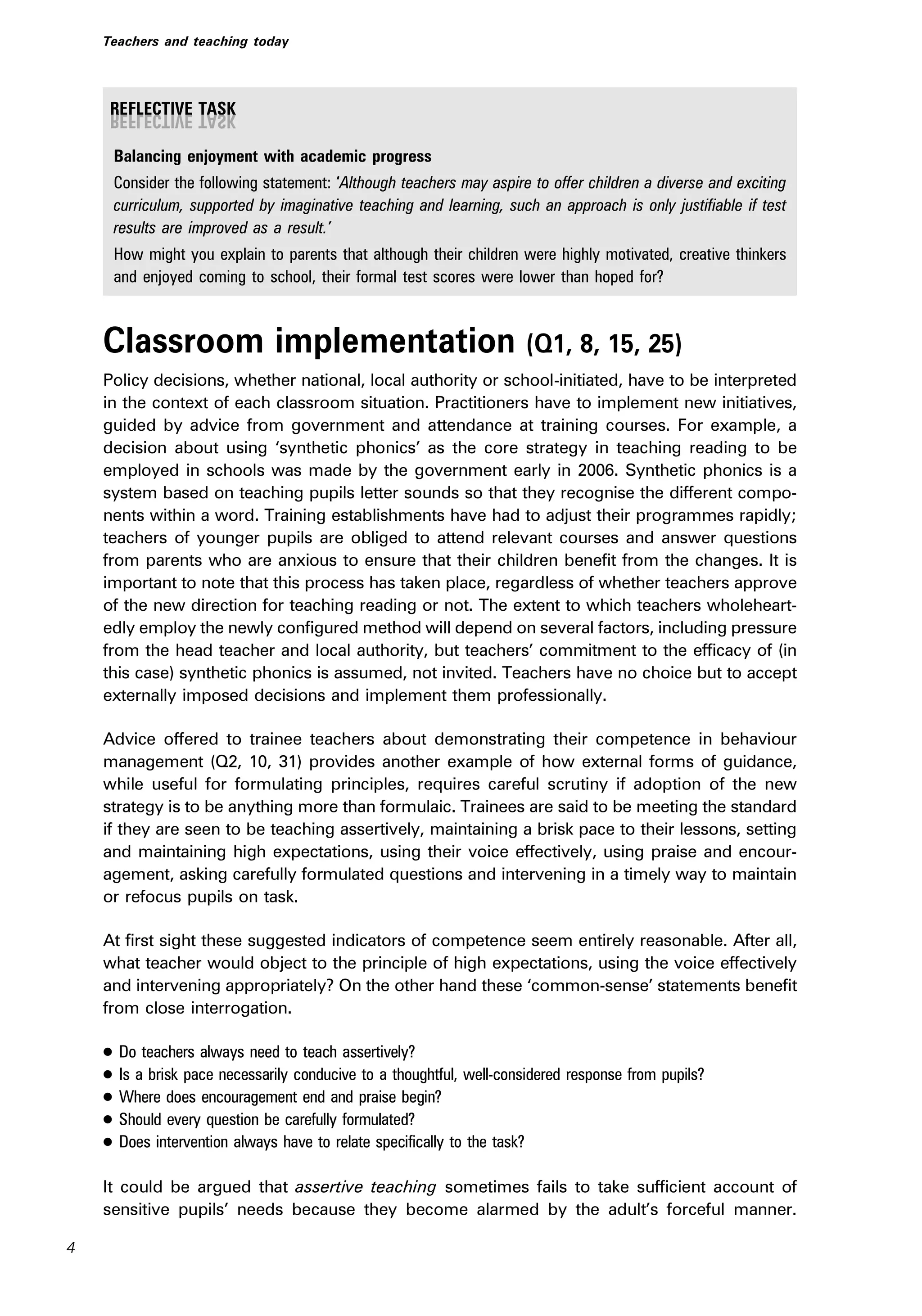
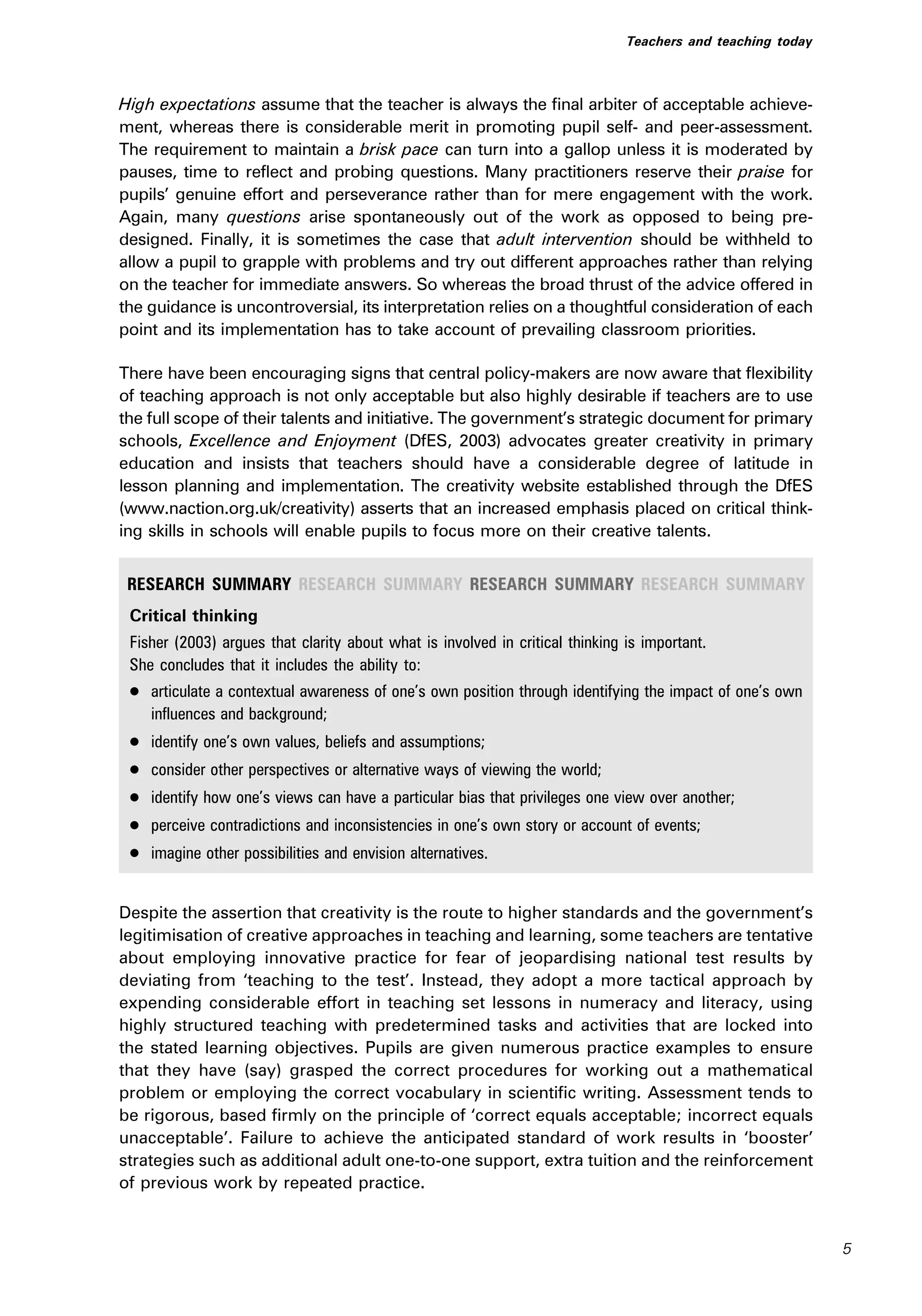
![It is not difficult to see that focusing on a ‘mastery of content and revision of concepts’
approach sits somewhat uneasily with an enquiry-based, investigative approach where
pupils are encouraged to explore, innovate and collaborate to find solutions (plural) rather
than the solution (singular). Learning outcomes and assessment of pupils’ understanding
and competence in such a problem-solving environment are, of course, far less predictable
than in a strictly objectives-driven one. There appears to be something of a divide between,
on the one hand, the encouragement for teachers to be adventurous and, on the other hand,
the use of an assessment system that relies on systematic forms of teaching to prepare
pupils for success in tests. As Campbell (2005) cannily notes, it is ironic that when our future
may be dependent upon adults who are creative, original and able to use their own initiative
– as well as being literate and numerate – that primary schooling may be restricting the
development of those [very] qualities (p6, my addition). These tensions and opportunities
exist in every primary school for every teacher.
Initial teacher education and training (Q7a, 16)
Teacher training has not been immune from the criteria-driven agenda and trainee teachers
(‘trainees’) are assessed on the basis of performance criteria under the umbrella term,
Standards. The Standards for the award of qualified teacher status are outcome statements
that set out what an aspiring teacher should know, understand and be capable of doing, with
particular regard to their classroom practice. The Standards fall under three main headings:
(1) Professional attributes (2) Professional knowledge and understanding and (3)
Professional skills. The professional attributes standards incorporate relationships with chil-
dren and adults; communicating and working with others; personal professional
development. The professional knowledge and understanding standards incorporate teach-
ing and learning; assessing and monitoring; subjects and curriculum; literacy, numeracy
(maths) and ICT; achievement and diversity; health and wellbeing. The final section, profes-
sional skills, incorporate planning; teaching; assessing, monitoring and giving feedback;
reviewing teaching and learning; learning environment; team-working and collaboration.
Class management requires an ability to exercise appropriate discipline, and mentors and
tutors responsible for initial teacher training have been given guidance about the character-
istics of good practice (TDA, 2007).
There are many Standards covering the key areas of professional attributes, some of which
are simply expressed, others of which contain several strands. Chapters 8 and 9 provide a
Standards lexicon, plus a comprehensive analysis of their content and how to successfully
meet the requirements. Attention to the Standards offers insights in respect of the ability to:
. be a positive adult influence in the classroom;
. understand what has to be taught and why;
. plan sessions systematically but not inflexibly;
. teach in a way that motivates the pupils and maintains control;
. assess pupil progress and offer them constructive feedback;
. deal effectively with pupils who need special provision;
. liaise with teachers and assistants as a useful team member;
. relate formally and informally to parents;
. make a contribution to wider school life;
. listen, learn, evaluate and implement advice from colleagues.
Teachers and teaching today
6](https://image.slidesharecdn.com/1132440-250521164307-5594af17/75/Learning-And-Teaching-In-Primary-Schools-Achieving-Qts-Denis-Hayes-18-2048.jpg)


![possibilities. Teachers then have reason to be confident that: In equipping their charges with different
kinds of understanding, with aesthetic sensitivity, with dispositions towards self-directedness and
accomplishment they were enriching their [pupils’] lives. (p444)
Interactive teaching (Q1, 17, 25a, 25c, 31)
For anyone who works in a school it is impossible not to interact with pupils and colleagues
throughout almost every moment of the day (Burns and Myhill, 2004). It is, however, the
quality and effectiveness of the interactions that is important, whether in a teaching situation,
a casual encounter in the corridor or talking to a parent in the playground. One important
aspect of interaction that receives only brief mention in this book is the role that information
technology plays in learning, which, though significant, is the subject of specialist texts (e.g.
Gage, 2005).
A general definition of interaction is that it consists of an encounter in which both the
instigator and the receiver of an action share an experience, with the emphasis on ‘action’
and ‘share’. The experience may be practical (such as completing a task), emotional (such as
offering reassurance) or physical (such as a pat on the back). As used in this book the
expression ‘classroom interaction’ is broadly synonymous with communication and refers
in the main to a range of person-to-person verbal encounters, formal and informal (see
Chapter 6). A lot of communication is non-verbal (such as a wave, a nod or a scowl)
suggesting that teachers can increase their effectiveness with careful attention to the unspo-
ken as well as spoken messages that they convey to pupils. Non-verbal communication is
frequently used in conjunction with speech; for example, a teacher might verbally approve a
pupil’s behaviour and reinforce it with a bright smile.
Interaction that has an educational purpose tends to take place at two levels. First, ordinal
interaction is unidirectional, usually from adult to child, for example where the teacher gives
an explanation about procedures. Second, reciprocal interaction is bidirectional, where an
adult initiates talk then invites and acknowledges pupils’ comments, for example during a
class debate about the rights and wrongs of an ethically sensitive situation. Interaction also
takes place when a group of pupils collaborate (with minimal adult intervention) to solve
problems or exchange information, ideas and opinions. Interaction sometimes necessitates
or is enhanced by the use of technology, for example use of electronic mail to contact pupils
in another part of the world. Experience suggests, however, that in the minds of some
teachers interactivity has become inextricably tangled with the technique of asking pupils
large numbers of superficial questions and then making a rapid evaluation of their answers
(sometimes in an unimaginative way), rather than encouraging them to think, interrogate
issues and offer creative insights and solutions.
Interactive teaching is a term that was originally designed for the first version of the
national literacy strategy in 1999 and recommended as an example of a good teaching
method. It has also been employed in mathematics with reference to the opening ques-
tion and answer phase (often referred to by the odd expression ‘mental–oral session’). A
lot has been written about the relevance of interactive teaching in literacy and numeracy
teaching (e.g. Bearne et al, 2003; Hardman et al, 2003; Pratt, 2006). This book is, however,
primarily concerned with the principles and practice that apply across the curriculum and
not to subject-specific teaching.
Teachers and teaching today
9](https://image.slidesharecdn.com/1132440-250521164307-5594af17/75/Learning-And-Teaching-In-Primary-Schools-Achieving-Qts-Denis-Hayes-21-2048.jpg)



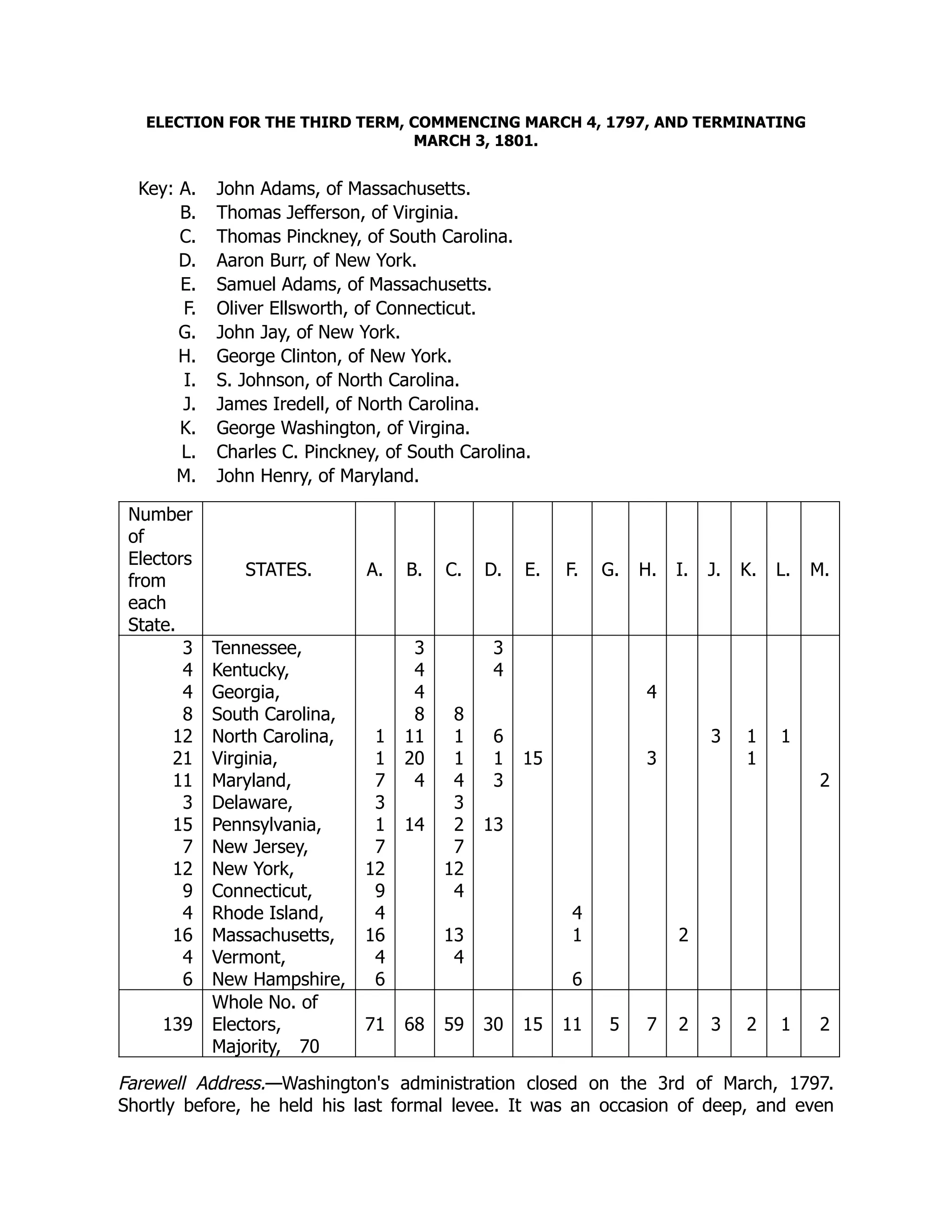



![was given. A compliance was, nevertheless, repeatedly urged, until, at
length, the envoys refused to hold with them any further communications.
These matters becoming known in America, excited general indignation.
The spirit of party appeared to be extinct. "Millions for defence, not a cent
for tribute," the language of Mr. Pinckney to the French government,
resounded from every quarter of the Union. The treaty of alliance with
France was declared by congress to be annulled; and authority was given
for capturing armed French vessels. Provision was made for raising a
regular army, and in case events should render it expedient, for augmenting
it. A direct tax and additional internal duties were laid. To the command of
the armies of the United States, President Adams, with the unanimous
advice of the senate, appointed George Washington, with the rank of
lieutenant-general and commander-in-chief. Washington reluctantly
accepted the office, declaring, however, that he cordially approved the
measures of the government.
The first act of hostility between the two nations, appears to have been
committed by the Insurgente, which captured the American schooner
Retaliation, and carried her into Guadaloupe. Soon after, the Constellation,
under the command of Captain Truxton, went to sea, and in February,
1799, he encountered the Insurgente, which, after a close action of about
an hour and a half, he compelled to strike. The rate of the Constellation
was thirty-two guns; that of the Insurgente, forty. The former had three
men wounded, one of whom shortly after died, and none killed; the latter
had forty-one wounded, and twenty-nine killed. This victory, so brilliant and
so decisive, with such a wonderful disparity of loss, gave great eclat to the
victor and to the navy.
Treaty with France.—The bold and decided tone of the Americans, added to
their preparations for prosecuting a war with vigor—and, perhaps, more
than all, the success of the American navy in various engagements, had the
desired effect. Overtures for renewing the negotiations were received from
the French directory, which were immediately responded to by the
president, by the appointment of Oliver Ellsworth, chief justice of the United
States, Patrick Henry,[65] then late governor of Virginia, and William Vans
Murray, minister at the Hague, envoys extraordinary for concluding a peace.
On their arrival at Paris, they found the directory overthrown, and the
government in the hands of Napoleon Buonaparte, as first consul. By him
they were promptly received, and a treaty was concluded on the 30th of](https://image.slidesharecdn.com/1132440-250521164307-5594af17/75/Learning-And-Teaching-In-Primary-Schools-Achieving-Qts-Denis-Hayes-36-2048.jpg)



![unborn! Let the children of my country prove themselves worthy of his
virtues, his labors, his sacrifices, by reverencing his name, and imitating his
piety, integrity, industry, fortitude, patience, forbearance, and patriotism. So
shall they become fitted to enjoy the blessings of freedom and the bounties
of Heaven."[66]
Removal of the Seat of Government.—In the year 1800, the seat of
government, agreeably to a law passed by congress in 1790, was removed
to Washington, in the District of Columbia. This territory, ten miles square,
had been granted to the general government by the states of Virginia and
Maryland. Public buildings had been erected, and in November of this year,
congress, for the first time, held their session in that place. After
congratulating the people of the United States on the assembling of
congress, on the prospect of a residence not to be changed, the president
said: "It would be unbecoming the representatives of this nation to
assemble, for the first time, in this solemn temple, without looking up to
the Supreme Ruler of the universe, and imploring his blessing. May this
territory be the residence of virtue and happiness! In this city, may that
piety and virtue, that wisdom and magnanimity, that constancy and self-
government, which adorned the great character whose name it bears, be
for ever held in veneration. Here, and throughout our country, may simple
manners, pure morals, and true religion, flourish for ever."
Election of Mr. Jefferson.—At this period, a presidential election recurred.
From the time of the adoption of the constitution, the republican party had
been gradually gathering strength, and, in anticipation of success, great
preparations were made by them to elect their candidates, Mr. Jefferson
and Mr. Burr. The candidates of the federal party were Mr. Adams and
General Pinckney.
Unfortunately for the federal party, the administration of Mr. Adams had not
been generally acceptable. "In the early part of it, the acts by which the
army and navy were strengthened, and eighty thousand of the militia
subjected to his order, were represented, by the republicans, as proofs that,
however he might have been a friend to the constitution of his country, he
now either wished to subvert it, or was led blindfold into the views of those
who did. The republicans scrupled the policy of a war with France, and
denied the necessity, even in case of such a war, of a large land force. They
believed that spirits were at work to produce this war, or to make the most
of a disturbance, in order to lull the people, while they raised an army,](https://image.slidesharecdn.com/1132440-250521164307-5594af17/75/Learning-And-Teaching-In-Primary-Schools-Achieving-Qts-Denis-Hayes-42-2048.jpg)


