Learning agility
the magic multiplier
„An organization's ability to learn, and
translate that learning into action rapidly, is
the ultimate competitive advantage.”
Jack Welch
Experimental design
• Tools
• Time line
• Workshop design
• Illustration
Experimental design
• Tool to be used:
– Professional learning indicator PLI (intelligence
test, measuring three layers of intelligence
1. Abstract
2. Verbal
3. Numerical
- Perception measurement: after participating into
this worksop, coworkers were expressing their
perception on the atmosphere they perceived
during the workshop
Timeline and workshop design
• Measurements:
A) Before workshop (1 week)
B) Beginning of the workshop
C) End of workshop
D) After the workshop(1 week)
• Workshop design: all PLI dimesnions are
trained/ explained during a 30’ in the classrom
session
Understanding results
First PLI raw score (B)
Last PLI raw score (C)
Maximum PLI raw score
Positive learning potential
(C - B)
First PLI raw score (B)
Last PLI raw score (C)
Minimum PLI raw score
Negative learning
potential (C - B)
The learning agility general index can be combined with:
- Performance evaluation
- personal values self-assessment tool
- Predictive Index extraverstion (interpersonal warmth, gregariousness, agreability)
Identified agile learners ;)
• “Learning from experience requires one to be
wrong (at least) part of the time. A punitive
culture inhibits individuals’ motivation for
learning. In contrast, a culture that is
supportive, entrepreneurial and nurturing
fosters learning and learning agility.”
Kenneth P. De Meuse et al., published in Consulting Psychology
Journal
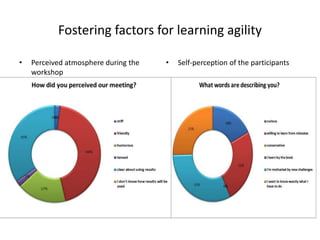
Fostering factors for learning agility
• Perceived atmosphere during the
workshop
• Self-perception of the participants

Learning agility - the magic multiplier

  • 1.
    Learning agility the magicmultiplier „An organization's ability to learn, and translate that learning into action rapidly, is the ultimate competitive advantage.” Jack Welch
  • 3.
    Experimental design • Tools •Time line • Workshop design • Illustration
  • 4.
    Experimental design • Toolto be used: – Professional learning indicator PLI (intelligence test, measuring three layers of intelligence 1. Abstract 2. Verbal 3. Numerical - Perception measurement: after participating into this worksop, coworkers were expressing their perception on the atmosphere they perceived during the workshop
  • 5.
    Timeline and workshopdesign • Measurements: A) Before workshop (1 week) B) Beginning of the workshop C) End of workshop D) After the workshop(1 week) • Workshop design: all PLI dimesnions are trained/ explained during a 30’ in the classrom session
  • 6.
    Understanding results First PLIraw score (B) Last PLI raw score (C) Maximum PLI raw score Positive learning potential (C - B) First PLI raw score (B) Last PLI raw score (C) Minimum PLI raw score Negative learning potential (C - B)
  • 7.
    The learning agilitygeneral index can be combined with: - Performance evaluation - personal values self-assessment tool - Predictive Index extraverstion (interpersonal warmth, gregariousness, agreability) Identified agile learners ;)
  • 8.
    • “Learning fromexperience requires one to be wrong (at least) part of the time. A punitive culture inhibits individuals’ motivation for learning. In contrast, a culture that is supportive, entrepreneurial and nurturing fosters learning and learning agility.” Kenneth P. De Meuse et al., published in Consulting Psychology Journal
  • 9.
    Fostering factors forlearning agility • Perceived atmosphere during the workshop • Self-perception of the participants