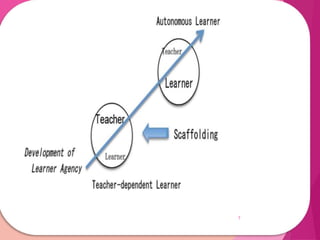
Learner autonomy refers to students taking control of their own learning through active involvement in more difficult tasks to achieve higher results and learn more efficiently. It is a process that boosts intrinsic motivation as students gain their own learning path. To practice learner autonomy, teachers should build on prior knowledge, use engaging topics, create flexible tasks, keep students active through cooperative work, allow choice, encourage risk-taking, help with reflection, and serve as a model. Self-assessment tools like portfolios and learning logs are also important, as is emphasizing pair and group work so students can evaluate their own progress and direct future learning.