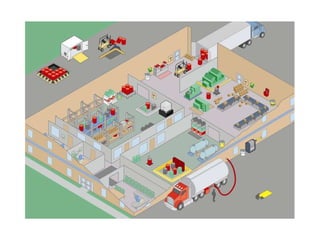
Best Practices for  Leak and Spill Control New Pig Corporation (Sound starts after six seconds. Slides automatically advance.)
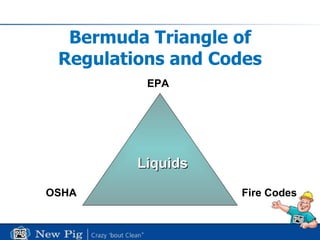
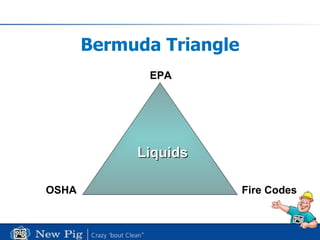
Bermuda Triangle of Regulations and Codes OSHA Fire Codes EPA Liquids
 
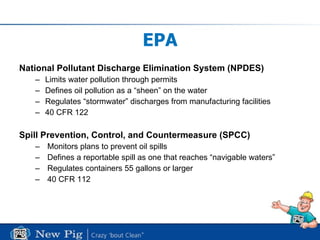
EPA National Pollutant Discharge Elimination System (NPDES) Limits water pollution through permits  Defines oil pollution as a “sheen” on the water Regulates “stormwater” discharges from manufacturing facilities 40 CFR 122 Spill Prevention, Control, and Countermeasure (SPCC)   Monitors plans to prevent oil spills Defines a reportable spill as one that reaches “navigable waters” Regulates containers 55 gallons or larger 40 CFR 112
EPA Continued Resource Conservation & Recovery Act (RCRA) Restricts hazardous waste collection and storage Defines “characteristic” and “listed” hazardous wastes Regulates waste oil through “ignitability” characteristic 40 CFR 260-265 (generator standards)
OSHA Occupational Safety & Health Administration (OSHA) Inspects working conditions Defines safe and healthful standards Regulates floor conditions, storage cabinets, hazardous waste operations and emergency response  29 CFR 1910 (general industry standards)
Fire Codes National Fire Protection Association (NFPA) An international, nonprofit membership organization Merged with Uniform Fire Code (UFC) in 2006 NFPA'S 300 codes and standards influence every building, process, service, design and installation in the U.S.  Regulated through state and local fire marshals NFPA 30: Flammable and Combustible Liquids Code UFC, Articles 74, 79, and 80
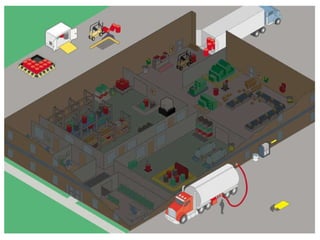
Outside Leaks & Spills
 
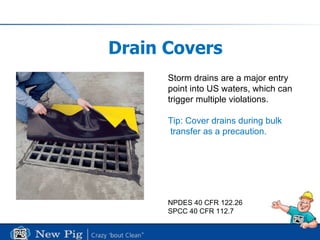
Drain Covers Storm drains are a major entry point into US waters, which can trigger multiple violations. Tip: Cover drains during bulk   transfer as a precaution.  NPDES 40 CFR 122.26 SPCC 40 CFR 112.7
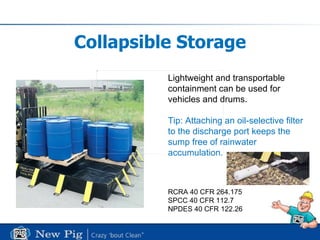
Collapsible Storage Lightweight and transportable containment can be used for vehicles and drums. Tip: Attaching an oil-selective filter to the discharge port keeps the sump free of rainwater accumulation. RCRA 40 CFR 264.175 SPCC 40 CFR 112.7 NPDES 40 CFR 122.26
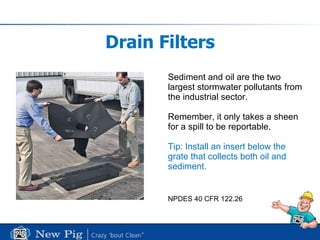
Drain Filters Sediment and oil are the two largest stormwater pollutants from the industrial sector. Remember, it only takes a sheen for a spill to be reportable.  Tip: Install an insert below the grate that collects both oil and sediment. NPDES 40 CFR 122.26
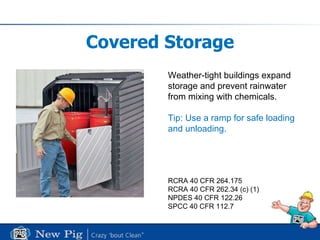
Covered Storage Weather-tight buildings expand storage and prevent rainwater  from mixing with chemicals. Tip: Use a ramp for safe loading  and unloading. RCRA 40 CFR 264.175 RCRA 40 CFR 262.34 (c) (1) NPDES 40 CFR 122.26 SPCC 40 CFR 112.7
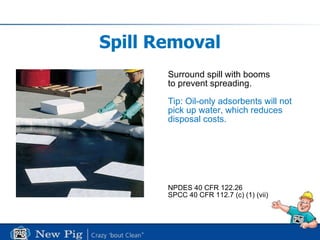
Spill Removal Surround spill with booms to prevent spreading. Tip: Oil-only adsorbents will not pick up water, which reduces disposal costs. NPDES 40 CFR 122.26 SPCC 40 CFR 112.7 (c) (1) (vii)
Inside Leaks and Spills
 
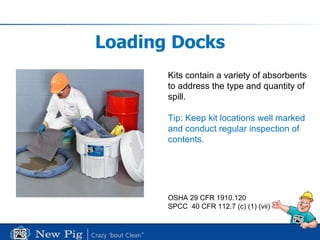
Loading Docks Kits contain a variety of absorbents to address the type and quantity of spill. Tip: Keep kit locations well marked and conduct regular inspection of contents. OSHA 29 CFR 1910.120 SPCC  40 CFR 112.7 (c) (1) (vii)
 
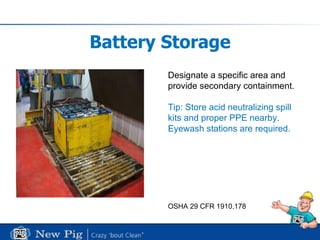
Battery Storage Designate a specific area and  provide secondary containment. Tip: Store acid neutralizing spill  kits and proper PPE nearby.  Eyewash stations are required. OSHA 29 CFR 1910.178
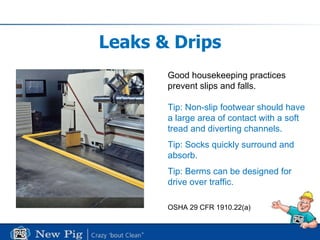
Leaks & Drips Good housekeeping practices  prevent slips and falls. Tip: Non-slip footwear should have  a large area of contact with a soft tread and diverting channels. Tip: Socks quickly surround and  absorb. Tip: Berms can be designed for  drive over traffic. OSHA 29 CFR 1910.22(a)
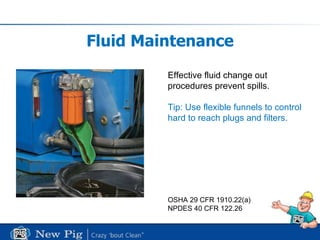
Fluid Maintenance Effective fluid change out procedures prevent spills. Tip: Use flexible funnels to control hard to reach plugs and filters. OSHA 29 CFR 1910.22(a) NPDES 40 CFR 122.26
 
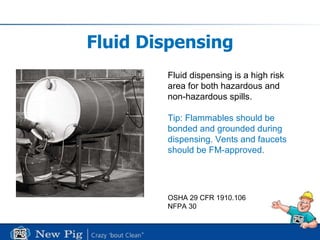
Fluid Dispensing Fluid dispensing is a high risk  area for both hazardous and  non-hazardous spills. Tip: Flammables should be  bonded and grounded during dispensing. Vents and faucets  should be FM-approved. OSHA 29 CFR 1910.106 NFPA 30
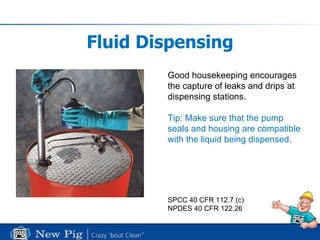
Fluid Dispensing Good housekeeping encourages the capture of leaks and drips at  dispensing stations. Tip: Make sure that the pump seals and housing are compatible with the liquid being dispensed. SPCC 40 CFR 112.7 (c) NPDES 40 CFR 122.26
 
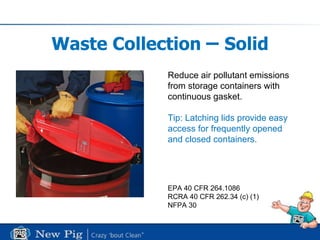
Waste Collection  –  Solid Reduce air pollutant emissions from storage containers with  continuous gasket. Tip: Latching lids provide easy access for frequently opened  and closed containers.  EPA 40 CFR 264.1086 RCRA 40 CFR 262.34 (c) (1) NFPA 30
 
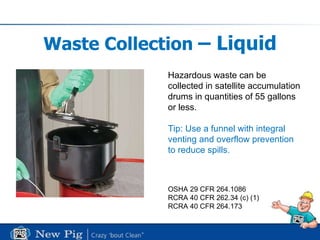
Waste Collection  – Liquid Hazardous waste can be  collected in satellite accumulation drums in quantities of 55 gallons or less. Tip: Use a funnel with integral venting and overflow prevention to reduce spills.   OSHA 29 CFR 264.1086 RCRA 40 CFR 262.34 (c) (1) RCRA 40 CFR 264.173
 
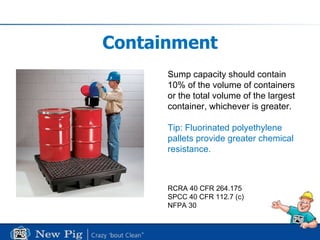
Containment Sump capacity should contain  10% of the volume of containers or the total volume of the largest  container, whichever is greater.  Tip: Fluorinated polyethylene pallets provide greater chemical  resistance. RCRA 40 CFR 264.175 SPCC 40 CFR 112.7 (c) NFPA 30
Bermuda Triangle OSHA Fire Codes EPA Liquids
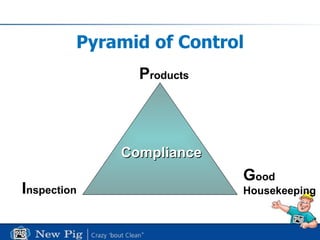
Pyramid of Control I nspection G ood Housekeeping P roducts Compliance
 

Leak & Spill Best Practices from New Pig

  • 1.
    Best Practices for Leak and Spill Control New Pig Corporation (Sound starts after six seconds. Slides automatically advance.)
  • 2.
    Bermuda Triangle ofRegulations and Codes OSHA Fire Codes EPA Liquids
  • 3.
  • 4.
    EPA National PollutantDischarge Elimination System (NPDES) Limits water pollution through permits Defines oil pollution as a “sheen” on the water Regulates “stormwater” discharges from manufacturing facilities 40 CFR 122 Spill Prevention, Control, and Countermeasure (SPCC) Monitors plans to prevent oil spills Defines a reportable spill as one that reaches “navigable waters” Regulates containers 55 gallons or larger 40 CFR 112
  • 5.
    EPA Continued ResourceConservation & Recovery Act (RCRA) Restricts hazardous waste collection and storage Defines “characteristic” and “listed” hazardous wastes Regulates waste oil through “ignitability” characteristic 40 CFR 260-265 (generator standards)
  • 6.
    OSHA Occupational Safety& Health Administration (OSHA) Inspects working conditions Defines safe and healthful standards Regulates floor conditions, storage cabinets, hazardous waste operations and emergency response 29 CFR 1910 (general industry standards)
  • 7.
    Fire Codes NationalFire Protection Association (NFPA) An international, nonprofit membership organization Merged with Uniform Fire Code (UFC) in 2006 NFPA'S 300 codes and standards influence every building, process, service, design and installation in the U.S. Regulated through state and local fire marshals NFPA 30: Flammable and Combustible Liquids Code UFC, Articles 74, 79, and 80
  • 8.
  • 9.
  • 10.
    Drain Covers Stormdrains are a major entry point into US waters, which can trigger multiple violations. Tip: Cover drains during bulk transfer as a precaution. NPDES 40 CFR 122.26 SPCC 40 CFR 112.7
  • 11.
    Collapsible Storage Lightweightand transportable containment can be used for vehicles and drums. Tip: Attaching an oil-selective filter to the discharge port keeps the sump free of rainwater accumulation. RCRA 40 CFR 264.175 SPCC 40 CFR 112.7 NPDES 40 CFR 122.26
  • 12.
    Drain Filters Sedimentand oil are the two largest stormwater pollutants from the industrial sector. Remember, it only takes a sheen for a spill to be reportable. Tip: Install an insert below the grate that collects both oil and sediment. NPDES 40 CFR 122.26
  • 13.
    Covered Storage Weather-tightbuildings expand storage and prevent rainwater from mixing with chemicals. Tip: Use a ramp for safe loading and unloading. RCRA 40 CFR 264.175 RCRA 40 CFR 262.34 (c) (1) NPDES 40 CFR 122.26 SPCC 40 CFR 112.7
  • 14.
    Spill Removal Surroundspill with booms to prevent spreading. Tip: Oil-only adsorbents will not pick up water, which reduces disposal costs. NPDES 40 CFR 122.26 SPCC 40 CFR 112.7 (c) (1) (vii)
  • 15.
  • 16.
  • 17.
    Loading Docks Kitscontain a variety of absorbents to address the type and quantity of spill. Tip: Keep kit locations well marked and conduct regular inspection of contents. OSHA 29 CFR 1910.120 SPCC 40 CFR 112.7 (c) (1) (vii)
  • 18.
  • 19.
    Battery Storage Designatea specific area and provide secondary containment. Tip: Store acid neutralizing spill kits and proper PPE nearby. Eyewash stations are required. OSHA 29 CFR 1910.178
  • 20.
    Leaks & DripsGood housekeeping practices prevent slips and falls. Tip: Non-slip footwear should have a large area of contact with a soft tread and diverting channels. Tip: Socks quickly surround and absorb. Tip: Berms can be designed for drive over traffic. OSHA 29 CFR 1910.22(a)
  • 21.
    Fluid Maintenance Effectivefluid change out procedures prevent spills. Tip: Use flexible funnels to control hard to reach plugs and filters. OSHA 29 CFR 1910.22(a) NPDES 40 CFR 122.26
  • 22.
  • 23.
    Fluid Dispensing Fluiddispensing is a high risk area for both hazardous and non-hazardous spills. Tip: Flammables should be bonded and grounded during dispensing. Vents and faucets should be FM-approved. OSHA 29 CFR 1910.106 NFPA 30
  • 24.
    Fluid Dispensing Goodhousekeeping encourages the capture of leaks and drips at dispensing stations. Tip: Make sure that the pump seals and housing are compatible with the liquid being dispensed. SPCC 40 CFR 112.7 (c) NPDES 40 CFR 122.26
  • 25.
  • 26.
    Waste Collection – Solid Reduce air pollutant emissions from storage containers with continuous gasket. Tip: Latching lids provide easy access for frequently opened and closed containers. EPA 40 CFR 264.1086 RCRA 40 CFR 262.34 (c) (1) NFPA 30
  • 27.
  • 28.
    Waste Collection – Liquid Hazardous waste can be collected in satellite accumulation drums in quantities of 55 gallons or less. Tip: Use a funnel with integral venting and overflow prevention to reduce spills. OSHA 29 CFR 264.1086 RCRA 40 CFR 262.34 (c) (1) RCRA 40 CFR 264.173
  • 29.
  • 30.
    Containment Sump capacityshould contain 10% of the volume of containers or the total volume of the largest container, whichever is greater. Tip: Fluorinated polyethylene pallets provide greater chemical resistance. RCRA 40 CFR 264.175 SPCC 40 CFR 112.7 (c) NFPA 30
  • 31.
    Bermuda Triangle OSHAFire Codes EPA Liquids
  • 32.
    Pyramid of ControlI nspection G ood Housekeeping P roducts Compliance
  • 33.