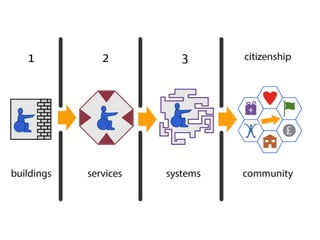
What are we doing here? 
Talk by Dr Simon Duffy for ACH Leadership, 
3 December 2014 in Adelaide
Words 
are important
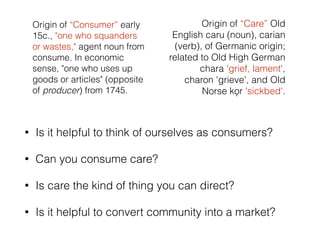
Origin of “Consumer” early 
15c., "one who squanders 
or wastes," agent noun from 
consume. In economic 
sense, "one who uses up 
goods or articles" (opposite 
of producer) from 1745. 
Origin of “Care” Old 
English caru (noun), carian 
(verb), of Germanic origin; 
related to Old High German 
chara 'grief, lament', 
charon 'grieve', and Old 
Norse kǫr 'sickbed'. 
• Is it helpful to think of ourselves as consumers? 
• Can you consume care? 
• Is care the kind of thing you can direct? 
• Is it helpful to convert community into a market?
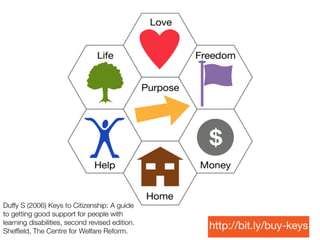
We make citizenship real by 
1. Finding our sense of purpose 
2. Having the freedom to pursue it 
3. Having enough money to be free 
4. Having a home where we belong 
5. Getting help from other people 
6. Making life in community 
7. Finding love
This protects our dignity 
1. Our life is seen to have meaning 
2. We are not on someone else’s control 
3. We can pay our way - we’re not unduly dependent 
4. We have a stake in the community 
5. We give others the chance to give 
6. We contribute to the community 
7. We are building the relationships that sustain community
“My life, my rights” 
1. I have a right to live independently 
2. My budget is my money 
3. I can control it, and get good 
support with decisions 
4. I should know my budget and any 
rules 
5. My budget should be able to to be 
used flexibly 
6. I should be able to share what I am 
learning 
7. I should be supported to make a 
contribution
These innovations were not 
inspired by consumerism, 
neo-liberalism or a desire 
to create a ‘market’. They 
were inspired by a desire 
for justice, citizenship and 
community.
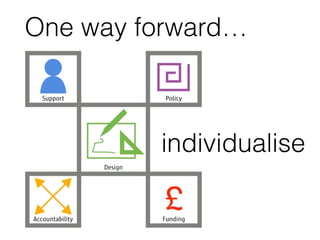
One way forward… 
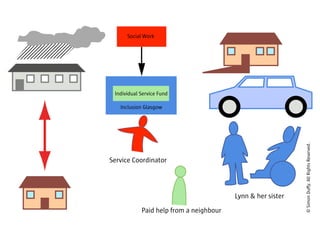
individualise
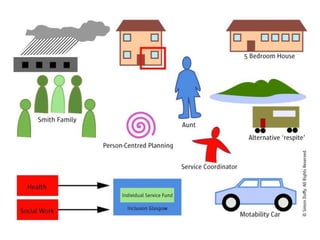
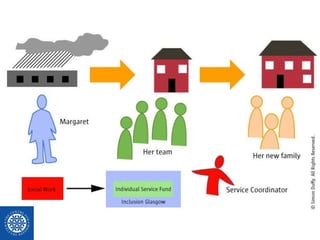
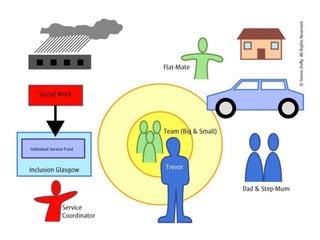
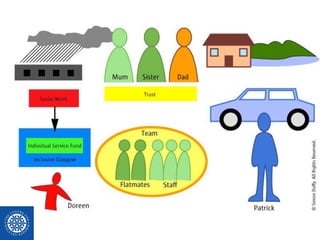
Social Work 
Individual Service Fund 
Inclusion Glasgow 
Service Coordinator 
Lynn & her sister 
Paid help from a neighbour 
© Simon Duffy. All Rights Reserved.
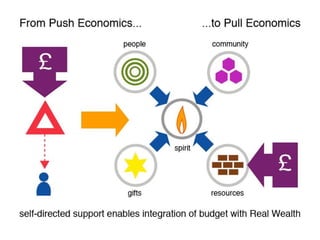
My Money 
Funding from one 
or more sources 
[enables integration] 
€ 
Coordinator Admin 
Insurance Fund 
brokerage overheads unexpected costs 
Restricted Funding 
Individual Service Fund
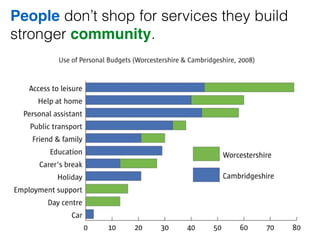
People don’t shop for services they build 
stronger community.
Some questions for 
ACH going forward
• Can you really plan with people so they can find the 
very best solution? 
• Can you give people some of their own money? 
• Can you keep people’s money safe for them (e.g. roll 
it over to next year)? 
• Can you let people use their money flexibly? 
• Are you part of the same community as the citizens? 
• Are you helping people contribute?
At their best providers are 
points of wisdom. So how have 
providers become ‘a problem’?
• Ideological rhetoric around markets? 
• Vested-interest of commissioners? 
• The increased detachment from community? 
• Increased wage differentials and profit? 
• Associational with institutional provision?
What roles should you play 
in order to restore trust and 
exercise leadership?
• Genuine commitment to partnership with citizens 
• Rootedness and commitment to community 
• A platform for peer support, family or self-advocacy 
• Accountability for meaningful research based in 
real outcomes 
• Sharing what you’re learning
Christ does not call his benefactors loving or charitable. He calls them 
just. The Gospel makes no distinction between the love of our 
neighbour and justice. In the eyes of the Greeks also a respect for Zeus 
the suppliant was the first duty of justice. We have invented the 
distinction between justice and charity. It is easy to understand why. 
Our notion of justice dispenses him who possesses from the obligation 
of giving. If he gives, all the same, he thinks he has a right to be 
pleased with himself. He thinks he has done good work. As for him who 
receives, it depends on the way he interprets this notion whether he is 
dispensed from all gratitude, or whether it obliges him to offer servile 
thanks. 
Only the absolute identification of justice and love makes the co-existence 
possible of compassion and gratitude on the one hand, and 
on the other, of respect for the dignity of affliction in the afflicted - a 
respect felt by the sufferer himself and the others. 
Simone Weil
Honour can exist anywhere, love can exist 
anywhere, but justice can exist only among 
people who found their relationships upon it. 
Ursula Le Guin
All social values - liberty and opportunity, 
income and wealth, and the bases of self-respect 
- are to be distributed equally unless 
an unequal distribution of any, or all, of these 
values is to everyone's advantage. 
John Rawls
There are eight degrees of charity, one higher 
than the other. The highest degree, exceeded by 
none, is that of the person who assists a poor Jew 
by providing him with a gift or loan or by accepting 
him into a business partnership or by helping him 
find employment - in a word, by putting him where 
he can dispense with other people's aid. With 
reference to such aid, it is said, “You shall 
strengthen him, be he a stranger or a settler, he 
shall live with you” (Lev. 25:35), which means 
strengthen him in such manner that his falling into 
want is prevented. [Maimonides]
Maimonides’ 8 rules of giving 
1. Don’t look down on people - respect them as your equal 
2. Don’t deny people what they really need 
3. Don’t wait until someone has to ask 
4. Don’t force people to beg 
5. Don’t act like you are doing them a favour 
6. Don’t expose people to scorn or stigma 
7. Don’t distinguish givers or receivers 
8. Don’t let people fall into need and out of citizenship

Leadership Challenges in Aged Care

  • 1.
    What are wedoing here? Talk by Dr Simon Duffy for ACH Leadership, 3 December 2014 in Adelaide
  • 2.
  • 3.
    Origin of “Consumer”early 15c., "one who squanders or wastes," agent noun from consume. In economic sense, "one who uses up goods or articles" (opposite of producer) from 1745. Origin of “Care” Old English caru (noun), carian (verb), of Germanic origin; related to Old High German chara 'grief, lament', charon 'grieve', and Old Norse kǫr 'sickbed'. • Is it helpful to think of ourselves as consumers? • Can you consume care? • Is care the kind of thing you can direct? • Is it helpful to convert community into a market?
  • 9.
    We make citizenshipreal by 1. Finding our sense of purpose 2. Having the freedom to pursue it 3. Having enough money to be free 4. Having a home where we belong 5. Getting help from other people 6. Making life in community 7. Finding love
  • 10.
    This protects ourdignity 1. Our life is seen to have meaning 2. We are not on someone else’s control 3. We can pay our way - we’re not unduly dependent 4. We have a stake in the community 5. We give others the chance to give 6. We contribute to the community 7. We are building the relationships that sustain community
  • 16.
    “My life, myrights” 1. I have a right to live independently 2. My budget is my money 3. I can control it, and get good support with decisions 4. I should know my budget and any rules 5. My budget should be able to to be used flexibly 6. I should be able to share what I am learning 7. I should be supported to make a contribution
  • 19.
    These innovations werenot inspired by consumerism, neo-liberalism or a desire to create a ‘market’. They were inspired by a desire for justice, citizenship and community.
  • 21.
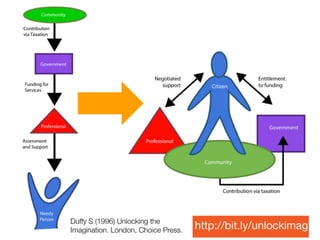
    One way forward… individualise
  • 25.
    Social Work IndividualService Fund Inclusion Glasgow Service Coordinator Lynn & her sister Paid help from a neighbour © Simon Duffy. All Rights Reserved.
  • 28.
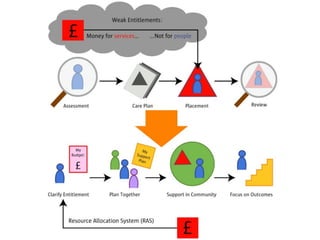
    My Money Fundingfrom one or more sources [enables integration] € Coordinator Admin Insurance Fund brokerage overheads unexpected costs Restricted Funding Individual Service Fund
  • 32.
    People don’t shopfor services they build stronger community.
  • 35.
    Some questions for ACH going forward
  • 36.
    • Can youreally plan with people so they can find the very best solution? • Can you give people some of their own money? • Can you keep people’s money safe for them (e.g. roll it over to next year)? • Can you let people use their money flexibly? • Are you part of the same community as the citizens? • Are you helping people contribute?
  • 37.
    At their bestproviders are points of wisdom. So how have providers become ‘a problem’?
  • 38.
    • Ideological rhetoricaround markets? • Vested-interest of commissioners? • The increased detachment from community? • Increased wage differentials and profit? • Associational with institutional provision?
  • 39.
    What roles shouldyou play in order to restore trust and exercise leadership?
  • 40.
    • Genuine commitmentto partnership with citizens • Rootedness and commitment to community • A platform for peer support, family or self-advocacy • Accountability for meaningful research based in real outcomes • Sharing what you’re learning
  • 41.
    Christ does notcall his benefactors loving or charitable. He calls them just. The Gospel makes no distinction between the love of our neighbour and justice. In the eyes of the Greeks also a respect for Zeus the suppliant was the first duty of justice. We have invented the distinction between justice and charity. It is easy to understand why. Our notion of justice dispenses him who possesses from the obligation of giving. If he gives, all the same, he thinks he has a right to be pleased with himself. He thinks he has done good work. As for him who receives, it depends on the way he interprets this notion whether he is dispensed from all gratitude, or whether it obliges him to offer servile thanks. Only the absolute identification of justice and love makes the co-existence possible of compassion and gratitude on the one hand, and on the other, of respect for the dignity of affliction in the afflicted - a respect felt by the sufferer himself and the others. Simone Weil
  • 42.
    Honour can existanywhere, love can exist anywhere, but justice can exist only among people who found their relationships upon it. Ursula Le Guin
  • 43.
    All social values- liberty and opportunity, income and wealth, and the bases of self-respect - are to be distributed equally unless an unequal distribution of any, or all, of these values is to everyone's advantage. John Rawls
  • 44.
    There are eightdegrees of charity, one higher than the other. The highest degree, exceeded by none, is that of the person who assists a poor Jew by providing him with a gift or loan or by accepting him into a business partnership or by helping him find employment - in a word, by putting him where he can dispense with other people's aid. With reference to such aid, it is said, “You shall strengthen him, be he a stranger or a settler, he shall live with you” (Lev. 25:35), which means strengthen him in such manner that his falling into want is prevented. [Maimonides]
  • 45.
    Maimonides’ 8 rulesof giving 1. Don’t look down on people - respect them as your equal 2. Don’t deny people what they really need 3. Don’t wait until someone has to ask 4. Don’t force people to beg 5. Don’t act like you are doing them a favour 6. Don’t expose people to scorn or stigma 7. Don’t distinguish givers or receivers 8. Don’t let people fall into need and out of citizenship