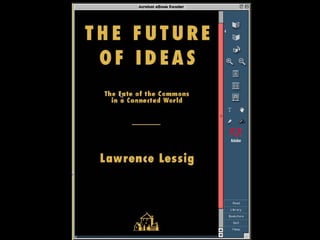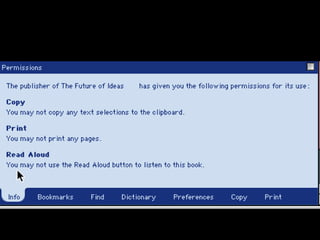
<free culture>

       OSCON
   July 24, 2002
<refrain>
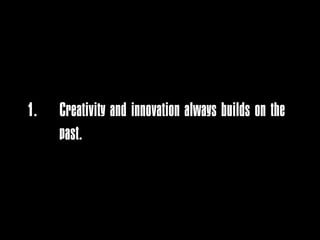
1.   Creativity and innovation always builds on the
     past.
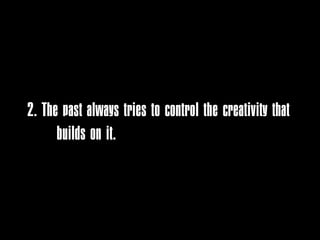
2. The past always tries to control the creativity that
      builds on it.
3. Free societies enable the future by limiting the
      past.
4. Ours is less and less a free society.
</refrain>
(1)
1774
Donaldson v. Beckett
    free culture
        born
1774
Donaldson v. Beckett
    free culture
        born
1774
Donaldson v. Beckett
    free culture
        born
1774
Donaldson v. Beckett
    free culture
        born
1710
Statute of Anne
 limited term
   14 years
1710
Statute of Anne
 limited term
   14 years
1710
Statute of Anne
 limited term
   14 years
1710
Statute of Anne
 limited term
   14 years
1740s
Scottish publishers
 reprint classics
1740s
Scottish publishers
 reprint classics
1740s
Scottish publishers
 reprint classics
London publishers:
“copyright is forever”
London publishers:
“copyright is forever”
[Sonny Bono:
“forever minus a day”]
London publishers:
“copyright is forever”
publishers
“old patentees and monopolizers in the trade of
bookselling, men who do not labour in an honest
       profession to learning is indetted.”
“common law copyright”
1769
 Millar v. Taylor
publishers prevail
1769
 Millar v. Taylor
publishers prevail
1769
 Millar v. Taylor
publishers prevail
1774
Millar reversed
1774
Millar reversed
Shakespeare free
freed culture
<refrain>
1.   Creativity and innovation always builds on the
     past.
2. The past always tries to control the creativity that
      builds on it.
3. Free societies enable the future by limiting the
      past.
4. Ours is less and less a free society.
</refrain>
(2)
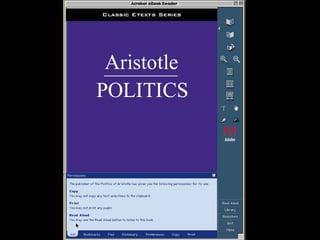
1790
unregulated creativity
      “printing”
   free derivatives
       14 years
1790
unregulated creativity
      “printing”
   free derivatives
       14 years
1790
unregulated creativity
      “printing”
   free derivatives
       14 years
1790
unregulated creativity
      “printing”
   free derivatives
       14 years
1790
unregulated creativity
      “printing”
   free derivatives
       14 years
1790
      free code
transparent technology
1790
      free code
transparent technology
1790
      free code
transparent technology
control
control
not
just
then
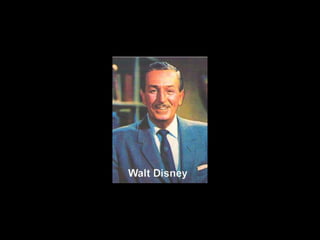
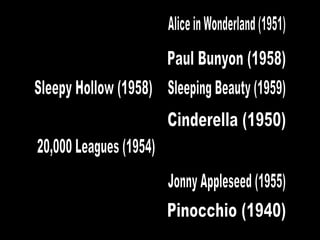
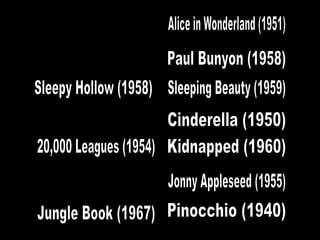
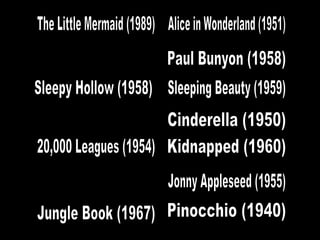
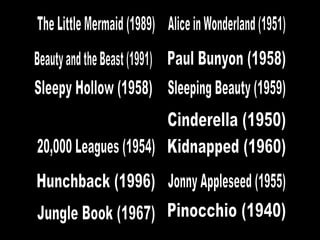
1928
    Walt Disney
 Steamboat Willie
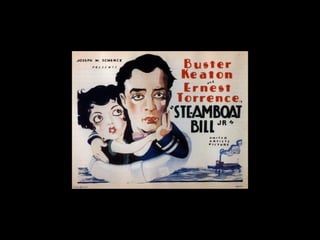
Steamboat Bill., Jr.
1928
    Walt Disney
 Steamboat Willie
Steamboat Bill., Jr.
QuickTime™ and a Video Format cvid   decompressor are needed to see this picture.
1928
    Walt Disney
 Steamboat Willie
Steamboat Bill., Jr.
1928
   Walt Disney
 Steamboat Willie
Steamboat Bill, Jr.
“always parroting the feature length mainstream
                     films”
commons
lawyer
lawyer
“limited Times”
1790
“fourteen years”
    maybe x2
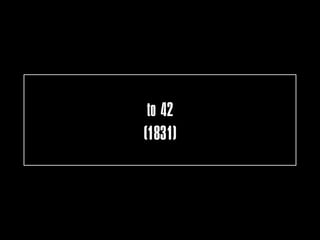
to 42
(1831)
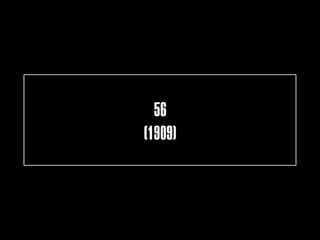
56
(1909)
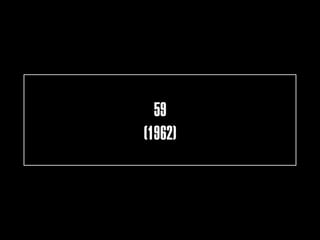
59
(1962)
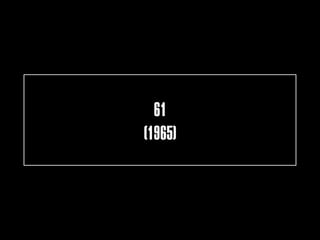
61
(1965)
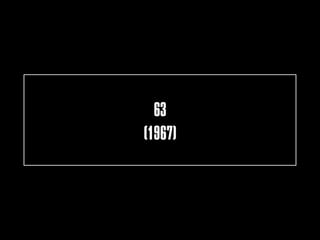
63
(1967)
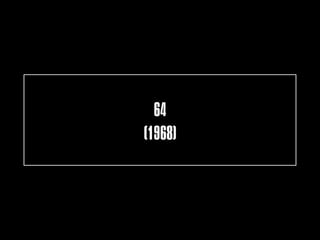
64
(1968)
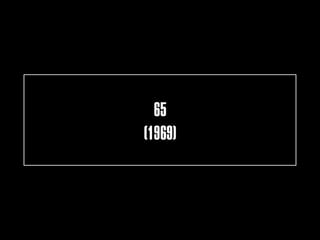
65
(1969)
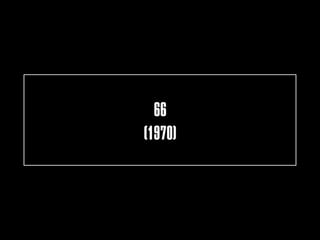
66
(1970)
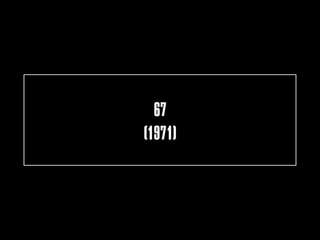
67
(1971)
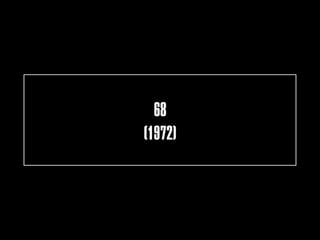
68
(1972)
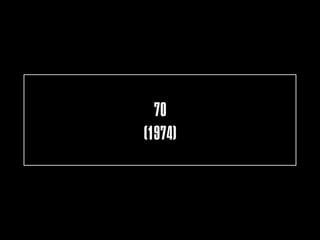
70
(1974)
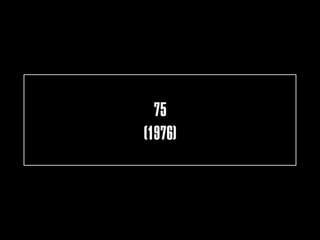
75
(1976)
95
(1998)
Sonny Bono Copyright Term Extension Act
aka
Mickey Mouse Protection Act
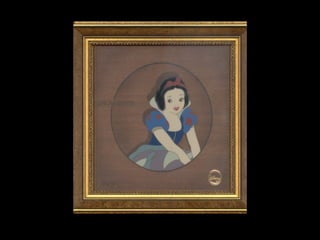
No one can
  do to Disney, Inc.
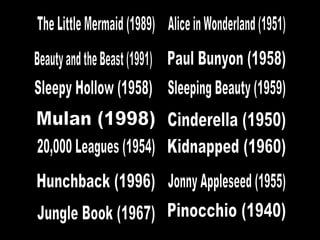
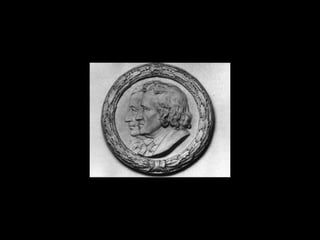
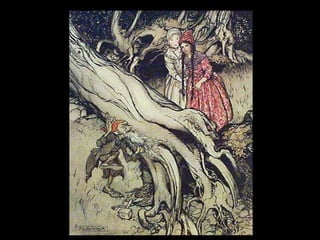
what Walt Disney did to
 the Brothers Grimm
<refrain>
1.   Creativity and innovation always builds on the
     past.
2. The past always tries to control the creativity that
      builds on it.
3. Free societies enable the future by limiting the
      past.
4. Ours is less and less a free society.
</refrain>
(3)
different
   now
2002
regulated creativity
2002
regulated creativity
law:
©
©
©
©
©
“publishing” to “copying”
“copies” to “derivative works”
“14 years” to “life+70”
technology:
opaque creativity
controlling uses
law + technology:
law regulates “copies”
uses
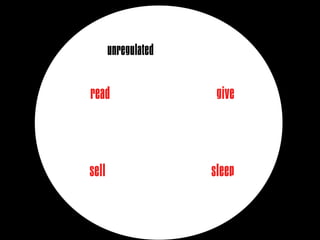
unregulated
unregulated

read
unregulated

read             give
unregulated

read                 give


sell
unregulated

read                  give


sell                 sleep
unregulated


          ©
unregulated


publish             ©
unregulated


          ©
unregulated


          ©
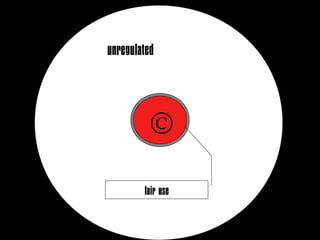
        fair use
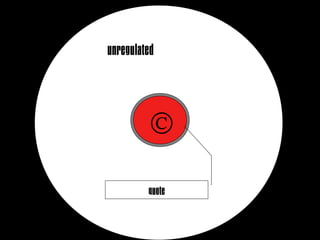
unregulated


          ©
         quote
uses
uses

1. unregulated
 2. regulated
   3. ©
uses

1. unregulated
 2. regulated
   3. ©
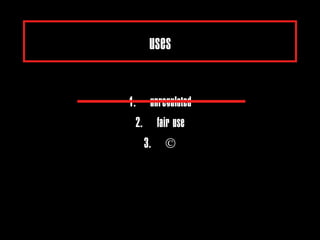
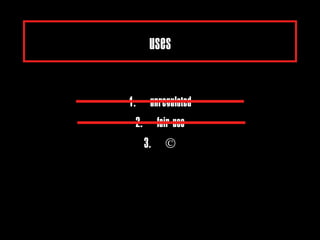
uses

1. unregulated
  2. fair use
    3. ©
uses

1. unregulated
  2. fair use
    3. ©
enter the net
every
acts a
 copy
every
act’s a
 copy
every
act’s a
 copy
unregulated uses
regulated
©
uses

1. unregulated
  2. fair use
    3. ©
<del>
“fair use”
QuickTime™ and a
Sorenson Video decompressor
are needed to see this picture.
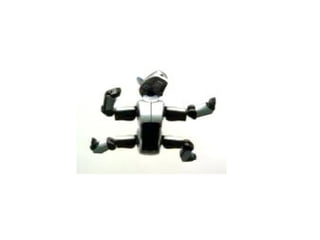
<http://aibopet.com>

“teach your Aibo jazz”
“[Y]our site contains information providing the means to
circumvent AIBO-ware's copy protection protocol constituting
a violation of the anti-circumvention provisions of the Digital
                  Millennium Copyright Act.”
uses

1. unregulated
  2. fair use
    3. ©
uses


©
controlled creativity
never more controlled
term
   scope
concentration
term
   scope
concentration
term
   scope
concentration
never
fewer
 more
never
fewer
 more
never
fewer
 more
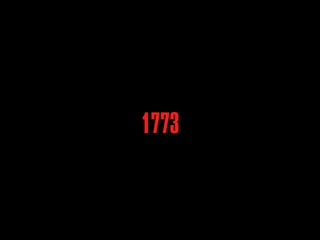
1773
control
<refrain>
1.   Creativity and innovation always builds on the
     past.
2. The past always tries to control the creativity that
      builds on it.
3. Free societies enable the future by limiting the
      past.
4. Ours is less and less a free society.
</refrain>
(4)
you
gnu
transparent creativity
free sharing
common base
create
like it’s
  1790
proprietary
    v.
   free
proprietary
    v.
 free
for now
<refrain>
1.   Creativity and innovation always builds on the
     past.
2. The past always tries to control the creativity that
      builds on it.
3. Free societies enable the future by limiting the
      past.
4. Ours is less and less a free society.
</refrain>
(5)
free code threatens
threats to free code
item:
sw patents
Mr. Gates
on sw patents:
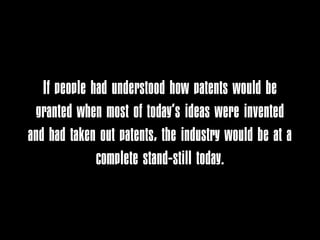
If people had understood how patents would be
 granted when most of today’s ideas were invented
and had taken out patents, the industry would be at a
              complete stand-still today.
The solution . . . is patenting as much as we can. . . . A future
    start-up with no patents of its own will be forced to pay
whatever price the giants choose to impose. That price might be
high: Established companies have an interest in excluding future
                           competitors.
The solution . . . is patenting as much as we can. . . . A future
    start-up with no patents of its own will be forced to pay
whatever price the giants choose to impose. That price might be
high: Established companies have an interest in excluding future
                           competitors.
Established companies have an interest in excluding future
                      competitors.
4 years
tiny changes
tim changes
q. todd changes
apologists
what have you done?
“excluding future competitors”
defensive
offensive
what have you done?
item:
copyright wars
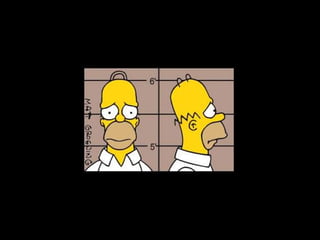
homeric tragedy
$25,000
insane rules
whole world
insane rules
for the whole world
broadcast flag
mandated fritz chips
“police state in every computer”
digital vigilantes
“a terrorist war”
for what?
“to stop the harm”
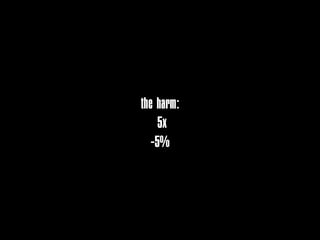
the harm:
    5x
   -5%
the harm:
     5x
   -5%
the harm:
     5x
   -5%
what have you done?
<refrain>
1.   Creativity and innovation always builds on the
     past.
2. The past always tries to control the creativity that
      builds on it.
3. Free societies enable the future by limiting the
      past.
4. Ours is less and less a free society.
</refrain>
(6)
JC Watts
“If you’re explaining,
    you’re losing.”

                         JC Watts
6 years
what have you done?
Boucher
  Cannon
Hank Perritt
eff.org
do something
Lawrence Lessig and Modern Copyright

Lawrence Lessig and Modern Copyright