Laser Security System
PRESENTED BY
SYED AHMED ALI SHAH 20PWMEC4932
MUHAMMAD USMAN AFTAB 20PWMEC4908
AHMED SHUMAIL KAYANI 20PWMEC9415
FARHAN AHMED QURESHI 20PWMEC4974
Introduction
 A laser security system is a modern and sophisticated technology
designed to protect an area or property from unauthorized access. It
utilizes laser beams to create an invisible barrier or perimeter, and
any interruption of the laser beam triggers an alarm or alert,
signaling a potential intrusion.
 Laser security systems have gained popularity due to their high level
of accuracy, reliability, and effectiveness in detecting . They find
applications in various settings, including residential properties,
commercial buildings, industrial facilities, and even high-security
installations.
Objective
 The objectives of a laser security system using Arduino Uno can
vary depending on the specific requirements and design goals.
However, here are some common objectives for such a system:
 Intrusion Detection
 Alarm Triggering
 Real-time Monitoring
 Integration with Arduino Uno
 Low-cost and Compact Design
 Power Efficiency
Key Features of Laser Security System
1. Laser Beam Detection: The system uses laser beams to create an invisible
barrier or perimeter. It can detect any interruption or blockage of the laser
beam caused by an intruder or object.
2. High Accuracy and Reliability: Laser security systems provide a high level of
accuracy in detecting intrusions. They are less prone to false alarms caused
by environmental factors, ensuring reliable performance.
3. Long-Distance Coverage: Laser beams can cover long distances, making it
possible to create large perimeters or boundaries for enhanced security. This
feature is particularly useful for securing expansive outdoor areas.
4. Multiple Alarm Options: Laser security systems can incorporate various alarm
options such as sound alarms, visual indicators (like strobe lights), or
notifications sent to a monitoring station or property owner.
5. Remote Monitoring and Control: Advanced laser security systems can be
connected to a network, enabling remote monitoring and control. This feature
allows users to access and manage the system from anywhere, enhancing
convenience and flexibility.
6. Power Efficiency: Laser security systems can be designed to be power-
efficient, minimizing power consumption and prolonging battery life. This is
important for systems that operate continuously or in remote areas without a
stable power source.
Advantages and Disadvantages
Advantages
 Long-Distance Coverage
 Accurate Detection
 Fast Response Time
 Remote Monitoring and Control
 Cost-Effective
Disadvantages
 Limited Effectiveness in Adverse Weather Conditions
 Sensitivity to Physical Obstructions
 False Alarms from Small Movements
 Power Requirements
EQUIPMENTS USED IN LSS
 ARDUINO UNO
 LASER
 BUZZER
 ULTRASONIC SENSOR
 LCD
 LDR
 JUMPERS
DETAIL EXPLANATION OF EQUIPMENTS
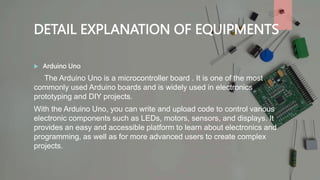
 Arduino Uno
The Arduino Uno is a microcontroller board . It is one of the most
commonly used Arduino boards and is widely used in electronics
prototyping and DIY projects.
With the Arduino Uno, you can write and upload code to control various
electronic components such as LEDs, motors, sensors, and displays. It
provides an easy and accessible platform to learn about electronics and
programming, as well as for more advanced users to create complex
projects.
 LASER
A laser is a device that emits , focused, and amplified light
through a process called stimulated emission. The term "laser"
stands for "Light Amplification by Stimulated Emission of
Radiation."
 Buzzer
A buzzer is an electronic device that generates sound or an
audible tone when an electrical signal is applied to it. It is
commonly used in various applications for generating audible
alerts, notifications, or indicating certain conditions.
ULTRASONIC SENSOR
•An ultrasonic sensor is a device that uses sound waves
at frequencies above the range of human hearing
(typically above 20 kHz) to detect and measure distances
to objects or detect their presence. It operates based on
the principle of sound wave reflection.
 LCD
LCD (Liquid Crystal Display) modules are commonly used with
Arduino boards for displaying text and simple graphics. Arduino
supports various LCD modules, including character LCDs and
graphical LCDs.
 LDR
An LDR typically consists of a semiconductor material that exhibits a
high resistance when there is little or no light, and a low resistance
when exposed to bright light. The resistance of an LDR is inversely
proportional to the amount of light it receives.
WORKING PRINCIPLE
 The working principle of laser security system is as follow :
 When there is some movement next to ultrasonic sensor it will
automatically turn ON and it alerts the buzzer in response the buzzer will
give a beep sound and also show “Security Alert “ on LCD screen .
 Also there is laser which is reflects the light in different directions and
receive a light at LDR so when there is some interruption or some object
detect between LDR so it gives signal to buzzer and beep sound will
produce .
PURPOSE OF LASER SECURITY
SYSTEM
 The purpose of a laser security system is to detect unauthorized intrusions or
movements within a specific area by using laser beams. The system works by
projecting a laser beam or multiple laser beams across the protected area, and
when the beam is interrupted or broken, it triggers an alarm or activates a
security response.
THANK YOU

Laser Security System.pptx

  • 1.
    Laser Security System PRESENTEDBY SYED AHMED ALI SHAH 20PWMEC4932 MUHAMMAD USMAN AFTAB 20PWMEC4908 AHMED SHUMAIL KAYANI 20PWMEC9415 FARHAN AHMED QURESHI 20PWMEC4974
  • 2.
    Introduction  A lasersecurity system is a modern and sophisticated technology designed to protect an area or property from unauthorized access. It utilizes laser beams to create an invisible barrier or perimeter, and any interruption of the laser beam triggers an alarm or alert, signaling a potential intrusion.  Laser security systems have gained popularity due to their high level of accuracy, reliability, and effectiveness in detecting . They find applications in various settings, including residential properties, commercial buildings, industrial facilities, and even high-security installations.
  • 3.
    Objective  The objectivesof a laser security system using Arduino Uno can vary depending on the specific requirements and design goals. However, here are some common objectives for such a system:  Intrusion Detection  Alarm Triggering  Real-time Monitoring  Integration with Arduino Uno  Low-cost and Compact Design  Power Efficiency
  • 4.
    Key Features ofLaser Security System 1. Laser Beam Detection: The system uses laser beams to create an invisible barrier or perimeter. It can detect any interruption or blockage of the laser beam caused by an intruder or object. 2. High Accuracy and Reliability: Laser security systems provide a high level of accuracy in detecting intrusions. They are less prone to false alarms caused by environmental factors, ensuring reliable performance. 3. Long-Distance Coverage: Laser beams can cover long distances, making it possible to create large perimeters or boundaries for enhanced security. This feature is particularly useful for securing expansive outdoor areas. 4. Multiple Alarm Options: Laser security systems can incorporate various alarm options such as sound alarms, visual indicators (like strobe lights), or notifications sent to a monitoring station or property owner. 5. Remote Monitoring and Control: Advanced laser security systems can be connected to a network, enabling remote monitoring and control. This feature allows users to access and manage the system from anywhere, enhancing convenience and flexibility. 6. Power Efficiency: Laser security systems can be designed to be power- efficient, minimizing power consumption and prolonging battery life. This is important for systems that operate continuously or in remote areas without a stable power source.
  • 5.
    Advantages and Disadvantages Advantages Long-Distance Coverage  Accurate Detection  Fast Response Time  Remote Monitoring and Control  Cost-Effective
  • 6.
    Disadvantages  Limited Effectivenessin Adverse Weather Conditions  Sensitivity to Physical Obstructions  False Alarms from Small Movements  Power Requirements
  • 7.
    EQUIPMENTS USED INLSS  ARDUINO UNO  LASER  BUZZER  ULTRASONIC SENSOR  LCD  LDR  JUMPERS
  • 8.
    DETAIL EXPLANATION OFEQUIPMENTS  Arduino Uno The Arduino Uno is a microcontroller board . It is one of the most commonly used Arduino boards and is widely used in electronics prototyping and DIY projects. With the Arduino Uno, you can write and upload code to control various electronic components such as LEDs, motors, sensors, and displays. It provides an easy and accessible platform to learn about electronics and programming, as well as for more advanced users to create complex projects.
  • 9.
     LASER A laseris a device that emits , focused, and amplified light through a process called stimulated emission. The term "laser" stands for "Light Amplification by Stimulated Emission of Radiation."  Buzzer A buzzer is an electronic device that generates sound or an audible tone when an electrical signal is applied to it. It is commonly used in various applications for generating audible alerts, notifications, or indicating certain conditions.
  • 10.
    ULTRASONIC SENSOR •An ultrasonicsensor is a device that uses sound waves at frequencies above the range of human hearing (typically above 20 kHz) to detect and measure distances to objects or detect their presence. It operates based on the principle of sound wave reflection.
  • 11.
     LCD LCD (LiquidCrystal Display) modules are commonly used with Arduino boards for displaying text and simple graphics. Arduino supports various LCD modules, including character LCDs and graphical LCDs.  LDR An LDR typically consists of a semiconductor material that exhibits a high resistance when there is little or no light, and a low resistance when exposed to bright light. The resistance of an LDR is inversely proportional to the amount of light it receives.
  • 12.
    WORKING PRINCIPLE  Theworking principle of laser security system is as follow :  When there is some movement next to ultrasonic sensor it will automatically turn ON and it alerts the buzzer in response the buzzer will give a beep sound and also show “Security Alert “ on LCD screen .  Also there is laser which is reflects the light in different directions and receive a light at LDR so when there is some interruption or some object detect between LDR so it gives signal to buzzer and beep sound will produce .
  • 13.
    PURPOSE OF LASERSECURITY SYSTEM  The purpose of a laser security system is to detect unauthorized intrusions or movements within a specific area by using laser beams. The system works by projecting a laser beam or multiple laser beams across the protected area, and when the beam is interrupted or broken, it triggers an alarm or activates a security response.
  • 14.