LAMINAR AIR FLOW
Helix Biosciences
•
I
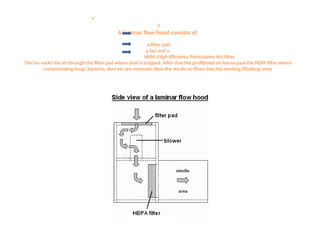
A laminar flow hood consists of
a filter pad,
a fan and a
HEPA (High Efficiency Particulates Air) filter.
The fan sucks the air through the filter pad where dust is trapped. After that the prefiltered air has to pass the HEPA filter where
contaminating fungi, bacteria, dust etc are removed. Now the sterile air flows into the working (flasking) area
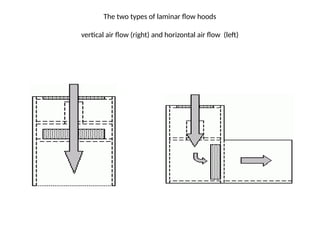
The two types of laminar flow hoods
vertical air flow (right) and horizontal air flow (left)
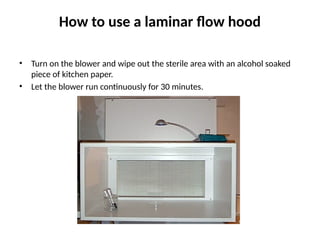
How to use a laminar flow hood
• Turn on the blower and wipe out the sterile area with an alcohol soaked
piece of kitchen paper.
• Let the blower run continuously for 30 minutes.
Laminar flow hood
advantages
• enough space in the sterile
area
• plant material can stay for
longer time in the sterile
area because it does not
become hot
• it´s easier to use bigger
flasks with wide lids
disadvantages
• more expensive
• the laminar flow hood
needs more space than a
pot

laminar-flow-presentation-1.pptx laminar air flow

  • 1.
  • 2.
    • I A laminar flowhood consists of a filter pad, a fan and a HEPA (High Efficiency Particulates Air) filter. The fan sucks the air through the filter pad where dust is trapped. After that the prefiltered air has to pass the HEPA filter where contaminating fungi, bacteria, dust etc are removed. Now the sterile air flows into the working (flasking) area
  • 3.
    The two typesof laminar flow hoods vertical air flow (right) and horizontal air flow (left)
  • 4.
    How to usea laminar flow hood • Turn on the blower and wipe out the sterile area with an alcohol soaked piece of kitchen paper. • Let the blower run continuously for 30 minutes.
  • 5.
    Laminar flow hood advantages •enough space in the sterile area • plant material can stay for longer time in the sterile area because it does not become hot • it´s easier to use bigger flasks with wide lids disadvantages • more expensive • the laminar flow hood needs more space than a pot