Electrophoresis
Definition:
‱ Electrophoresis is a laboratory technique used to
separate charged molecules, such as proteins,
nucleic acids, or small ions, based on their size
and charge by applying an electric field
‱ The term "electrophoresis" comes from "electro"
(referring to electricity) and "phoresis" (from the
Greek word "phoresis," meaning to carry or
move).
Principle:
‱ Electrophoresis relies on the principle that charged
particles will move through a medium under the
influence of an electric field
‱ The rate and direction of this movement depend on the
particle’s charge, size, and the strength of the electric
field
‱ Smaller or highly charged molecules will typically move
faster through the medium, while larger or less charged
molecules will move more slow
Working Mechanism:
1. Sample Preparation: The sample, such as a mixture of proteins
or DNA, is prepared and often treated with a buffer to maintain a
consistent pH, which is crucial for the stability and charge of the
molecules.
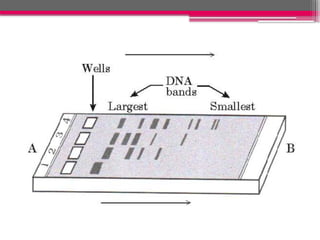
2. Loading: The sample is loaded into wells or slots within a gel
matrix (often agarose or polyacrylamide).
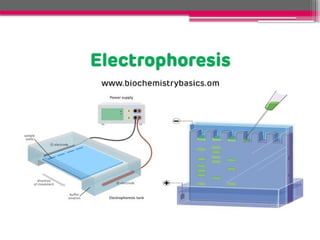
3. Application of Electric Field: An electric current is applied
across the gel. The positive end (anode) attracts negatively charged
particles, while the negative end (cathode) attracts positively
charged particles.
4. Separation: As the molecules move through the gel, they separate
based on their size and charge. Smaller molecules move faster, and
larger molecules lag behind.
5. Visualization: After the separation, the molecules can be
visualized using various staining techniques, UV light (for
fluorescently labeled molecules), or other detection methods
Parts of an Electrophoresis System:
1. Power Supply: Provides the electric current necessary to
drive the movement of molecules.
2. Electrophoresis Chamber: Contains the gel matrix and
the buffer solution. It includes electrodes at either end to
create the electric field.
3. Gel Matrix: The medium through which the molecules
migrate. It can be made of agarose (for larger molecules like
DNA) or polyacrylamide (for smaller molecules like proteins).
4. Buffer Solution: Maintains the pH and ionic strength of
the system, ensuring that the molecules carry the correct
charge and move consistently.
5. Loading Wells: Slots in the gel where the sample is placed.
6. Detection System: Methods to visualize the separated
molecules, such as staining or fluorescent labeling
Types of Electrophoresis:
1. Agarose Gel Electrophoresis: Primarily used for the separation of
large DNA fragments. Agarose is a porous gel that allows the separation
based on size.
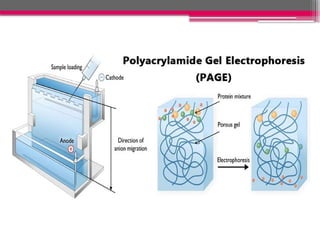
2. Polyacrylamide Gel Electrophoresis (PAGE): Used for proteins and
smaller DNA fragments. This method offers higher resolution due to the
smaller pore size of polyacrylamide.
‱ SDS-PAGE: A type of PAGE where SDS (sodium dodecyl sulfate) is
used to denature proteins, giving them a uniform negative charge. This
allows separation based purely on size.
‱ Native PAGE: Separates proteins based on their native charge and
size without denaturation.
3. Capillary Electrophoresis: Involves the use of a thin capillary tube and
is used for very small sample volumes. It offers high resolution and speed.
4. Isoelectric Focusing: Separates proteins based on their isoelectric point
(pI), the pH at which the protein has no net charge.
5. 2-D Gel Electrophoresis: Combines isoelectric focusing and SDS-
PAGE, first separating proteins by pI and then by size, allowing for the
resolution of complex mixtures of proteins
Uses in the Field of Nutrition:
1. Protein Analysis: Electrophoresis is commonly used to analyze
protein composition and structure in food samples, which is
essential for understanding nutritional content and potential
allergens
2. Genetic Studies: It is used to analyze genetic material, such as
DNA, in studies related to nutrient metabolism, gene expression
related to nutrition, and food safety
3. Quality Control: In the food industry, electrophoresis helps in
quality control by identifying and quantifying proteins and other
molecules, ensuring the consistency and safety of food products
4. Research in Nutrigenomics: Electrophoresis plays a role in
studying how different nutrients affect gene expression,
contributing to personalized nutrition strategies
5. Detection of Adulterants: In nutrition science, electrophoresis
can detect the presence of adulterants or contaminants in food
products, ensuring food safety
Conclusion:
‱ Electrophoresis is a versatile and powerful tool in
both research and practical applications within
the field of nutrition
‱ Its ability to separate and analyze complex
mixtures of biomolecules makes it indispensable
for understanding the molecular composition of
foods, studying the genetic basis of nutrient
metabolism, and ensuring the safety and quality of
nutritional products

Laboratory technique used to separate charged molecules.

  • 1.
  • 2.
    Definition: ‱ Electrophoresis isa laboratory technique used to separate charged molecules, such as proteins, nucleic acids, or small ions, based on their size and charge by applying an electric field ‱ The term "electrophoresis" comes from "electro" (referring to electricity) and "phoresis" (from the Greek word "phoresis," meaning to carry or move).
  • 3.
    Principle: ‱ Electrophoresis relieson the principle that charged particles will move through a medium under the influence of an electric field ‱ The rate and direction of this movement depend on the particle’s charge, size, and the strength of the electric field ‱ Smaller or highly charged molecules will typically move faster through the medium, while larger or less charged molecules will move more slow
  • 4.
    Working Mechanism: 1. SamplePreparation: The sample, such as a mixture of proteins or DNA, is prepared and often treated with a buffer to maintain a consistent pH, which is crucial for the stability and charge of the molecules. 2. Loading: The sample is loaded into wells or slots within a gel matrix (often agarose or polyacrylamide). 3. Application of Electric Field: An electric current is applied across the gel. The positive end (anode) attracts negatively charged particles, while the negative end (cathode) attracts positively charged particles. 4. Separation: As the molecules move through the gel, they separate based on their size and charge. Smaller molecules move faster, and larger molecules lag behind. 5. Visualization: After the separation, the molecules can be visualized using various staining techniques, UV light (for fluorescently labeled molecules), or other detection methods
  • 6.
    Parts of anElectrophoresis System: 1. Power Supply: Provides the electric current necessary to drive the movement of molecules. 2. Electrophoresis Chamber: Contains the gel matrix and the buffer solution. It includes electrodes at either end to create the electric field. 3. Gel Matrix: The medium through which the molecules migrate. It can be made of agarose (for larger molecules like DNA) or polyacrylamide (for smaller molecules like proteins). 4. Buffer Solution: Maintains the pH and ionic strength of the system, ensuring that the molecules carry the correct charge and move consistently. 5. Loading Wells: Slots in the gel where the sample is placed. 6. Detection System: Methods to visualize the separated molecules, such as staining or fluorescent labeling
  • 7.
    Types of Electrophoresis: 1.Agarose Gel Electrophoresis: Primarily used for the separation of large DNA fragments. Agarose is a porous gel that allows the separation based on size. 2. Polyacrylamide Gel Electrophoresis (PAGE): Used for proteins and smaller DNA fragments. This method offers higher resolution due to the smaller pore size of polyacrylamide. ‱ SDS-PAGE: A type of PAGE where SDS (sodium dodecyl sulfate) is used to denature proteins, giving them a uniform negative charge. This allows separation based purely on size. ‱ Native PAGE: Separates proteins based on their native charge and size without denaturation. 3. Capillary Electrophoresis: Involves the use of a thin capillary tube and is used for very small sample volumes. It offers high resolution and speed. 4. Isoelectric Focusing: Separates proteins based on their isoelectric point (pI), the pH at which the protein has no net charge. 5. 2-D Gel Electrophoresis: Combines isoelectric focusing and SDS- PAGE, first separating proteins by pI and then by size, allowing for the resolution of complex mixtures of proteins
  • 10.
    Uses in theField of Nutrition: 1. Protein Analysis: Electrophoresis is commonly used to analyze protein composition and structure in food samples, which is essential for understanding nutritional content and potential allergens 2. Genetic Studies: It is used to analyze genetic material, such as DNA, in studies related to nutrient metabolism, gene expression related to nutrition, and food safety 3. Quality Control: In the food industry, electrophoresis helps in quality control by identifying and quantifying proteins and other molecules, ensuring the consistency and safety of food products 4. Research in Nutrigenomics: Electrophoresis plays a role in studying how different nutrients affect gene expression, contributing to personalized nutrition strategies 5. Detection of Adulterants: In nutrition science, electrophoresis can detect the presence of adulterants or contaminants in food products, ensuring food safety
  • 11.
    Conclusion: ‱ Electrophoresis isa versatile and powerful tool in both research and practical applications within the field of nutrition ‱ Its ability to separate and analyze complex mixtures of biomolecules makes it indispensable for understanding the molecular composition of foods, studying the genetic basis of nutrient metabolism, and ensuring the safety and quality of nutritional products