
Labor Market Information /S
‫العمل‬ ‫سوق‬ ‫معلومات‬ ‫نظام‬
Rev. 2016
‫المحتويات‬ ‫قائمة‬
•‫مقدمة‬
•‫واألهداف‬ ‫العامة‬ ‫الرؤية‬
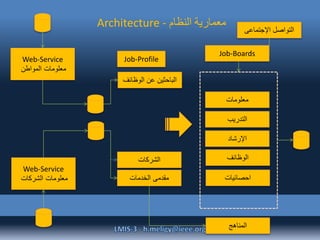
•‫النظام‬ ‫معمارية‬
•‫واألليات‬ ‫المكونات‬
•‫بالنظام‬ ‫المتعلقة‬ ‫البيانات‬
•‫دولية‬ ‫دراسات‬
•‫والتقييم‬ ‫والمتابعة‬ ‫التقارير‬
•‫العمل‬ ‫خطة‬(‫وتنفيذ‬ ‫وتصميم‬ ‫تحليل‬)
•‫العمل‬ ‫سوق‬ ‫لبوابة‬ ‫مثال‬
‫مقدمة‬
•‫من‬ ‫مجموعة‬ ‫ضمن‬ ‫ايضا‬ ‫متعددة‬ ‫جهات‬ ‫طلب‬ ‫على‬ ‫بناء‬
‫المت‬ ‫تحديد‬ ‫الى‬ ‫الوصول‬ ‫تم‬ ‫والدولية‬ ‫المحلية‬ ‫الدراسات‬‫طلبات‬
‫لالس‬ ‫استرشادى‬ ‫نموذج‬ ‫وتصميم‬ ‫العمل‬ ‫لسوق‬ ‫المبدئية‬‫تخدام‬
‫واألهداف‬ ‫العامة‬ ‫الرؤية‬
•‫ادارة‬ ‫نظام‬‫العمل‬ ‫سوق‬ ‫معلومات‬‫يتيح‬ ‫نظام‬ ‫هو‬‫تقيمي‬
‫يضا‬‫أ‬‫و‬ ‫الكيفية‬‫و‬ ‫المكية‬ ‫بياانت‬‫ل‬‫ا‬ ‫ومتابعة‬‫إحصائيات‬‫ل‬‫ا‬
‫العم‬ ‫سوق‬ ‫عن‬ ‫اذلكية‬ ‫او‬ ‫املتقدمة‬ ‫قتصادية‬‫آ‬‫ل‬‫ا‬‫وذكل‬ ‫ل‬
‫و‬ ‫ار‬‫ر‬‫الق‬ ‫اختاذ‬ ‫ىف‬ ‫املشاركة‬ ‫اف‬‫ر‬‫ط‬‫ال‬ ‫ملساعدة‬‫اجعة‬‫ر‬‫م‬
‫امل‬ ‫تساعد‬ ‫الىت‬ ‫ات‬‫ر‬‫اخليا‬‫و‬ ‫يجيات‬‫ت‬‫ا‬‫رت‬‫الاس‬‫ؤسسات‬
‫الق‬ ‫تساعد‬ ‫كام‬ ‫مؤهةل‬ ‫عامةل‬ ‫عىل‬ ‫احلصول‬ ‫ىف‬‫العامةل‬ ‫وى‬
‫تطلبات‬‫م‬‫و‬ ‫املهىن‬ ‫تقبلهم‬‫مس‬ ‫حتديد‬ ‫عىل‬‫يب‬‫ر‬‫التد‬
‫الا‬ ‫يق‬‫ر‬‫ط‬ ‫عن‬ ‫بة‬‫املناس‬ ‫الوظائف‬ ‫عن‬ ‫البحث‬‫و‬‫رشاد‬
‫املتاح‬ ‫يب‬‫ر‬‫التد‬‫و‬ ‫الوظيفى‬.
•‫امل‬ ‫ابملعلومات‬ ‫بتحليل‬ ‫النظام‬ ‫هيمت‬ ‫يضا‬‫أ‬‫نني‬‫ا‬‫و‬‫ابلق‬ ‫تعلقة‬
‫املتاحة‬ ‫ات‬‫ر‬‫والاستامث‬ ‫العمل‬ ‫اءات‬‫ر‬‫اج‬‫و‬.
• LMI/LMIS is the mechanism of linking supply with
demand and Labor Market signaling at an early
stage
• This will help policy makers make and take decision
in the market and education
• Also service provider to provide what kind of
training is require soft or vocational
• The LMI is affecting all the policies whether internal
job seekers, migration or information related to the
job such as salaries, work duration, work movement,
position changing ..etc.
T4E+ Training for Employment
Training Employment
Econometrics
Labor
Market S
Predictions
Planning
Policies
Planning
Curricula
Analysis
Reporting
Surveys
Research
Actuals
Policy
Career
Guidance
Employee
Life Cycle
Employer
Jobs History
Labor
Policy
Impact on investment and new projects, starts, value chain and supply chain
‫النظام‬ ‫معمارية‬Architecture -
Web-Service
‫المواطن‬ ‫معلومات‬
Web-Service
‫الشركات‬ ‫معلومات‬
‫الشركات‬
‫الخدمات‬ ‫مقدمى‬
‫الوظائف‬ ‫عن‬ ‫الباحثين‬
‫الوظائف‬
‫التدريب‬
‫اإلرشاد‬
‫معلومات‬
‫احصائيات‬
‫المناهج‬
‫اإلجتماعى‬ ‫التواصل‬
Job-Boards
Job-Profile
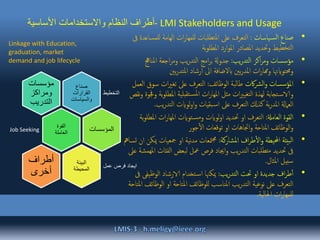
‫األساسية‬ ‫واالستخدامات‬ ‫النظام‬ ‫-أطراف‬ LMI Stakeholders and Usage
•‫ياسات‬‫الس‬ ‫صناع‬:‫لل‬ ‫الهامة‬ ‫ات‬‫ر‬‫للمها‬ ‫تطلبات‬‫مل‬‫ا‬ ‫عىل‬ ‫التعرف‬‫ىف‬ ‫مساعدة‬
‫بة‬‫و‬‫املطل‬ ‫ارد‬‫و‬‫امل‬ ‫املصادر‬ ‫وحتديد‬ ‫تخطيط‬‫ل‬‫ا‬
•‫يب‬‫ر‬‫التد‬ ‫اكز‬‫ر‬‫وم‬ ‫مؤسسات‬:‫املناجه‬ ‫اجعة‬‫ر‬‫وم‬ ‫يب‬‫ر‬‫التد‬ ‫امج‬‫ر‬‫ب‬ ‫جدوةل‬
‫بني‬‫ر‬‫املتد‬ ‫ارشاد‬ ‫اىل‬ ‫ابلضافة‬ ‫بني‬‫ر‬‫املد‬ ‫ات‬‫ر‬‫وهما‬ ‫وحمتوايهتا‬
•‫املؤسسات‬‫اكت‬‫رش‬‫ال‬‫و‬‫الوظائف‬ ‫طالبة‬:‫س‬ ‫ات‬‫ري‬‫تغ‬ ‫عىل‬ ‫التعرف‬‫العمل‬ ‫وق‬
‫املط‬ ‫بلية‬‫تق‬‫ملس‬‫ا‬ ‫ات‬‫ر‬‫املها‬ ‫مثل‬ ‫ات‬‫ري‬‫تغي‬‫ل‬‫ا‬ ‫لهذة‬ ‫تجابة‬‫والاس‬‫نقص‬‫و‬ ‫وجفوة‬ ‫بة‬‫و‬‫ل‬
‫ي‬‫ر‬‫التد‬ ‫لوايت‬‫و‬‫ا‬‫و‬ ‫بقيات‬‫س‬‫ا‬ ‫عىل‬ ‫التعرف‬ ‫كذكل‬ ‫بة‬‫ر‬‫املد‬ ‫العامةل‬‫ب‬.
•‫العامةل‬ ‫القوة‬:‫امل‬ ‫ات‬‫ر‬‫املها‬ ‫توايت‬‫ومس‬ ‫لوايت‬‫و‬‫ا‬ ‫حتديد‬ ‫او‬ ‫التعرف‬‫بة‬‫و‬‫طل‬
‫جور‬‫ال‬ ‫توقعات‬ ‫او‬ ‫اجتاهات‬‫و‬ ‫املتاحة‬ ‫الوظائف‬‫و‬
•‫املشاركة‬ ‫اف‬‫ر‬‫ط‬‫ال‬‫و‬ ‫احمليطة‬ ‫بيئة‬‫ل‬‫ا‬:‫مي‬ ‫مجعيات‬ ‫او‬ ‫نية‬‫د‬‫م‬ ‫متعات‬‫جم‬‫تسامه‬ ‫ان‬ ‫كن‬
‫الفئ‬ ‫لبعض‬ ‫معل‬ ‫فرص‬ ‫اجياد‬‫و‬ ‫يب‬‫ر‬‫التد‬ ‫تطلبات‬‫م‬ ‫حتديد‬ ‫ىف‬‫عىل‬ ‫همشة‬‫مل‬‫ا‬ ‫ات‬
‫املثال‬ ‫سبيل‬.
•‫يب‬‫ر‬‫التد‬ ‫حتت‬ ‫او‬ ‫جديدة‬ ‫اف‬‫ر‬‫ط‬‫أ‬:‫الوظي‬ ‫الارشاد‬ ‫تخدام‬‫اس‬ ‫ميكهنا‬‫ىف‬ ‫فى‬
‫الو‬ ‫او‬ ‫املتاحة‬ ‫للوظائف‬ ‫املناسب‬ ‫يب‬‫ر‬‫التد‬ ‫نوعية‬ ‫عىل‬ ‫التعرف‬‫املتاحة‬ ‫ظائف‬
‫احلالية‬ ‫ات‬‫ر‬‫للمها‬.
‫صناع‬
‫القرارات‬
‫والسياسات‬
‫التخطيط‬
‫مؤسسات‬
‫ومراكز‬
‫التدريب‬
‫القوة‬
‫العاملة‬
Job Seeking ‫المؤسسات‬
‫البيئة‬
‫المحيطة‬
‫عمل‬ ‫فرص‬ ‫ايجاد‬
‫أطراف‬
‫أخرى‬
Linkage with Education,
graduation, market
demand and job lifecycle
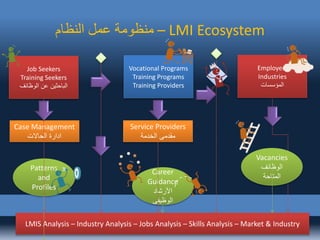
‫النظام‬ ‫عمل‬ ‫منظومة‬ – LMI Ecosystem
Job Seekers
Training Seekers
‫الوظائف‬ ‫عن‬ ‫الباحثين‬
Vocational Programs
Training Programs
Training Providers
Employers
Industries
‫المؤسسات‬
Vacancies
‫الوظائف‬
‫المتاحة‬
Career
Guidance
‫اآلرشاد‬
‫الوظيفى‬
Patterns
and
Profiles
LMIS Analysis – Industry Analysis – Jobs Analysis – Skills Analysis – Market & Industry
Service Providers
‫الخدمة‬ ‫مقدمى‬
Case Management
‫الحاالت‬ ‫ادارة‬
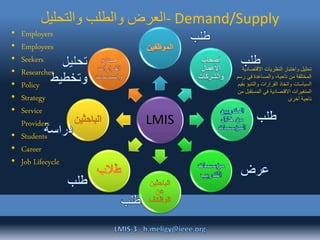
‫والتحليل‬ ‫والطلب‬ ‫-العرض‬ Demand/Supply
LMIS
‫االقتصا‬ ‫النظريات‬ ‫واختبار‬ ‫تحليل‬‫دية‬
‫ر‬ ‫في‬ ‫والمساعدة‬ ،‫ناحية‬ ‫من‬ ‫المختلفة‬‫سم‬
‫والتنبؤ‬ ‫القرارات‬ ‫واتخاذ‬ ‫السياسات‬‫بقيم‬
‫المستق‬ ‫في‬ ‫االقتصادية‬ ‫المتغيرات‬‫من‬ ‫بل‬
‫أخرى‬ ‫ناحية‬
• Employers
• Employees
• Seekers
• Researches
• Policy
• Strategy
• Service
Providers
• Students
• Career
• Job Lifecycle
‫النظام‬ ‫-فوائد‬ LMI Benefits
•‫توى‬‫املس‬ ‫وعىل‬ ‫املؤسسة‬ ‫توى‬‫مس‬ ‫عىل‬ ‫الشفافية‬ ‫زايدة‬‫القوىم‬
•‫و‬ ‫العمل‬ ‫سوق‬ ‫ىف‬ ‫الطلب‬‫و‬ ‫العرض‬ ‫عىل‬ ‫بط‬‫ر‬‫ال‬‫و‬ ‫الرتكزي‬‫يب‬‫ر‬‫التد‬
‫املهىن‬
•‫ماي‬ ‫اجياد‬‫و‬ ‫الوظيفية‬ ‫الطلبات‬‫و‬ ‫للعروض‬ ‫الوصول‬ ‫رسعة‬‫مهنا‬ ‫ناسب‬
‫الباح‬‫و‬ ‫ماهرة‬ ‫عامةل‬ ‫عن‬ ‫للباحثني‬ ‫يعة‬‫رس‬ ‫منظومة‬ ‫خالل‬ ‫من‬‫عن‬ ‫ثني‬
‫وظائف‬
•‫طلب‬ ‫عىل‬ ‫للتعرف‬ ‫املتاحة‬ ‫املصادر‬‫و‬ ‫املعلومات‬ ‫تخدام‬‫اس‬‫سوق‬ ‫ات‬
‫يب‬‫ر‬‫التد‬‫و‬ ‫العمل‬
•‫ا‬ ‫وسطاء‬ ‫دون‬ ‫الوظيفة‬ ‫حاةل‬ ‫عن‬ ‫التعرف‬‫و‬ ‫املبارش‬ ‫ادلخول‬‫وسطة‬ ‫و‬
•‫الطلب‬‫و‬ ‫للعرض‬ ‫وقتية‬ ‫بياانت‬ ‫عىل‬ ‫احلصول‬
•‫يب‬‫ر‬‫التد‬ ‫احتياجات‬ ‫عىل‬ ‫يع‬‫رس‬‫ال‬ ‫التعرف‬
•‫الطلب‬‫و‬ ‫العرض‬ ‫عن‬ ‫توقعات‬‫و‬ ‫احصائيات‬ ‫عىل‬ ‫احلصول‬
• Transparency on national level
• Focus and demand but consider supply
for future education
• Centralize jobs demands
• Access job information and apply in rely
time
• Link education of required job to filter
the job if certain education certificate is
requited
‫للنظام‬ ‫الرئيسية‬ ‫الوظائف‬ – Main Functions
•‫و‬ ‫بة‬‫و‬‫املطل‬ ‫للوظائف‬ ‫الطلب‬‫و‬ ‫العرض‬ ‫اسلوب‬ ‫حتسني‬‫ات‬‫ر‬‫املها‬
‫الوظيفى‬ ‫الارشاد‬ ‫مبنظومة‬ ‫بطها‬‫ر‬ ‫مع‬ ‫املتاحة‬
•‫املطلوب‬ ‫يب‬‫ر‬‫التد‬‫و‬ ‫احلرف‬ ‫عن‬ ‫معلومات‬ ‫ااتحة‬ ‫او‬ ‫توفري‬‫حسب‬
‫خرى‬‫أ‬ ‫معايري‬ ‫نب‬‫ا‬‫جب‬ ‫املاكن‬‫و‬ ‫النوع‬
•‫و‬ ‫وظيفى‬ ‫ملف‬ ‫بناء‬ ‫ىف‬ ‫وظيفة‬ ‫عن‬ ‫الباحثني‬ ‫مساعدة‬‫ات‬‫ر‬‫املها‬ ‫منية‬‫ت‬
‫املتاحة‬ ‫للوظائف‬ ‫التقدم‬‫و‬ ‫البحث‬ ‫يق‬‫ر‬‫ط‬ ‫عن‬
•‫القوىم‬ ‫توى‬‫املس‬ ‫عىل‬ ‫ية‬‫ر‬‫الرضو‬ ‫املعلومات‬ ‫تقيمي‬‫و‬ ‫مجع‬‫للتعرف‬
‫ا‬‫ر‬‫م‬ ‫او‬ ‫حتديد‬ ‫مث‬ ‫ومن‬ ‫العمل‬ ‫سوق‬ ‫تياجات‬‫ح‬‫اب‬ ‫تنئب‬‫ل‬‫ا‬‫و‬‫جعة‬
‫املتعلقة‬ ‫ياسات‬‫الس‬
•‫احصائية‬‫و‬ ‫مقية‬‫ر‬ ‫بياانت‬
• Supply / Demand match and CGS
support
• Availing all related information for
training and education by location and
types
• Help researchers to create more papers
into the issue to improve the system
• National collection of data and
tweaking / auditing aligning it with
the national policy
• Econometrical data analyses
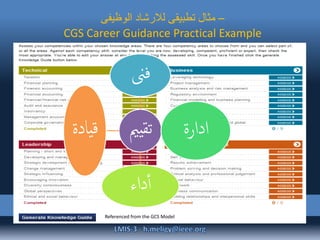
‫الوظيفى‬ ‫لالرشاد‬ ‫تطبيقى‬ ‫مثال‬ –
CGS Career Guidance Practical Example
Referenced from the GCS Model
‫تقي‬‫مي‬
‫فىن‬
‫ادارة‬
‫داء‬‫أ‬
‫قيادة‬
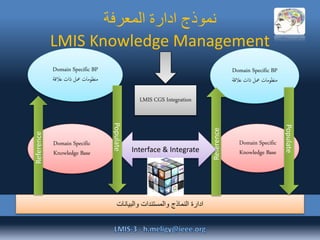
‫المعرفة‬ ‫ادارة‬ ‫نموذج‬
LMIS Knowledge Management
Domain Specific BP
‫عالقة‬ ‫ذات‬ ‫معل‬ ‫منظومات‬
Domain Specific BP
‫عالقة‬ ‫ذات‬ ‫معل‬ ‫منظومات‬
Domain Specific
Knowledge Base
Domain Specific
Knowledge Base
‫والبيانات‬ ‫والمستندات‬ ‫النماذج‬ ‫ادارة‬
Populate
Reference
Reference
Interface & Integrate
LMIS CGS Integration
Populate
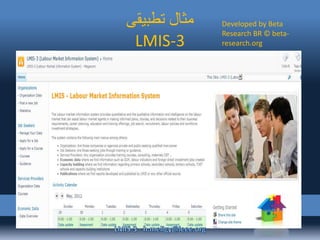
‫تطبيقى‬ ‫مثال‬
LMIS-3
Developed by Beta
Research BR © beta-
research.org
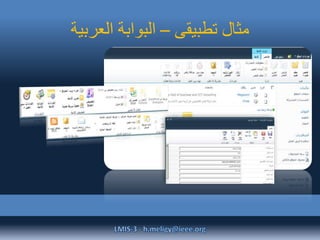
‫تطبيقى‬ ‫مثال‬–‫العربية‬ ‫البوابة‬
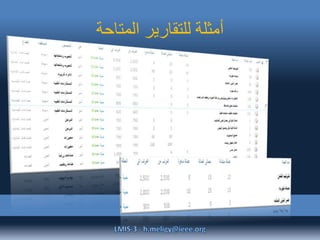
‫المتاحة‬ ‫للتقارير‬ ‫أمثلة‬
‫المحافظة‬ ‫حسب‬
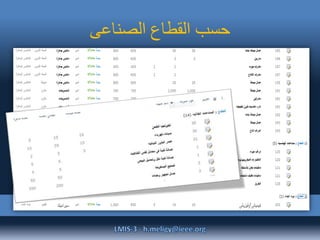
‫الصناعى‬ ‫القطاع‬ ‫حسب‬
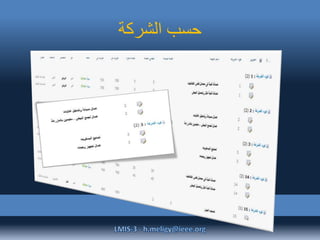
‫الشركة‬ ‫حسب‬
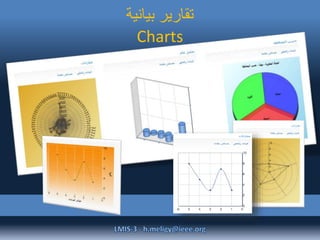
‫بيانية‬ ‫تقارير‬
Charts
‫دولية‬ ‫ومقارانات‬ ‫دراسات‬
International Best Practices
• Driver for change for skill demand
• Overview of Quantitative and qualitative LMIS
• What are the available models
• Sample from other countries
Drivers of change for Skills Demand
‫دولية‬ ‫دراسات‬
‫متغيرات‬
‫تحت‬ ‫السوق‬
‫الدراسة‬
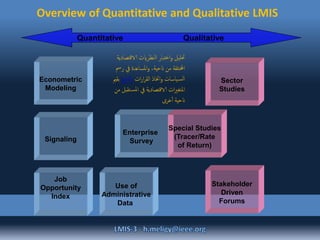
Overview of Quantitative and Qualitative LMIS
Quantitative Qualitative
Sector
Studies
Econometric
Modeling
Signaling
Job
Opportunity
Index
Enterprise
Survey
Special Studies
(Tracer/Rate
of Return)
Stakeholder
Driven
Forums
Use of
Administrative
Data
‫الاقت‬ ‫النظرايت‬ ‫اختبار‬‫و‬ ‫حتليل‬‫صادية‬
‫يف‬ ‫املساعدة‬‫و‬ ،‫انحية‬ ‫من‬ ‫اخملتلفة‬‫رمس‬
‫ات‬‫ر‬‫ا‬‫ر‬‫الق‬ ‫اختاذ‬‫و‬ ‫ياسات‬‫الس‬‫تنب‬‫ل‬‫ا‬‫و‬‫ؤ‬‫بقمي‬
‫املس‬ ‫يف‬ ‫الاقتصادية‬ ‫ات‬‫ري‬‫املتغ‬‫من‬ ‫تقبل‬
‫خرى‬‫أ‬ ‫انحية‬
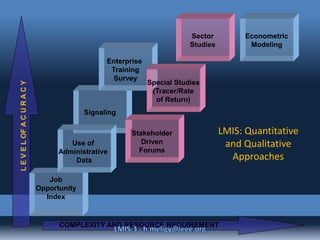
LMIS: Quantitative
and Qualitative
Approaches
LEVELOFACURACY
COMPLEXITY AND RESOURCE REQUIREMENT
Sector
Studies
Econometric
Modeling
Signaling
Job
Opportunity
Index
Enterprise
Training
Survey
Special Studies
(Tracer/Rate
of Return)
Stakeholder
Driven
Forums
Use of
Administrative
Data
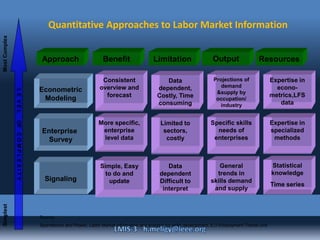
Quantitative Approaches to Labor Market Information
SimplestMostComplex
LEVELOFCOMPLEXITY
Approach Benefit Limitation Output Resources
Enterprise
Survey
More specific,
enterprise
level data
Limited to
sectors,
costly
Specific skills
needs of
enterprises
Expertise in
specialized
methods
Econometric
Modeling
Consistent
overview and
forecast
Data
dependent,
Costly, Time
consuming
Projections of
demand
&supply by
occupation/
industry
Expertise in
econo-
metrics,LFS
data
Signaling
Simple, Easy
to do and
update
Data
dependent
Difficult to
interpret
General
trends in
skills demand
and supply
Statistical
knowledge
Time series
Source:
Sparreboom and Powell, Labor Market information and analysis for skills development, ILO Employment Trends Unit
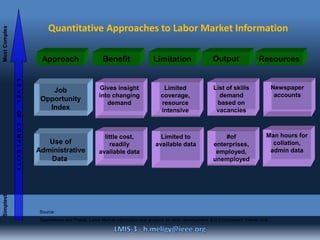
Use of
Administrative
Data
little cost,
readily
available data
#of
enterprises,
employed,
unemployed
Limited to
available data
Man hours for
collation,
admin data
Job
Opportunity
Index
Gives insight
into changing
demand
Limited
coverage,
resource
intensive
Newspaper
accounts
List of skills
demand
based on
vacancies
SimplestMostComplex
LEVELOFCOMPLEXITY
Approach Benefit Limitation Output Resources
Source:
Sparreboom and Powell, Labor Market information and analysis for skills development, ILO Employment Trends Unit
Quantitative Approaches to Labor Market Information
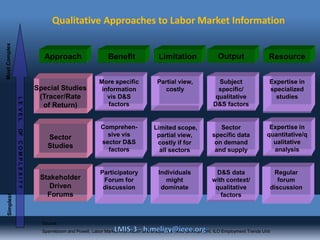
Qualitative Approaches to Labor Market Information
SimplestMostComplex
LEVELOFCOMPLEXITY
Approach Benefit Limitation Output Resource
Special Studies
(Tracer/Rate
of Return)
More specific
information
vis D&S
factors
Subject
specific/
qualitative
D&S factors
Expertise in
specialized
studies
Partial view,
costly
Source:
Sparreboom and Powell, Labor Market information and analysis for skills development, ILO Employment Trends Unit
Sector
Studies
Comprehen-
sive vis
sector D&S
factors
Sector
specific data
on demand
and supply
Expertise in
quantitative/q
ualitative
analysis
Limited scope,
partial view,
costly if for
all sectors
Stakeholder
Driven
Forums
D&S data
with context/
qualitative
factors
Participatory
Forum for
discussion
Individuals
might
dominate
Regular
forum
discussion
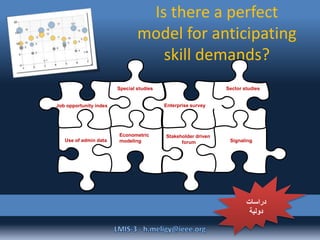
Is there a perfect
model for anticipating
skill demands?
Econometric
modeling
Job opportunity index Enterprise survey
SignalingUse of admin data
Special studies Sector studies
Stakeholder driven
forum
‫دراسات‬
‫دولية‬
• Econometric modeling to
project future labor demand
on a national level by industry
and occupation
• Annual LFS and employee
surveys
• Each state conducts LMIA.
Econometric
modeling
Job opportunity index Enterprise survey
SignalingUse of admin data
Special studies Sector studies
Stakeholder driven
forum
Occupational Projections National
Employment Average Annual Openings
SOC
Code
Occupation Est 2008 Proj 2018 Change Growth Replce Total
41-
1011
First-Line
Supervisors/Managers of
Retail Sales Workers
1,685,500 1,773,900 5.2% 8,840 36,170 45,010
41-
1012
First-Line
Supervisors/Managers of
Non-Retail Sales Workers
506,800 531,200 4.8% 2,440 10,510 12,950
41-
2011
Cashiers 3,550,000 3,675,500 3.5% 12,550 159,440 171,990
US LMI Model
‫دراسات‬
‫دولية‬
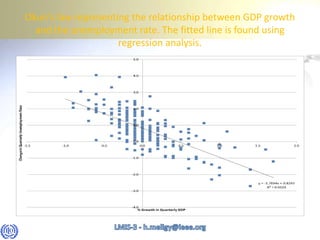
Okun's law representing the relationship between GDP growth
and the unemployment rate. The fitted line is found using
regression analysis.
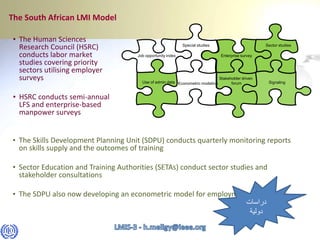
• The Skills Development Planning Unit (SDPU) conducts quarterly monitoring reports
on skills supply and the outcomes of training
• Sector Education and Training Authorities (SETAs) conduct sector studies and
stakeholder consultations
• The SDPU also now developing an econometric model for employment projections
The South African LMI Model
Econometric modeling
Job opportunity index Enterprise survey
SignalingUse of admin data
Special studies Sector studies
Stakeholder driven
forum
• The Human Sciences
Research Council (HSRC)
conducts labor market
studies covering priority
sectors utilising employer
surveys
• HSRC conducts semi-annual
LFS and enterprise-based
manpower surveys
‫دراسات‬
‫دولية‬
Sri Lanka LMI Model
Econometric modeling
Job opportunity index Enterprise survey
SignalingUse of admin data
Special studies Sector studies
Stakeholder driven
forum
• Occasional sector studies, e.g.: RMG, provide information on enterprise
characteristics and distribution and an overview of government policies related to
the sector
• TVEC collects and publishes statistics on training, training providers and labor
market data, including job vacancies, based largely on administrative data
• Occasional tracer studies
• Job vacancies
collected from
newspapers as well as
published through Jobs
Net
• Annual labor force
surveys since 1992
‫دراسات‬
‫دولية‬
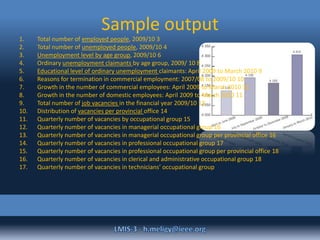
Sample output
1. Total number of employed people, 2009/10 3
2. Total number of unemployed people, 2009/10 4
3. Unemployment level by age group, 2009/10 6
4. Ordinary unemployment claimants by age group, 2009/ 10 8
5. Educational level of ordinary unemployment claimants: April 2009 to March 2010 9
6. Reasons for termination in commercial employment: 2007/08 to 2009/10 10
7. Growth in the number of commercial employees: April 2009 to March 2010 11
8. Growth in the number of domestic employees: April 2009 to March 2010 11
9. Total number of job vacancies in the financial year 2009/10 13
10. Distribution of vacancies per provincial office 14
11. Quarterly number of vacancies by occupational group 15
12. Quarterly number of vacancies in managerial occupational group 16
13. Quarterly number of vacancies in managerial occupational group per provincial office 16
14. Quarterly number of vacancies in professional occupational group 17
15. Quarterly number of vacancies in professional occupational group per provincial office 18
16. Quarterly number of vacancies in clerical and administrative occupational group 18
17. Quarterly number of vacancies in technicians’ occupational group
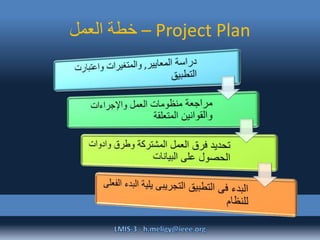
‫العمل‬ ‫خطة‬ – Project Plan
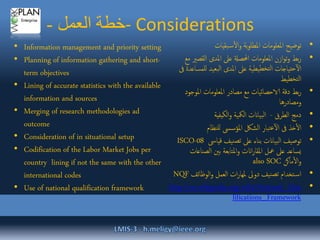
‫العمل‬ ‫خطة‬- - Considerations
•‫بقيات‬‫س‬‫ال‬‫و‬ ‫بة‬‫و‬‫املطل‬ ‫املعلومات‬ ‫توضيح‬
•‫القص‬ ‫املدى‬ ‫عىل‬ ‫احملصةل‬ ‫املعلومات‬ ‫ازن‬‫و‬‫ت‬‫و‬ ‫بط‬‫ر‬‫مع‬ ‫ري‬
‫للمس‬ ‫بعيد‬‫ل‬‫ا‬ ‫املدى‬ ‫عىل‬ ‫يطية‬‫لتخط‬‫ا‬ ‫تياجات‬‫ح‬‫آ‬‫ل‬‫ا‬‫ىف‬ ‫اعدة‬
‫تخطيط‬‫ل‬‫ا‬
•‫املوجود‬ ‫املعلومات‬ ‫مصادر‬ ‫مع‬ ‫الاحصائيات‬ ‫دقة‬ ‫بط‬‫ر‬
‫ومصادرها‬
•‫الطرق‬ ‫دمج‬-‫الكيفية‬‫و‬ ‫المكية‬ ‫بياانت‬‫ل‬‫ا‬
•‫للنظام‬ ‫املؤسىس‬ ‫الشلك‬ ‫تبار‬‫ع‬‫آ‬‫ل‬‫ا‬ ‫ىف‬ ‫خذ‬‫ال‬
•‫قياىس‬ ‫نيف‬‫تص‬ ‫عىل‬ ‫بناء‬ ‫بياانت‬‫ل‬‫ا‬ ‫توصيف‬ISCO-08
‫الصن‬ ‫بني‬ ‫املتابعة‬‫و‬ ‫اانت‬‫ر‬‫املقا‬ ‫معل‬ ‫عىل‬ ‫يساعد‬‫اعات‬
‫ماكن‬‫ال‬‫و‬also SOC
•‫الوظائف‬‫و‬ ‫العمل‬ ‫ات‬‫ر‬‫ملها‬ ‫دوىل‬ ‫نيف‬‫تص‬ ‫تخدام‬‫اس‬NQF
•http://en.wikipedia.org/wiki/National_Qua
lifications_Framework
• Information management and priority setting
• Planning of information gathering and short-
term objectives
• Lining of accurate statistics with the available
information and sources
• Merging of research methodologies ad
outcome
• Consideration of in situational setup
• Codification of the Labor Market Jobs per
country lining if not the same with the other
international codes
• Use of national qualification framework
‫دولية‬ ‫اعتبارات‬ – International Consideration
•‫خمتلف‬ ‫ية‬‫مؤسس‬ ‫ات‬‫ر‬‫تبا‬‫ع‬‫ا‬ ‫دوةل‬ ‫لك‬ ‫متثل‬‫تنعكس‬ ‫ة‬
‫تخدمة‬‫املس‬ ‫خيية‬‫ر‬‫التا‬ ‫بياانت‬‫ل‬‫ا‬ ‫عىل‬
•‫للتع‬ ‫املؤسىس‬ ‫بناء‬‫ل‬‫ا‬ ‫ية‬‫و‬‫تق‬ ‫عىل‬ ‫العمل‬‫عىل‬ ‫رف‬
‫دل‬ ‫لساسة‬ ‫طبقا‬ ‫املهىن‬ ‫هيل‬‫التأ‬ ‫تياجات‬‫ح‬‫ا‬‫وةل‬
•‫ا‬ ‫لتحديد‬ ‫القطاعى‬ ‫املنظور‬ ‫عىل‬ ‫الرتكزي‬‫لوايت‬‫و‬‫ل‬
(‫املعلومات‬ ‫مجلع‬ ‫لية‬‫أ‬)
•‫س‬‫ك‬ ‫ات‬‫ر‬‫املها‬‫و‬ ‫العمل‬ ‫سوق‬ ‫نتاجئ‬ ‫تخدام‬‫اس‬‫اس‬
‫ي‬‫ر‬‫التد‬‫و‬ ‫هيل‬‫التأ‬ ‫امج‬‫ر‬‫ب‬ ‫مع‬ ‫العالقة‬ ‫لقياس‬‫املهىن‬ ‫ب‬
‫ار‬‫ر‬‫مت‬‫س‬‫اب‬ ‫نتاجئ‬‫ل‬‫ا‬ ‫هذة‬ ‫تقيمي‬‫و‬ ‫ومتابعة‬
• Circumstances differs from country to
another however the approach and
objectives should be the same
• Sectorial approach is common as long
as it is unified in the end
• Measuring the performance of the
LMI and the quality of integration is a
key success factor
• Quality and continuous improvement
is cannot be skipped including
auditing which means you have to
have a quality and auditing officer
• Reporting online and all the time
accepting feedback means you are in
your correct road.
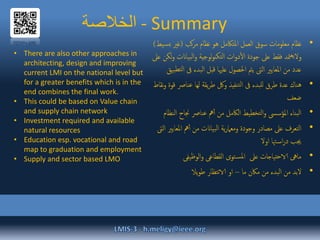
‫الخالصة‬ - Summary
•‫كب‬‫ر‬‫م‬ ‫نظام‬ ‫هو‬ ‫املتاكمل‬ ‫العمل‬ ‫سوق‬ ‫معلومات‬ ‫نظام‬(‫بس‬ ‫غري‬‫يط‬)
‫بياانت‬‫ل‬‫ا‬‫و‬ ‫لوجية‬‫و‬‫تكن‬‫ل‬‫ا‬ ‫ات‬‫و‬‫د‬‫ال‬ ‫جودة‬ ‫عىل‬ ‫فقط‬ ‫متد‬‫يع‬‫ول‬‫عىل‬ ‫لكن‬‫و‬
‫ىف‬ ‫البدء‬ ‫قبل‬ ‫علهيا‬ ‫احلصول‬ ‫يمت‬ ‫الىت‬ ‫املعايري‬ ‫من‬ ‫عدد‬‫بيق‬‫لتط‬‫ا‬
•‫عنارص‬ ‫لها‬ ‫يقة‬‫ر‬‫ط‬ ‫ولك‬ ‫نفيذ‬‫لت‬‫ا‬ ‫ىف‬ ‫للبدء‬ ‫طرق‬ ‫عدة‬ ‫هناك‬‫نقاط‬‫و‬ ‫قوة‬
‫ضعف‬
•‫الن‬ ‫جناح‬ ‫عنارص‬ ‫مه‬‫أ‬ ‫من‬ ‫الاكمل‬ ‫تخطيط‬‫ل‬‫ا‬‫و‬ ‫املؤسىس‬ ‫بناء‬‫ل‬‫ا‬‫ظام‬
•‫املعايري‬ ‫مه‬‫أ‬ ‫من‬ ‫بياانت‬‫ل‬‫ا‬ ‫ية‬‫ر‬‫ومعام‬ ‫وجودة‬ ‫مصادر‬ ‫عىل‬ ‫التعرف‬‫الىت‬
‫اول‬ ‫هتا‬‫اس‬‫ر‬‫د‬ ‫جيب‬
•‫الوظيفى‬‫و‬ ‫القطاعى‬ ‫توى‬‫املس‬ ‫عىل‬ ‫تياجات‬‫ح‬‫الا‬ ‫ماىه‬
•‫ما‬ ‫ماكن‬ ‫من‬ ‫البدء‬ ‫من‬ ‫لبد‬–‫يال‬‫و‬‫ط‬ ‫نتظار‬‫الا‬ ‫او‬
• There are also other approaches in
architecting, design and improving
current LMI on the national level but
for a greater benefits which is in the
end combines the final work.
• This could be based on Value chain
and supply chain network
• Investment required and available
natural resources
• Education esp. vocational and road
map to graduation and employment
• Supply and sector based LMO
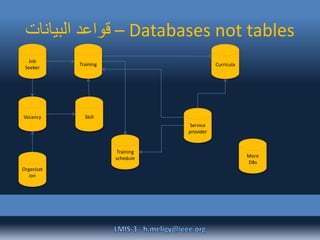
‫البيانات‬ ‫قواعد‬ – Databases not tables
Job
Seeker
Vacancy
Training
Skill
Curricula
Organizat
ion
Service
provider
Training
schedule More
DBs
Working Team
Hassan El-Meligy
h.meligy@beta-research.com (SME Labor Market Expert)
h.meligy@ieee.org (Senior Member)
M: 0100109405
Director of Strategic Management Solutions
Certified Management consultant and Technology Architecture Expert
Masters of Science in Business Information Technology
Senior IEEE / ACM / PMI and European Information Society Member
Previous experience & project with the World Bank, IFC, EBRD, EC/EU, Social Fund, MCIT,
MTI and a long list in labour market, process reengineering, OSS, Innovation, R&D
Profile at LinkedIn www.LinkedIn.com/in/hassan2000

Labor market inforamtion 2016

  • 1.
    Labor Market Information/S ‫العمل‬ ‫سوق‬ ‫معلومات‬ ‫نظام‬ Rev. 2016
  • 2.
    ‫المحتويات‬ ‫قائمة‬ •‫مقدمة‬ •‫واألهداف‬ ‫العامة‬‫الرؤية‬ •‫النظام‬ ‫معمارية‬ •‫واألليات‬ ‫المكونات‬ •‫بالنظام‬ ‫المتعلقة‬ ‫البيانات‬ •‫دولية‬ ‫دراسات‬ •‫والتقييم‬ ‫والمتابعة‬ ‫التقارير‬ •‫العمل‬ ‫خطة‬(‫وتنفيذ‬ ‫وتصميم‬ ‫تحليل‬) •‫العمل‬ ‫سوق‬ ‫لبوابة‬ ‫مثال‬
  • 3.
    ‫مقدمة‬ •‫من‬ ‫مجموعة‬ ‫ضمن‬‫ايضا‬ ‫متعددة‬ ‫جهات‬ ‫طلب‬ ‫على‬ ‫بناء‬ ‫المت‬ ‫تحديد‬ ‫الى‬ ‫الوصول‬ ‫تم‬ ‫والدولية‬ ‫المحلية‬ ‫الدراسات‬‫طلبات‬ ‫لالس‬ ‫استرشادى‬ ‫نموذج‬ ‫وتصميم‬ ‫العمل‬ ‫لسوق‬ ‫المبدئية‬‫تخدام‬
  • 4.
    ‫واألهداف‬ ‫العامة‬ ‫الرؤية‬ •‫ادارة‬‫نظام‬‫العمل‬ ‫سوق‬ ‫معلومات‬‫يتيح‬ ‫نظام‬ ‫هو‬‫تقيمي‬ ‫يضا‬‫أ‬‫و‬ ‫الكيفية‬‫و‬ ‫المكية‬ ‫بياانت‬‫ل‬‫ا‬ ‫ومتابعة‬‫إحصائيات‬‫ل‬‫ا‬ ‫العم‬ ‫سوق‬ ‫عن‬ ‫اذلكية‬ ‫او‬ ‫املتقدمة‬ ‫قتصادية‬‫آ‬‫ل‬‫ا‬‫وذكل‬ ‫ل‬ ‫و‬ ‫ار‬‫ر‬‫الق‬ ‫اختاذ‬ ‫ىف‬ ‫املشاركة‬ ‫اف‬‫ر‬‫ط‬‫ال‬ ‫ملساعدة‬‫اجعة‬‫ر‬‫م‬ ‫امل‬ ‫تساعد‬ ‫الىت‬ ‫ات‬‫ر‬‫اخليا‬‫و‬ ‫يجيات‬‫ت‬‫ا‬‫رت‬‫الاس‬‫ؤسسات‬ ‫الق‬ ‫تساعد‬ ‫كام‬ ‫مؤهةل‬ ‫عامةل‬ ‫عىل‬ ‫احلصول‬ ‫ىف‬‫العامةل‬ ‫وى‬ ‫تطلبات‬‫م‬‫و‬ ‫املهىن‬ ‫تقبلهم‬‫مس‬ ‫حتديد‬ ‫عىل‬‫يب‬‫ر‬‫التد‬ ‫الا‬ ‫يق‬‫ر‬‫ط‬ ‫عن‬ ‫بة‬‫املناس‬ ‫الوظائف‬ ‫عن‬ ‫البحث‬‫و‬‫رشاد‬ ‫املتاح‬ ‫يب‬‫ر‬‫التد‬‫و‬ ‫الوظيفى‬. •‫امل‬ ‫ابملعلومات‬ ‫بتحليل‬ ‫النظام‬ ‫هيمت‬ ‫يضا‬‫أ‬‫نني‬‫ا‬‫و‬‫ابلق‬ ‫تعلقة‬ ‫املتاحة‬ ‫ات‬‫ر‬‫والاستامث‬ ‫العمل‬ ‫اءات‬‫ر‬‫اج‬‫و‬. • LMI/LMIS is the mechanism of linking supply with demand and Labor Market signaling at an early stage • This will help policy makers make and take decision in the market and education • Also service provider to provide what kind of training is require soft or vocational • The LMI is affecting all the policies whether internal job seekers, migration or information related to the job such as salaries, work duration, work movement, position changing ..etc.
  • 5.
    T4E+ Training forEmployment Training Employment Econometrics Labor Market S Predictions Planning Policies Planning Curricula Analysis Reporting Surveys Research Actuals Policy Career Guidance Employee Life Cycle Employer Jobs History Labor Policy Impact on investment and new projects, starts, value chain and supply chain
  • 6.
    ‫النظام‬ ‫معمارية‬Architecture - Web-Service ‫المواطن‬‫معلومات‬ Web-Service ‫الشركات‬ ‫معلومات‬ ‫الشركات‬ ‫الخدمات‬ ‫مقدمى‬ ‫الوظائف‬ ‫عن‬ ‫الباحثين‬ ‫الوظائف‬ ‫التدريب‬ ‫اإلرشاد‬ ‫معلومات‬ ‫احصائيات‬ ‫المناهج‬ ‫اإلجتماعى‬ ‫التواصل‬ Job-Boards Job-Profile
  • 7.
    ‫األساسية‬ ‫واالستخدامات‬ ‫النظام‬‫-أطراف‬ LMI Stakeholders and Usage •‫ياسات‬‫الس‬ ‫صناع‬:‫لل‬ ‫الهامة‬ ‫ات‬‫ر‬‫للمها‬ ‫تطلبات‬‫مل‬‫ا‬ ‫عىل‬ ‫التعرف‬‫ىف‬ ‫مساعدة‬ ‫بة‬‫و‬‫املطل‬ ‫ارد‬‫و‬‫امل‬ ‫املصادر‬ ‫وحتديد‬ ‫تخطيط‬‫ل‬‫ا‬ •‫يب‬‫ر‬‫التد‬ ‫اكز‬‫ر‬‫وم‬ ‫مؤسسات‬:‫املناجه‬ ‫اجعة‬‫ر‬‫وم‬ ‫يب‬‫ر‬‫التد‬ ‫امج‬‫ر‬‫ب‬ ‫جدوةل‬ ‫بني‬‫ر‬‫املتد‬ ‫ارشاد‬ ‫اىل‬ ‫ابلضافة‬ ‫بني‬‫ر‬‫املد‬ ‫ات‬‫ر‬‫وهما‬ ‫وحمتوايهتا‬ •‫املؤسسات‬‫اكت‬‫رش‬‫ال‬‫و‬‫الوظائف‬ ‫طالبة‬:‫س‬ ‫ات‬‫ري‬‫تغ‬ ‫عىل‬ ‫التعرف‬‫العمل‬ ‫وق‬ ‫املط‬ ‫بلية‬‫تق‬‫ملس‬‫ا‬ ‫ات‬‫ر‬‫املها‬ ‫مثل‬ ‫ات‬‫ري‬‫تغي‬‫ل‬‫ا‬ ‫لهذة‬ ‫تجابة‬‫والاس‬‫نقص‬‫و‬ ‫وجفوة‬ ‫بة‬‫و‬‫ل‬ ‫ي‬‫ر‬‫التد‬ ‫لوايت‬‫و‬‫ا‬‫و‬ ‫بقيات‬‫س‬‫ا‬ ‫عىل‬ ‫التعرف‬ ‫كذكل‬ ‫بة‬‫ر‬‫املد‬ ‫العامةل‬‫ب‬. •‫العامةل‬ ‫القوة‬:‫امل‬ ‫ات‬‫ر‬‫املها‬ ‫توايت‬‫ومس‬ ‫لوايت‬‫و‬‫ا‬ ‫حتديد‬ ‫او‬ ‫التعرف‬‫بة‬‫و‬‫طل‬ ‫جور‬‫ال‬ ‫توقعات‬ ‫او‬ ‫اجتاهات‬‫و‬ ‫املتاحة‬ ‫الوظائف‬‫و‬ •‫املشاركة‬ ‫اف‬‫ر‬‫ط‬‫ال‬‫و‬ ‫احمليطة‬ ‫بيئة‬‫ل‬‫ا‬:‫مي‬ ‫مجعيات‬ ‫او‬ ‫نية‬‫د‬‫م‬ ‫متعات‬‫جم‬‫تسامه‬ ‫ان‬ ‫كن‬ ‫الفئ‬ ‫لبعض‬ ‫معل‬ ‫فرص‬ ‫اجياد‬‫و‬ ‫يب‬‫ر‬‫التد‬ ‫تطلبات‬‫م‬ ‫حتديد‬ ‫ىف‬‫عىل‬ ‫همشة‬‫مل‬‫ا‬ ‫ات‬ ‫املثال‬ ‫سبيل‬. •‫يب‬‫ر‬‫التد‬ ‫حتت‬ ‫او‬ ‫جديدة‬ ‫اف‬‫ر‬‫ط‬‫أ‬:‫الوظي‬ ‫الارشاد‬ ‫تخدام‬‫اس‬ ‫ميكهنا‬‫ىف‬ ‫فى‬ ‫الو‬ ‫او‬ ‫املتاحة‬ ‫للوظائف‬ ‫املناسب‬ ‫يب‬‫ر‬‫التد‬ ‫نوعية‬ ‫عىل‬ ‫التعرف‬‫املتاحة‬ ‫ظائف‬ ‫احلالية‬ ‫ات‬‫ر‬‫للمها‬. ‫صناع‬ ‫القرارات‬ ‫والسياسات‬ ‫التخطيط‬ ‫مؤسسات‬ ‫ومراكز‬ ‫التدريب‬ ‫القوة‬ ‫العاملة‬ Job Seeking ‫المؤسسات‬ ‫البيئة‬ ‫المحيطة‬ ‫عمل‬ ‫فرص‬ ‫ايجاد‬ ‫أطراف‬ ‫أخرى‬ Linkage with Education, graduation, market demand and job lifecycle
  • 8.
    ‫النظام‬ ‫عمل‬ ‫منظومة‬– LMI Ecosystem Job Seekers Training Seekers ‫الوظائف‬ ‫عن‬ ‫الباحثين‬ Vocational Programs Training Programs Training Providers Employers Industries ‫المؤسسات‬ Vacancies ‫الوظائف‬ ‫المتاحة‬ Career Guidance ‫اآلرشاد‬ ‫الوظيفى‬ Patterns and Profiles LMIS Analysis – Industry Analysis – Jobs Analysis – Skills Analysis – Market & Industry Service Providers ‫الخدمة‬ ‫مقدمى‬ Case Management ‫الحاالت‬ ‫ادارة‬
  • 9.
    ‫والتحليل‬ ‫والطلب‬ ‫-العرض‬Demand/Supply LMIS ‫االقتصا‬ ‫النظريات‬ ‫واختبار‬ ‫تحليل‬‫دية‬ ‫ر‬ ‫في‬ ‫والمساعدة‬ ،‫ناحية‬ ‫من‬ ‫المختلفة‬‫سم‬ ‫والتنبؤ‬ ‫القرارات‬ ‫واتخاذ‬ ‫السياسات‬‫بقيم‬ ‫المستق‬ ‫في‬ ‫االقتصادية‬ ‫المتغيرات‬‫من‬ ‫بل‬ ‫أخرى‬ ‫ناحية‬ • Employers • Employees • Seekers • Researches • Policy • Strategy • Service Providers • Students • Career • Job Lifecycle
  • 10.
    ‫النظام‬ ‫-فوائد‬ LMIBenefits •‫توى‬‫املس‬ ‫وعىل‬ ‫املؤسسة‬ ‫توى‬‫مس‬ ‫عىل‬ ‫الشفافية‬ ‫زايدة‬‫القوىم‬ •‫و‬ ‫العمل‬ ‫سوق‬ ‫ىف‬ ‫الطلب‬‫و‬ ‫العرض‬ ‫عىل‬ ‫بط‬‫ر‬‫ال‬‫و‬ ‫الرتكزي‬‫يب‬‫ر‬‫التد‬ ‫املهىن‬ •‫ماي‬ ‫اجياد‬‫و‬ ‫الوظيفية‬ ‫الطلبات‬‫و‬ ‫للعروض‬ ‫الوصول‬ ‫رسعة‬‫مهنا‬ ‫ناسب‬ ‫الباح‬‫و‬ ‫ماهرة‬ ‫عامةل‬ ‫عن‬ ‫للباحثني‬ ‫يعة‬‫رس‬ ‫منظومة‬ ‫خالل‬ ‫من‬‫عن‬ ‫ثني‬ ‫وظائف‬ •‫طلب‬ ‫عىل‬ ‫للتعرف‬ ‫املتاحة‬ ‫املصادر‬‫و‬ ‫املعلومات‬ ‫تخدام‬‫اس‬‫سوق‬ ‫ات‬ ‫يب‬‫ر‬‫التد‬‫و‬ ‫العمل‬ •‫ا‬ ‫وسطاء‬ ‫دون‬ ‫الوظيفة‬ ‫حاةل‬ ‫عن‬ ‫التعرف‬‫و‬ ‫املبارش‬ ‫ادلخول‬‫وسطة‬ ‫و‬ •‫الطلب‬‫و‬ ‫للعرض‬ ‫وقتية‬ ‫بياانت‬ ‫عىل‬ ‫احلصول‬ •‫يب‬‫ر‬‫التد‬ ‫احتياجات‬ ‫عىل‬ ‫يع‬‫رس‬‫ال‬ ‫التعرف‬ •‫الطلب‬‫و‬ ‫العرض‬ ‫عن‬ ‫توقعات‬‫و‬ ‫احصائيات‬ ‫عىل‬ ‫احلصول‬ • Transparency on national level • Focus and demand but consider supply for future education • Centralize jobs demands • Access job information and apply in rely time • Link education of required job to filter the job if certain education certificate is requited
  • 11.
    ‫للنظام‬ ‫الرئيسية‬ ‫الوظائف‬– Main Functions •‫و‬ ‫بة‬‫و‬‫املطل‬ ‫للوظائف‬ ‫الطلب‬‫و‬ ‫العرض‬ ‫اسلوب‬ ‫حتسني‬‫ات‬‫ر‬‫املها‬ ‫الوظيفى‬ ‫الارشاد‬ ‫مبنظومة‬ ‫بطها‬‫ر‬ ‫مع‬ ‫املتاحة‬ •‫املطلوب‬ ‫يب‬‫ر‬‫التد‬‫و‬ ‫احلرف‬ ‫عن‬ ‫معلومات‬ ‫ااتحة‬ ‫او‬ ‫توفري‬‫حسب‬ ‫خرى‬‫أ‬ ‫معايري‬ ‫نب‬‫ا‬‫جب‬ ‫املاكن‬‫و‬ ‫النوع‬ •‫و‬ ‫وظيفى‬ ‫ملف‬ ‫بناء‬ ‫ىف‬ ‫وظيفة‬ ‫عن‬ ‫الباحثني‬ ‫مساعدة‬‫ات‬‫ر‬‫املها‬ ‫منية‬‫ت‬ ‫املتاحة‬ ‫للوظائف‬ ‫التقدم‬‫و‬ ‫البحث‬ ‫يق‬‫ر‬‫ط‬ ‫عن‬ •‫القوىم‬ ‫توى‬‫املس‬ ‫عىل‬ ‫ية‬‫ر‬‫الرضو‬ ‫املعلومات‬ ‫تقيمي‬‫و‬ ‫مجع‬‫للتعرف‬ ‫ا‬‫ر‬‫م‬ ‫او‬ ‫حتديد‬ ‫مث‬ ‫ومن‬ ‫العمل‬ ‫سوق‬ ‫تياجات‬‫ح‬‫اب‬ ‫تنئب‬‫ل‬‫ا‬‫و‬‫جعة‬ ‫املتعلقة‬ ‫ياسات‬‫الس‬ •‫احصائية‬‫و‬ ‫مقية‬‫ر‬ ‫بياانت‬ • Supply / Demand match and CGS support • Availing all related information for training and education by location and types • Help researchers to create more papers into the issue to improve the system • National collection of data and tweaking / auditing aligning it with the national policy • Econometrical data analyses
  • 12.
    ‫الوظيفى‬ ‫لالرشاد‬ ‫تطبيقى‬‫مثال‬ – CGS Career Guidance Practical Example Referenced from the GCS Model ‫تقي‬‫مي‬ ‫فىن‬ ‫ادارة‬ ‫داء‬‫أ‬ ‫قيادة‬
  • 13.
    ‫المعرفة‬ ‫ادارة‬ ‫نموذج‬ LMISKnowledge Management Domain Specific BP ‫عالقة‬ ‫ذات‬ ‫معل‬ ‫منظومات‬ Domain Specific BP ‫عالقة‬ ‫ذات‬ ‫معل‬ ‫منظومات‬ Domain Specific Knowledge Base Domain Specific Knowledge Base ‫والبيانات‬ ‫والمستندات‬ ‫النماذج‬ ‫ادارة‬ Populate Reference Reference Interface & Integrate LMIS CGS Integration Populate
  • 14.
    ‫تطبيقى‬ ‫مثال‬ LMIS-3 Developed byBeta Research BR © beta- research.org
  • 15.
  • 16.
  • 17.
  • 18.
  • 19.
  • 20.
  • 21.
    ‫دولية‬ ‫ومقارانات‬ ‫دراسات‬ InternationalBest Practices • Driver for change for skill demand • Overview of Quantitative and qualitative LMIS • What are the available models • Sample from other countries
  • 22.
    Drivers of changefor Skills Demand ‫دولية‬ ‫دراسات‬ ‫متغيرات‬ ‫تحت‬ ‫السوق‬ ‫الدراسة‬
  • 23.
    Overview of Quantitativeand Qualitative LMIS Quantitative Qualitative Sector Studies Econometric Modeling Signaling Job Opportunity Index Enterprise Survey Special Studies (Tracer/Rate of Return) Stakeholder Driven Forums Use of Administrative Data ‫الاقت‬ ‫النظرايت‬ ‫اختبار‬‫و‬ ‫حتليل‬‫صادية‬ ‫يف‬ ‫املساعدة‬‫و‬ ،‫انحية‬ ‫من‬ ‫اخملتلفة‬‫رمس‬ ‫ات‬‫ر‬‫ا‬‫ر‬‫الق‬ ‫اختاذ‬‫و‬ ‫ياسات‬‫الس‬‫تنب‬‫ل‬‫ا‬‫و‬‫ؤ‬‫بقمي‬ ‫املس‬ ‫يف‬ ‫الاقتصادية‬ ‫ات‬‫ري‬‫املتغ‬‫من‬ ‫تقبل‬ ‫خرى‬‫أ‬ ‫انحية‬
  • 24.
    LMIS: Quantitative and Qualitative Approaches LEVELOFACURACY COMPLEXITYAND RESOURCE REQUIREMENT Sector Studies Econometric Modeling Signaling Job Opportunity Index Enterprise Training Survey Special Studies (Tracer/Rate of Return) Stakeholder Driven Forums Use of Administrative Data
  • 25.
    Quantitative Approaches toLabor Market Information SimplestMostComplex LEVELOFCOMPLEXITY Approach Benefit Limitation Output Resources Enterprise Survey More specific, enterprise level data Limited to sectors, costly Specific skills needs of enterprises Expertise in specialized methods Econometric Modeling Consistent overview and forecast Data dependent, Costly, Time consuming Projections of demand &supply by occupation/ industry Expertise in econo- metrics,LFS data Signaling Simple, Easy to do and update Data dependent Difficult to interpret General trends in skills demand and supply Statistical knowledge Time series Source: Sparreboom and Powell, Labor Market information and analysis for skills development, ILO Employment Trends Unit
  • 26.
    Use of Administrative Data little cost, readily availabledata #of enterprises, employed, unemployed Limited to available data Man hours for collation, admin data Job Opportunity Index Gives insight into changing demand Limited coverage, resource intensive Newspaper accounts List of skills demand based on vacancies SimplestMostComplex LEVELOFCOMPLEXITY Approach Benefit Limitation Output Resources Source: Sparreboom and Powell, Labor Market information and analysis for skills development, ILO Employment Trends Unit Quantitative Approaches to Labor Market Information
  • 27.
    Qualitative Approaches toLabor Market Information SimplestMostComplex LEVELOFCOMPLEXITY Approach Benefit Limitation Output Resource Special Studies (Tracer/Rate of Return) More specific information vis D&S factors Subject specific/ qualitative D&S factors Expertise in specialized studies Partial view, costly Source: Sparreboom and Powell, Labor Market information and analysis for skills development, ILO Employment Trends Unit Sector Studies Comprehen- sive vis sector D&S factors Sector specific data on demand and supply Expertise in quantitative/q ualitative analysis Limited scope, partial view, costly if for all sectors Stakeholder Driven Forums D&S data with context/ qualitative factors Participatory Forum for discussion Individuals might dominate Regular forum discussion
  • 28.
    Is there aperfect model for anticipating skill demands? Econometric modeling Job opportunity index Enterprise survey SignalingUse of admin data Special studies Sector studies Stakeholder driven forum ‫دراسات‬ ‫دولية‬
  • 29.
    • Econometric modelingto project future labor demand on a national level by industry and occupation • Annual LFS and employee surveys • Each state conducts LMIA. Econometric modeling Job opportunity index Enterprise survey SignalingUse of admin data Special studies Sector studies Stakeholder driven forum Occupational Projections National Employment Average Annual Openings SOC Code Occupation Est 2008 Proj 2018 Change Growth Replce Total 41- 1011 First-Line Supervisors/Managers of Retail Sales Workers 1,685,500 1,773,900 5.2% 8,840 36,170 45,010 41- 1012 First-Line Supervisors/Managers of Non-Retail Sales Workers 506,800 531,200 4.8% 2,440 10,510 12,950 41- 2011 Cashiers 3,550,000 3,675,500 3.5% 12,550 159,440 171,990 US LMI Model ‫دراسات‬ ‫دولية‬
  • 30.
    Okun's law representingthe relationship between GDP growth and the unemployment rate. The fitted line is found using regression analysis.
  • 31.
    • The SkillsDevelopment Planning Unit (SDPU) conducts quarterly monitoring reports on skills supply and the outcomes of training • Sector Education and Training Authorities (SETAs) conduct sector studies and stakeholder consultations • The SDPU also now developing an econometric model for employment projections The South African LMI Model Econometric modeling Job opportunity index Enterprise survey SignalingUse of admin data Special studies Sector studies Stakeholder driven forum • The Human Sciences Research Council (HSRC) conducts labor market studies covering priority sectors utilising employer surveys • HSRC conducts semi-annual LFS and enterprise-based manpower surveys ‫دراسات‬ ‫دولية‬
  • 32.
    Sri Lanka LMIModel Econometric modeling Job opportunity index Enterprise survey SignalingUse of admin data Special studies Sector studies Stakeholder driven forum • Occasional sector studies, e.g.: RMG, provide information on enterprise characteristics and distribution and an overview of government policies related to the sector • TVEC collects and publishes statistics on training, training providers and labor market data, including job vacancies, based largely on administrative data • Occasional tracer studies • Job vacancies collected from newspapers as well as published through Jobs Net • Annual labor force surveys since 1992 ‫دراسات‬ ‫دولية‬
  • 33.
    Sample output 1. Totalnumber of employed people, 2009/10 3 2. Total number of unemployed people, 2009/10 4 3. Unemployment level by age group, 2009/10 6 4. Ordinary unemployment claimants by age group, 2009/ 10 8 5. Educational level of ordinary unemployment claimants: April 2009 to March 2010 9 6. Reasons for termination in commercial employment: 2007/08 to 2009/10 10 7. Growth in the number of commercial employees: April 2009 to March 2010 11 8. Growth in the number of domestic employees: April 2009 to March 2010 11 9. Total number of job vacancies in the financial year 2009/10 13 10. Distribution of vacancies per provincial office 14 11. Quarterly number of vacancies by occupational group 15 12. Quarterly number of vacancies in managerial occupational group 16 13. Quarterly number of vacancies in managerial occupational group per provincial office 16 14. Quarterly number of vacancies in professional occupational group 17 15. Quarterly number of vacancies in professional occupational group per provincial office 18 16. Quarterly number of vacancies in clerical and administrative occupational group 18 17. Quarterly number of vacancies in technicians’ occupational group
  • 34.
  • 35.
    ‫العمل‬ ‫خطة‬- -Considerations •‫بقيات‬‫س‬‫ال‬‫و‬ ‫بة‬‫و‬‫املطل‬ ‫املعلومات‬ ‫توضيح‬ •‫القص‬ ‫املدى‬ ‫عىل‬ ‫احملصةل‬ ‫املعلومات‬ ‫ازن‬‫و‬‫ت‬‫و‬ ‫بط‬‫ر‬‫مع‬ ‫ري‬ ‫للمس‬ ‫بعيد‬‫ل‬‫ا‬ ‫املدى‬ ‫عىل‬ ‫يطية‬‫لتخط‬‫ا‬ ‫تياجات‬‫ح‬‫آ‬‫ل‬‫ا‬‫ىف‬ ‫اعدة‬ ‫تخطيط‬‫ل‬‫ا‬ •‫املوجود‬ ‫املعلومات‬ ‫مصادر‬ ‫مع‬ ‫الاحصائيات‬ ‫دقة‬ ‫بط‬‫ر‬ ‫ومصادرها‬ •‫الطرق‬ ‫دمج‬-‫الكيفية‬‫و‬ ‫المكية‬ ‫بياانت‬‫ل‬‫ا‬ •‫للنظام‬ ‫املؤسىس‬ ‫الشلك‬ ‫تبار‬‫ع‬‫آ‬‫ل‬‫ا‬ ‫ىف‬ ‫خذ‬‫ال‬ •‫قياىس‬ ‫نيف‬‫تص‬ ‫عىل‬ ‫بناء‬ ‫بياانت‬‫ل‬‫ا‬ ‫توصيف‬ISCO-08 ‫الصن‬ ‫بني‬ ‫املتابعة‬‫و‬ ‫اانت‬‫ر‬‫املقا‬ ‫معل‬ ‫عىل‬ ‫يساعد‬‫اعات‬ ‫ماكن‬‫ال‬‫و‬also SOC •‫الوظائف‬‫و‬ ‫العمل‬ ‫ات‬‫ر‬‫ملها‬ ‫دوىل‬ ‫نيف‬‫تص‬ ‫تخدام‬‫اس‬NQF •http://en.wikipedia.org/wiki/National_Qua lifications_Framework • Information management and priority setting • Planning of information gathering and short- term objectives • Lining of accurate statistics with the available information and sources • Merging of research methodologies ad outcome • Consideration of in situational setup • Codification of the Labor Market Jobs per country lining if not the same with the other international codes • Use of national qualification framework
  • 36.
    ‫دولية‬ ‫اعتبارات‬ –International Consideration •‫خمتلف‬ ‫ية‬‫مؤسس‬ ‫ات‬‫ر‬‫تبا‬‫ع‬‫ا‬ ‫دوةل‬ ‫لك‬ ‫متثل‬‫تنعكس‬ ‫ة‬ ‫تخدمة‬‫املس‬ ‫خيية‬‫ر‬‫التا‬ ‫بياانت‬‫ل‬‫ا‬ ‫عىل‬ •‫للتع‬ ‫املؤسىس‬ ‫بناء‬‫ل‬‫ا‬ ‫ية‬‫و‬‫تق‬ ‫عىل‬ ‫العمل‬‫عىل‬ ‫رف‬ ‫دل‬ ‫لساسة‬ ‫طبقا‬ ‫املهىن‬ ‫هيل‬‫التأ‬ ‫تياجات‬‫ح‬‫ا‬‫وةل‬ •‫ا‬ ‫لتحديد‬ ‫القطاعى‬ ‫املنظور‬ ‫عىل‬ ‫الرتكزي‬‫لوايت‬‫و‬‫ل‬ (‫املعلومات‬ ‫مجلع‬ ‫لية‬‫أ‬) •‫س‬‫ك‬ ‫ات‬‫ر‬‫املها‬‫و‬ ‫العمل‬ ‫سوق‬ ‫نتاجئ‬ ‫تخدام‬‫اس‬‫اس‬ ‫ي‬‫ر‬‫التد‬‫و‬ ‫هيل‬‫التأ‬ ‫امج‬‫ر‬‫ب‬ ‫مع‬ ‫العالقة‬ ‫لقياس‬‫املهىن‬ ‫ب‬ ‫ار‬‫ر‬‫مت‬‫س‬‫اب‬ ‫نتاجئ‬‫ل‬‫ا‬ ‫هذة‬ ‫تقيمي‬‫و‬ ‫ومتابعة‬ • Circumstances differs from country to another however the approach and objectives should be the same • Sectorial approach is common as long as it is unified in the end • Measuring the performance of the LMI and the quality of integration is a key success factor • Quality and continuous improvement is cannot be skipped including auditing which means you have to have a quality and auditing officer • Reporting online and all the time accepting feedback means you are in your correct road.
  • 37.
    ‫الخالصة‬ - Summary •‫كب‬‫ر‬‫م‬‫نظام‬ ‫هو‬ ‫املتاكمل‬ ‫العمل‬ ‫سوق‬ ‫معلومات‬ ‫نظام‬(‫بس‬ ‫غري‬‫يط‬) ‫بياانت‬‫ل‬‫ا‬‫و‬ ‫لوجية‬‫و‬‫تكن‬‫ل‬‫ا‬ ‫ات‬‫و‬‫د‬‫ال‬ ‫جودة‬ ‫عىل‬ ‫فقط‬ ‫متد‬‫يع‬‫ول‬‫عىل‬ ‫لكن‬‫و‬ ‫ىف‬ ‫البدء‬ ‫قبل‬ ‫علهيا‬ ‫احلصول‬ ‫يمت‬ ‫الىت‬ ‫املعايري‬ ‫من‬ ‫عدد‬‫بيق‬‫لتط‬‫ا‬ •‫عنارص‬ ‫لها‬ ‫يقة‬‫ر‬‫ط‬ ‫ولك‬ ‫نفيذ‬‫لت‬‫ا‬ ‫ىف‬ ‫للبدء‬ ‫طرق‬ ‫عدة‬ ‫هناك‬‫نقاط‬‫و‬ ‫قوة‬ ‫ضعف‬ •‫الن‬ ‫جناح‬ ‫عنارص‬ ‫مه‬‫أ‬ ‫من‬ ‫الاكمل‬ ‫تخطيط‬‫ل‬‫ا‬‫و‬ ‫املؤسىس‬ ‫بناء‬‫ل‬‫ا‬‫ظام‬ •‫املعايري‬ ‫مه‬‫أ‬ ‫من‬ ‫بياانت‬‫ل‬‫ا‬ ‫ية‬‫ر‬‫ومعام‬ ‫وجودة‬ ‫مصادر‬ ‫عىل‬ ‫التعرف‬‫الىت‬ ‫اول‬ ‫هتا‬‫اس‬‫ر‬‫د‬ ‫جيب‬ •‫الوظيفى‬‫و‬ ‫القطاعى‬ ‫توى‬‫املس‬ ‫عىل‬ ‫تياجات‬‫ح‬‫الا‬ ‫ماىه‬ •‫ما‬ ‫ماكن‬ ‫من‬ ‫البدء‬ ‫من‬ ‫لبد‬–‫يال‬‫و‬‫ط‬ ‫نتظار‬‫الا‬ ‫او‬ • There are also other approaches in architecting, design and improving current LMI on the national level but for a greater benefits which is in the end combines the final work. • This could be based on Value chain and supply chain network • Investment required and available natural resources • Education esp. vocational and road map to graduation and employment • Supply and sector based LMO
  • 38.
    ‫البيانات‬ ‫قواعد‬ –Databases not tables Job Seeker Vacancy Training Skill Curricula Organizat ion Service provider Training schedule More DBs
  • 39.
    Working Team Hassan El-Meligy h.meligy@beta-research.com(SME Labor Market Expert) h.meligy@ieee.org (Senior Member) M: 0100109405 Director of Strategic Management Solutions Certified Management consultant and Technology Architecture Expert Masters of Science in Business Information Technology Senior IEEE / ACM / PMI and European Information Society Member Previous experience & project with the World Bank, IFC, EBRD, EC/EU, Social Fund, MCIT, MTI and a long list in labour market, process reengineering, OSS, Innovation, R&D Profile at LinkedIn www.LinkedIn.com/in/hassan2000