LAB SAFETY RULES
Safety rules in the laboratory
Objectives
▪Locate and use Lab safety equipment
▪Know the basic rules of lab safety in the
classroom/lab
▪Identify lab symbols
Lab Safety
▪Science activities are potentially hazardous.
▪Equipment must be handled properly or can be
dangerous.
▪No science student will be allowed to participate in
science activities until the safety contract has been
signed by both the student and a parent or guardian.
Safety Rule #1
▪Conduct yourself in a responsible manner at all times
in the science room.
▪Horseplay, practical jokes, and pranks will not be
tolerated.
▪You wouldn’t want to be responsible for seriously
injuring a fellow classmate.
Safety Rule #2
▪Follow all written and verbal instructions carefully.
▪Ask your teacher questions if you do not
understand the instructions.
▪I am your teacher and I care about you. I do not
want you to get hurt. Please ask me whatever you
need to know, always.
Safety Rule #3
▪Do not touch any equipment, supplies,
animals, or other materials in the science
room without permission from the teacher.
Safety Rule #4
▪Perform only authorized and approved
experiments.
▪Do not conduct any experiments when the
teacher is out of the room.
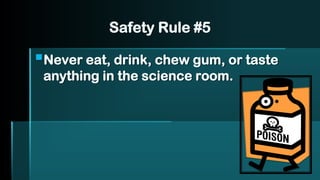
Safety Rule #5
▪Never eat, drink, chew gum, or taste
anything in the science room.
Safety Rule #6
▪Keep hands away from face, eyes, and mouth while
using science materials or when working with either
chemicals or animals.
▪Wash your hands with soap and water before leaving
the science room.
Safety Rule #7
▪Wear safety glasses or goggles when
instructed.
▪Never remove safety glasses or goggles during
an experiment.
▪There will be no exceptions to this rule.
Safety Rule #8
▪Keep your work area and the science room
neat and clean.
▪Bring only your laboratory instructions,
worksheets, and pen or pencil to the work
area.
Safety Rule #9
▪Clean all work areas and equipment at the end
of the experiment.
▪Return all equipment clean and in working
order to the proper storage area.
Safety Rule #10
▪Follow your teacher’s instructions to dispose of
any waste materials generated in an
experiment
Safety Rule #11
▪Report any
▪accident (fire, spill, breakage, etc.),
▪injury (cut, burn, etc.), or
▪hazardous condition (broken equipment, etc.)
to the teacher immediately.
Safety Rule #12
▪Consider all chemicals used in the science room to
be dangerous.
▪Do not touch or smell any chemicals unless
specifically instructed to do so.
Safety Rule #13
Handle all animals with
care and respect
1. Open animal cages only
with permission
2. Never handle any
animals when the teacher
is out of the room.
3. Do not take animals out
of the science room.
4. Do not tease or handle
animals roughly.
5. Keep animal away from
students’ faces.
6. Wear gloves when
handling animals.
7. Report any animal bite
or scratch to the
teacher immediately.
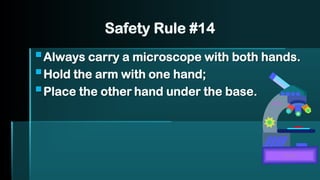
Safety Rule #14
▪Always carry a microscope with both hands.
▪Hold the arm with one hand;
▪Place the other hand under the base.
arm
base
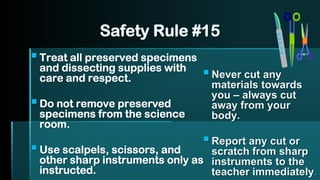
Safety Rule #15
▪Treat all preserved specimens
and dissecting supplies with
care and respect.
▪Do not remove preserved
specimens from the science
room.
▪Use scalpels, scissors, and
other sharp instruments only as
instructed.
▪Never cut any
materials towards
you – always cut
away from your
body.
▪Report any cut or
scratch from sharp
instruments to the
teacher immediately.
Safety Rule #16
▪Never open storage cabinets or enter the
prep/storage room without permission from
the teacher.
Safety Rule #17
▪Do not remove chemicals, equipment, supplies, or
animals from the science room without permission
from the teacher.
Safety Rule #18
▪Handle all glassware with care.
▪Never pick up hot or broken glassware with
your bare hands.
Safety Rule #19
▪Use extreme caution when using matches, a burner,
or hot plate.
▪Only light burners when instructed and do not put
anything into a flame unless specifically instructed to
do so.
▪Do not leave a lit burner unattended.
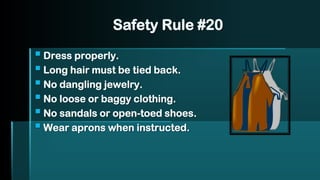
Safety Rule #20
▪Dress properly.
▪Long hair must be tied back.
▪No dangling jewelry.
▪No loose or baggy clothing.
▪No sandals or open-toed shoes.
▪Wear aprons when instructed.
Safety Rule #21
▪Learn where the safety equipment is located and
how to use it.
▪Know where the exits are located and what to do in
case of an emergency or fire drill.
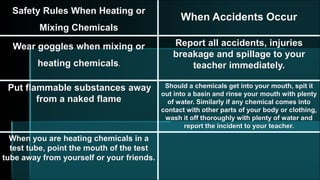
Safety Rules When Heating or
Mixing Chemicals
When Accidents Occur
Wear goggles when mixing or
heating chemicals.
Report all accidents, injuries
breakage and spillage to your
teacher immediately.
Put flammable substances away
from a naked flame
Should a chemicals get into your mouth, spit it
out into a basin and rinse your mouth with plenty
of water. Similarly if any chemical comes into
contact with other parts of your body or clothing,
wash it off thoroughly with plenty of water and
report the incident to your teacher.
When you are heating chemicals in a
test tube, point the mouth of the test
tube away from yourself or your friends.
Jazak Allah

Lab safety

  • 2.
    LAB SAFETY RULES Safetyrules in the laboratory
  • 3.
    Objectives ▪Locate and useLab safety equipment ▪Know the basic rules of lab safety in the classroom/lab ▪Identify lab symbols
  • 4.
    Lab Safety ▪Science activitiesare potentially hazardous. ▪Equipment must be handled properly or can be dangerous. ▪No science student will be allowed to participate in science activities until the safety contract has been signed by both the student and a parent or guardian.
  • 5.
    Safety Rule #1 ▪Conductyourself in a responsible manner at all times in the science room. ▪Horseplay, practical jokes, and pranks will not be tolerated. ▪You wouldn’t want to be responsible for seriously injuring a fellow classmate.
  • 6.
    Safety Rule #2 ▪Followall written and verbal instructions carefully. ▪Ask your teacher questions if you do not understand the instructions. ▪I am your teacher and I care about you. I do not want you to get hurt. Please ask me whatever you need to know, always.
  • 7.
    Safety Rule #3 ▪Donot touch any equipment, supplies, animals, or other materials in the science room without permission from the teacher.
  • 8.
    Safety Rule #4 ▪Performonly authorized and approved experiments. ▪Do not conduct any experiments when the teacher is out of the room.
  • 9.
    Safety Rule #5 ▪Nevereat, drink, chew gum, or taste anything in the science room.
  • 10.
    Safety Rule #6 ▪Keephands away from face, eyes, and mouth while using science materials or when working with either chemicals or animals. ▪Wash your hands with soap and water before leaving the science room.
  • 11.
    Safety Rule #7 ▪Wearsafety glasses or goggles when instructed. ▪Never remove safety glasses or goggles during an experiment. ▪There will be no exceptions to this rule.
  • 12.
    Safety Rule #8 ▪Keepyour work area and the science room neat and clean. ▪Bring only your laboratory instructions, worksheets, and pen or pencil to the work area.
  • 13.
    Safety Rule #9 ▪Cleanall work areas and equipment at the end of the experiment. ▪Return all equipment clean and in working order to the proper storage area.
  • 14.
    Safety Rule #10 ▪Followyour teacher’s instructions to dispose of any waste materials generated in an experiment
  • 15.
    Safety Rule #11 ▪Reportany ▪accident (fire, spill, breakage, etc.), ▪injury (cut, burn, etc.), or ▪hazardous condition (broken equipment, etc.) to the teacher immediately.
  • 16.
    Safety Rule #12 ▪Considerall chemicals used in the science room to be dangerous. ▪Do not touch or smell any chemicals unless specifically instructed to do so.
  • 17.
    Safety Rule #13 Handleall animals with care and respect 1. Open animal cages only with permission 2. Never handle any animals when the teacher is out of the room. 3. Do not take animals out of the science room. 4. Do not tease or handle animals roughly. 5. Keep animal away from students’ faces. 6. Wear gloves when handling animals. 7. Report any animal bite or scratch to the teacher immediately.
  • 18.
    Safety Rule #14 ▪Alwayscarry a microscope with both hands. ▪Hold the arm with one hand; ▪Place the other hand under the base. arm base
  • 19.
    Safety Rule #15 ▪Treatall preserved specimens and dissecting supplies with care and respect. ▪Do not remove preserved specimens from the science room. ▪Use scalpels, scissors, and other sharp instruments only as instructed. ▪Never cut any materials towards you – always cut away from your body. ▪Report any cut or scratch from sharp instruments to the teacher immediately.
  • 20.
    Safety Rule #16 ▪Neveropen storage cabinets or enter the prep/storage room without permission from the teacher.
  • 21.
    Safety Rule #17 ▪Donot remove chemicals, equipment, supplies, or animals from the science room without permission from the teacher.
  • 22.
    Safety Rule #18 ▪Handleall glassware with care. ▪Never pick up hot or broken glassware with your bare hands.
  • 23.
    Safety Rule #19 ▪Useextreme caution when using matches, a burner, or hot plate. ▪Only light burners when instructed and do not put anything into a flame unless specifically instructed to do so. ▪Do not leave a lit burner unattended.
  • 24.
    Safety Rule #20 ▪Dressproperly. ▪Long hair must be tied back. ▪No dangling jewelry. ▪No loose or baggy clothing. ▪No sandals or open-toed shoes. ▪Wear aprons when instructed.
  • 25.
    Safety Rule #21 ▪Learnwhere the safety equipment is located and how to use it. ▪Know where the exits are located and what to do in case of an emergency or fire drill.
  • 26.
    Safety Rules WhenHeating or Mixing Chemicals When Accidents Occur Wear goggles when mixing or heating chemicals. Report all accidents, injuries breakage and spillage to your teacher immediately. Put flammable substances away from a naked flame Should a chemicals get into your mouth, spit it out into a basin and rinse your mouth with plenty of water. Similarly if any chemical comes into contact with other parts of your body or clothing, wash it off thoroughly with plenty of water and report the incident to your teacher. When you are heating chemicals in a test tube, point the mouth of the test tube away from yourself or your friends.
  • 27.