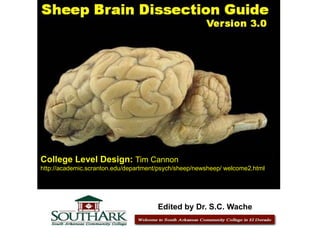
College Level Design: Tim Cannon
http://academic.scranton.edu/department/psych/sheep/newsheep/ welcome2.html
Edited by Dr. S.C. Wache
Goal:
We will compare sheep brain structures with human brain structures.
Compared to human cerebrum a human’s olfactory bulb is much shorter than
sheep olfactory bulbs compared to the sheep cerebrum. Human cerebellum is
bilobed, sheep cerebellum is not.
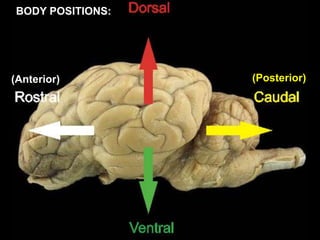
First, we will learn body positions applied to the whole sheep brain.
We will do two sections: one group will do a mid-sagittal cut, the other a
coronal cut.
Use the mid-sagittal section to find your location through each consecutive
coronal section.
Methods and Materials:
We will be dissecting a preserved adult sheep brain.
Our dissection kit contains a scalpel, a fine tipped pair of scissors, a blunt
metal probe, a fine tipped forceps, a blunt-tipped forceps.
It is vital to wear vinyl gloves. It is important to be careful when working with
preservatives. If necessary protect your eyes. Follow OSHA (office of safety
and Health administration) regulations.
Dispose of the dissected specimen as indicated on the MSDA (material safety
and data administration) sheets.
These are some additional web sites where you can obtain more information:
http://labs.ansci.uiuc.edu/rwjohnson/class/braintext.html
University of Scranton, Dissection of the Sheep Brain
University of Scranton, The Sheep Brain Dissection Guide
Michigan State University, Atlas of the Sheep Brain
Interactive Atlases, Digital Anatomist Project
University of Wisconsin, Global Anatomy
University of Utah, Anatomy-Histology Tutorials
Gray Cancer Institute On-line Medical Dictionary
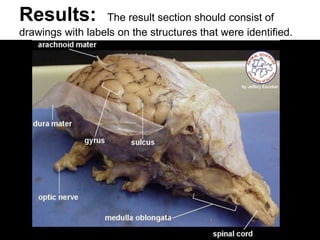
Results: The result section should consist of
drawings with labels on the structures that were identified.
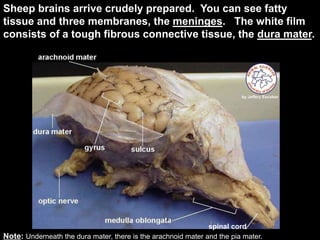
Sheep brains arrive crudely prepared. You can see fatty
tissue and three membranes, the meninges. The white film
consists of a tough fibrous connective tissue, the dura mater.
Note: Underneath the dura mater, there is the arachnoid mater and the pia mater.
spinal cord
(Anterior) (Posterior)
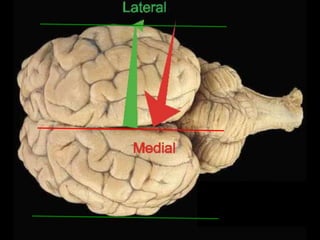
BODY POSITIONS:
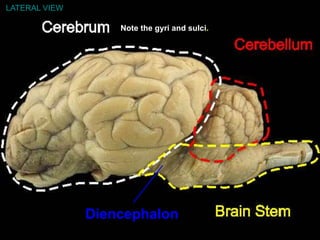
Diencephalon
LATERAL VIEW
Note the gyri and sulci.
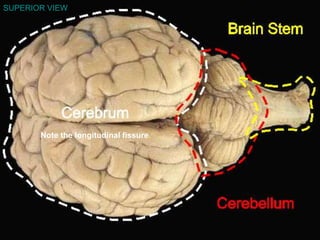
SUPERIOR VIEW
Note the longitudinal fissure.
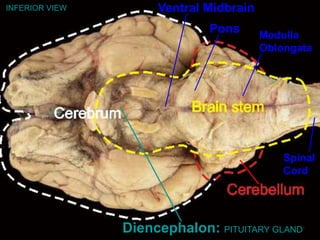
INFERIOR VIEW Ventral Midbrain
Pons Medulla
Oblongata
Spinal
Cord
Diencephalon: PITUITARY GLAND
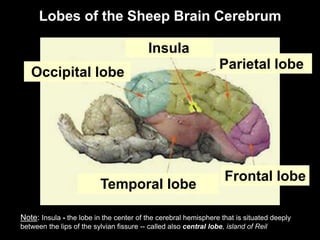
Temporal lobe
Insula
Note: Insula - the lobe in the center of the cerebral hemisphere that is situated deeply
between the lips of the sylvian fissure -- called also central lobe, island of Reil
Frontal lobe
Parietal lobe
Lobes of the Sheep Brain Cerebrum
Occipital lobe
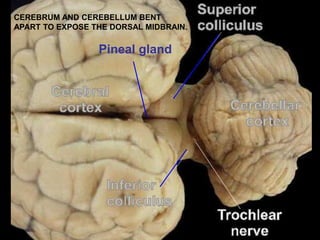
Pineal gland
CEREBRUM AND CEREBELLUM BENT
APART TO EXPOSE THE DORSAL MIDBRAIN.
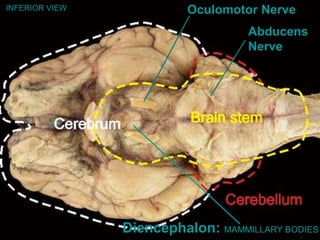
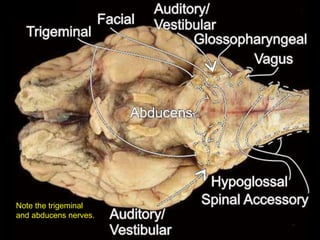
INFERIOR VIEW
Diencephalon: MAMMILLARY BODIES
Oculomotor Nerve
Abducens
Nerve
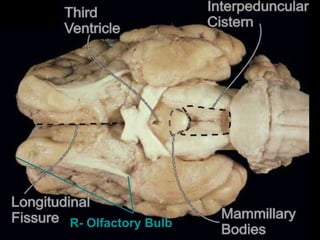
R- Olfactory Bulb
Note the trigeminal
and abducens nerves.
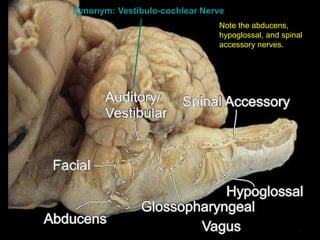
Note the abducens,
hypoglossal, and spinal
accessory nerves.
Synonym: Vestibulo-cochlear Nerve
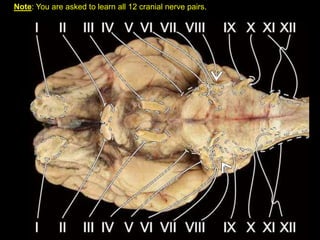
Note: You are asked to learn all 12 cranial nerve pairs.
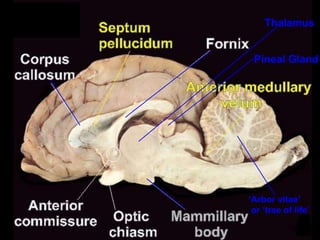
‘Arbor vitae’
or ‘tree of life’
Thalamus
Pineal Gland
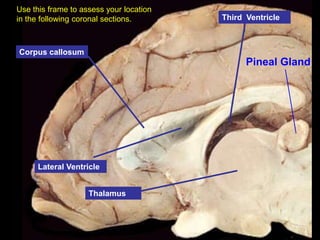
Corpus callosum
Thalamus
Lateral Ventricle
Third Ventricle
Use this frame to assess your location
in the following coronal sections.
Pineal Gland
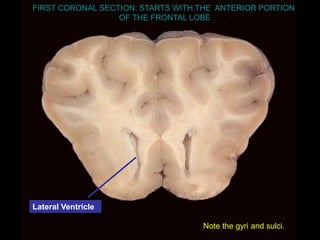
Lateral Ventricle
Note the gyri and sulci.
FIRST CORONAL SECTION: STARTS WITH THE ANTERIOR PORTION
OF THE FRONTAL LOBE
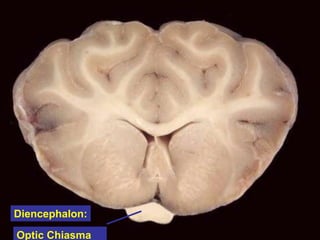
Optic Chiasma
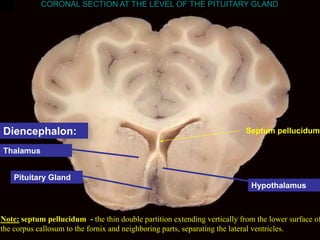
Diencephalon:
Pituitary Gland
Thalamus
Hypothalamus
CORONAL SECTION AT THE LEVEL OF THE PITUITARY GLAND
Note: septum pellucidum - the thin double partition extending vertically from the lower surface of
the corpus callosum to the fornix and neighboring parts, separating the lateral ventricles.
Septum pellucidum
Diencephalon:
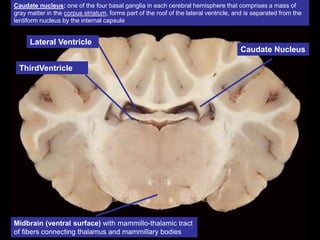
Lateral Ventricle
ThirdVentricle
Midbrain (ventral surface) with mammillo-thalamic tract
of fibers connecting thalamus and mammillary bodies
Caudate Nucleus
Caudate nucleus: one of the four basal ganglia in each cerebral hemisphere that comprises a mass of
gray matter in the corpus striatum, forms part of the roof of the lateral ventricle, and is separated from the
lentiform nucleus by the internal capsule
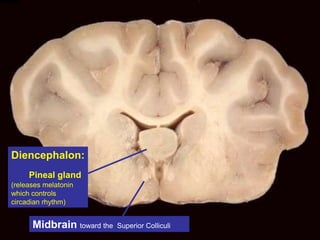
Diencephalon:
Pineal gland
(releases melatonin
which controls
circadian rhythm)
Midbrain toward the Superior Colliculi
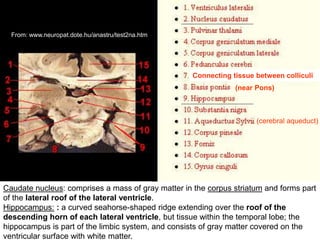
Caudate nucleus: comprises a mass of gray matter in the corpus striatum and forms part
of the lateral roof of the lateral ventricle.
Hippocampus: : a curved seahorse-shaped ridge extending over the roof of the
descending horn of each lateral ventricle, but tissue within the temporal lobe; the
hippocampus is part of the limbic system, and consists of gray matter covered on the
ventricular surface with white matter.
From: www.neuropat.dote.hu/anastru/test2na.htm
(near Pons)
Connecting tissue between colliculi
(cerebral aqueduct)
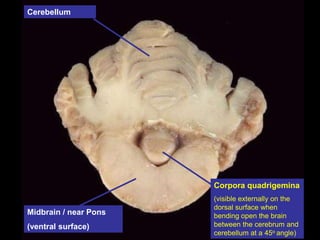
Cerebellum
Corpora quadrigemina
(visible externally on the
dorsal surface when
bending open the brain
between the cerebrum and
cerebellum at a 45o angle)
Midbrain / near Pons
(ventral surface)
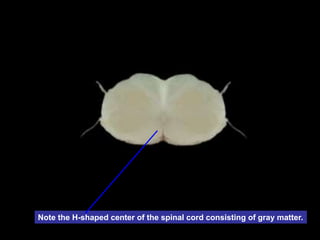
Note the H-shaped center of the spinal cord consisting of gray matter.
Summary:
We have studied the structures on a preserved sheep brain specimen. We
have learned the functions of such structures using the lecture handout and
comparing to what is known about the human brain function.
We learned body positions applied to the whole sheep brain.
The mid-sagittal cut was helpful in identifying the extension of the lateral
ventricle to the third ventricle. The coronal cuts made it possible to find the
cerebral aqueduct (aqueductus sylvii) that joins the third and fourth ventricles
which house the CSF.
The coronal cut helped in the location of the hippocampus along the roof of the
descending lateral ventricle.
Lab 14 Sheepbraindiss 2

  • 1.
    College Level Design:Tim Cannon http://academic.scranton.edu/department/psych/sheep/newsheep/ welcome2.html Edited by Dr. S.C. Wache
  • 2.
    Goal: We will comparesheep brain structures with human brain structures. Compared to human cerebrum a human’s olfactory bulb is much shorter than sheep olfactory bulbs compared to the sheep cerebrum. Human cerebellum is bilobed, sheep cerebellum is not. First, we will learn body positions applied to the whole sheep brain. We will do two sections: one group will do a mid-sagittal cut, the other a coronal cut. Use the mid-sagittal section to find your location through each consecutive coronal section.
  • 3.
    Methods and Materials: Wewill be dissecting a preserved adult sheep brain. Our dissection kit contains a scalpel, a fine tipped pair of scissors, a blunt metal probe, a fine tipped forceps, a blunt-tipped forceps. It is vital to wear vinyl gloves. It is important to be careful when working with preservatives. If necessary protect your eyes. Follow OSHA (office of safety and Health administration) regulations. Dispose of the dissected specimen as indicated on the MSDA (material safety and data administration) sheets. These are some additional web sites where you can obtain more information: http://labs.ansci.uiuc.edu/rwjohnson/class/braintext.html University of Scranton, Dissection of the Sheep Brain University of Scranton, The Sheep Brain Dissection Guide Michigan State University, Atlas of the Sheep Brain Interactive Atlases, Digital Anatomist Project University of Wisconsin, Global Anatomy University of Utah, Anatomy-Histology Tutorials Gray Cancer Institute On-line Medical Dictionary
  • 4.
    Results: The resultsection should consist of drawings with labels on the structures that were identified.
  • 5.
    Sheep brains arrivecrudely prepared. You can see fatty tissue and three membranes, the meninges. The white film consists of a tough fibrous connective tissue, the dura mater. Note: Underneath the dura mater, there is the arachnoid mater and the pia mater. spinal cord
  • 6.
  • 8.
  • 9.
    SUPERIOR VIEW Note thelongitudinal fissure.
  • 10.
    INFERIOR VIEW VentralMidbrain Pons Medulla Oblongata Spinal Cord Diencephalon: PITUITARY GLAND
  • 11.
    Temporal lobe Insula Note: Insula- the lobe in the center of the cerebral hemisphere that is situated deeply between the lips of the sylvian fissure -- called also central lobe, island of Reil Frontal lobe Parietal lobe Lobes of the Sheep Brain Cerebrum Occipital lobe
  • 12.
    Pineal gland CEREBRUM ANDCEREBELLUM BENT APART TO EXPOSE THE DORSAL MIDBRAIN.
  • 13.
    INFERIOR VIEW Diencephalon: MAMMILLARYBODIES Oculomotor Nerve Abducens Nerve
  • 14.
  • 15.
    Note the trigeminal andabducens nerves.
  • 16.
    Note the abducens, hypoglossal,and spinal accessory nerves. Synonym: Vestibulo-cochlear Nerve
  • 17.
    Note: You areasked to learn all 12 cranial nerve pairs.
  • 18.
    ‘Arbor vitae’ or ‘treeof life’ Thalamus Pineal Gland
  • 19.
    Corpus callosum Thalamus Lateral Ventricle ThirdVentricle Use this frame to assess your location in the following coronal sections. Pineal Gland
  • 20.
    Lateral Ventricle Note thegyri and sulci. FIRST CORONAL SECTION: STARTS WITH THE ANTERIOR PORTION OF THE FRONTAL LOBE
  • 21.
  • 22.
    Pituitary Gland Thalamus Hypothalamus CORONAL SECTIONAT THE LEVEL OF THE PITUITARY GLAND Note: septum pellucidum - the thin double partition extending vertically from the lower surface of the corpus callosum to the fornix and neighboring parts, separating the lateral ventricles. Septum pellucidum Diencephalon:
  • 23.
    Lateral Ventricle ThirdVentricle Midbrain (ventralsurface) with mammillo-thalamic tract of fibers connecting thalamus and mammillary bodies Caudate Nucleus Caudate nucleus: one of the four basal ganglia in each cerebral hemisphere that comprises a mass of gray matter in the corpus striatum, forms part of the roof of the lateral ventricle, and is separated from the lentiform nucleus by the internal capsule
  • 24.
    Diencephalon: Pineal gland (releases melatonin whichcontrols circadian rhythm) Midbrain toward the Superior Colliculi
  • 25.
    Caudate nucleus: comprisesa mass of gray matter in the corpus striatum and forms part of the lateral roof of the lateral ventricle. Hippocampus: : a curved seahorse-shaped ridge extending over the roof of the descending horn of each lateral ventricle, but tissue within the temporal lobe; the hippocampus is part of the limbic system, and consists of gray matter covered on the ventricular surface with white matter. From: www.neuropat.dote.hu/anastru/test2na.htm (near Pons) Connecting tissue between colliculi (cerebral aqueduct)
  • 26.
    Cerebellum Corpora quadrigemina (visible externallyon the dorsal surface when bending open the brain between the cerebrum and cerebellum at a 45o angle) Midbrain / near Pons (ventral surface)
  • 27.
    Note the H-shapedcenter of the spinal cord consisting of gray matter.
  • 28.
    Summary: We have studiedthe structures on a preserved sheep brain specimen. We have learned the functions of such structures using the lecture handout and comparing to what is known about the human brain function. We learned body positions applied to the whole sheep brain. The mid-sagittal cut was helpful in identifying the extension of the lateral ventricle to the third ventricle. The coronal cuts made it possible to find the cerebral aqueduct (aqueductus sylvii) that joins the third and fourth ventricles which house the CSF. The coronal cut helped in the location of the hippocampus along the roof of the descending lateral ventricle.