KNOW THE SIGNS
  SAVE A LIFE


 Marin County Teen Mental Health Board
Who Are We?
   We are a volunteer group whose
    mission is to raise awareness for
    mental health issues and suicide
    among teens.
   We’re not mental health
    professionals.
   We don’t do diagnosis or treatment.
Depression
   1 in 3 high school
    students has a mental
    health disorder.
   Most don’t seek or get
    treatment.
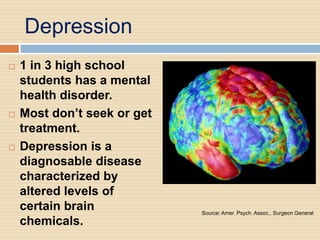
   Depression is a
    diagnosable disease
    characterized by
    altered levels of
    certain brain            Source: Amer. Psych. Assoc., Surgeon General
    chemicals.
Depression Statistics
   Depression is the most common mental
    health disorder in the U.S. among teens
    and adults.
   10-15% of teenagers have some symptoms
    of depression at any one time.
   Between 80 and 90% of people with
    depression—even the most serious
    forms—can be helped.
                                 Source: teendepression.org and NIMH
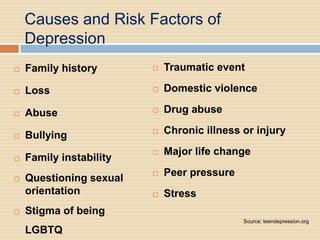
Causes and Risk Factors of
    Depression
   Family history          Traumatic event

   Loss                    Domestic violence

   Abuse                   Drug abuse

   Bullying                Chronic illness or injury
                            Major life change
   Family instability
                            Peer pressure
   Questioning sexual
    orientation             Stress
   Stigma of being
                                             Source: teendepression.org
    LGBTQ
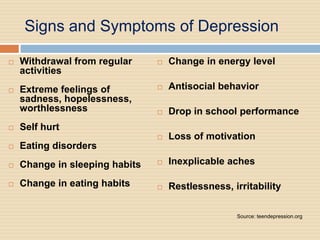
Signs and Symptoms of Depression

   Withdrawal from regular        Change in energy level
    activities
   Extreme feelings of            Antisocial behavior
    sadness, hopelessness,
    worthlessness                  Drop in school performance
   Self hurt
                                   Loss of motivation
   Eating disorders
   Change in sleeping habits      Inexplicable aches

   Change in eating habits        Restlessness, irritability

                                                   Source: teendepression.org
Myth or Fact?
Depression affects more
than 19 million Americans
every year.
          Fact!
                   Source: Mental Health America
Myth or Fact?
Most high school students
don’t think about killing
themselves.
          Myth!
                     Source: teenscreen.org
Myth or Fact?
Approximately 68% of
adults 65 and over know
little or nothing about
depression.
          Fact!
                  Source: National Mental Health Association
Myth or Fact?
   Males have higher suicide
    rates than females.
              Fact!

                           Source: AFSP
Myth or Fact?
Asking someone if they are
suicidal makes them more
suicidal.

          Myth!
                       Source: AFSP
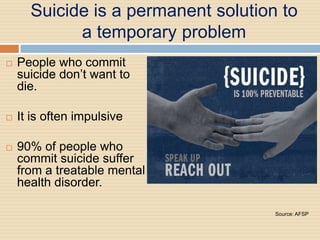
Suicide is a permanent solution to
            a temporary problem
   People who commit
    suicide don’t want to
    die.

   It is often impulsive

   90% of people who
    commit suicide suffer
    from a treatable mental
    health disorder.

                                     Source: AFSP
Suicide Statistics
   Every 100 minutes, an American teenager commits
    suicide.
   For every suicide there are at least 25 attempts.
   Suicide is the 3rd leading cause of death for people
    ages 15-24 after accidents and homicide.
   It is the 4th leading cause of death for people ages 10-
    14.
   Those who’ve made prior attempt more vulnerable, but
    means restriction is effective.
                                                        Source: AFSP
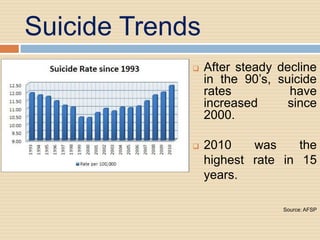
Suicide Trends
                After steady decline
                 in the 90’s, suicide
                 rates          have
                 increased      since
                 2000.

                2010    was     the
                 highest rate in 15
                 years.

                               Source: AFSP
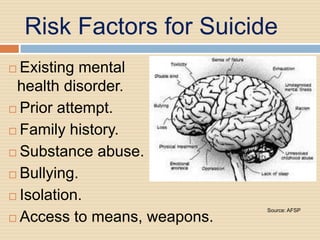
Risk Factors for Suicide
 Existing mental
 health disorder.
 Prior attempt.

 Family history.

 Substance abuse.

 Bullying.

 Isolation.
                              Source: AFSP
 Access to means, weapons.
Warning Signs and Indicators of Suicide

   Suicidal Talk                  Taking excessive risks
   Preoccupation with death       Drop in school
    or dying                        performance
   Withdrawal from family or
                                   Increased drug, alcohol
    friends
   Making final                    use

    arrangements                   Self neglect

   Self-injury                    Involvement in criminal

   Change in energy level          justice system
                                   Expression of anger and
ACT
Acknowledge
Care
Tell
What To Do
   If you think you or a friend is depressed or suicidal,
    get connected with a trusted adult.
   Plan + Means + Opportunity
   Deadly Secret or Deadly Promise
Mental Health Hygiene
            Healthy diet and regular exercise keeps
             you physically fit and helps fight or
             prevent a mental health disorder.

            Getting enough sleep helps the body
             rejuvenate after a stressful day.

            Maintain good relationships with family
             and friends.

            Develop creative, physical or social
             outlet.

            Seek help when necessary. Don’t be
             afraid to ask.
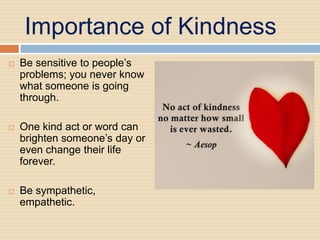
Importance of Kindness
   Be sensitive to people’s
    problems; you never know
    what someone is going
    through.

   One kind act or word can
    brighten someone’s day or
    even change their life
    forever.

   Be sympathetic,
    empathetic.
Mental Health Resources
   Family Service Agency of Marin
       Provides a safety net of affordable mental health services
       Tel: (415) 491-5700
       24-Hour Suicide Hotline: (415) 499-1100

   Community Institute for Psychotherapy
       Offers quality, affordable counseling and psychotherapy
       Tel: (415) 459-5999

   Suicide Hotline (Spanish)
       1-888-628-9454
Marin County Teen Mental Health Board

Contact Us:
 Web: Knowthesignssavealife.blogspot.com

 Email: john@iheartcasey.com

 Tel: (415) 272-5123

 We meet at 10AM one Sunday every month
  at 317 Scenic Rd. in Fairfax.

Know the signs ppt 912

  • 1.
    KNOW THE SIGNS SAVE A LIFE Marin County Teen Mental Health Board
  • 2.
    Who Are We?  We are a volunteer group whose mission is to raise awareness for mental health issues and suicide among teens.  We’re not mental health professionals.  We don’t do diagnosis or treatment.
  • 3.
    Depression  1 in 3 high school students has a mental health disorder.  Most don’t seek or get treatment.  Depression is a diagnosable disease characterized by altered levels of certain brain Source: Amer. Psych. Assoc., Surgeon General chemicals.
  • 4.
    Depression Statistics  Depression is the most common mental health disorder in the U.S. among teens and adults.  10-15% of teenagers have some symptoms of depression at any one time.  Between 80 and 90% of people with depression—even the most serious forms—can be helped. Source: teendepression.org and NIMH
  • 5.
    Causes and RiskFactors of Depression  Family history  Traumatic event  Loss  Domestic violence  Abuse  Drug abuse  Bullying  Chronic illness or injury  Major life change  Family instability  Peer pressure  Questioning sexual orientation  Stress  Stigma of being Source: teendepression.org LGBTQ
  • 6.
    Signs and Symptomsof Depression  Withdrawal from regular  Change in energy level activities  Extreme feelings of  Antisocial behavior sadness, hopelessness, worthlessness  Drop in school performance  Self hurt  Loss of motivation  Eating disorders  Change in sleeping habits  Inexplicable aches  Change in eating habits  Restlessness, irritability Source: teendepression.org
  • 7.
    Myth or Fact? Depressionaffects more than 19 million Americans every year. Fact! Source: Mental Health America
  • 8.
    Myth or Fact? Mosthigh school students don’t think about killing themselves. Myth! Source: teenscreen.org
  • 9.
    Myth or Fact? Approximately68% of adults 65 and over know little or nothing about depression. Fact! Source: National Mental Health Association
  • 10.
    Myth or Fact?  Males have higher suicide rates than females. Fact! Source: AFSP
  • 11.
    Myth or Fact? Askingsomeone if they are suicidal makes them more suicidal. Myth! Source: AFSP
  • 12.
    Suicide is apermanent solution to a temporary problem  People who commit suicide don’t want to die.  It is often impulsive  90% of people who commit suicide suffer from a treatable mental health disorder. Source: AFSP
  • 13.
    Suicide Statistics  Every 100 minutes, an American teenager commits suicide.  For every suicide there are at least 25 attempts.  Suicide is the 3rd leading cause of death for people ages 15-24 after accidents and homicide.  It is the 4th leading cause of death for people ages 10- 14.  Those who’ve made prior attempt more vulnerable, but means restriction is effective. Source: AFSP
  • 14.
    Suicide Trends  After steady decline in the 90’s, suicide rates have increased since 2000.  2010 was the highest rate in 15 years. Source: AFSP
  • 15.
    Risk Factors forSuicide  Existing mental health disorder.  Prior attempt.  Family history.  Substance abuse.  Bullying.  Isolation. Source: AFSP  Access to means, weapons.
  • 16.
    Warning Signs andIndicators of Suicide  Suicidal Talk  Taking excessive risks  Preoccupation with death  Drop in school or dying performance  Withdrawal from family or  Increased drug, alcohol friends  Making final use arrangements  Self neglect  Self-injury  Involvement in criminal  Change in energy level justice system  Expression of anger and
  • 17.
  • 18.
    What To Do  If you think you or a friend is depressed or suicidal, get connected with a trusted adult.  Plan + Means + Opportunity  Deadly Secret or Deadly Promise
  • 19.
    Mental Health Hygiene  Healthy diet and regular exercise keeps you physically fit and helps fight or prevent a mental health disorder.  Getting enough sleep helps the body rejuvenate after a stressful day.  Maintain good relationships with family and friends.  Develop creative, physical or social outlet.  Seek help when necessary. Don’t be afraid to ask.
  • 20.
    Importance of Kindness  Be sensitive to people’s problems; you never know what someone is going through.  One kind act or word can brighten someone’s day or even change their life forever.  Be sympathetic, empathetic.
  • 21.
    Mental Health Resources  Family Service Agency of Marin  Provides a safety net of affordable mental health services  Tel: (415) 491-5700  24-Hour Suicide Hotline: (415) 499-1100  Community Institute for Psychotherapy  Offers quality, affordable counseling and psychotherapy  Tel: (415) 459-5999  Suicide Hotline (Spanish)  1-888-628-9454
  • 22.
    Marin County TeenMental Health Board Contact Us:  Web: Knowthesignssavealife.blogspot.com  Email: john@iheartcasey.com  Tel: (415) 272-5123  We meet at 10AM one Sunday every month at 317 Scenic Rd. in Fairfax.