THE
KNOW
LAW
PROBATE
When a person dies,
someone has to deal
with the affairs of the
deceased. This person(s)
is either named in the
Will or is usually the
next of kin if there is no
valid Will.
This person is legally responsible for
collecting any money, paying any
debts and correctly distributing the
estate to those people entitled: the
“beneficiaries”.
This whole process is called
“administration of the estate” and
part of the process may involve
making an application to the court.
A “Grant of Probate”is the
official court document issued
by the Probate Registry that
includes a copy of the
deceased's Will.
It is called a “Grant of Letters of
Administration”if there is no
Will, but the document serves
the same purpose.
Such a Grant is often required
before banks will release large
sums of money, or before any
property can be sold. The Grant
is confirmation of legal
authority, therefore ensuring
funds are released to the
correct person.
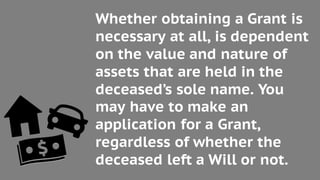
Whether obtaining a Grant is
necessary at all, is dependent
on the value and nature of
assets that are held in the
deceased’s sole name. You
may have to make an
application for a Grant,
regardless of whether the
deceased left a Will or not.
Dealing with an estate
involves a series of legal and
administrative activities, such
as contacting financial
institutions, paying any debts
owed, closing bank accounts,
and dealing with any legal
work in obtaining the
relevant Grant.
If the deceased has left a
valid Will, it is the
responsibility of the
“Executor” to distribute the
estate in accordance with
the terms of the Will, after
all the administrative
requirements have been
met.
If the deceased died without
leaving a Will, there is a set
legal formula for distributing
assets to beneficiaries, which is
called the “rules of intestacy.”
The “Legal Personal
Representative (LPR)”of the
deceased must distribute the
estate according to these rules.
The role of the Executor or LPR is
one that may involve a lot of
work, spanning months and even
years, depending on the nature
of the estate.
If an Executor or LPR refuses to
administer an estate, the law
provides procedures for
beneficiaries to assume this role.
The information provided here is not intended to give legal
advice. Should you require legal representation or advice, please
consult an attorney-at-law.
PROBATE
THE
KNOW
LAW

Know the Law: Probate

  • 1.
  • 2.
  • 3.
    When a persondies, someone has to deal with the affairs of the deceased. This person(s) is either named in the Will or is usually the next of kin if there is no valid Will.
  • 4.
    This person islegally responsible for collecting any money, paying any debts and correctly distributing the estate to those people entitled: the “beneficiaries”. This whole process is called “administration of the estate” and part of the process may involve making an application to the court.
  • 5.
    A “Grant ofProbate”is the official court document issued by the Probate Registry that includes a copy of the deceased's Will. It is called a “Grant of Letters of Administration”if there is no Will, but the document serves the same purpose.
  • 6.
    Such a Grantis often required before banks will release large sums of money, or before any property can be sold. The Grant is confirmation of legal authority, therefore ensuring funds are released to the correct person.
  • 7.
    Whether obtaining aGrant is necessary at all, is dependent on the value and nature of assets that are held in the deceased’s sole name. You may have to make an application for a Grant, regardless of whether the deceased left a Will or not.
  • 8.
    Dealing with anestate involves a series of legal and administrative activities, such as contacting financial institutions, paying any debts owed, closing bank accounts, and dealing with any legal work in obtaining the relevant Grant.
  • 9.
    If the deceasedhas left a valid Will, it is the responsibility of the “Executor” to distribute the estate in accordance with the terms of the Will, after all the administrative requirements have been met.
  • 10.
    If the deceaseddied without leaving a Will, there is a set legal formula for distributing assets to beneficiaries, which is called the “rules of intestacy.” The “Legal Personal Representative (LPR)”of the deceased must distribute the estate according to these rules.
  • 11.
    The role ofthe Executor or LPR is one that may involve a lot of work, spanning months and even years, depending on the nature of the estate. If an Executor or LPR refuses to administer an estate, the law provides procedures for beneficiaries to assume this role.
  • 12.
    The information providedhere is not intended to give legal advice. Should you require legal representation or advice, please consult an attorney-at-law. PROBATE THE KNOW LAW