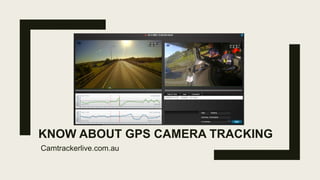
KNOW ABOUT GPS CAMERA TRACKING
Camtrackerlive.com.au
Is live vehicle tracking really "live"?
Most fleet management systems report a position
about every 60 seconds. Some systems log GPS data
based on driving behavior, not a set time interval. This
tends to provide a higher resolution of the actual
vehicle path traveled but at the standard market rate.
This service is very affordable when this level of
resolution is needed. Contact your sales consultant to
learn about volume pricing.
What is involved in the GPS installation
process?
Installation is a very important component of a
success deployment, especially for large fleets.
This is a step that is often glossed over during the
sales process. A good partner will discuss the
GPS install plan in detail and demonstrate 1.
experience 2. an organized plan. Simply saying it
is not an issue is not good enough. As with
everything, there are limitation and requirements
that impact you.
What is the difference between live and
passive GPS tracking systems?
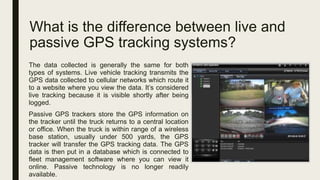
The data collected is generally the same for both
types of systems. Live vehicle tracking transmits the
GPS data collected to cellular networks which route it
to a website where you view the data. It’s considered
live tracking because it is visible shortly after being
logged.
Passive GPS trackers store the GPS information on
the tracker until the truck returns to a central location
or office. When the truck is within range of a wireless
base station, usually under 500 yards, the GPS
tracker will transfer the GPS tracking data. The GPS
data is then put in a database which is connected to
fleet management software where you can view it
online. Passive technology is no longer readily
available.
What areas can I expect to see
improvement?
Typical areas of improvement include:
■ Reduce fuel expenses resulting from a host of reasons
■ Reduced accidents
■ Improved productivity
■ Reduced regular and overtime wages for the same amount of work.
■ Improvements in fleet maintenance expenses with fewer miles and lower
maintenance costs.
I'm concerned my drivers will quit
Don’t be. If you have a driver quit, you just saved
a ton of money. It seldom happens but anyone
that is afraid to be tracked is hiding something. If
they quit they can drag your competitor down
who isn’t using GPS tracking and you don’t have
to pay unemployment. All drivers are nervous at
first, but good leadership overcomes this fear
and builds a stronger company.
Contact us

Know About GPS Camera Tracking - Camtrackerlive.com.au

  • 1.
    KNOW ABOUT GPSCAMERA TRACKING Camtrackerlive.com.au
  • 2.
    Is live vehicletracking really "live"? Most fleet management systems report a position about every 60 seconds. Some systems log GPS data based on driving behavior, not a set time interval. This tends to provide a higher resolution of the actual vehicle path traveled but at the standard market rate. This service is very affordable when this level of resolution is needed. Contact your sales consultant to learn about volume pricing.
  • 3.
    What is involvedin the GPS installation process? Installation is a very important component of a success deployment, especially for large fleets. This is a step that is often glossed over during the sales process. A good partner will discuss the GPS install plan in detail and demonstrate 1. experience 2. an organized plan. Simply saying it is not an issue is not good enough. As with everything, there are limitation and requirements that impact you.
  • 4.
    What is thedifference between live and passive GPS tracking systems? The data collected is generally the same for both types of systems. Live vehicle tracking transmits the GPS data collected to cellular networks which route it to a website where you view the data. It’s considered live tracking because it is visible shortly after being logged. Passive GPS trackers store the GPS information on the tracker until the truck returns to a central location or office. When the truck is within range of a wireless base station, usually under 500 yards, the GPS tracker will transfer the GPS tracking data. The GPS data is then put in a database which is connected to fleet management software where you can view it online. Passive technology is no longer readily available.
  • 5.
    What areas canI expect to see improvement? Typical areas of improvement include: ■ Reduce fuel expenses resulting from a host of reasons ■ Reduced accidents ■ Improved productivity ■ Reduced regular and overtime wages for the same amount of work. ■ Improvements in fleet maintenance expenses with fewer miles and lower maintenance costs.
  • 6.
    I'm concerned mydrivers will quit Don’t be. If you have a driver quit, you just saved a ton of money. It seldom happens but anyone that is afraid to be tracked is hiding something. If they quit they can drag your competitor down who isn’t using GPS tracking and you don’t have to pay unemployment. All drivers are nervous at first, but good leadership overcomes this fear and builds a stronger company.
  • 7.