Kinetic Expression
for 2nd Order
Reaction
The kinetic expression for a second-order reaction describes the
relationship between the rate of the reaction and the concentrations of
the reactants. This is a critical concept in understanding the dynamics of
chemical processes.
AY
by Adnan Yazdani
Introduction to 2nd Order
Reactions
1 Reaction Order
Second-order reactions
involve the simultaneous
collision of two reactant
molecules.
2 Reaction Kinetics
The rate of a second-order
reaction depends on the
concentrations of both
reactants.
3 Reaction Mechanisms
Understanding second-order kinetics is essential for elucidating
the underlying reaction mechanisms.
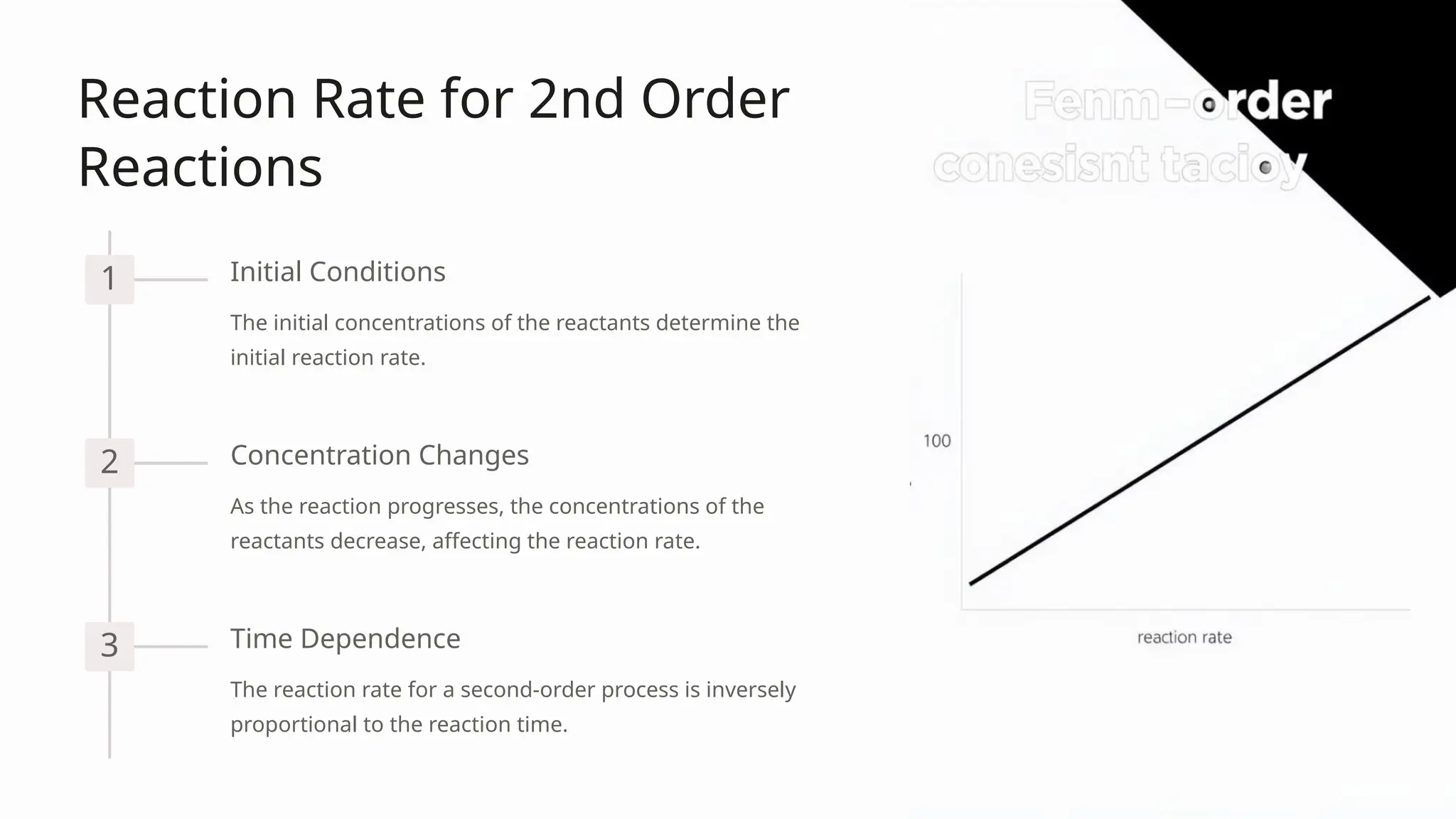
Reaction Rate for 2nd Order
Reactions
1 Initial Conditions
The initial concentrations of the reactants determine the
initial reaction rate.
2 Concentration Changes
As the reaction progresses, the concentrations of the
reactants decrease, affecting the reaction rate.
3 Time Dependence
The reaction rate for a second-order process is inversely
proportional to the reaction time.
Deriving the Rate Equation for 2nd Order
Reactions
Rate Law
The rate of a second-order reaction is
proportional to the product of the
concentrations of the two reactants.
Integrated Rate Law
The integrated rate equation for a
second-order reaction involves the
reciprocal of the reactant
concentrations.
Graphical Analysis
Plotting the reciprocal of the reactant
concentration versus time yields a
straight line, confirming the second-
order kinetics.
Kinetic Expression for 2nd Order Reactions (Same
Concentration)
Reaction Rate
For a second-order reaction with equal initial concentrations of the
reactants, the rate is proportional to the square of the concentration.
Integrated Rate Law
The integrated rate equation for a second-order reaction with equal
initial concentrations takes a simple, linear form.
Half-Life
The half-life of a second-order reaction with equal initial concentrations
is inversely proportional to the initial concentration.
Graphical Analysis
Plotting the reciprocal of the concentration versus time results in a
straight line, confirming the second-order kinetics.
Graphical Representation of 2nd Order Kinetics
(Same Concentration)
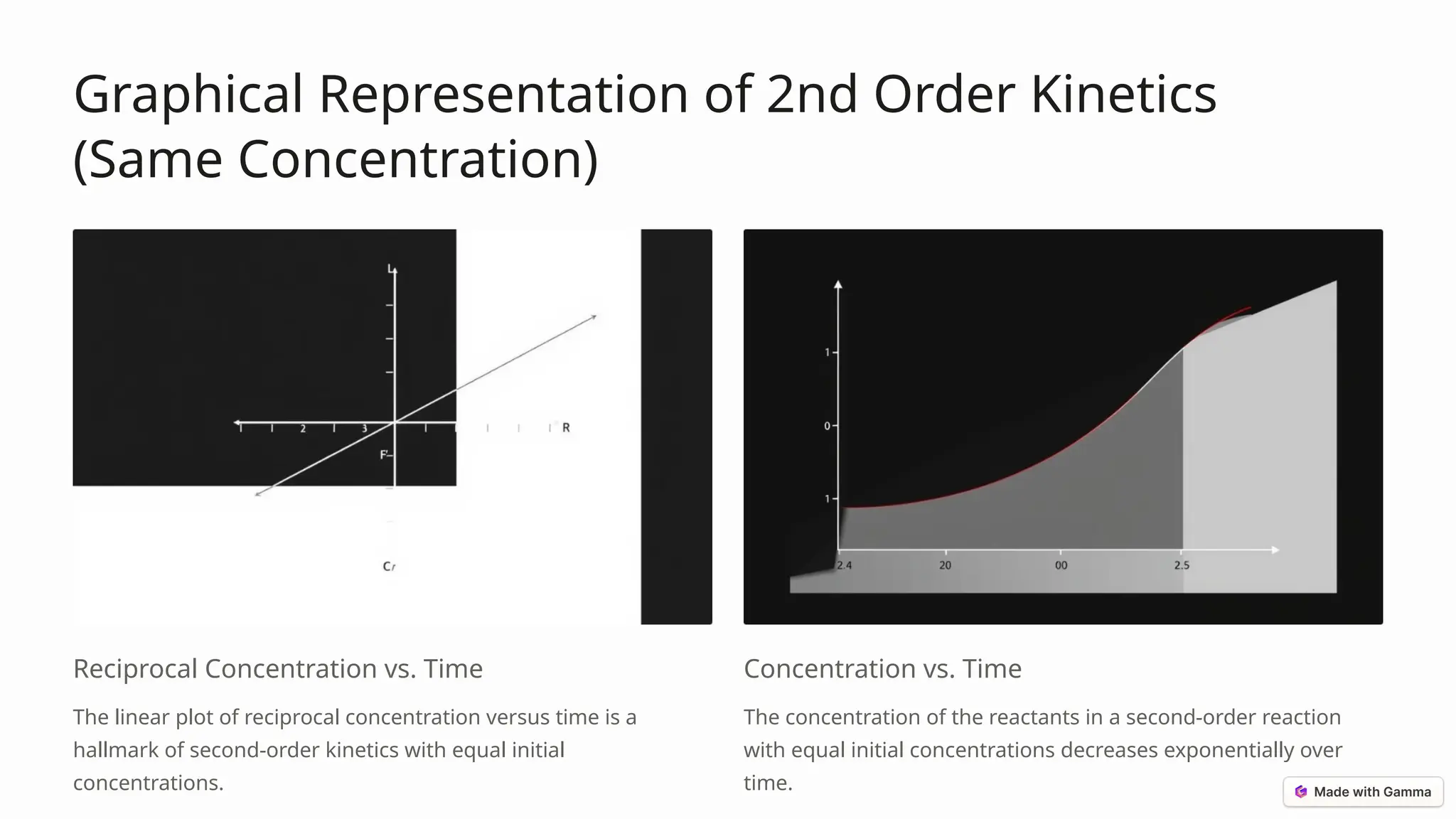
Reciprocal Concentration vs. Time
The linear plot of reciprocal concentration versus time is a
hallmark of second-order kinetics with equal initial
concentrations.
Concentration vs. Time
The concentration of the reactants in a second-order reaction
with equal initial concentrations decreases exponentially over
time.
Kinetic Expression for 2nd Order
Reactions (Different Concentration)
Reaction Conditions
When the initial concentrations of the reactants are different, the kinetic expression for a second-order
reaction becomes more complex.
Integrated Rate Law
The integrated rate equation for a second-order reaction with different initial concentrations involves a
nonlinear relationship.
Graphical Analysis
Plotting the reciprocal of the concentration difference versus time yields a straight line for second-
order kinetics with different initial concentrations.
Graphical Representation of 2nd
Order Kinetics (Different
Concentration)
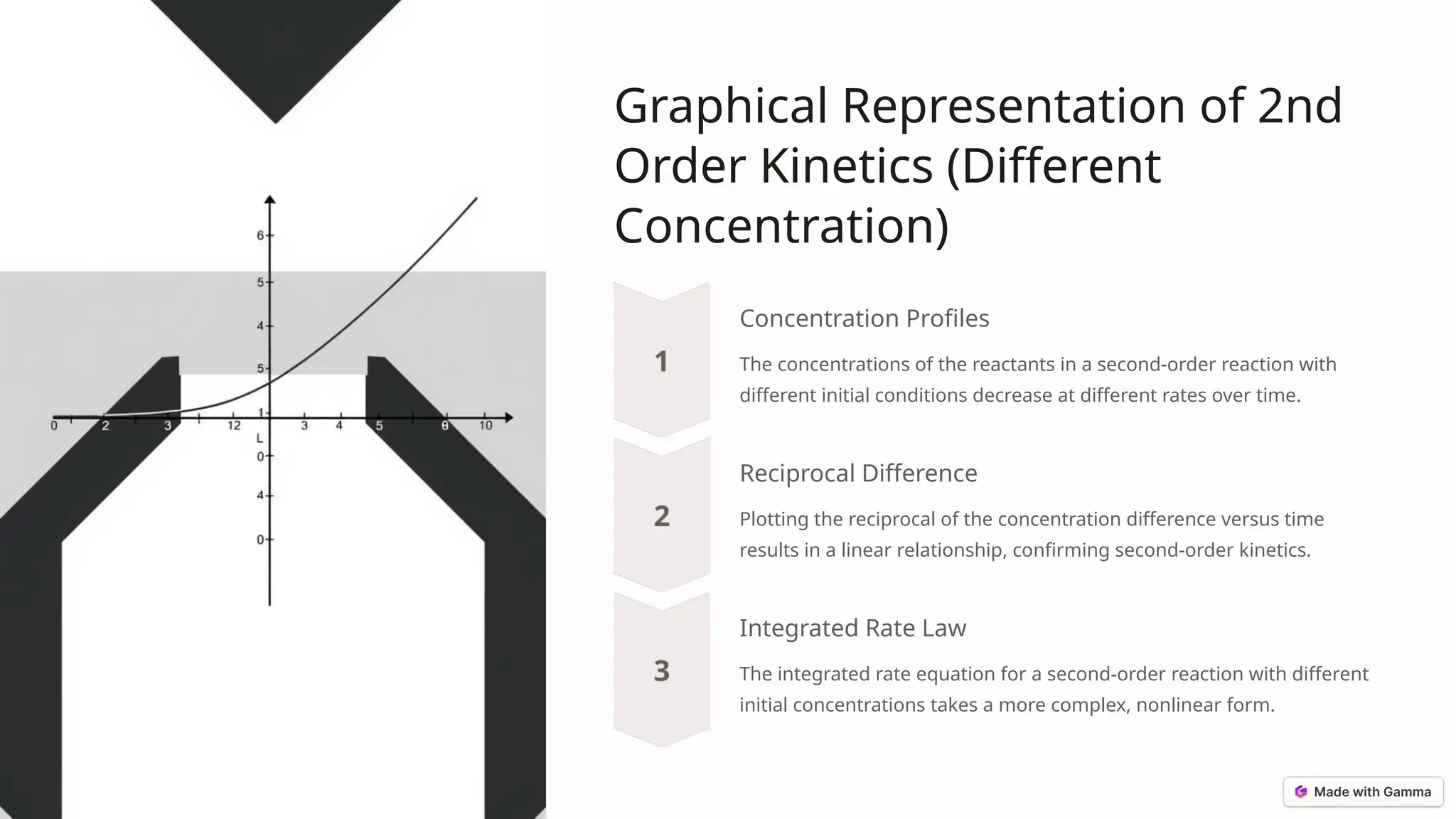
Concentration Profiles
The concentrations of the reactants in a second-order reaction with
different initial conditions decrease at different rates over time.
Reciprocal Difference
Plotting the reciprocal of the concentration difference versus time
results in a linear relationship, confirming second-order kinetics.
Integrated Rate Law
The integrated rate equation for a second-order reaction with different
initial concentrations takes a more complex, nonlinear form.
Applications of 2nd Order Kinetics
Organic Synthesis Second-order kinetics are commonly
observed in organic reactions, such as
nucleophilic substitutions and elimination
reactions.
Enzyme Kinetics Many enzymatic reactions, where the
enzyme and substrate concentrations are
key factors, can be modeled using second-
order kinetics.
Atmospheric Chemistry Second-order reactions play a crucial role
in the study of atmospheric processes,
such as the formation of smog and ozone
depletion.
Polymerization The kinetics of step-growth polymerization
reactions, where two polymer chains react
to form a longer chain, often follow
second-order behavior.
Conclusion and Key
Takeaways
1 Importance of 2nd
Order Kinetics
Understanding the kinetic
expression and graphical
representation of second-
order reactions is crucial in
various fields of chemistry and
chemical engineering.
2 Reaction Dynamics
The rate of a second-order
reaction depends on the
concentrations of both
reactants, and the integrated
rate equation reveals the time-
dependent behavior of the
process.
3 Practical Applications
Second-order kinetics are widely observed and applied in organic
synthesis, enzyme catalysis, atmospheric chemistry, and
polymerization processes.

Kinetic-Expression-for-2nd-Order-Reaction.pptx

  • 1.
    Kinetic Expression for 2ndOrder Reaction The kinetic expression for a second-order reaction describes the relationship between the rate of the reaction and the concentrations of the reactants. This is a critical concept in understanding the dynamics of chemical processes. AY by Adnan Yazdani
  • 2.
    Introduction to 2ndOrder Reactions 1 Reaction Order Second-order reactions involve the simultaneous collision of two reactant molecules. 2 Reaction Kinetics The rate of a second-order reaction depends on the concentrations of both reactants. 3 Reaction Mechanisms Understanding second-order kinetics is essential for elucidating the underlying reaction mechanisms.
  • 3.
    Reaction Rate for2nd Order Reactions 1 Initial Conditions The initial concentrations of the reactants determine the initial reaction rate. 2 Concentration Changes As the reaction progresses, the concentrations of the reactants decrease, affecting the reaction rate. 3 Time Dependence The reaction rate for a second-order process is inversely proportional to the reaction time.
  • 4.
    Deriving the RateEquation for 2nd Order Reactions Rate Law The rate of a second-order reaction is proportional to the product of the concentrations of the two reactants. Integrated Rate Law The integrated rate equation for a second-order reaction involves the reciprocal of the reactant concentrations. Graphical Analysis Plotting the reciprocal of the reactant concentration versus time yields a straight line, confirming the second- order kinetics.
  • 5.
    Kinetic Expression for2nd Order Reactions (Same Concentration) Reaction Rate For a second-order reaction with equal initial concentrations of the reactants, the rate is proportional to the square of the concentration. Integrated Rate Law The integrated rate equation for a second-order reaction with equal initial concentrations takes a simple, linear form. Half-Life The half-life of a second-order reaction with equal initial concentrations is inversely proportional to the initial concentration. Graphical Analysis Plotting the reciprocal of the concentration versus time results in a straight line, confirming the second-order kinetics.
  • 6.
    Graphical Representation of2nd Order Kinetics (Same Concentration) Reciprocal Concentration vs. Time The linear plot of reciprocal concentration versus time is a hallmark of second-order kinetics with equal initial concentrations. Concentration vs. Time The concentration of the reactants in a second-order reaction with equal initial concentrations decreases exponentially over time.
  • 7.
    Kinetic Expression for2nd Order Reactions (Different Concentration) Reaction Conditions When the initial concentrations of the reactants are different, the kinetic expression for a second-order reaction becomes more complex. Integrated Rate Law The integrated rate equation for a second-order reaction with different initial concentrations involves a nonlinear relationship. Graphical Analysis Plotting the reciprocal of the concentration difference versus time yields a straight line for second- order kinetics with different initial concentrations.
  • 8.
    Graphical Representation of2nd Order Kinetics (Different Concentration) Concentration Profiles The concentrations of the reactants in a second-order reaction with different initial conditions decrease at different rates over time. Reciprocal Difference Plotting the reciprocal of the concentration difference versus time results in a linear relationship, confirming second-order kinetics. Integrated Rate Law The integrated rate equation for a second-order reaction with different initial concentrations takes a more complex, nonlinear form.
  • 9.
    Applications of 2ndOrder Kinetics Organic Synthesis Second-order kinetics are commonly observed in organic reactions, such as nucleophilic substitutions and elimination reactions. Enzyme Kinetics Many enzymatic reactions, where the enzyme and substrate concentrations are key factors, can be modeled using second- order kinetics. Atmospheric Chemistry Second-order reactions play a crucial role in the study of atmospheric processes, such as the formation of smog and ozone depletion. Polymerization The kinetics of step-growth polymerization reactions, where two polymer chains react to form a longer chain, often follow second-order behavior.
  • 10.
    Conclusion and Key Takeaways 1Importance of 2nd Order Kinetics Understanding the kinetic expression and graphical representation of second- order reactions is crucial in various fields of chemistry and chemical engineering. 2 Reaction Dynamics The rate of a second-order reaction depends on the concentrations of both reactants, and the integrated rate equation reveals the time- dependent behavior of the process. 3 Practical Applications Second-order kinetics are widely observed and applied in organic synthesis, enzyme catalysis, atmospheric chemistry, and polymerization processes.