Personalized Medicine
voor oogscreening bij diabeten

         Jan EE Keunen
    Nijmegen, The Netherlands

                   OOG-ZOG
     Berg en Dal, zaterdag 1 december 2012
Opbouw presentatie
• Het mondiale probleem diabetes
• Diabetes in Nederland
• Personalized Medicine bij DR screening
In de laatste drie decennia
is het aantal diabeten wereldwijd gestegen
           van 153 miljoen in 1980
            tot 347 miljoen in 2008

  Deze stijging is voor 70% op conto van de
             mondiale veroudering
                The Lancet, June 2011
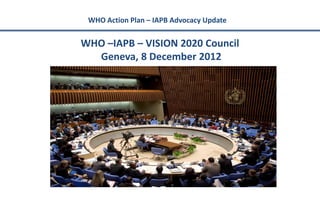
WHO Action Plan – IAPB Advocacy Update


WHO –IAPB – VISION 2020 Council
  Geneva, 8 December 2012
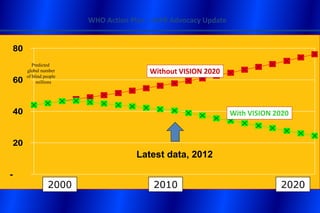
WHO Action Plan – IAPB Advocacy Update


    80
            Predicted
         global number                     Without VISION 2020
         of blind people
    60        millions


    40                                                              With VISION 2020


    20
                                        Latest data, 2012

-
                    2000                    2010                                 2020
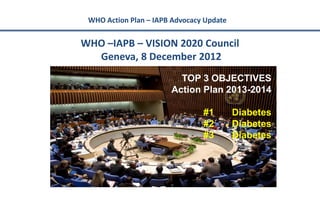
WHO Action Plan – IAPB Advocacy Update


WHO –IAPB – VISION 2020 Council
  Geneva, 8 December 2012
                         TOP 3 OBJECTIVES
                       Action Plan 2013-2014

                                #1        Diabetes
                                #2        Diabetes
                                #3        Diabetes
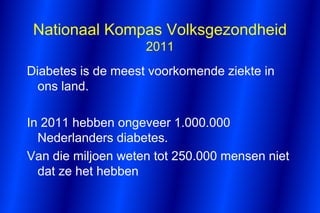
Nationaal Kompas Volksgezondheid
                    2011
Diabetes is de meest voorkomende ziekte in
  ons land.

In 2011 hebben ongeveer 1.000.000
  Nederlanders diabetes.
Van die miljoen weten tot 250.000 mensen niet
  dat ze het hebben
Nationaal Kompas Volksgezondheid
                    2011


• Ieder jaar krijgen 70.000 mensen diabetes,
  bijna 200 per dag.
• 9 van de 10 mensen met diabetes hebben
  diabetes type 2.
• Naar schatting hebben ongeveer 6.000
  kinderen tussen de 0-18 jaar diabetes.
Nationaal Kompas Volksgezondheid
                    2011
40-56% van de mensen met diabetes heeft last
  van één of meerdere chronische complicaties
  van diabetes. Dus 1 op de 2 diabeten.

Oogproblemen bij 4-46%, oplopend naar 82%
 na 20 jaar diabetes type 1.
Stand van zaken voor oogartsen
         in Nederland

Er is een sterk verouderde diabetes richtlijn
  (geen richtlijn voor anti-VEGF therapie)
Schlingemann, Mol, Keunen &
  Werkgroep Diabetische Oogziekten

Presentatie van een nieuwe concept richtlijn
 tijdens de NOG jaarvergadering in 2010,
     buiten het reguliere programma om.
         Update geschreven in 2012
Aanbevelingen SMK in concept richtlijn
            voor DME (1)
1. Bij KSMO met centraal oedeem met
  visusdaling is anti-VEGF therapie de 1e keus
2. Focale en grid laserbehandeling als 1e keus
  bij KSMO zonder centraal oedeem; de rol van
  subthreshold laser is in onderzoek
3. Bij KSMO met centraal oedeem plus focale
  lekkage buiten de fovea, wordt anti-VEGF
  therapie plus aanvullende laserbehandeling
  aanbevolen
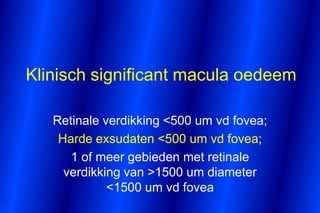
Klinisch significant macula oedeem

   Retinale verdikking <500 um vd fovea;
    Harde exsudaten <500 um vd fovea;
      1 of meer gebieden met retinale
     verdikking van >1500 um diameter
             <1500 um vd fovea
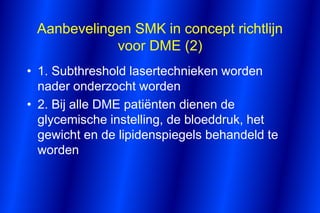
Aanbevelingen SMK in concept richtlijn
            voor DME (2)
• 1. Subthreshold lasertechnieken worden
  nader onderzocht worden
• 2. Bij alle DME patiënten dienen de
  glycemische instelling, de bloeddruk, het
  gewicht en de lipidenspiegels behandeld te
  worden
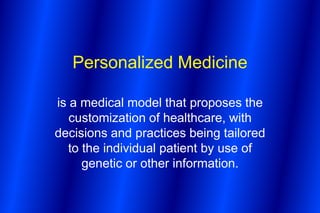
Personalized Medicine

     een modewoord
Personalized Medicine

is a medical model that proposes the
   customization of healthcare, with
decisions and practices being tailored
   to the individual patient by use of
      genetic or other information.
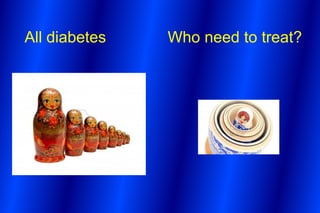
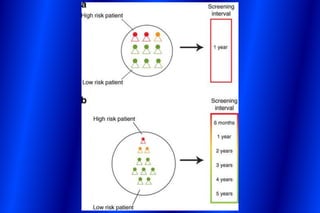
All diabetes   Who need to treat?
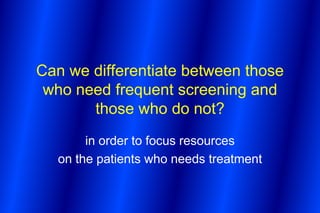
Can we differentiate between those
 who need frequent screening and
       those who do not?
       in order to focus resources
  on the patients who needs treatment
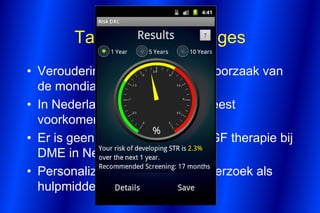
PM bij oogscreening

Individual Risk Assessment
      for DR screening
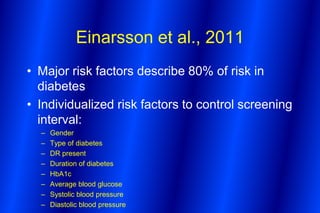
Einarsson et al., 2011
• Major risk factors describe 80% of risk in
  diabetes
• Individualized risk factors to control screening
  interval:
  –   Gender
  –   Type of diabetes
  –   DR present
  –   Duration of diabetes
  –   HbA1c
  –   Average blood glucose
  –   Systolic blood pressure
  –   Diastolic blood pressure
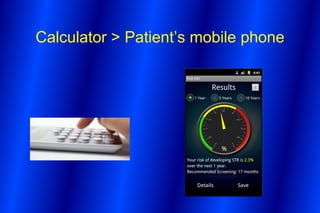
Calculator > Patient’s mobile phone
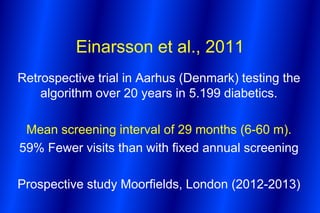
Einarsson et al., 2011
Retrospective trial in Aarhus (Denmark) testing the
    algorithm over 20 years in 5.199 diabetics.

 Mean screening interval of 29 months (6-60 m).
59% Fewer visits than with fixed annual screening

Prospective study Moorfields, London (2012-2013)
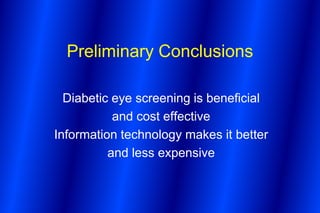
Preliminary Conclusions

  Diabetic eye screening is beneficial
           and cost effective
Information technology makes it better
          and less expensive
Take home messages
• Veroudering is de belangrijkste oorzaak van
  de mondiale diabetes epidemie
• In Nederlands is diabetes de meest
  voorkomende aandoening
• Er is geen richtlijn voor anti-VEGF therapie bij
  DME in Nederland
• Personalized Medicine is in onderzoek als
  hulpmiddel bij DR screening
Bedankt voor je aandacht!
WHO Action Plan – IAPB Advocacy Update


      IAPB Council Meeting
    8 December 2012, Geneva

     Strategic Plan 2013-2016
        Initial Consultation

       Peter Ackland, CEO
 Volker Klaus, IAPB chair Europe
Jan Keunen, IAPB co-chair Europe
WHO Action Plan – IAPB Advocacy Update


        IAPB Council

         CEO Report

            Peter Ackland
                IAPB

    Sunday 16th September 2012
WHO Action Plan – IAPB Advocacy Update


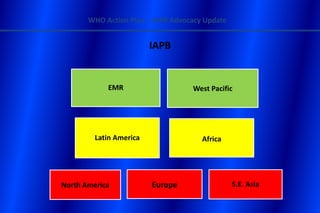
                         IAPB


            EMR                    West Pacific


         Latin America                Africa


North America            Europe                 S.E. Asia

OOG/ZOG: Keunen valmonte 2012

  • 1.
    Personalized Medicine voor oogscreeningbij diabeten Jan EE Keunen Nijmegen, The Netherlands OOG-ZOG Berg en Dal, zaterdag 1 december 2012
  • 2.
    Opbouw presentatie • Hetmondiale probleem diabetes • Diabetes in Nederland • Personalized Medicine bij DR screening
  • 3.
    In de laatstedrie decennia is het aantal diabeten wereldwijd gestegen van 153 miljoen in 1980 tot 347 miljoen in 2008 Deze stijging is voor 70% op conto van de mondiale veroudering The Lancet, June 2011
  • 5.
    WHO Action Plan– IAPB Advocacy Update WHO –IAPB – VISION 2020 Council Geneva, 8 December 2012
  • 6.
    WHO Action Plan– IAPB Advocacy Update 80 Predicted global number Without VISION 2020 of blind people 60 millions 40 With VISION 2020 20 Latest data, 2012 - 2000 2010 2020
  • 7.
    WHO Action Plan– IAPB Advocacy Update WHO –IAPB – VISION 2020 Council Geneva, 8 December 2012 TOP 3 OBJECTIVES Action Plan 2013-2014 #1 Diabetes #2 Diabetes #3 Diabetes
  • 8.
    Nationaal Kompas Volksgezondheid 2011 Diabetes is de meest voorkomende ziekte in ons land. In 2011 hebben ongeveer 1.000.000 Nederlanders diabetes. Van die miljoen weten tot 250.000 mensen niet dat ze het hebben
  • 9.
    Nationaal Kompas Volksgezondheid 2011 • Ieder jaar krijgen 70.000 mensen diabetes, bijna 200 per dag. • 9 van de 10 mensen met diabetes hebben diabetes type 2. • Naar schatting hebben ongeveer 6.000 kinderen tussen de 0-18 jaar diabetes.
  • 10.
    Nationaal Kompas Volksgezondheid 2011 40-56% van de mensen met diabetes heeft last van één of meerdere chronische complicaties van diabetes. Dus 1 op de 2 diabeten. Oogproblemen bij 4-46%, oplopend naar 82% na 20 jaar diabetes type 1.
  • 11.
    Stand van zakenvoor oogartsen in Nederland Er is een sterk verouderde diabetes richtlijn (geen richtlijn voor anti-VEGF therapie)
  • 12.
    Schlingemann, Mol, Keunen& Werkgroep Diabetische Oogziekten Presentatie van een nieuwe concept richtlijn tijdens de NOG jaarvergadering in 2010, buiten het reguliere programma om. Update geschreven in 2012
  • 13.
    Aanbevelingen SMK inconcept richtlijn voor DME (1) 1. Bij KSMO met centraal oedeem met visusdaling is anti-VEGF therapie de 1e keus 2. Focale en grid laserbehandeling als 1e keus bij KSMO zonder centraal oedeem; de rol van subthreshold laser is in onderzoek 3. Bij KSMO met centraal oedeem plus focale lekkage buiten de fovea, wordt anti-VEGF therapie plus aanvullende laserbehandeling aanbevolen
  • 14.
    Klinisch significant maculaoedeem Retinale verdikking <500 um vd fovea; Harde exsudaten <500 um vd fovea; 1 of meer gebieden met retinale verdikking van >1500 um diameter <1500 um vd fovea
  • 15.
    Aanbevelingen SMK inconcept richtlijn voor DME (2) • 1. Subthreshold lasertechnieken worden nader onderzocht worden • 2. Bij alle DME patiënten dienen de glycemische instelling, de bloeddruk, het gewicht en de lipidenspiegels behandeld te worden
  • 16.
  • 17.
    Personalized Medicine is amedical model that proposes the customization of healthcare, with decisions and practices being tailored to the individual patient by use of genetic or other information.
  • 18.
    All diabetes Who need to treat?
  • 19.
    Can we differentiatebetween those who need frequent screening and those who do not? in order to focus resources on the patients who needs treatment
  • 20.
    PM bij oogscreening IndividualRisk Assessment for DR screening
  • 21.
    Einarsson et al.,2011 • Major risk factors describe 80% of risk in diabetes • Individualized risk factors to control screening interval: – Gender – Type of diabetes – DR present – Duration of diabetes – HbA1c – Average blood glucose – Systolic blood pressure – Diastolic blood pressure
  • 22.
  • 23.
    Einarsson et al.,2011 Retrospective trial in Aarhus (Denmark) testing the algorithm over 20 years in 5.199 diabetics. Mean screening interval of 29 months (6-60 m). 59% Fewer visits than with fixed annual screening Prospective study Moorfields, London (2012-2013)
  • 24.
    Preliminary Conclusions Diabetic eye screening is beneficial and cost effective Information technology makes it better and less expensive
  • 25.
    Take home messages •Veroudering is de belangrijkste oorzaak van de mondiale diabetes epidemie • In Nederlands is diabetes de meest voorkomende aandoening • Er is geen richtlijn voor anti-VEGF therapie bij DME in Nederland • Personalized Medicine is in onderzoek als hulpmiddel bij DR screening
  • 26.
    Bedankt voor jeaandacht!
  • 27.
    WHO Action Plan– IAPB Advocacy Update IAPB Council Meeting 8 December 2012, Geneva Strategic Plan 2013-2016 Initial Consultation Peter Ackland, CEO Volker Klaus, IAPB chair Europe Jan Keunen, IAPB co-chair Europe
  • 28.
    WHO Action Plan– IAPB Advocacy Update IAPB Council CEO Report Peter Ackland IAPB Sunday 16th September 2012
  • 29.
    WHO Action Plan– IAPB Advocacy Update IAPB EMR West Pacific Latin America Africa North America Europe S.E. Asia