VCS
Current challenges, strange climates and
weatherproofing
Do you have branding
straplines?
True peace is not merely the absence of
tension: it is the presence of justice

The time is always right to do what’s
right.
Your birth is not your destiny
Women who seek to be equal with men
lack ambition
Narrative?
Economic contribution yet vast economic inequality.
Social contribution but social inequality.

Cultural contribution (food, music, dance, drama).
Sporting contribution (Olympics, football, boxing
etc).

Contribution to faith development.
Contribution to community development.
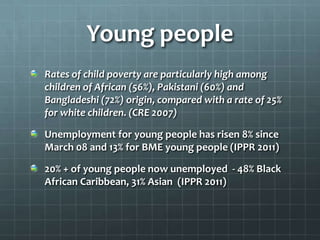
Young people
Rates of child poverty are particularly high among
children of African (56%), Pakistani (60%) and
Bangladeshi (72%) origin, compared with a rate of 25%
for white children. (CRE 2007)
Unemployment for young people has risen 8% since
March 08 and 13% for BME young people (IPPR 2011)

20% + of young people now unemployed - 48% Black
African Caribbean, 31% Asian (IPPR 2011)
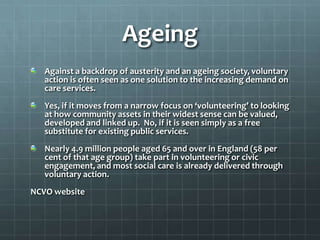
Ageing
Against a backdrop of austerity and an ageing society, voluntary
action is often seen as one solution to the increasing demand on
care services.
Yes, if it moves from a narrow focus on ‘volunteering’ to looking
at how community assets in their widest sense can be valued,
developed and linked up. No, if it is seen simply as a free
substitute for existing public services.
Nearly 4.9 million people aged 65 and over in England (58 per
cent of that age group) take part in volunteering or civic
engagement, and most social care is already delivered through
voluntary action.
NCVO website
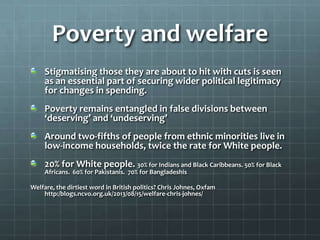
Poverty and welfare
Stigmatising those they are about to hit with cuts is seen
as an essential part of securing wider political legitimacy
for changes in spending.
Poverty remains entangled in false divisions between
‘deserving’ and ‘undeserving’
Around two-fifths of people from ethnic minorities live in
low-income households, twice the rate for White people.
20% for White people. 30% for Indians and Black Caribbeans. 50% for Black
Africans. 60% for Pakistanis. 70% for Bangladeshis

Welfare, the dirtiest word in British politics? Chris Johnes, Oxfam
http:/blogs.ncvo.org.uk/2013/08/15/welfare-chris-johnes/
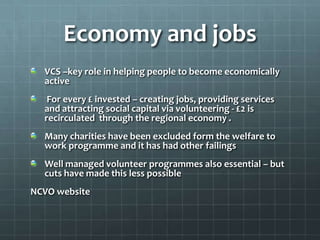
Economy and jobs
VCS –key role in helping people to become economically
active
For every £ invested – creating jobs, providing services
and attracting social capital via volunteering - £2 is
recirculated through the regional economy .
Many charities have been excluded form the welfare to
work programme and it has had other failings
Well managed volunteer programmes also essential – but
cuts have made this less possible
NCVO website
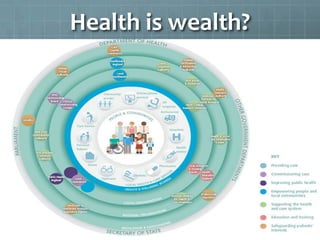
Health is wealth?
Homelessness
Housing for young people is unaffordable
39% of St Mungo’s clients were from BME
communities
housing benefit is paid to people on low income.
BME communities are amongst those with the
lowest incomes, often living in poor housing and
with high unemployment rates.
Bedroom tax will have a negative impact.
We know that BME communities are more likely to
become homeless.
Criminal Justice
Stop and search
Representation

Custodial sentences
Prevention of re-offending (each prison place costs
£40,000)

Policing
Political Context of VCS
Big Society and localism - nebulous concept; appeals
to left & right of spectrum
English Localism Act 2011
Argues answers are local, community scale not with
‘big government’
Revival of ‘the local’ & policy interest in
places/communities
Local decision-making, asset-ownership, mobilisation of
VCS etc
Civil society as a ‘resource’ for the state in austere times
Dr Kim McKee, Centre for Housing Research, University of St Andrews
25
Exacerbating Inequalities?
As Cruikshank (1999) argues strategies of empowerment
are still technologies of governance
Localism may exacerbate social-spatial inequalities:
Communities do not speak with one voice
Nor are they all equally resourced nor empowered; nor
operating at the same scale
Perspective on power that presupposes freedom

Some communities may be more able than others to
articulate their needs and command resources:
Issues such as skills, education, capacity, experience are all
relevant here
May disadvantage already low-income/deprived
neighbourhoods

26
Mobilization of community not new (history matters)
Policy discourses have differential impact in different places in
different ways (geography important)
Localism is no guarantee of community empowerment
Devolution may exacerbate inequalities
Poses threats as well as opportunities for the VCS
Blurring boundaries between third and public sector; expected to
fill the gap as the state retrenches with fewer resources
Important to consider broader context of welfare reform

Should not assume that all communities necessarily want to
take control
May not be a demand for community ownership for example, where
already receiving good service
Local and central government have statutory responsibilities
27
Activism or arm of the
state? (NCIA)
‘De-coupling’ of voluntary agencies that provide
services (often with state funding) to individuals and
communities, from the rest – activists and
community groups.
Commissioning is increasingly marketised and
professionalised: around access to finance, capacity,
risk management, and having the right technical
(contracting and financial) skills.
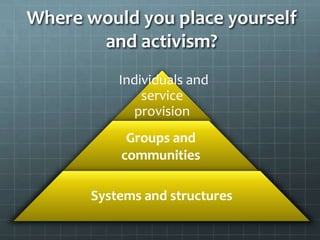
Where would you place yourself
and activism?
Individuals and
service
provision
Groups and
communities

Systems and structures
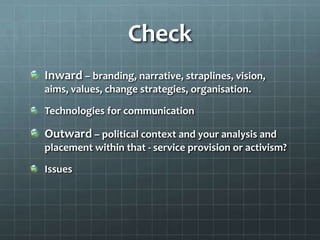
Check
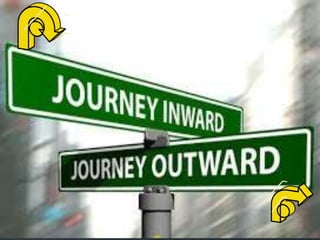
Inward – branding, narrative, straplines, vision,
aims, values, change strategies, organisation.
Technologies for communication

Outward – political context and your analysis and
placement within that - service provision or activism?

Issues
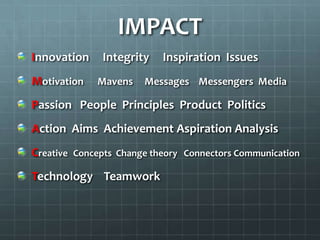
IMPACT
Innovation
Motivation

Integrity
Mavens

Inspiration Issues

Messages Messengers Media

Passion People Principles Product Politics

Action Aims Achievement Aspiration Analysis
Creative

Concepts Change theory Connectors Communication

Technology Teamwork

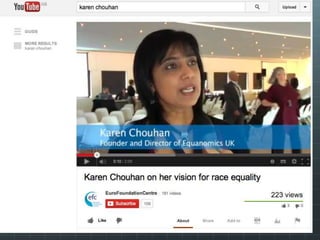
Karen Chouhan 2013 Future Focus Keynote Speaker

  • 1.
    VCS Current challenges, strangeclimates and weatherproofing
  • 14.
    Do you havebranding straplines? True peace is not merely the absence of tension: it is the presence of justice The time is always right to do what’s right. Your birth is not your destiny Women who seek to be equal with men lack ambition
  • 15.
    Narrative? Economic contribution yetvast economic inequality. Social contribution but social inequality. Cultural contribution (food, music, dance, drama). Sporting contribution (Olympics, football, boxing etc). Contribution to faith development. Contribution to community development.
  • 18.
    Young people Rates ofchild poverty are particularly high among children of African (56%), Pakistani (60%) and Bangladeshi (72%) origin, compared with a rate of 25% for white children. (CRE 2007) Unemployment for young people has risen 8% since March 08 and 13% for BME young people (IPPR 2011) 20% + of young people now unemployed - 48% Black African Caribbean, 31% Asian (IPPR 2011)
  • 19.
    Ageing Against a backdropof austerity and an ageing society, voluntary action is often seen as one solution to the increasing demand on care services. Yes, if it moves from a narrow focus on ‘volunteering’ to looking at how community assets in their widest sense can be valued, developed and linked up. No, if it is seen simply as a free substitute for existing public services. Nearly 4.9 million people aged 65 and over in England (58 per cent of that age group) take part in volunteering or civic engagement, and most social care is already delivered through voluntary action. NCVO website
  • 20.
    Poverty and welfare Stigmatisingthose they are about to hit with cuts is seen as an essential part of securing wider political legitimacy for changes in spending. Poverty remains entangled in false divisions between ‘deserving’ and ‘undeserving’ Around two-fifths of people from ethnic minorities live in low-income households, twice the rate for White people. 20% for White people. 30% for Indians and Black Caribbeans. 50% for Black Africans. 60% for Pakistanis. 70% for Bangladeshis Welfare, the dirtiest word in British politics? Chris Johnes, Oxfam http:/blogs.ncvo.org.uk/2013/08/15/welfare-chris-johnes/
  • 21.
    Economy and jobs VCS–key role in helping people to become economically active For every £ invested – creating jobs, providing services and attracting social capital via volunteering - £2 is recirculated through the regional economy . Many charities have been excluded form the welfare to work programme and it has had other failings Well managed volunteer programmes also essential – but cuts have made this less possible NCVO website
  • 22.
  • 23.
    Homelessness Housing for youngpeople is unaffordable 39% of St Mungo’s clients were from BME communities housing benefit is paid to people on low income. BME communities are amongst those with the lowest incomes, often living in poor housing and with high unemployment rates. Bedroom tax will have a negative impact. We know that BME communities are more likely to become homeless.
  • 24.
    Criminal Justice Stop andsearch Representation Custodial sentences Prevention of re-offending (each prison place costs £40,000) Policing
  • 25.
    Political Context ofVCS Big Society and localism - nebulous concept; appeals to left & right of spectrum English Localism Act 2011 Argues answers are local, community scale not with ‘big government’ Revival of ‘the local’ & policy interest in places/communities Local decision-making, asset-ownership, mobilisation of VCS etc Civil society as a ‘resource’ for the state in austere times Dr Kim McKee, Centre for Housing Research, University of St Andrews 25
  • 26.
    Exacerbating Inequalities? As Cruikshank(1999) argues strategies of empowerment are still technologies of governance Localism may exacerbate social-spatial inequalities: Communities do not speak with one voice Nor are they all equally resourced nor empowered; nor operating at the same scale Perspective on power that presupposes freedom Some communities may be more able than others to articulate their needs and command resources: Issues such as skills, education, capacity, experience are all relevant here May disadvantage already low-income/deprived neighbourhoods 26
  • 27.
    Mobilization of communitynot new (history matters) Policy discourses have differential impact in different places in different ways (geography important) Localism is no guarantee of community empowerment Devolution may exacerbate inequalities Poses threats as well as opportunities for the VCS Blurring boundaries between third and public sector; expected to fill the gap as the state retrenches with fewer resources Important to consider broader context of welfare reform Should not assume that all communities necessarily want to take control May not be a demand for community ownership for example, where already receiving good service Local and central government have statutory responsibilities 27
  • 28.
    Activism or armof the state? (NCIA) ‘De-coupling’ of voluntary agencies that provide services (often with state funding) to individuals and communities, from the rest – activists and community groups. Commissioning is increasingly marketised and professionalised: around access to finance, capacity, risk management, and having the right technical (contracting and financial) skills.
  • 29.
    Where would youplace yourself and activism? Individuals and service provision Groups and communities Systems and structures
  • 31.
    Check Inward – branding,narrative, straplines, vision, aims, values, change strategies, organisation. Technologies for communication Outward – political context and your analysis and placement within that - service provision or activism? Issues
  • 32.
    IMPACT Innovation Motivation Integrity Mavens Inspiration Issues Messages MessengersMedia Passion People Principles Product Politics Action Aims Achievement Aspiration Analysis Creative Concepts Change theory Connectors Communication Technology Teamwork

Editor's Notes

  • #15 Martin Luther King (top two)Government mobility strategyMae West
  • #26 SPECTRUM: emphasis on small gvt & co-operative/mutual traditions of providing servicesBIG GOVERNMENT: see quote on slide 4 then back. Entered popular politics since formation coalition gvt 2010. Nebulous concept appeals to both left & right of political spectrum.ESRC Seminar Series: The Big Society, Localism & Housing Policy
  • #27 Dr Kim McKee, Centre for Housing Research, University of St AndrewsESRC Seminar Series: The Big Society, Localism & Housing Policy
  • #28 Dr Kim McKee, Centre for Housing Research, University of St AndrewsESRC Seminar Series: The Big Society, Localism & Housing Policy