
HUMAN RIGHTS AND VULNERABLE
         GROUPS
               VISHWANATH M.
   (DR.D.C.PAVATE FELLOW, CAMBRIDGE UNIVERSITY, UK)

        ASSOCIATE PROFESSOR,
         DEPARTMENT OF LAW
    KARNATAK UNIVERSITY, DHARWAD
‘Human Rights constitute
 those very rights, which
 one has precisely because
 of being a Human Being’
                - D.D.Raphael
UDHR
PREAMBLE
Whereas recognition of the
inherent dignity & of the equal
& inalienable rights of all
members of the human family
is    the    foundation      of
freedom, justice & peace in
The Universal Declaration of Human
 Rights 10th Dec 1948
The United Nations system for the
 promotion and protection of human
 rights consists of two main types of
 body
1.Bodies created under the UN
 Charter.
2.Bodies     created    under        the
 international human rights treaties
The Protection of Human Rights Act
• Sec-2(d) Human rights means rights
  relating to life, liberty, equality and
  dignity of the individual guaranteed by the
  Constitution or embodied in the
  International Covenants and enforceable
  by Courts in India.
• Constitution
I. Preamble
II. Part III & IV
VULNERABLE GROUPS
• Vulnerable refers to the harsh reality that
  these groups are more likely to
  encounter discrimination or other human
  rights violations than others.
• There are particular groups who, for
  various reasons, are weak and
  vulnerable or have traditionally been
  victims of violations and consequently
  require special protection for the equal
  and effective enjoyment of their human
  rights.
COMMONLY IDENTIFIED VULNERABLE GROUPS
• Women and Children
• Displaced People
• Persons With Disabilities
• Refugees
• Elderly People
• Victims of Racism
• Persons With HIV-AIDS
In India
• Scheduled Castes/ Scheduled Tribes
• Linguistic Minorities/ Religious Minorities
Reasons?

The political, social, economic
and cultural inequalities present in
each       society     many        a
times, hamper the rights of these
weaker       sections       of     a
society, thereby obstructing them
from fully realizing their rights.
The 2008 guidelines (Committee on Economic, Social
                and Cultural Rights)
• Introduced the terminology marginalized
  and disadvantaged groups instead of
  Vulnerable groups.
• The 2008 guidelines include the training
  programmes, specific data on housing,
  right to food, education, scientific
  progression, malnutrition, health, and
  other social welfare schemes evolved
  from time to time by the states.
SITUATION IN INDIA
• The hierarchical caste system along with
  other socio-cultural practices prevailing
  in India for many centuries has resulted
  in discrimination and inequality.
• 2011 Census, the SC’s constitutes around
  16.2% & 8.2% of ST’s population of the
  country
• In addition to Constitutional provisions, a
  number of legislations were enacted to
  end discrimination against SC/ST
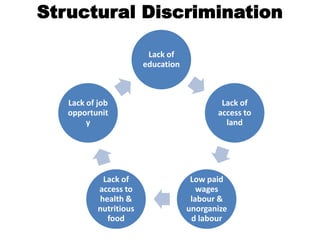
Structural Discrimination

                         Lack of
                        education


   Lack of job                              Lack of
   opportunit                              access to
        y                                    land


            Lack of                  Low paid
           access to                   wages
           health &                  labour &
           nutritious               unorganize
             food                    d labour
PROTECTION BY LAW
• The Protection of Civil Rights (Anti-
  Untouchability) Act, 1955.
• The Bonded Labour (Abolition) Act, 1976.
• The Scheduled Castes and Scheduled Tribes
  (Prevention of Atrocities) Act, 1989.
• The Employment of Manuel Scavengers and
  Construction of Dry Latrines (Prohibition)
  Act, 1993.
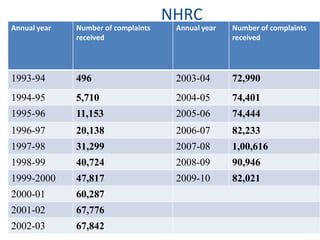
NHRC
Annual year   Number of complaints    Annual year   Number of complaints
              received                              received


1993-94       496                     2003-04       72,990
1994-95       5,710                   2004-05       74,401
1995-96       11,153                  2005-06       74,444
1996-97       20,138                  2006-07       82,233
1997-98       31,299                  2007-08       1,00,616
1998-99       40,724                  2008-09       90,946
1999-2000     47,817                  2009-10       82,021
2000-01       60,287
2001-02       67,776
2002-03       67,842
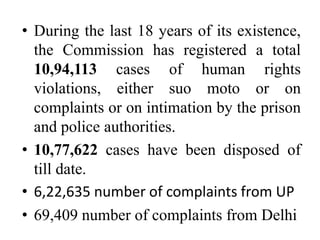
• During the last 18 years of its existence,
  the Commission has registered a total
  10,94,113 cases of human rights
  violations, either suo moto or on
  complaints or on intimation by the prison
  and police authorities.
• 10,77,622 cases have been disposed of
  till date.
• 6,22,635 number of complaints from UP
• 69,409 number of complaints from Delhi
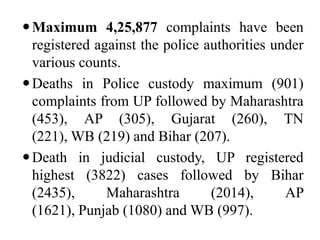
 Maximum 4,25,877 complaints have been
  registered against the police authorities under
  various counts.
 Deaths in Police custody maximum (901)
  complaints from UP followed by Maharashtra
  (453), AP (305), Gujarat (260), TN
  (221), WB (219) and Bihar (207).
 Death in judicial custody, UP registered
  highest (3822) cases followed by Bihar
  (2435),      Maharashtra       (2014),      AP
  (1621), Punjab (1080) and WB (997).
THANK YOU

Kalghatagi

  • 1.
    HUMAN RIGHTS ANDVULNERABLE GROUPS VISHWANATH M. (DR.D.C.PAVATE FELLOW, CAMBRIDGE UNIVERSITY, UK) ASSOCIATE PROFESSOR, DEPARTMENT OF LAW KARNATAK UNIVERSITY, DHARWAD
  • 2.
    ‘Human Rights constitute those very rights, which one has precisely because of being a Human Being’ - D.D.Raphael
  • 3.
    UDHR PREAMBLE Whereas recognition ofthe inherent dignity & of the equal & inalienable rights of all members of the human family is the foundation of freedom, justice & peace in
  • 4.
    The Universal Declarationof Human Rights 10th Dec 1948 The United Nations system for the promotion and protection of human rights consists of two main types of body 1.Bodies created under the UN Charter. 2.Bodies created under the international human rights treaties
  • 5.
    The Protection ofHuman Rights Act • Sec-2(d) Human rights means rights relating to life, liberty, equality and dignity of the individual guaranteed by the Constitution or embodied in the International Covenants and enforceable by Courts in India. • Constitution I. Preamble II. Part III & IV
  • 6.
    VULNERABLE GROUPS • Vulnerablerefers to the harsh reality that these groups are more likely to encounter discrimination or other human rights violations than others. • There are particular groups who, for various reasons, are weak and vulnerable or have traditionally been victims of violations and consequently require special protection for the equal and effective enjoyment of their human rights.
  • 7.
    COMMONLY IDENTIFIED VULNERABLEGROUPS • Women and Children • Displaced People • Persons With Disabilities • Refugees • Elderly People • Victims of Racism • Persons With HIV-AIDS In India • Scheduled Castes/ Scheduled Tribes • Linguistic Minorities/ Religious Minorities
  • 8.
    Reasons? The political, social,economic and cultural inequalities present in each society many a times, hamper the rights of these weaker sections of a society, thereby obstructing them from fully realizing their rights.
  • 9.
    The 2008 guidelines(Committee on Economic, Social and Cultural Rights) • Introduced the terminology marginalized and disadvantaged groups instead of Vulnerable groups. • The 2008 guidelines include the training programmes, specific data on housing, right to food, education, scientific progression, malnutrition, health, and other social welfare schemes evolved from time to time by the states.
  • 10.
    SITUATION IN INDIA •The hierarchical caste system along with other socio-cultural practices prevailing in India for many centuries has resulted in discrimination and inequality. • 2011 Census, the SC’s constitutes around 16.2% & 8.2% of ST’s population of the country • In addition to Constitutional provisions, a number of legislations were enacted to end discrimination against SC/ST
  • 11.
    Structural Discrimination Lack of education Lack of job Lack of opportunit access to y land Lack of Low paid access to wages health & labour & nutritious unorganize food d labour
  • 12.
    PROTECTION BY LAW •The Protection of Civil Rights (Anti- Untouchability) Act, 1955. • The Bonded Labour (Abolition) Act, 1976. • The Scheduled Castes and Scheduled Tribes (Prevention of Atrocities) Act, 1989. • The Employment of Manuel Scavengers and Construction of Dry Latrines (Prohibition) Act, 1993.
  • 13.
    NHRC Annual year Number of complaints Annual year Number of complaints received received 1993-94 496 2003-04 72,990 1994-95 5,710 2004-05 74,401 1995-96 11,153 2005-06 74,444 1996-97 20,138 2006-07 82,233 1997-98 31,299 2007-08 1,00,616 1998-99 40,724 2008-09 90,946 1999-2000 47,817 2009-10 82,021 2000-01 60,287 2001-02 67,776 2002-03 67,842
  • 14.
    • During thelast 18 years of its existence, the Commission has registered a total 10,94,113 cases of human rights violations, either suo moto or on complaints or on intimation by the prison and police authorities. • 10,77,622 cases have been disposed of till date. • 6,22,635 number of complaints from UP • 69,409 number of complaints from Delhi
  • 15.
     Maximum 4,25,877complaints have been registered against the police authorities under various counts.  Deaths in Police custody maximum (901) complaints from UP followed by Maharashtra (453), AP (305), Gujarat (260), TN (221), WB (219) and Bihar (207).  Death in judicial custody, UP registered highest (3822) cases followed by Bihar (2435), Maharashtra (2014), AP (1621), Punjab (1080) and WB (997).
  • 16.