Tecnologias Móviles: Incremento de Teledensidad Andicom 2003 – Cartagena, ColombiaJOSE F. OTERO
Slide Number   1AgendaMore spectrum?Next Generation Services RequirementsPending IssuesLatin America’s Spectrum Licensing ScenarioCompetition, Technologies and New ServicesAddressing the Market: SegmentationThe Roaming MythConclusions
Slide Number   2PerspectivaLa finalidad de la sociedad de la informacion es el ser humano.	Manuel Martinez Nino, Andicom 2003
Slide Number   3More Spectrum?Traditionally the next generation services debate centered on the need for more spectrumThe 2000 World Radiocommunication Conference (WRC) adopted the resolution that approximately 160 MHz of additional spectrum will be required in order to meet the capacity needs of the high traffic areas by 2010.
Slide Number   4Next Generation Services RequirementsHigh-speed, high-bandwidth mobile wireless services (termed “3G”) in many cases warrants additional spectrum allocation.Additional spectrum allocations do not preclude the incentive for operators to maximize efficient spectrum use.Spectrum aggregation limits are no longer necessary to stimulate competition nor to encourage spectrum efficiency enhancements.Coverage and capacity are currently emerging as key competitive factors.Band-clearing compensation payments will emerge as the solution to the problem of incumbents squatting on valuable spectrum.
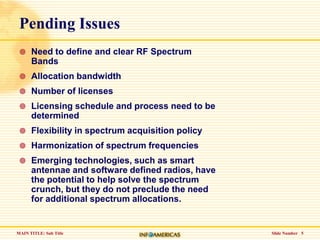
Slide Number   5Pending IssuesNeed to define and clear RF Spectrum BandsAllocation bandwidthNumber of licensesLicensing schedule and process need to be determinedFlexibility in spectrum acquisition policyHarmonization of spectrum frequenciesEmerging technologies, such as smart antennae and software defined radios, have the potential to help solve the spectrum crunch, but they do not preclude the need for additional spectrum allocations.
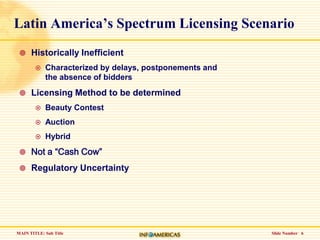
Slide Number   6Latin America’s Spectrum Licensing ScenarioHistorically InefficientCharacterized by delays, postponements and the absence of biddersLicensing Method to be determinedBeauty ContestAuction HybridNot a “Cash Cow”Regulatory Uncertainty
Slide Number   7Competition, Technologies & New ServicesMVNOsWi FiExpansion of CPP 3G Data ServicesWLLEmergence of Full Service ProvidersBroadband ServicesThe Handset Market
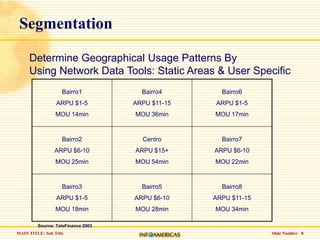
Slide Number   8SegmentationDetermine Geographical Usage Patterns By Using Network Data Tools: Static Areas & User SpecificSource: TeleFinance 2003
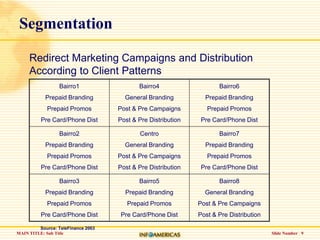
Slide Number   9SegmentationRedirect Marketing Campaigns and DistributionAccording to Client PatternsSource: TeleFinance 2003
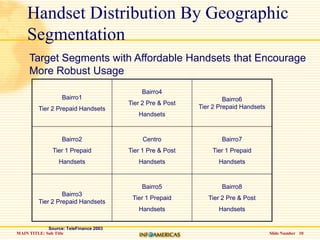
Slide Number   10Handset Distribution By Geographic SegmentationTarget Segments with Affordable Handsets that EncourageMore Robust UsageSource: TeleFinance 2003
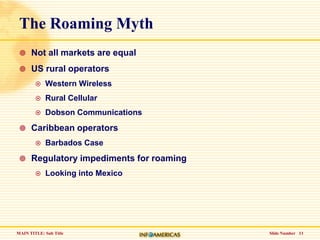
Slide Number   11The Roaming MythNot all markets are equalUS rural operatorsWestern WirelessRural CellularDobson CommunicationsCaribbean operatorsBarbados CaseRegulatory impediments for roamingLooking into Mexico
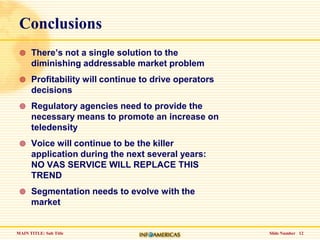
Slide Number   12ConclusionsThere’s not a single solution to the diminishing addressable market problemProfitability will continue to drive operators decisions Regulatory agencies need to provide the necessary means to promote an increase on teledensityVoice will continue to be the killer application during the next several years: NO VAS SERVICE WILL REPLACE THIS TRENDSegmentation needs to evolve with the market
Slide Number   13GRACIAS!Jose F. OteroTelecoms Practice DirectorJotero@infoamericas.com

Jose F Otero

  • 1.
    Tecnologias Móviles: Incrementode Teledensidad Andicom 2003 – Cartagena, ColombiaJOSE F. OTERO
  • 2.
    Slide Number 1AgendaMore spectrum?Next Generation Services RequirementsPending IssuesLatin America’s Spectrum Licensing ScenarioCompetition, Technologies and New ServicesAddressing the Market: SegmentationThe Roaming MythConclusions
  • 3.
    Slide Number 2PerspectivaLa finalidad de la sociedad de la informacion es el ser humano. Manuel Martinez Nino, Andicom 2003
  • 4.
    Slide Number 3More Spectrum?Traditionally the next generation services debate centered on the need for more spectrumThe 2000 World Radiocommunication Conference (WRC) adopted the resolution that approximately 160 MHz of additional spectrum will be required in order to meet the capacity needs of the high traffic areas by 2010.
  • 5.
    Slide Number 4Next Generation Services RequirementsHigh-speed, high-bandwidth mobile wireless services (termed “3G”) in many cases warrants additional spectrum allocation.Additional spectrum allocations do not preclude the incentive for operators to maximize efficient spectrum use.Spectrum aggregation limits are no longer necessary to stimulate competition nor to encourage spectrum efficiency enhancements.Coverage and capacity are currently emerging as key competitive factors.Band-clearing compensation payments will emerge as the solution to the problem of incumbents squatting on valuable spectrum.
  • 6.
    Slide Number 5Pending IssuesNeed to define and clear RF Spectrum BandsAllocation bandwidthNumber of licensesLicensing schedule and process need to be determinedFlexibility in spectrum acquisition policyHarmonization of spectrum frequenciesEmerging technologies, such as smart antennae and software defined radios, have the potential to help solve the spectrum crunch, but they do not preclude the need for additional spectrum allocations.
  • 7.
    Slide Number 6Latin America’s Spectrum Licensing ScenarioHistorically InefficientCharacterized by delays, postponements and the absence of biddersLicensing Method to be determinedBeauty ContestAuction HybridNot a “Cash Cow”Regulatory Uncertainty
  • 8.
    Slide Number 7Competition, Technologies & New ServicesMVNOsWi FiExpansion of CPP 3G Data ServicesWLLEmergence of Full Service ProvidersBroadband ServicesThe Handset Market
  • 9.
    Slide Number 8SegmentationDetermine Geographical Usage Patterns By Using Network Data Tools: Static Areas & User SpecificSource: TeleFinance 2003
  • 10.
    Slide Number 9SegmentationRedirect Marketing Campaigns and DistributionAccording to Client PatternsSource: TeleFinance 2003
  • 11.
    Slide Number 10Handset Distribution By Geographic SegmentationTarget Segments with Affordable Handsets that EncourageMore Robust UsageSource: TeleFinance 2003
  • 12.
    Slide Number 11The Roaming MythNot all markets are equalUS rural operatorsWestern WirelessRural CellularDobson CommunicationsCaribbean operatorsBarbados CaseRegulatory impediments for roamingLooking into Mexico
  • 13.
    Slide Number 12ConclusionsThere’s not a single solution to the diminishing addressable market problemProfitability will continue to drive operators decisions Regulatory agencies need to provide the necessary means to promote an increase on teledensityVoice will continue to be the killer application during the next several years: NO VAS SERVICE WILL REPLACE THIS TRENDSegmentation needs to evolve with the market
  • 14.
    Slide Number 13GRACIAS!Jose F. OteroTelecoms Practice DirectorJotero@infoamericas.com