Are Our RoadMaps Going in the Right Direction?John P Williams, MDPeter and Eva Safar ProfessorAssociate Scientific and Medical DirectorUPMC and University of Pittsburgh
Rare opportunity to quote a film and TV star....
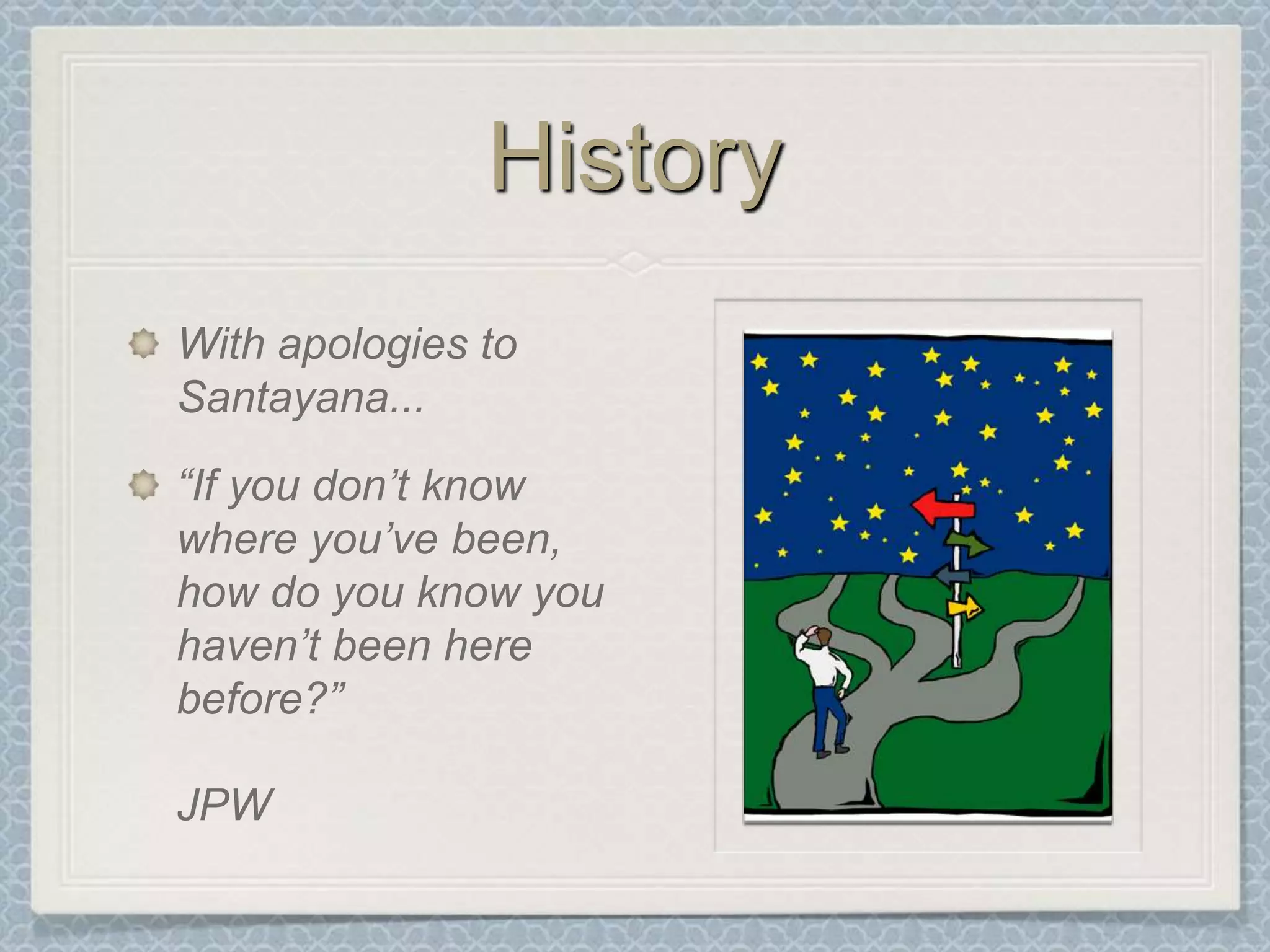
HistoryWith apologies to Santayana...“If you don’t know where you’ve been, how do you know you haven’t been here before?”JPW
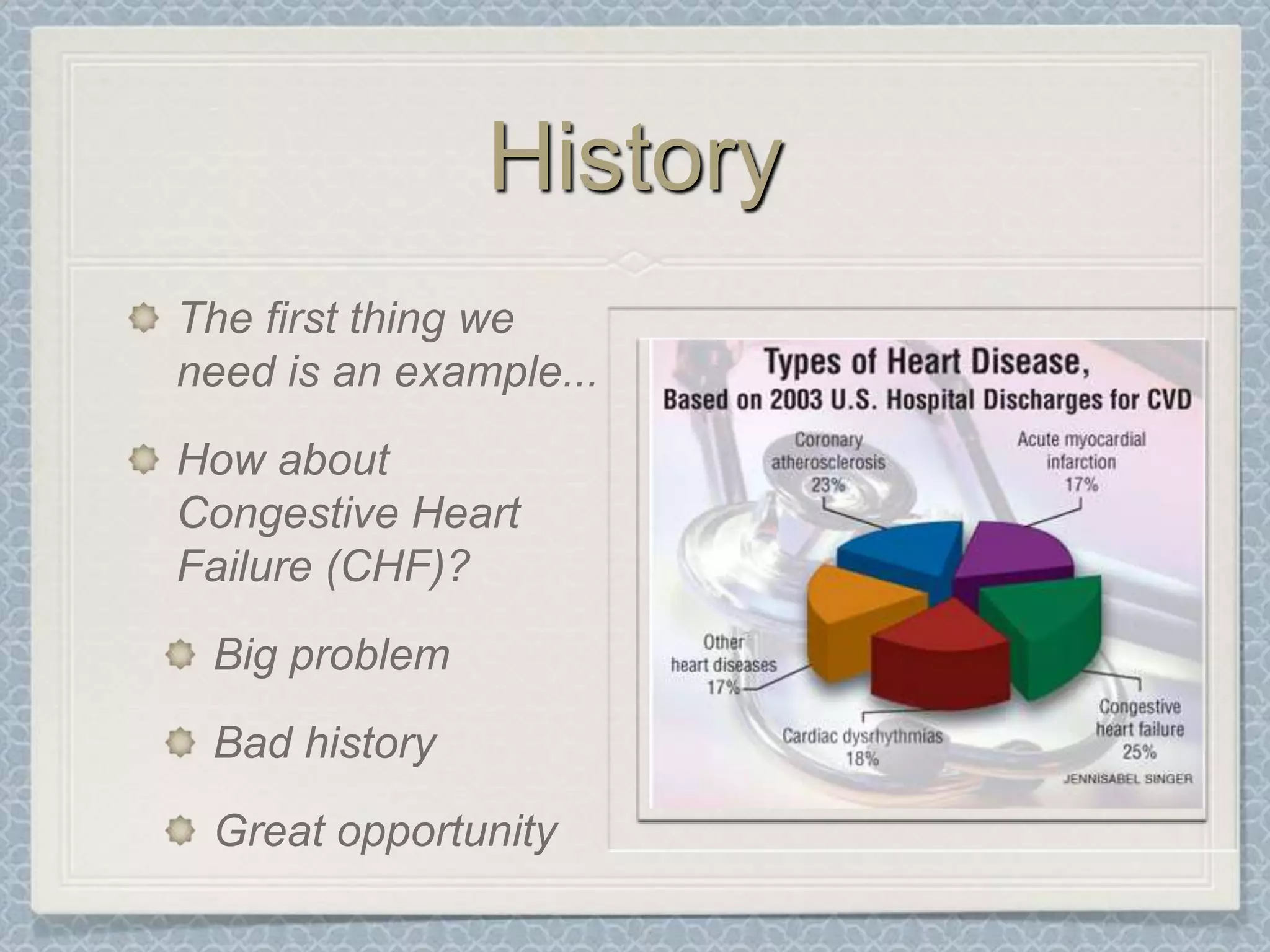
HistoryThe first thing we need is an example...How about Congestive Heart Failure (CHF)?Big problemBad historyGreat opportunity
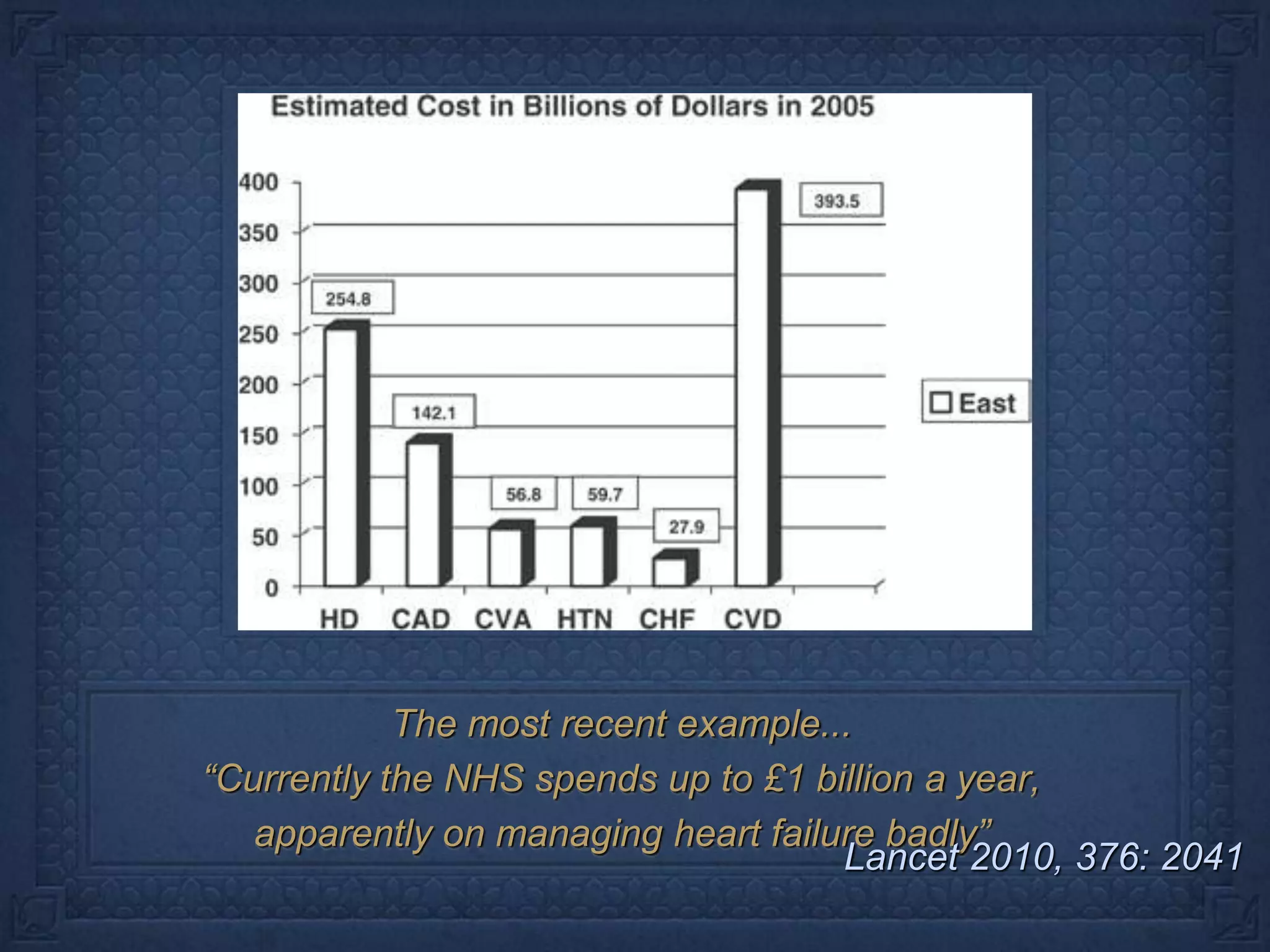
The most recent example...“Currently the NHS spends up to £1 billion a year, apparently on managing heart failure badly”Lancet 2010, 376: 2041
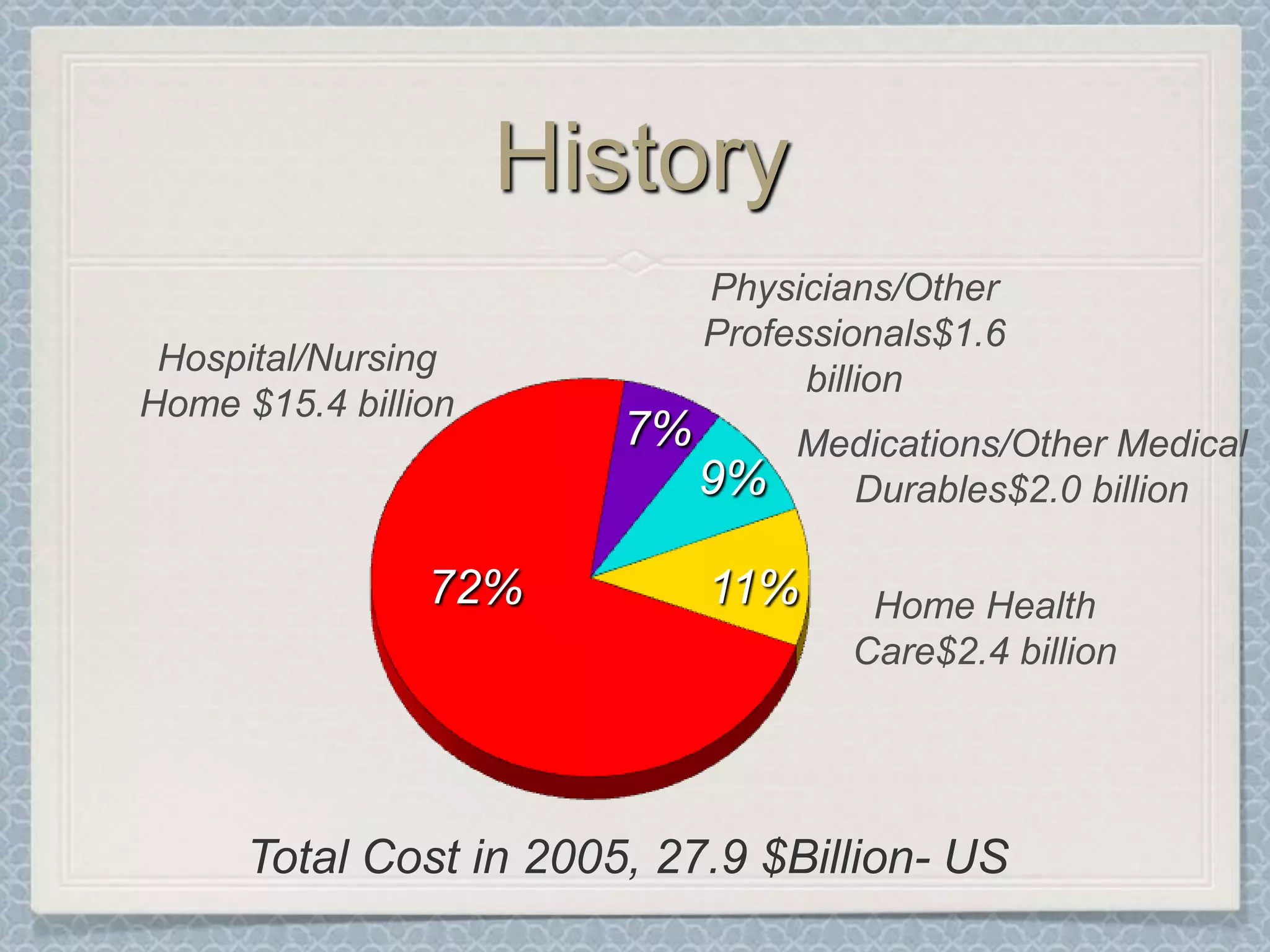
HistoryPhysicians/Other Professionals$1.6 billionHospital/Nursing Home $15.4 billion7%Medications/Other Medical Durables$2.0 billion9%72%11%Home Health Care$2.4 billionTotal Cost in 2005, 27.9 $Billion- US
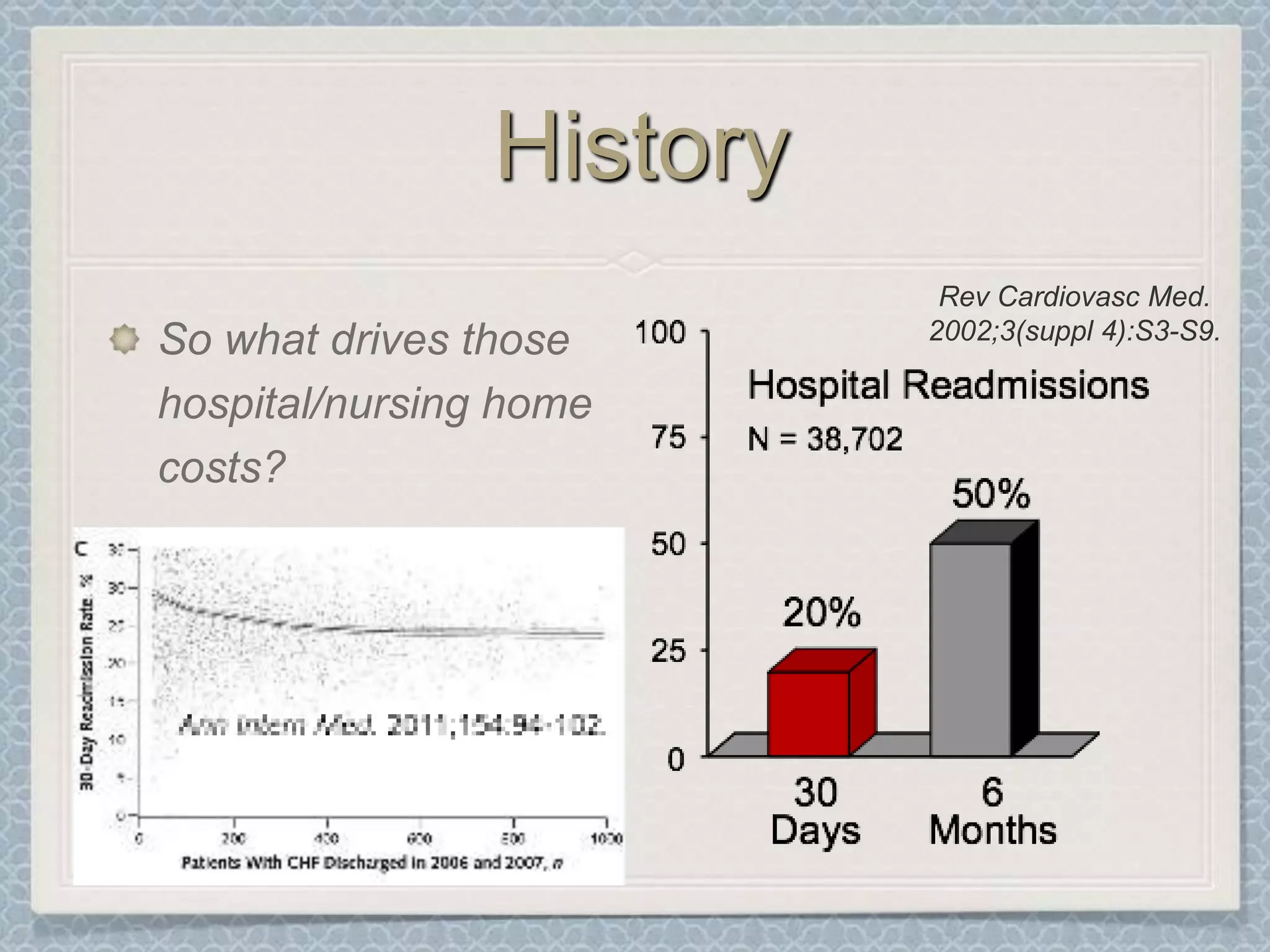
HistoryRev Cardiovasc Med. 2002;3(suppl 4):S3-S9.So what drives those hospital/nursing home  costs?
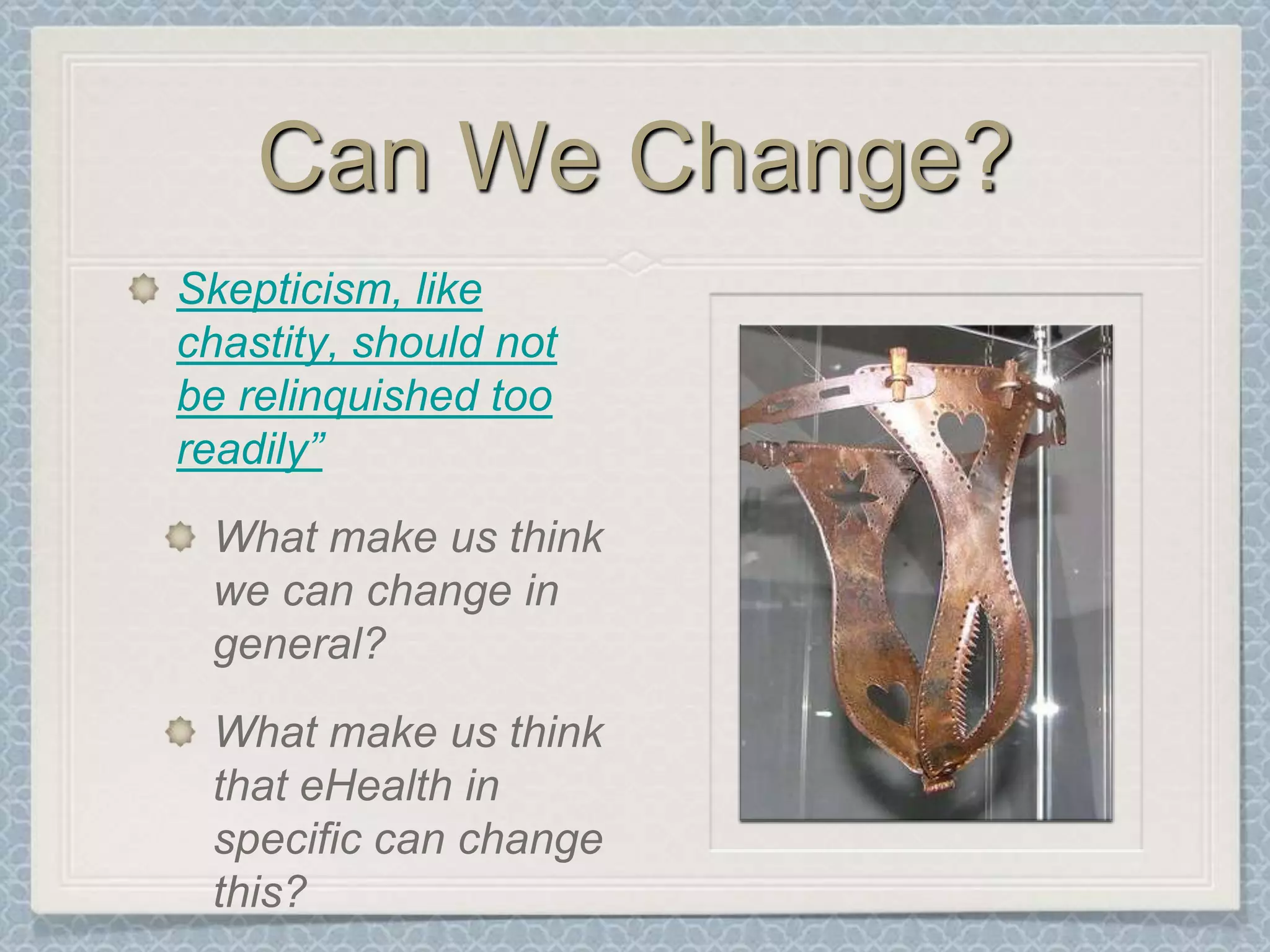
Can We Change?Skepticism, like chastity, should not be relinquished too readily”What make us think we can change in general?What make us think that eHealth in specific can change this?
Previous Studies“...it is evident that the use of telemanagement for CHF has demonstrated positive outcomes, including substantial reductions in hospital readmissions, emergency department visits, costs of care, and improvements in quality of life.”“In order to be successful and sustainable, telehealth requires integration into existing health structures and processes”Kleinpell and Avital, 2005Dansky 2008Alston 2009 Hoover 2009
UPMC/Jefferson Regional Home Health, LPLocated in Seven Fields, PA (suburb of Pittsburgh)Part of a large integrated health care systemJoint Venture, Limited PartnershipMedicare certified, JCAHO accreditedTotal Employees >697
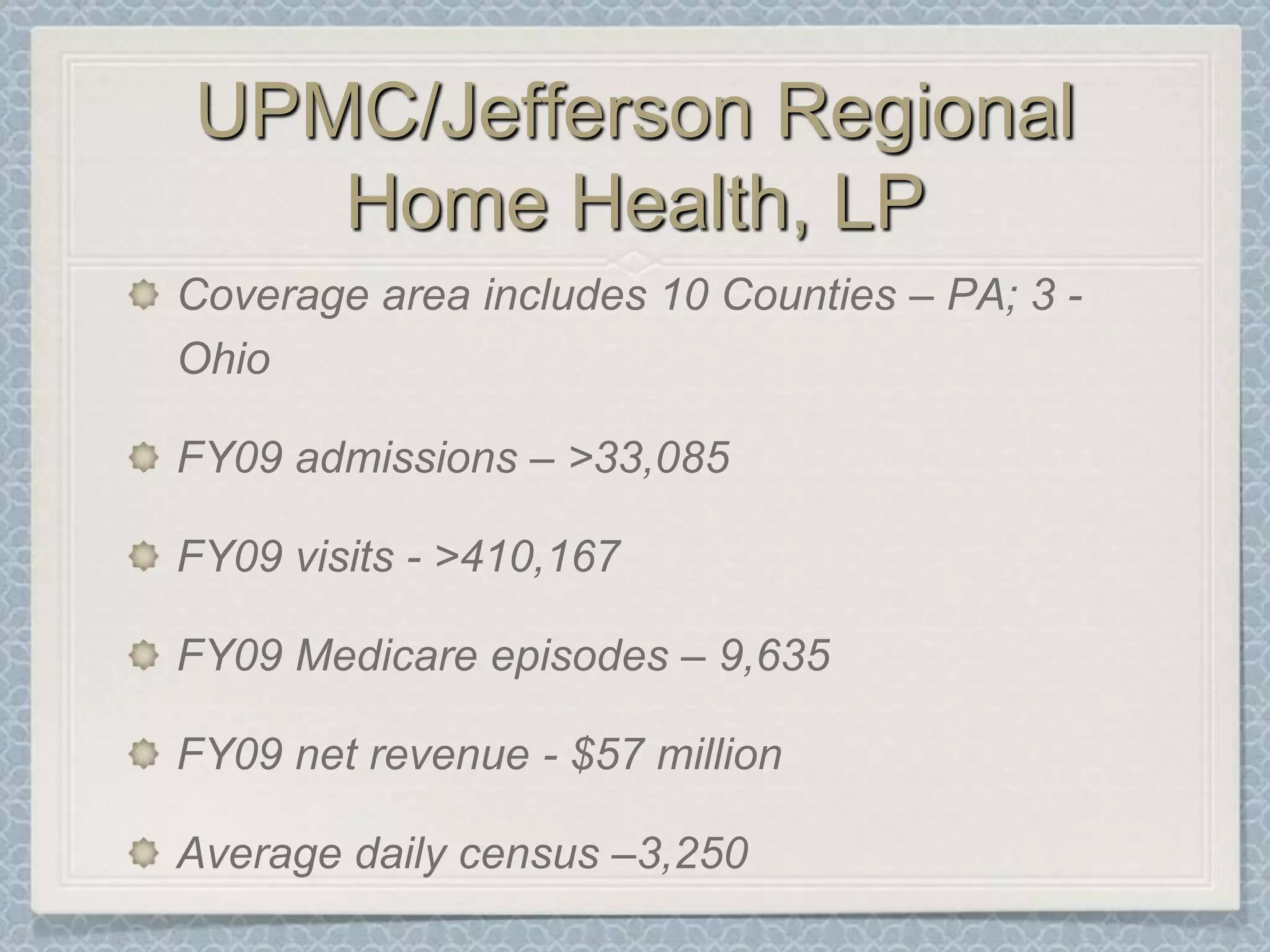
UPMC/Jefferson Regional Home Health, LPCoverage area includes 10 Counties – PA; 3 - OhioFY09 admissions – >33,085 FY09 visits - >410,167FY09 Medicare episodes – 9,635FY09 net revenue - $57 millionAverage daily census –3,250
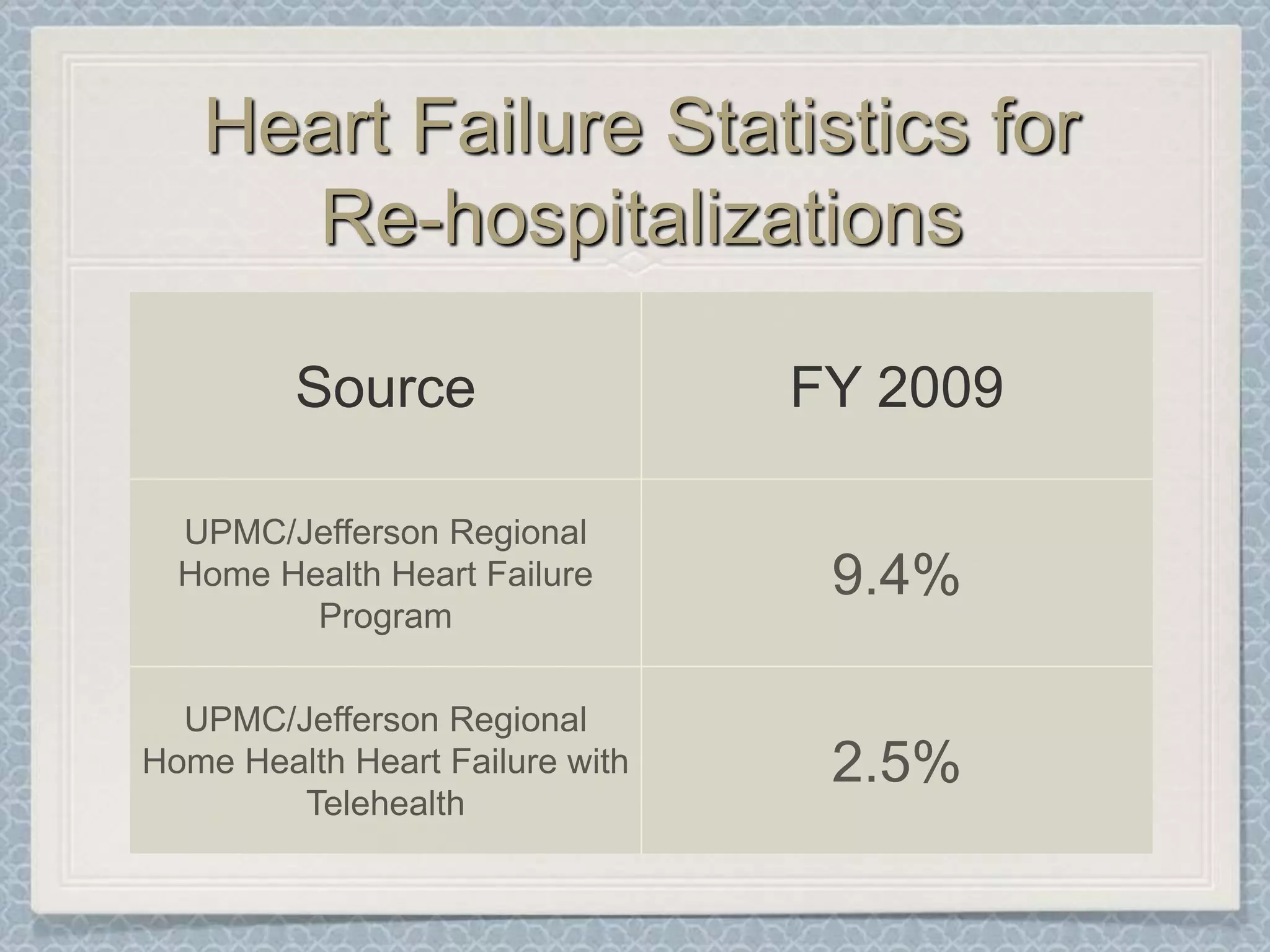
Heart Failure InitiativeWith adequate education, medication management, multi-disciplinary care and the implementation of a Telehealth program, Heart Failure patients that are provided appropriate and timely intervention will see a reduction in the exacerbation of disease process, costly readmissions to the hospital and frequent visits to the Emergency Department.
Heart Failure/Telehealth Program GoalsReduce re-hospitalizations within 30 days at 	targeted hospitalsReduce frequent unnecessary visits to the 	Emergency DepartmentProvide appropriate and timely interventions to prevent exacerbation of disease processUse outcomes as marketing tool to partner with 3rd party payers.
Heart Failure/Telehealth Program GoalsIncrease patient complianceImprove patient quality of lifeAllow patient to remain independentEliminate travel time for staffAssists in addressing the nursing shortage in specific geographic areas
Telehealth Program ExpansionPartnership with Third Party PayersUPMC Health PlanThree year pilot 25 monitors with peripheralsHome Health –oversight and interventionReimbursement for set-up/tear-down-$209.00Collaborative data collection/analysis based on high utilization of services
Heart Failure Statistics forRe-hospitalizations
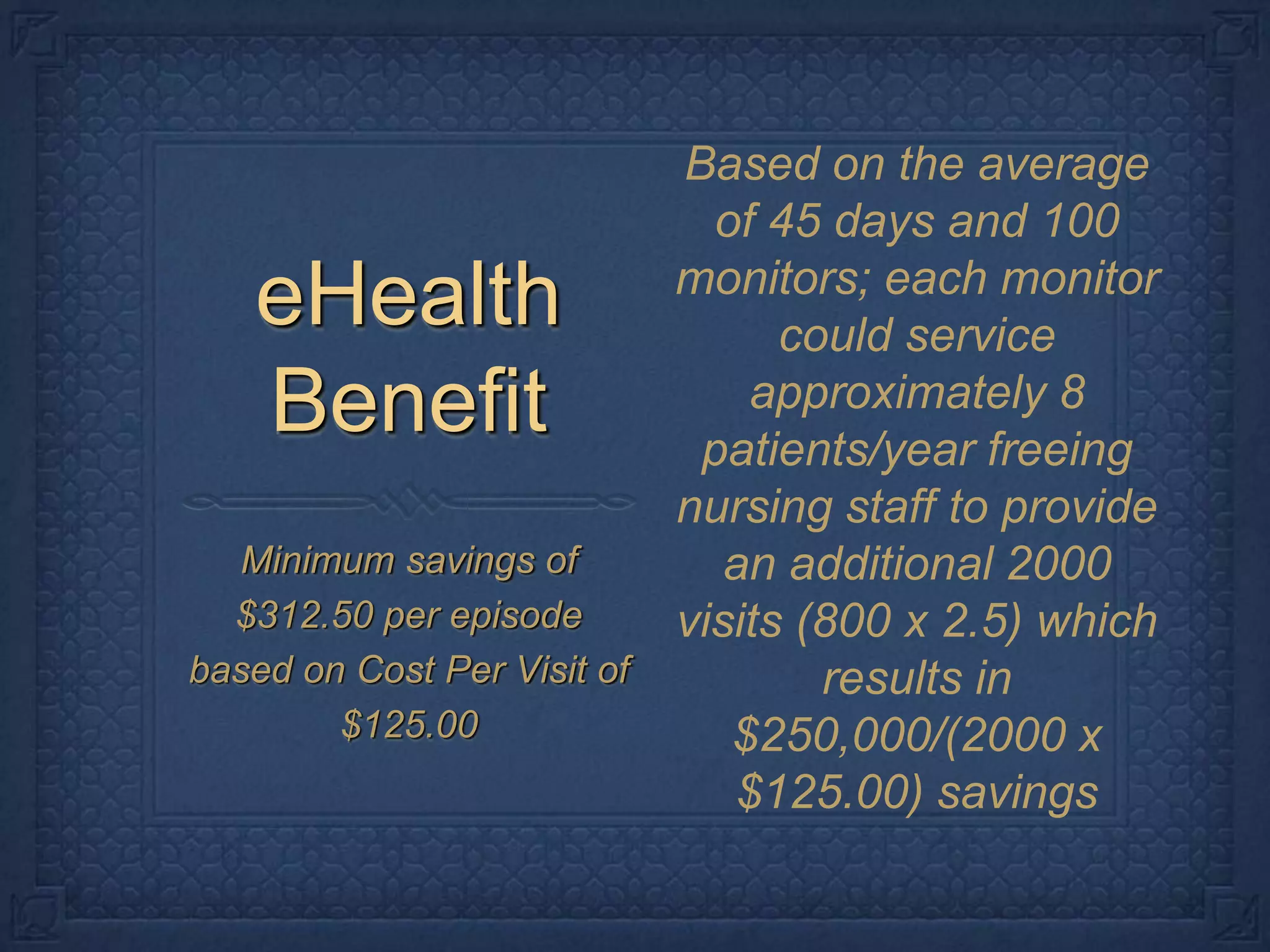
eHealth BenefitMinimum savings of $312.50 per episode based on Cost Per Visit of $125.00Based on the average of 45 days and 100 monitors; each monitor could service approximately 8 patients/year freeing nursing staff to provide an additional 2000 visits (800 x 2.5) which results in $250,000/(2000 x $125.00) savings
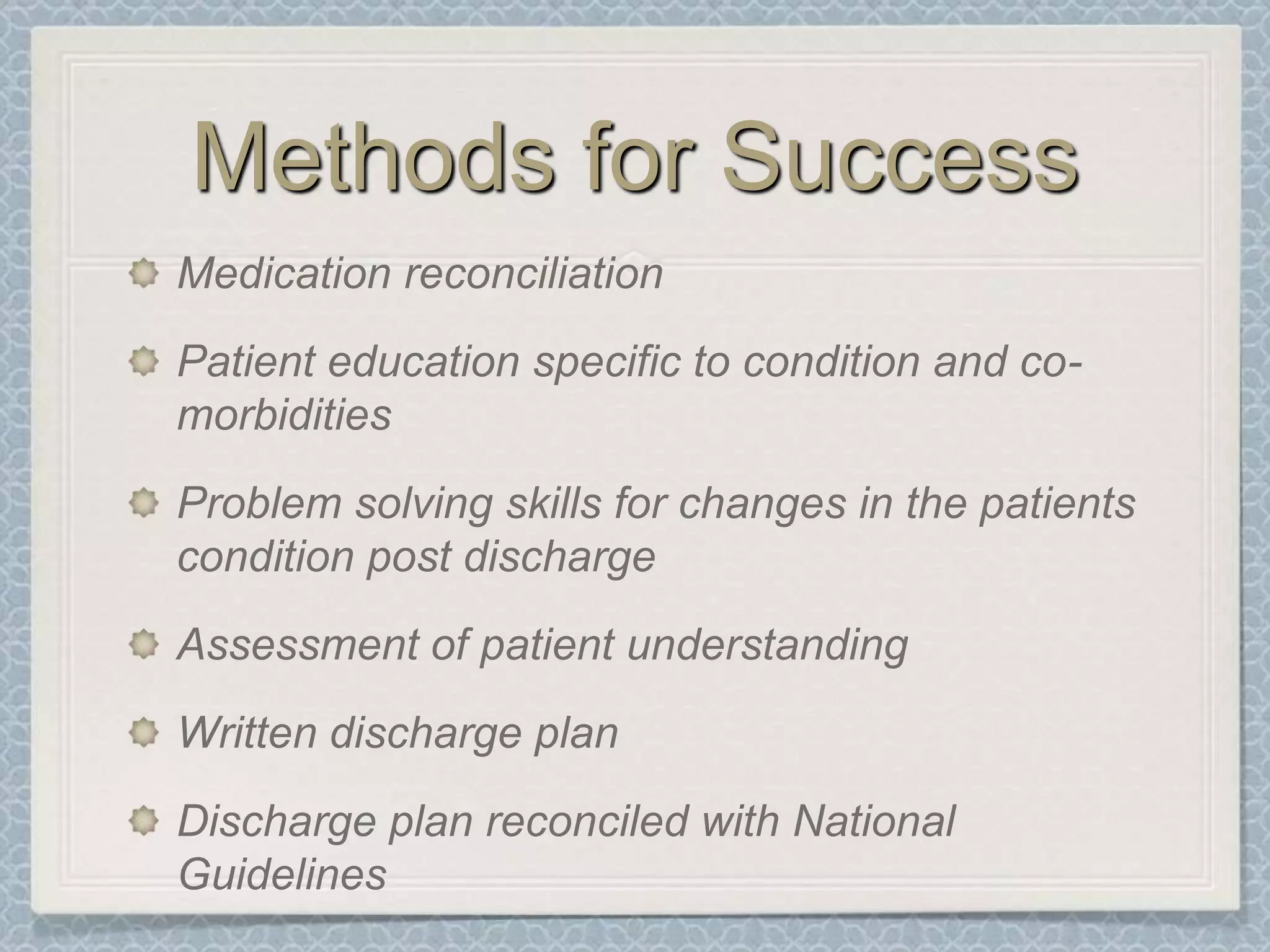
Methods for SuccessMedication reconciliationPatient education specific to condition and co-morbiditiesProblem solving skills for changes in the patients condition post dischargeAssessment of patient understandingWritten discharge planDischarge plan reconciled with National Guidelines
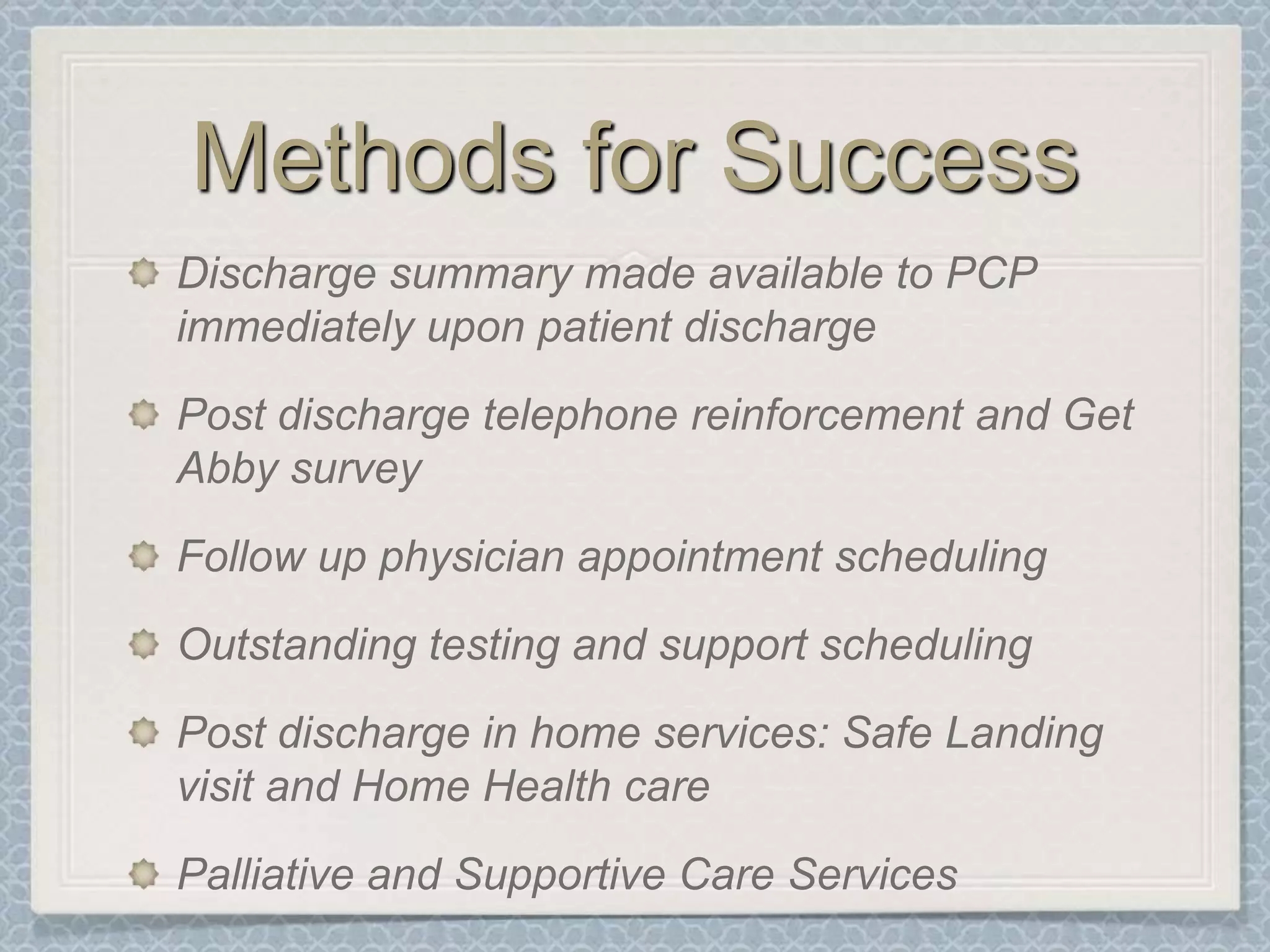
Methods for SuccessDischarge summary made available to PCP immediately upon patient dischargePost discharge telephone reinforcement and Get Abby surveyFollow up physician appointment schedulingOutstanding testing and support schedulingPost discharge in home services: Safe Landing visit and Home Health carePalliative and Supportive Care Services
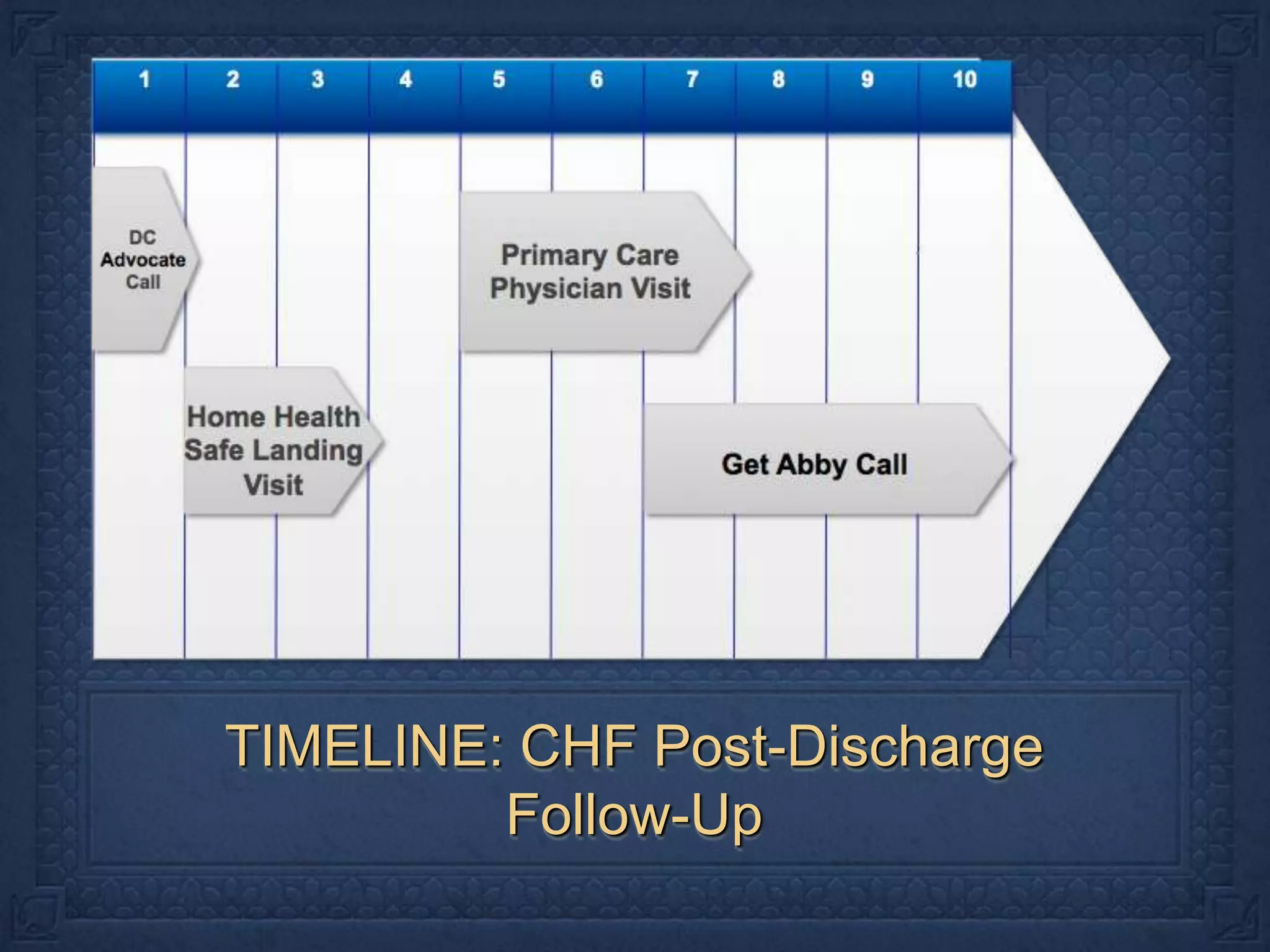
Discharge Plan24-48 hours: The DA follows up with the patient via phone call to reinforce understanding of the established discharge plan and provides any new care coordination or education2-3 days: The patient also receives a Safe Landing home visit to ensure that equipment, medications and supplies are present. The patient's understanding of their care and current health status are assessed. Home Health care is also a part of the care plan5-7 days: the patient is scheduled to visit the PCP for a post discharge appointment (partner with Central Scheduling)10 days post discharge, the patient receives a Get Abby phone survey to assess their current state of health
TIMELINE: CHF Post-Discharge Follow-Up
Discharge AdvocateOngoing medication reconciliation Medication education in conjunction with the unit based pharmacistEducates the patient and caregivers on the discharge planConsults appropriate inpatient services to assist with management and education specific to patient’s needsSchedules  post discharge follow up appointments for the patient
Discharge AdvocateFacilitates a 30 day supply of medications prior to discharge in conjunction with the outpatient pharmacyCompiles a written, personalized discharge planContacts the patient 24-48 hours post-discharge to reinforce the established discharge plan and provide any needed care coordination or education. Sends inpatient information to the patient’s PCP
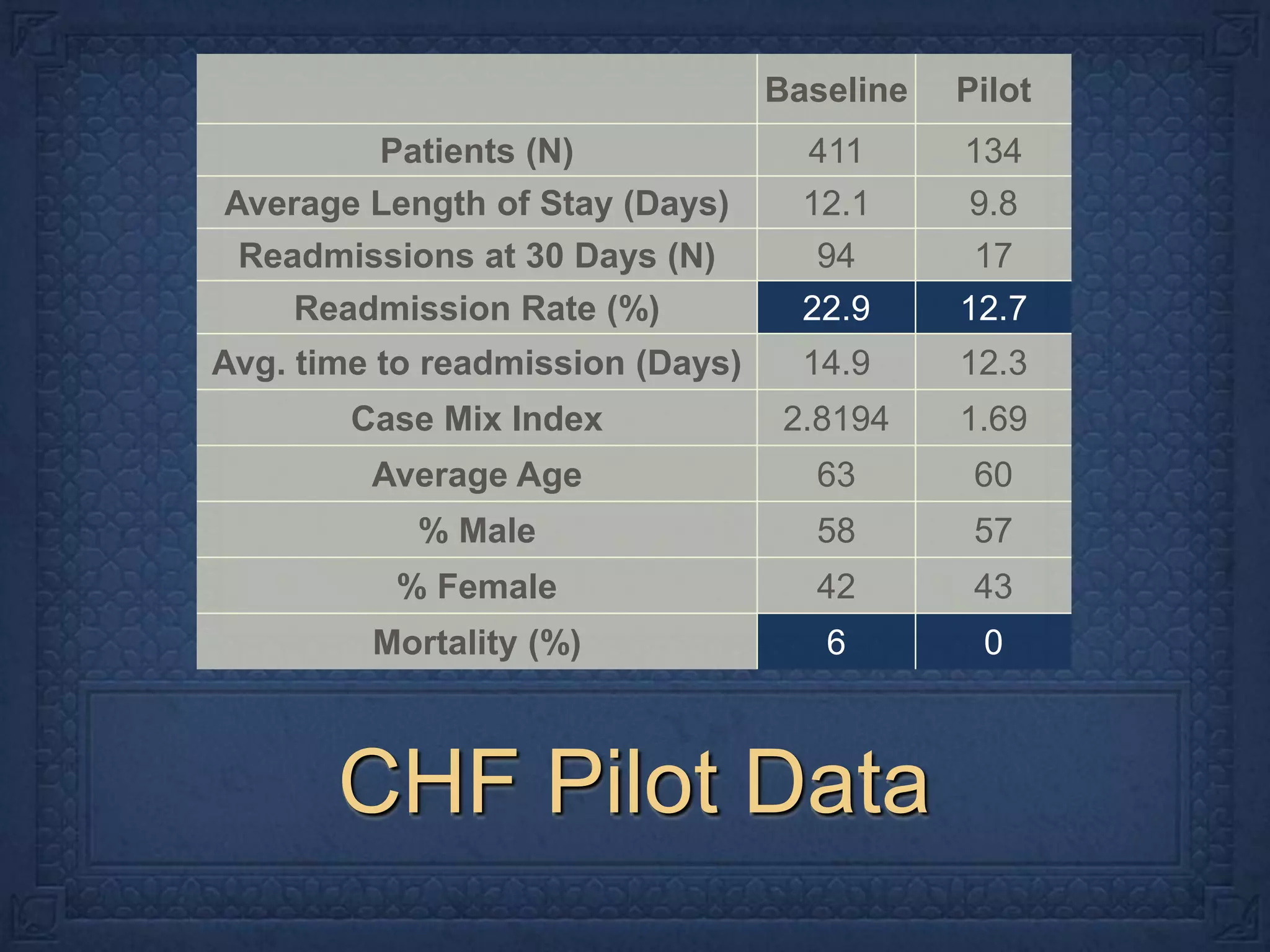
CHF Pilot Data
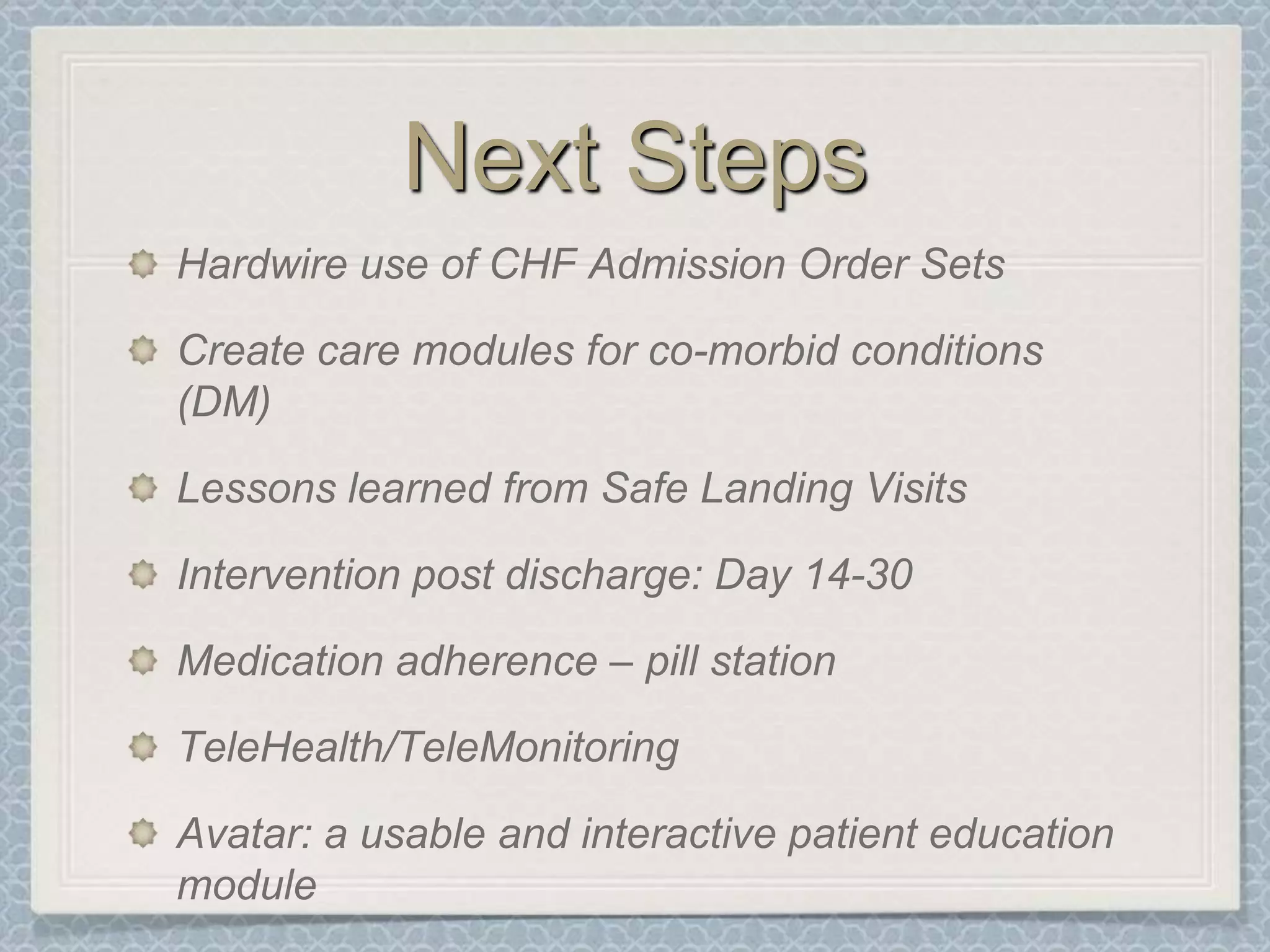
Next StepsHardwire use of CHF Admission Order SetsCreate care modules for co-morbid conditions (DM)Lessons learned from Safe Landing VisitsIntervention post discharge: Day 14-30Medication adherence – pill stationTeleHealth/TeleMonitoringAvatar: a usable and interactive patient education module
QUESTIONS?
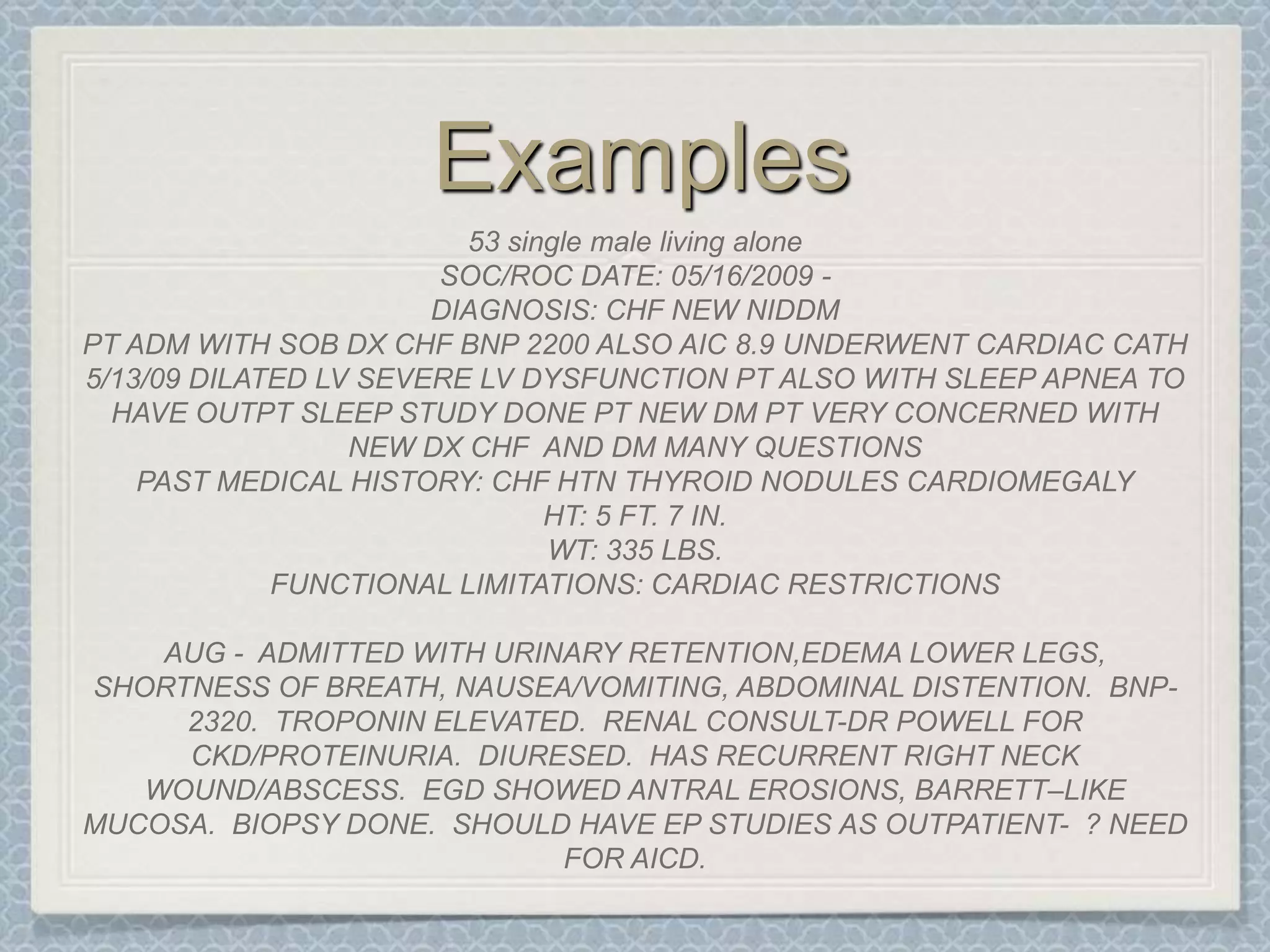
Examples53 single male living aloneSOC/ROC DATE: 05/16/2009 -DIAGNOSIS: CHF NEW NIDDMPT ADM WITH SOB DX CHF BNP 2200 ALSO AIC 8.9 UNDERWENT CARDIAC CATH 5/13/09 DILATED LV SEVERE LV DYSFUNCTION PT ALSO WITH SLEEP APNEA TO HAVE OUTPT SLEEP STUDY DONE PT NEW DM PT VERY CONCERNED WITH NEW DX CHF  AND DM MANY QUESTIONS PAST MEDICAL HISTORY: CHF HTN THYROID NODULES CARDIOMEGALYHT: 5 FT. 7 IN.WT: 335 LBS.FUNCTIONAL LIMITATIONS: CARDIAC RESTRICTIONSAUG -  ADMITTED WITH URINARY RETENTION,EDEMA LOWER LEGS, SHORTNESS OF BREATH, NAUSEA/VOMITING, ABDOMINAL DISTENTION.  BNP-2320.  TROPONIN ELEVATED.  RENAL CONSULT-DR POWELL FOR CKD/PROTEINURIA.  DIURESED.  HAS RECURRENT RIGHT NECK  WOUND/ABSCESS.  EGD SHOWED ANTRAL EROSIONS, BARRETT–LIKE MUCOSA.  BIOPSY DONE.  SHOULD HAVE EP STUDIES AS OUTPATIENT-  ? NEED FOR AICD.
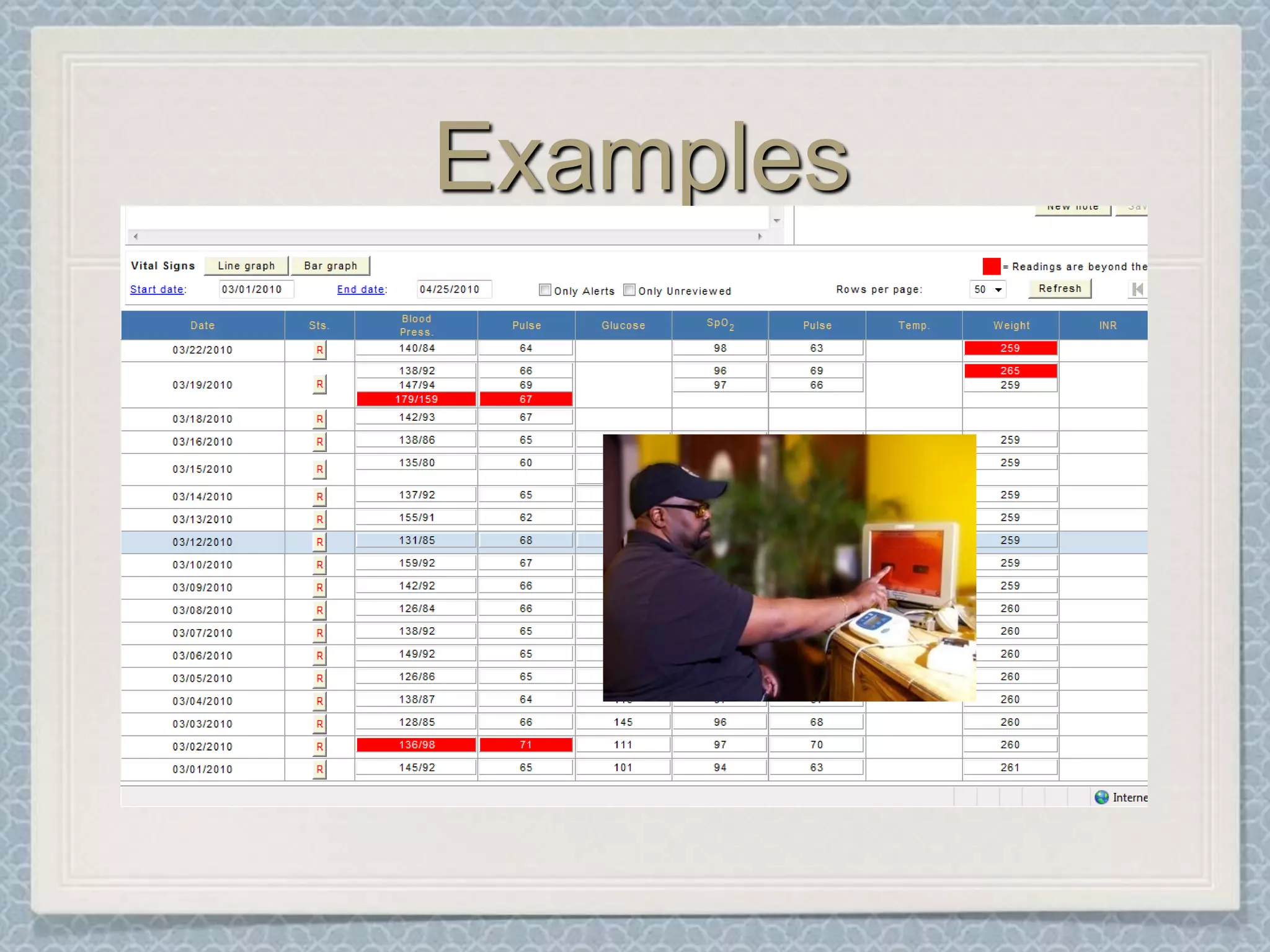
Examples
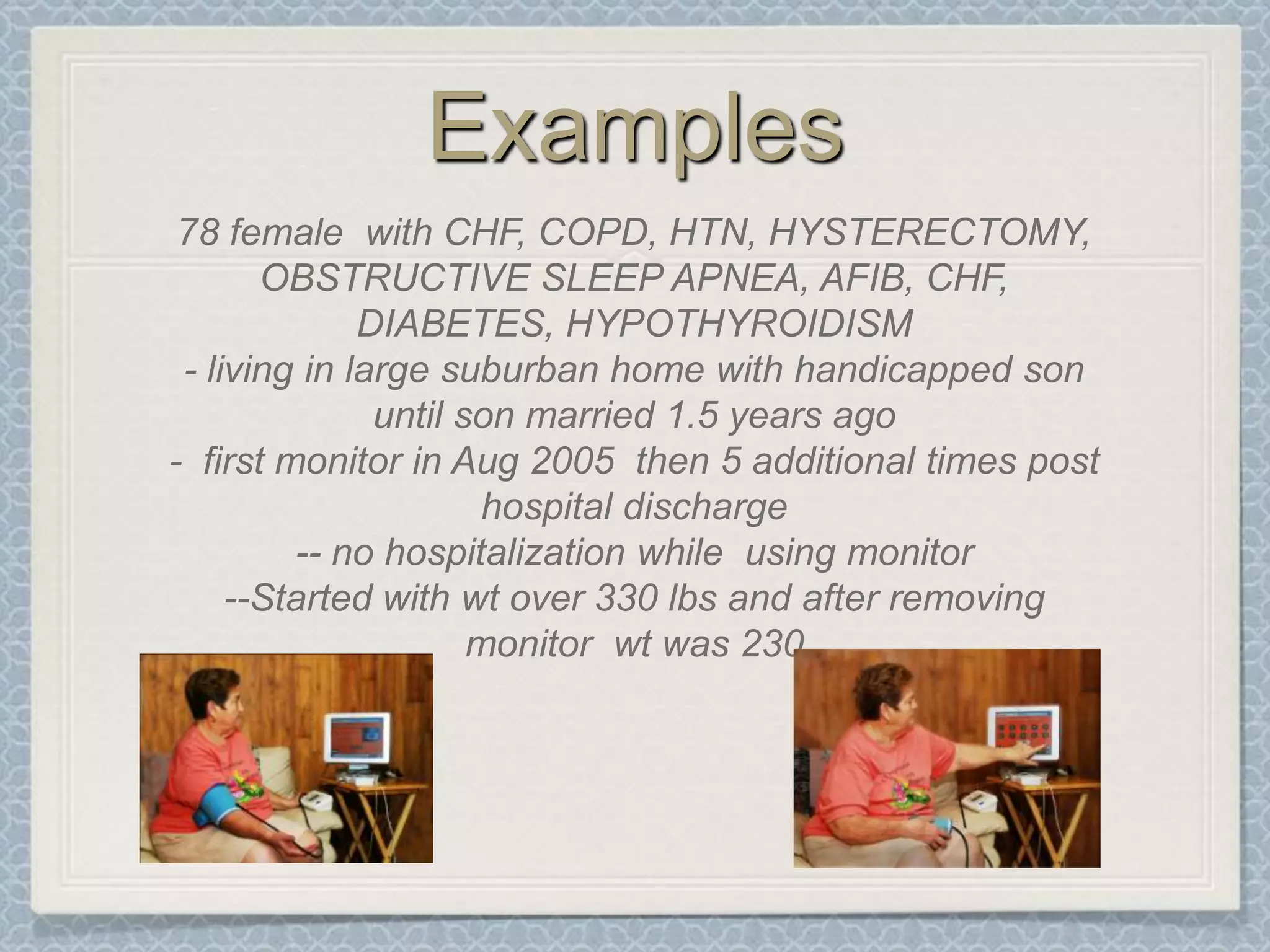
Examples78 female  with CHF, COPD, HTN, HYSTERECTOMY, OBSTRUCTIVE SLEEP APNEA, AFIB, CHF, DIABETES, HYPOTHYROIDISM- living in large suburban home with handicapped son until son married 1.5 years ago-  first monitor in Aug 2005  then 5 additional times post hospital discharge-- no hospitalization while  using monitor --Started with wt over 330 lbs and after removing monitor  wt was 230
Examples
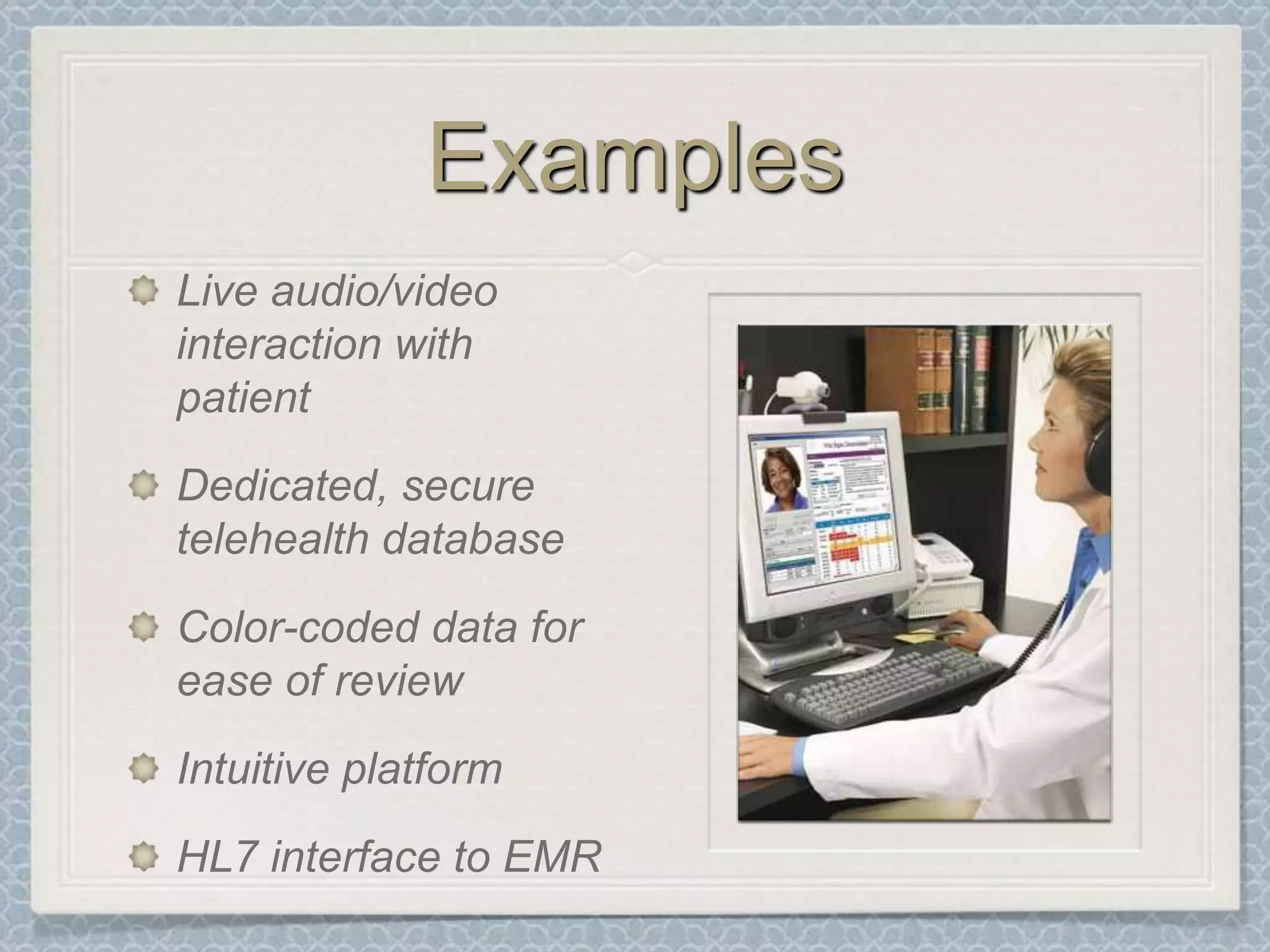
ExamplesLive audio/video interaction with patientDedicated, secure telehealth databaseColor-coded data for ease of reviewIntuitive platformHL7 interface to EMR
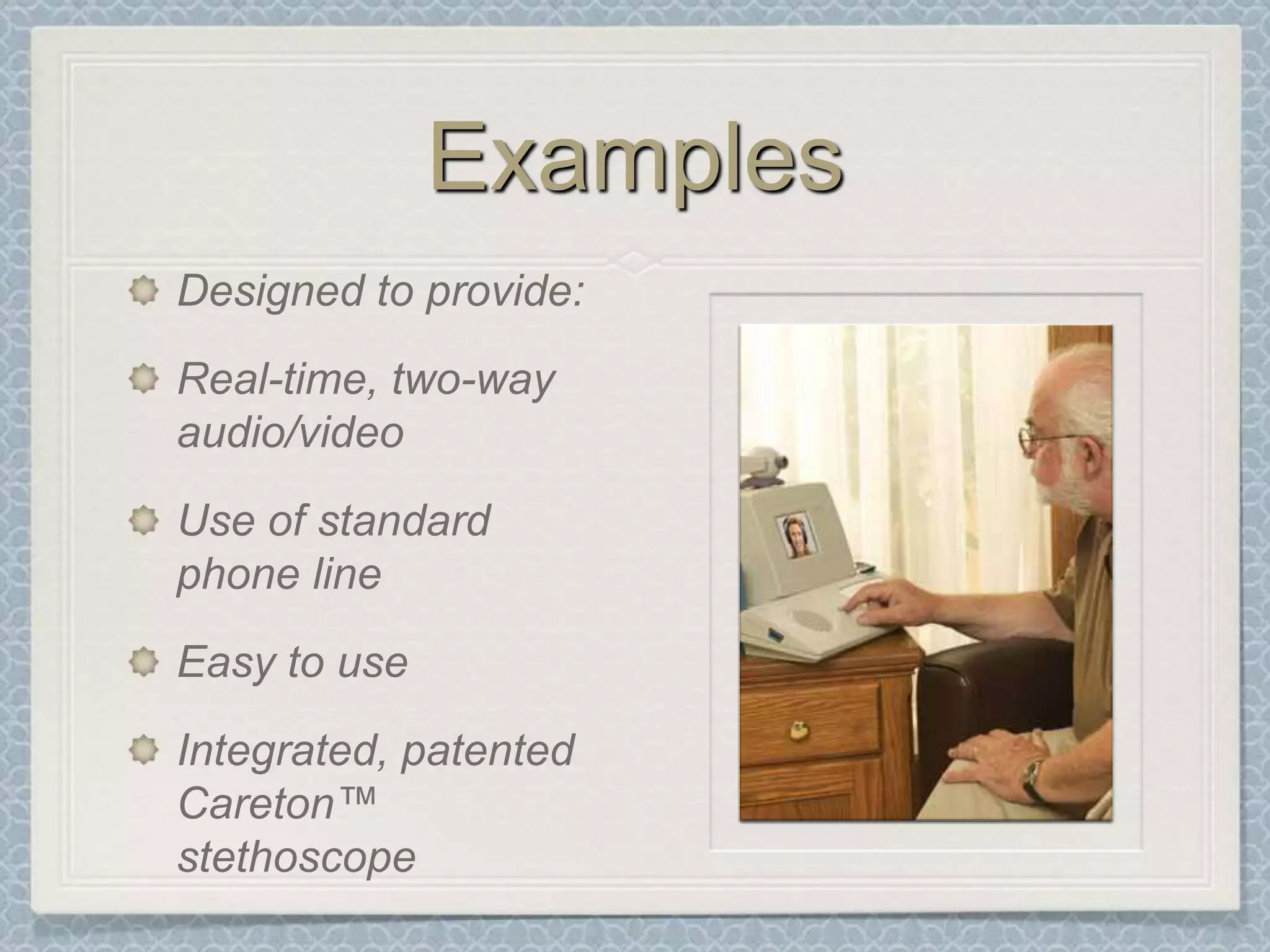
ExamplesDesigned to provide:Real-time, two-way audio/videoUse of standard phone lineEasy to useIntegrated, patented Careton™ stethoscope
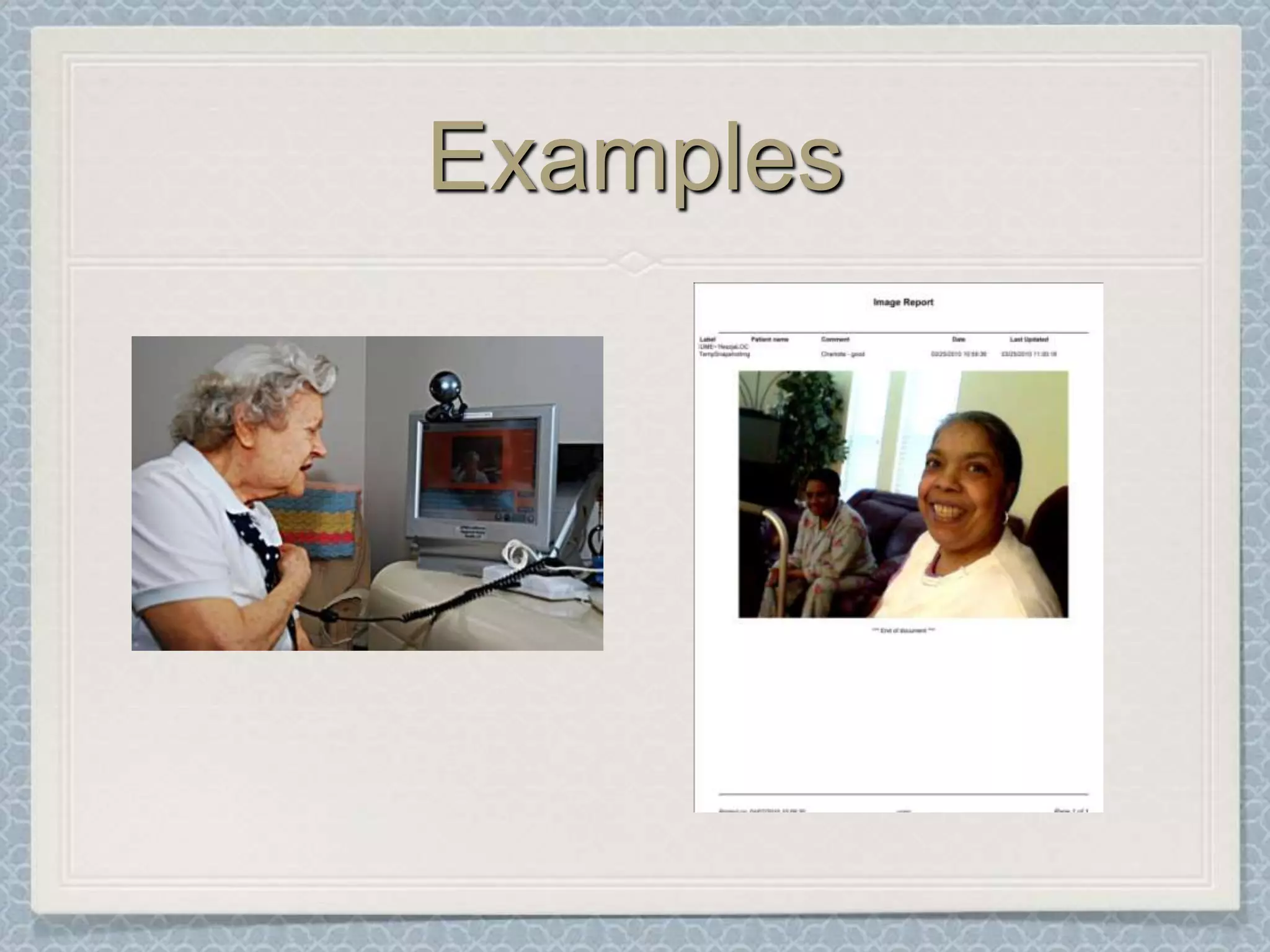
ExamplesOffers Face-to-face, personal interaction with accurate visual observationProvides Peace-of-mind Opportunity for immediate action for Alert conditionsVisits can be documented with photographs.Ability to assess mental & physical acuity and behavioral changes Medications can be managed and problems caught BEFORE they reach crisis levels!

John Williams - UPMC

  • 1.
    Are Our RoadMapsGoing in the Right Direction?John P Williams, MDPeter and Eva Safar ProfessorAssociate Scientific and Medical DirectorUPMC and University of Pittsburgh
  • 2.
    Rare opportunity toquote a film and TV star....
  • 3.
    HistoryWith apologies toSantayana...“If you don’t know where you’ve been, how do you know you haven’t been here before?”JPW
  • 4.
    HistoryThe first thingwe need is an example...How about Congestive Heart Failure (CHF)?Big problemBad historyGreat opportunity
  • 5.
    The most recentexample...“Currently the NHS spends up to £1 billion a year, apparently on managing heart failure badly”Lancet 2010, 376: 2041
  • 6.
    HistoryPhysicians/Other Professionals$1.6 billionHospital/NursingHome $15.4 billion7%Medications/Other Medical Durables$2.0 billion9%72%11%Home Health Care$2.4 billionTotal Cost in 2005, 27.9 $Billion- US
  • 7.
    HistoryRev Cardiovasc Med.2002;3(suppl 4):S3-S9.So what drives those hospital/nursing home costs?
  • 8.
    Can We Change?Skepticism,like chastity, should not be relinquished too readily”What make us think we can change in general?What make us think that eHealth in specific can change this?
  • 9.
    Previous Studies“...it isevident that the use of telemanagement for CHF has demonstrated positive outcomes, including substantial reductions in hospital readmissions, emergency department visits, costs of care, and improvements in quality of life.”“In order to be successful and sustainable, telehealth requires integration into existing health structures and processes”Kleinpell and Avital, 2005Dansky 2008Alston 2009 Hoover 2009
  • 10.
    UPMC/Jefferson Regional HomeHealth, LPLocated in Seven Fields, PA (suburb of Pittsburgh)Part of a large integrated health care systemJoint Venture, Limited PartnershipMedicare certified, JCAHO accreditedTotal Employees >697
  • 11.
    UPMC/Jefferson Regional HomeHealth, LPCoverage area includes 10 Counties – PA; 3 - OhioFY09 admissions – >33,085 FY09 visits - >410,167FY09 Medicare episodes – 9,635FY09 net revenue - $57 millionAverage daily census –3,250
  • 12.
    Heart Failure InitiativeWithadequate education, medication management, multi-disciplinary care and the implementation of a Telehealth program, Heart Failure patients that are provided appropriate and timely intervention will see a reduction in the exacerbation of disease process, costly readmissions to the hospital and frequent visits to the Emergency Department.
  • 13.
    Heart Failure/Telehealth ProgramGoalsReduce re-hospitalizations within 30 days at targeted hospitalsReduce frequent unnecessary visits to the Emergency DepartmentProvide appropriate and timely interventions to prevent exacerbation of disease processUse outcomes as marketing tool to partner with 3rd party payers.
  • 14.
    Heart Failure/Telehealth ProgramGoalsIncrease patient complianceImprove patient quality of lifeAllow patient to remain independentEliminate travel time for staffAssists in addressing the nursing shortage in specific geographic areas
  • 15.
    Telehealth Program ExpansionPartnershipwith Third Party PayersUPMC Health PlanThree year pilot 25 monitors with peripheralsHome Health –oversight and interventionReimbursement for set-up/tear-down-$209.00Collaborative data collection/analysis based on high utilization of services
  • 16.
    Heart Failure StatisticsforRe-hospitalizations
  • 17.
    eHealth BenefitMinimum savingsof $312.50 per episode based on Cost Per Visit of $125.00Based on the average of 45 days and 100 monitors; each monitor could service approximately 8 patients/year freeing nursing staff to provide an additional 2000 visits (800 x 2.5) which results in $250,000/(2000 x $125.00) savings
  • 18.
    Methods for SuccessMedicationreconciliationPatient education specific to condition and co-morbiditiesProblem solving skills for changes in the patients condition post dischargeAssessment of patient understandingWritten discharge planDischarge plan reconciled with National Guidelines
  • 19.
    Methods for SuccessDischargesummary made available to PCP immediately upon patient dischargePost discharge telephone reinforcement and Get Abby surveyFollow up physician appointment schedulingOutstanding testing and support schedulingPost discharge in home services: Safe Landing visit and Home Health carePalliative and Supportive Care Services
  • 20.
    Discharge Plan24-48 hours:The DA follows up with the patient via phone call to reinforce understanding of the established discharge plan and provides any new care coordination or education2-3 days: The patient also receives a Safe Landing home visit to ensure that equipment, medications and supplies are present. The patient's understanding of their care and current health status are assessed. Home Health care is also a part of the care plan5-7 days: the patient is scheduled to visit the PCP for a post discharge appointment (partner with Central Scheduling)10 days post discharge, the patient receives a Get Abby phone survey to assess their current state of health
  • 21.
  • 22.
    Discharge AdvocateOngoing medicationreconciliation Medication education in conjunction with the unit based pharmacistEducates the patient and caregivers on the discharge planConsults appropriate inpatient services to assist with management and education specific to patient’s needsSchedules post discharge follow up appointments for the patient
  • 23.
    Discharge AdvocateFacilitates a30 day supply of medications prior to discharge in conjunction with the outpatient pharmacyCompiles a written, personalized discharge planContacts the patient 24-48 hours post-discharge to reinforce the established discharge plan and provide any needed care coordination or education. Sends inpatient information to the patient’s PCP
  • 24.
  • 25.
    Next StepsHardwire useof CHF Admission Order SetsCreate care modules for co-morbid conditions (DM)Lessons learned from Safe Landing VisitsIntervention post discharge: Day 14-30Medication adherence – pill stationTeleHealth/TeleMonitoringAvatar: a usable and interactive patient education module
  • 26.
  • 27.
    Examples53 single maleliving aloneSOC/ROC DATE: 05/16/2009 -DIAGNOSIS: CHF NEW NIDDMPT ADM WITH SOB DX CHF BNP 2200 ALSO AIC 8.9 UNDERWENT CARDIAC CATH 5/13/09 DILATED LV SEVERE LV DYSFUNCTION PT ALSO WITH SLEEP APNEA TO HAVE OUTPT SLEEP STUDY DONE PT NEW DM PT VERY CONCERNED WITH NEW DX CHF AND DM MANY QUESTIONS PAST MEDICAL HISTORY: CHF HTN THYROID NODULES CARDIOMEGALYHT: 5 FT. 7 IN.WT: 335 LBS.FUNCTIONAL LIMITATIONS: CARDIAC RESTRICTIONSAUG - ADMITTED WITH URINARY RETENTION,EDEMA LOWER LEGS, SHORTNESS OF BREATH, NAUSEA/VOMITING, ABDOMINAL DISTENTION. BNP-2320. TROPONIN ELEVATED. RENAL CONSULT-DR POWELL FOR CKD/PROTEINURIA. DIURESED. HAS RECURRENT RIGHT NECK WOUND/ABSCESS. EGD SHOWED ANTRAL EROSIONS, BARRETT–LIKE MUCOSA. BIOPSY DONE. SHOULD HAVE EP STUDIES AS OUTPATIENT- ? NEED FOR AICD.
  • 28.
  • 29.
    Examples78 female with CHF, COPD, HTN, HYSTERECTOMY, OBSTRUCTIVE SLEEP APNEA, AFIB, CHF, DIABETES, HYPOTHYROIDISM- living in large suburban home with handicapped son until son married 1.5 years ago- first monitor in Aug 2005 then 5 additional times post hospital discharge-- no hospitalization while using monitor --Started with wt over 330 lbs and after removing monitor wt was 230
  • 30.
  • 31.
    ExamplesLive audio/video interactionwith patientDedicated, secure telehealth databaseColor-coded data for ease of reviewIntuitive platformHL7 interface to EMR
  • 32.
    ExamplesDesigned to provide:Real-time,two-way audio/videoUse of standard phone lineEasy to useIntegrated, patented Careton™ stethoscope
  • 33.
    ExamplesOffers Face-to-face, personalinteraction with accurate visual observationProvides Peace-of-mind Opportunity for immediate action for Alert conditionsVisits can be documented with photographs.Ability to assess mental & physical acuity and behavioral changes Medications can be managed and problems caught BEFORE they reach crisis levels!