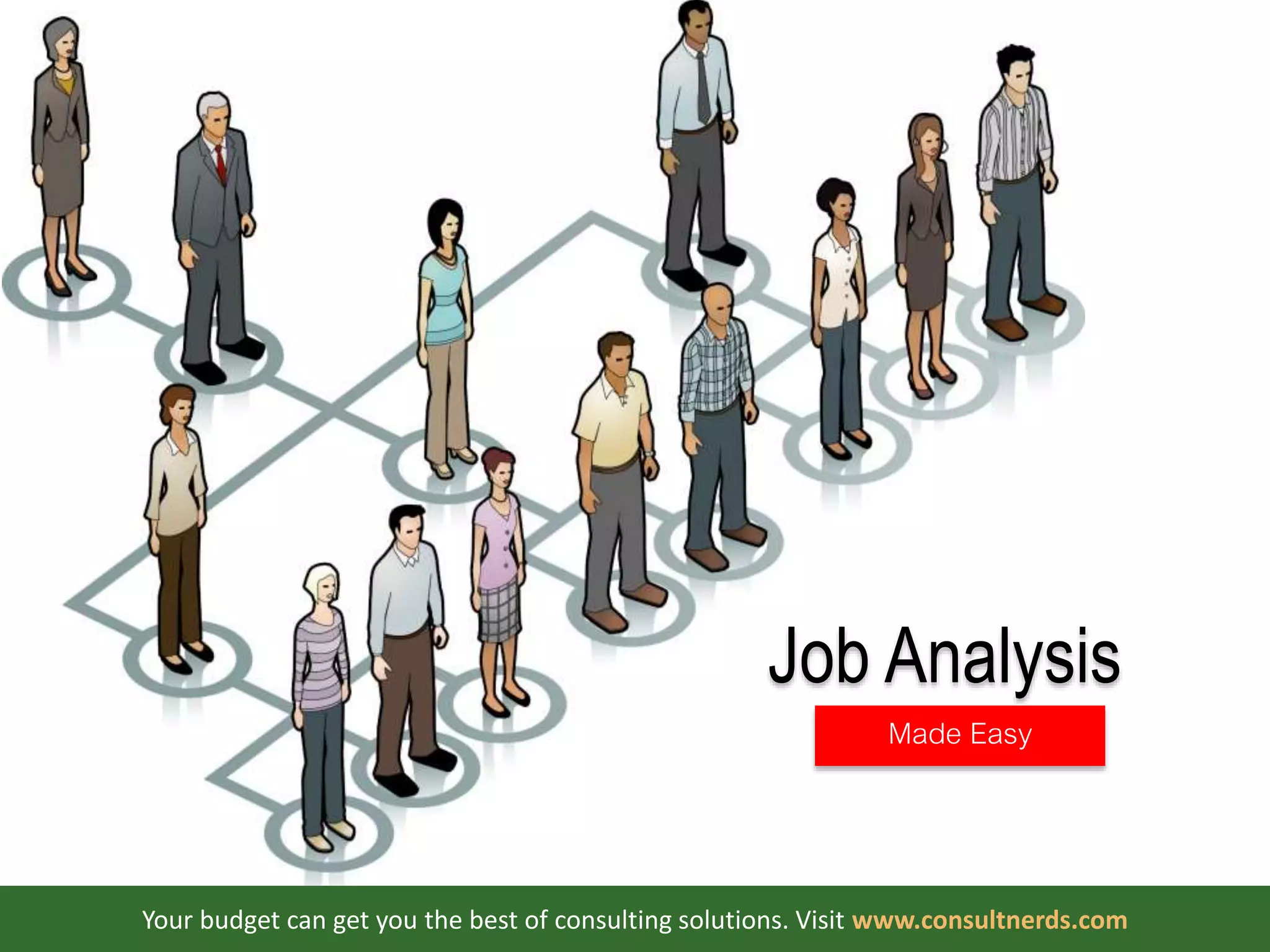


Job Analysis
Made Easy
Your budget can get you the best of consulting solutions. Visit www.consultnerds.com
Which is Job Analysis?
HR Audit
Skill Audit
Job Evaluation
2
Check answer on the next
slide
None!
HR Audit
Skill Audit
Job Evaluation
3
Which is Job Analysis?
Please do your research on each of
them
4
For every job/role is an
expectation
‘Job Analysis is a process of finding out
how these expectations could be
achieved and measured through clear
understanding of responsibilities,
performance parameters,
competencies and skills requirements’
Try redefining in your own words……………………………………………………..
5
Clarification
Job Analysis OR Role Analysis = Job Profile OR Role Profile
Job Profile OR Role Profile are concerned with performance, results, knowledge and skill
requirements.
Job/Role profile is inclusive of Job description, Person Specifications & more
Job analysis aims to answer these questions
1. Why does the job exist?
2. Where is the job to be performed?
3. When is the job to be performed?
4. What physical and mental activities does the worker undertake?
5. How does the worker do the job?
6. What qualifications are needed to perform the job?
6
Please use these questions to generate answers to what you currently do. Revisit your Job Profile and see if it
correlates
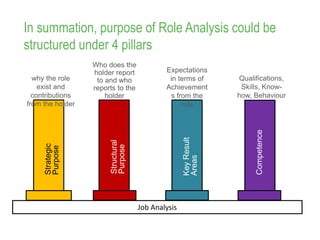
In summation, purpose of Role Analysis could be
structured under 4 pillars
Qualifications,
Skills, Know-
how, Behaviour
7
Strategic
Purpose
why the role
exist and
contributions
from the holder
Structural
Purpose
Who does the
holder report
to and who
reports to the
holder
KeyResult
Areas
Expectations
in terms of
Achievement
s from the
role
Competence
Job Analysis
8
Where do you source information for Job
Analysis?
Organisational Data:
Strategy Document, Organisational Structure
(mostly a component of the SD)
Information Gathering & Observations: Direct
Supervisor/Manager
Internal Customers
Job Holder
Field/On-the-Job Observation
What do you get from these sources?
Information Gathering &
Observations
This is to help you gather
information about the job
through holders,
supervisors and
colleagues who depend on
the output of such jobs.
Data gathered here makes
comparison easy. You
compare what is
happening with the line of
thoughts that brought
about the role as
contained in the strategy
document. You also can
participate in field
observation of jobs to
gather primary data with
9
Organisational Data
This provides you with the
strategy that informs the
business model. How the
business Model shaped the
Organisational Structure and
the expectations from each
of the functional arms of the
business. With this you have
an idea where the job is
situated, why, what it should
be doing, , requirements for
the job and how best to
measure its contribution
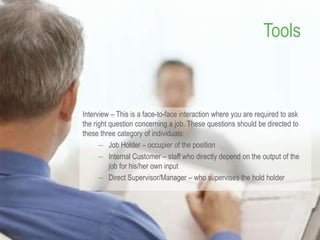
Tools
Interview – This is a face-to-face interaction where you are required to ask
the right question concerning a job. These questions should be directed to
these three category of individuals:
– Job Holder – occupier of the position
– Internal Customer – staff who directly depend on the output of the
job for his/her own input
– Direct Supervisor/Manager – who supervises the hold holder
10
Tools
Questionnaire – This is one of the easiest approach to
gathering data required for a job analysis. You need to
prepare for delay in submission and scanty responds from
respondents. Simply ensure your questionnaire is simple
in grammatical construction and does not come with
ambiguity. These questionnaires can be deplored
electronically or paper based. It should be forwarded to
these three individuals:
– Job Holder
– Internal Customer
– Direct Supervisor/Manager
11
Tools
Observation – For first hand information on what
the job holder actually does, this is a field/on-the-
job observation where you set out to observe the
job and its holder. This helps to balance data
gathered from the other tools
12
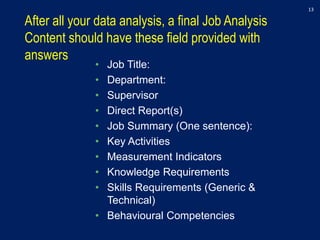
After all your data analysis, a final Job Analysis
Content should have these field provided with
answers
• Job Title:
• Department:
• Supervisor
• Direct Report(s)
• Job Summary (One sentence):
• Key Activities
• Measurement Indicators
• Knowledge Requirements
• Skills Requirements (Generic &
Technical)
• Behavioural Competencies
13
Critical Success Factors
The must be Management Buy-in
Clear Communication on the intent of carrying out a job
analysis
Job Analysis is about the Job and not the Job Holders
Careful selection of appropriate tools based what will work
for an organisation
Mental and Physical preparedness to embark on the
project
Feedback Mechanism and actual implementation of
findings
14
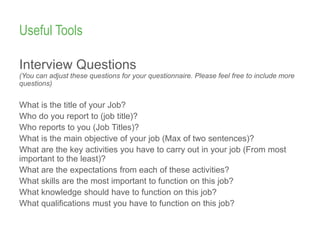
Useful Tools
Interview Questions
(You can adjust these questions for your questionnaire. Please feel free to include more
questions)
What is the title of your Job?
Who do you report to (job title)?
Who reports to you (Job Titles)?
What is the main objective of your job (Max of two sentences)?
What are the key activities you have to carry out in your job (From most
important to the least)?
What are the expectations from each of these activities?
What skills are the most important to function on this job?
What knowledge should have to function on this job?
What qualifications must you have to function on this job?
15
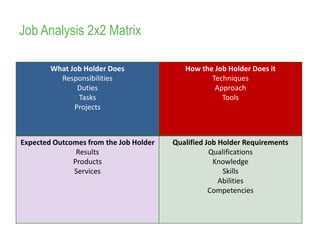
Job Analysis 2x2 Matrix
What Job Holder Does
Responsibilities
Duties
Tasks
Projects
How the Job Holder Does it
Techniques
Approach
Tools
Expected Outcomes from the Job Holder
Results
Products
Services
Qualified Job Holder Requirements
Qualifications
Knowledge
Skills
Abilities
Competencies
16
17
Copyright © Femi Ojomo
femi@femiojomo.com
18

Job Analysis made easy

  • 1.
    Job Analysis Made Easy Yourbudget can get you the best of consulting solutions. Visit www.consultnerds.com
  • 2.
    Which is JobAnalysis? HR Audit Skill Audit Job Evaluation 2 Check answer on the next slide
  • 3.
    None! HR Audit Skill Audit JobEvaluation 3 Which is Job Analysis? Please do your research on each of them
  • 4.
    4 For every job/roleis an expectation ‘Job Analysis is a process of finding out how these expectations could be achieved and measured through clear understanding of responsibilities, performance parameters, competencies and skills requirements’ Try redefining in your own words……………………………………………………..
  • 5.
    5 Clarification Job Analysis ORRole Analysis = Job Profile OR Role Profile Job Profile OR Role Profile are concerned with performance, results, knowledge and skill requirements. Job/Role profile is inclusive of Job description, Person Specifications & more
  • 6.
    Job analysis aimsto answer these questions 1. Why does the job exist? 2. Where is the job to be performed? 3. When is the job to be performed? 4. What physical and mental activities does the worker undertake? 5. How does the worker do the job? 6. What qualifications are needed to perform the job? 6 Please use these questions to generate answers to what you currently do. Revisit your Job Profile and see if it correlates
  • 7.
    In summation, purposeof Role Analysis could be structured under 4 pillars Qualifications, Skills, Know- how, Behaviour 7 Strategic Purpose why the role exist and contributions from the holder Structural Purpose Who does the holder report to and who reports to the holder KeyResult Areas Expectations in terms of Achievement s from the role Competence Job Analysis
  • 8.
    8 Where do yousource information for Job Analysis? Organisational Data: Strategy Document, Organisational Structure (mostly a component of the SD) Information Gathering & Observations: Direct Supervisor/Manager Internal Customers Job Holder Field/On-the-Job Observation
  • 9.
    What do youget from these sources? Information Gathering & Observations This is to help you gather information about the job through holders, supervisors and colleagues who depend on the output of such jobs. Data gathered here makes comparison easy. You compare what is happening with the line of thoughts that brought about the role as contained in the strategy document. You also can participate in field observation of jobs to gather primary data with 9 Organisational Data This provides you with the strategy that informs the business model. How the business Model shaped the Organisational Structure and the expectations from each of the functional arms of the business. With this you have an idea where the job is situated, why, what it should be doing, , requirements for the job and how best to measure its contribution
  • 10.
    Tools Interview – Thisis a face-to-face interaction where you are required to ask the right question concerning a job. These questions should be directed to these three category of individuals: – Job Holder – occupier of the position – Internal Customer – staff who directly depend on the output of the job for his/her own input – Direct Supervisor/Manager – who supervises the hold holder 10
  • 11.
    Tools Questionnaire – Thisis one of the easiest approach to gathering data required for a job analysis. You need to prepare for delay in submission and scanty responds from respondents. Simply ensure your questionnaire is simple in grammatical construction and does not come with ambiguity. These questionnaires can be deplored electronically or paper based. It should be forwarded to these three individuals: – Job Holder – Internal Customer – Direct Supervisor/Manager 11
  • 12.
    Tools Observation – Forfirst hand information on what the job holder actually does, this is a field/on-the- job observation where you set out to observe the job and its holder. This helps to balance data gathered from the other tools 12
  • 13.
    After all yourdata analysis, a final Job Analysis Content should have these field provided with answers • Job Title: • Department: • Supervisor • Direct Report(s) • Job Summary (One sentence): • Key Activities • Measurement Indicators • Knowledge Requirements • Skills Requirements (Generic & Technical) • Behavioural Competencies 13
  • 14.
    Critical Success Factors Themust be Management Buy-in Clear Communication on the intent of carrying out a job analysis Job Analysis is about the Job and not the Job Holders Careful selection of appropriate tools based what will work for an organisation Mental and Physical preparedness to embark on the project Feedback Mechanism and actual implementation of findings 14
  • 15.
    Useful Tools Interview Questions (Youcan adjust these questions for your questionnaire. Please feel free to include more questions) What is the title of your Job? Who do you report to (job title)? Who reports to you (Job Titles)? What is the main objective of your job (Max of two sentences)? What are the key activities you have to carry out in your job (From most important to the least)? What are the expectations from each of these activities? What skills are the most important to function on this job? What knowledge should have to function on this job? What qualifications must you have to function on this job? 15
  • 16.
    Job Analysis 2x2Matrix What Job Holder Does Responsibilities Duties Tasks Projects How the Job Holder Does it Techniques Approach Tools Expected Outcomes from the Job Holder Results Products Services Qualified Job Holder Requirements Qualifications Knowledge Skills Abilities Competencies 16
  • 17.
  • 18.
    Copyright © FemiOjomo femi@femiojomo.com 18