Dimensions of Sector and Rules and
Regulations of Javelin Throw
Submitted by
Julie George
Roll no. 11
Option: English
2015-17 batch
KSTC
Javelin Throw
The javelin throw is the field event
where an athlete runs down a narrow
runway then tosses a long, spear-like
object of about 2.5 m (8 ft 2 in) in
length, as far as he can into a marked
field area.
The javelin thrower
gains momentum by
running within a
predetermined area.
 Javelin throwing is an
event of both the
men's decathlon and the
women's heptathlon.
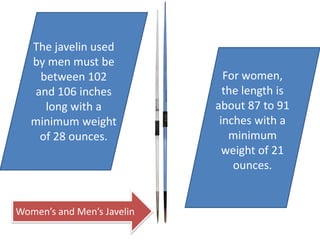
The javelin used
by men must be
between 102
and 106 inches
long with a
minimum weight
of 28 ounces.
For women,
the length is
about 87 to 91
inches with a
minimum
weight of 21
ounces.
Women’s and Men’s Javelin
Runway Specs
The runway must be at
least 33 yards and as
much as 37 yards long.
Two white parallel lines,
slightly wider than 4
feet apart, mark the
runway. At the end of
the runway is an arch-
shaped foul line with a
radius of about 9 feet.
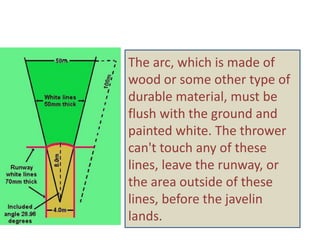
The arc, which is made of
wood or some other type of
durable material, must be
flush with the ground and
painted white. The thrower
can't touch any of these
lines, leave the runway, or
the area outside of these
lines, before the javelin
lands.
Equipment Specs
The javelin head is made of metal, tapers to a
point and is attached to either a hollow or
solid shaft.
The shaft must have a uniform, smooth
surface with no ridges or grooves. The
javelin can't have any attachments that
can change its center of gravity or
throwing characteristics.
The cord grip must have a constant
thickness and can't be more than .31
inches larger than the diameter of the
shaft.
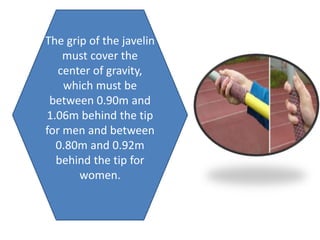
The grip of the javelin
must cover the
center of gravity,
which must be
between 0.90m and
1.06m behind the tip
for men and between
0.80m and 0.92m
behind the tip for
women.
Throwing Technique
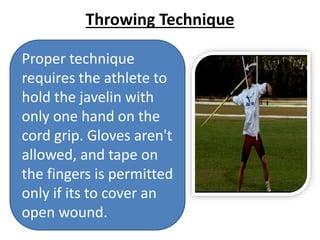
Proper technique
requires the athlete to
hold the javelin with
only one hand on the
cord grip. Gloves aren't
allowed, and tape on
the fingers is permitted
only if its to cover an
open wound.
Javelin Throw Steps
The technique
used to throw
the javelin is
dictated
by IAAF rules.
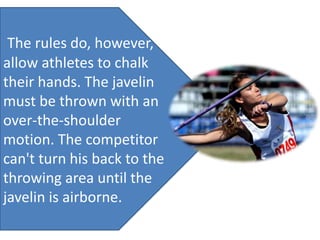
The rules do, however,
allow athletes to chalk
their hands. The javelin
must be thrown with an
over-the-shoulder
motion. The competitor
can't turn his back to the
throwing area until the
javelin is airborne.
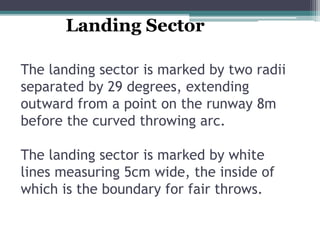
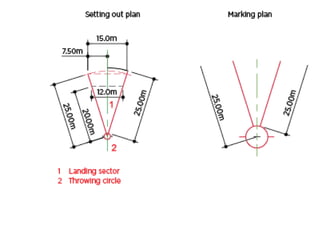
The landing sector is marked by two radii
separated by 29 degrees, extending
outward from a point on the runway 8m
before the curved throwing arc.
The landing sector is marked by white
lines measuring 5cm wide, the inside of
which is the boundary for fair throws.
Landing Sector
Legal Throws
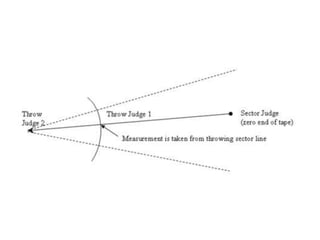
The javelin must land within the
"sector" to register a score. This fan-
shaped area extends out from the ends
of the arch-shaped foul line.
The javelin can't land on the lines
marking the sides of the sector. The
metal head of the javelin has to hit the
ground first or the throw is a foul.
Javelin throw
Javelin throw

Javelin throw

  • 1.
    Dimensions of Sectorand Rules and Regulations of Javelin Throw Submitted by Julie George Roll no. 11 Option: English 2015-17 batch KSTC
  • 2.
    Javelin Throw The javelinthrow is the field event where an athlete runs down a narrow runway then tosses a long, spear-like object of about 2.5 m (8 ft 2 in) in length, as far as he can into a marked field area.
  • 3.
    The javelin thrower gainsmomentum by running within a predetermined area.  Javelin throwing is an event of both the men's decathlon and the women's heptathlon.
  • 4.
    The javelin used bymen must be between 102 and 106 inches long with a minimum weight of 28 ounces. For women, the length is about 87 to 91 inches with a minimum weight of 21 ounces. Women’s and Men’s Javelin
  • 5.
    Runway Specs The runwaymust be at least 33 yards and as much as 37 yards long. Two white parallel lines, slightly wider than 4 feet apart, mark the runway. At the end of the runway is an arch- shaped foul line with a radius of about 9 feet.
  • 6.
    The arc, whichis made of wood or some other type of durable material, must be flush with the ground and painted white. The thrower can't touch any of these lines, leave the runway, or the area outside of these lines, before the javelin lands.
  • 7.
    Equipment Specs The javelinhead is made of metal, tapers to a point and is attached to either a hollow or solid shaft. The shaft must have a uniform, smooth surface with no ridges or grooves. The javelin can't have any attachments that can change its center of gravity or throwing characteristics. The cord grip must have a constant thickness and can't be more than .31 inches larger than the diameter of the shaft.
  • 8.
    The grip ofthe javelin must cover the center of gravity, which must be between 0.90m and 1.06m behind the tip for men and between 0.80m and 0.92m behind the tip for women.
  • 9.
    Throwing Technique Proper technique requiresthe athlete to hold the javelin with only one hand on the cord grip. Gloves aren't allowed, and tape on the fingers is permitted only if its to cover an open wound.
  • 10.
    Javelin Throw Steps Thetechnique used to throw the javelin is dictated by IAAF rules.
  • 11.
    The rules do,however, allow athletes to chalk their hands. The javelin must be thrown with an over-the-shoulder motion. The competitor can't turn his back to the throwing area until the javelin is airborne.
  • 12.
    The landing sectoris marked by two radii separated by 29 degrees, extending outward from a point on the runway 8m before the curved throwing arc. The landing sector is marked by white lines measuring 5cm wide, the inside of which is the boundary for fair throws. Landing Sector
  • 14.
    Legal Throws The javelinmust land within the "sector" to register a score. This fan- shaped area extends out from the ends of the arch-shaped foul line. The javelin can't land on the lines marking the sides of the sector. The metal head of the javelin has to hit the ground first or the throw is a foul.