Java Programming
Language: A Benefiting
Asset to the Software
Industry
Java is a widely used and versatileprogrammingassignment help that has made
a significant impact on thetechnology landscape. It is known for its platform
independence, security features, and largecommunity support.
by Harry Brook
H
Key Features and Advantages of Java
Platform Independence
Java's ability to run on any
devicethat supports Java is a key
feature, making it a popular
choicefor developers.
Rich Ecosystem
Java has a vast ecosystem with
libraries, frameworks, and tools
that enhanceproductivity and
efficiency.
Security
Its built-in security features
protect systems from harmful
malwareand cyber threats.
Java's Role in the Software Industry
1 Application
Development
Java is extensively used to
createdesktop, web, and
mobileapplications.
2 Enterprise Solutions
Many large-scale
enterprises rely on Java for
building robust and
scalablesolutions.
3 Integration
Java plays a critical rolein
integrating various
softwaresystems and
platforms.
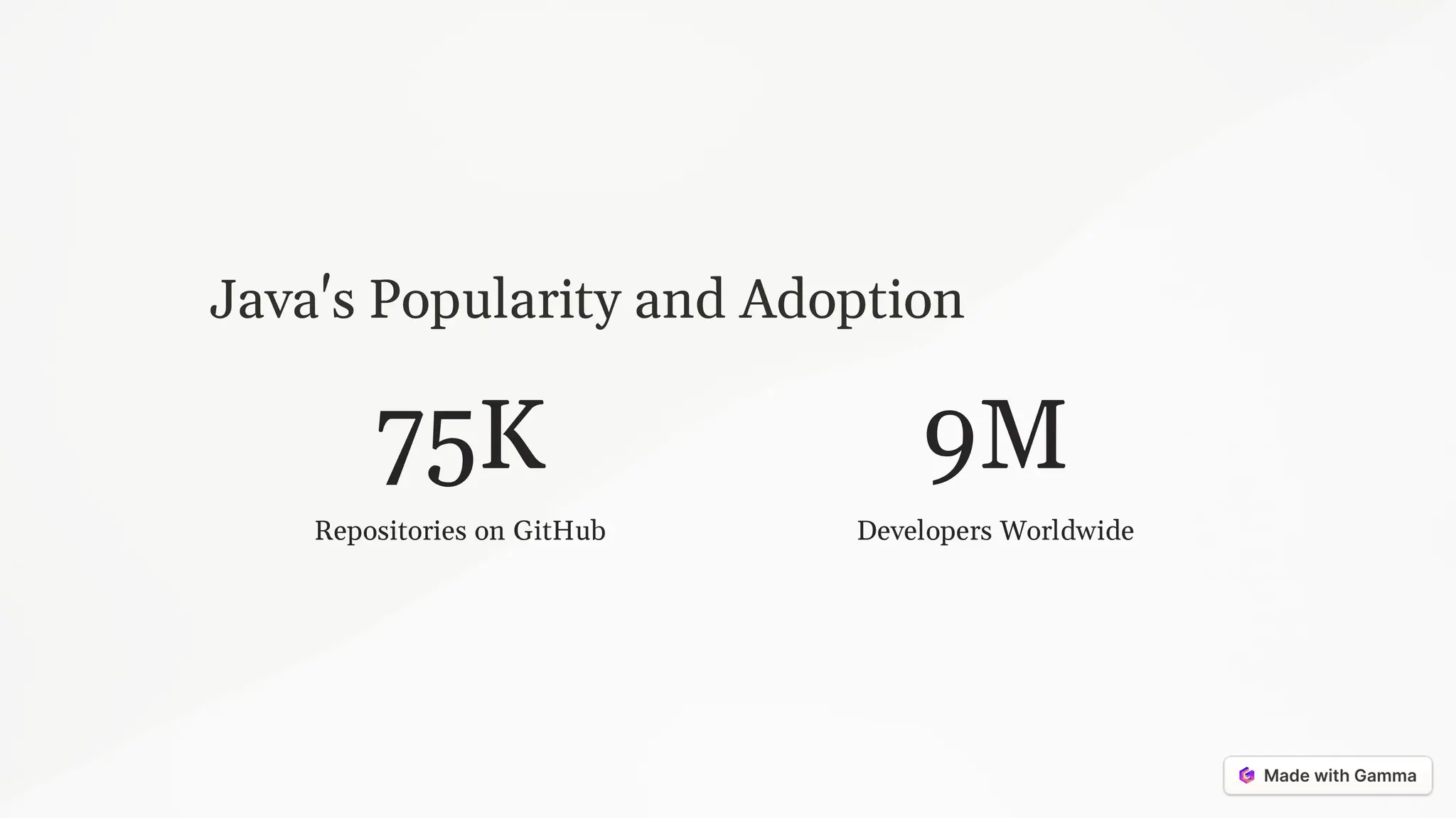
Java's Popularity and Adoption
75K
Repositories on GitHub
9M
Developers Worldwide
Java's Versatility and Portability
1
Cross-Platform
Compatibility
Java applications can run on
different operating systems
without modification.
2
Mobile to Cloud
Its versatility allows smooth
deployment from mobile
devices to cloud environments.
3
Embedded Devices
Java's portability extends to
embedded systems, ensuring
wideapplication usage.
Java's Strong Community and
Support
Open Source Collaboration
Java boasts a thriving open-source
community that contributes to its
continuous development.
Global User Groups
Communities around theworld offer
support, learning, and networking
opportunities.
Java's Impact on Enterprise Applications
Scalability Java facilitates thedevelopment of scalable
enterprisesolutions.
Reliability It is known for its robust and reliableperformance
in complex business environments.
Compatibility Seamless integration with existing enterprise
systems is a hallmarkof Java.
Conclusion: The Future of Java in the
Software Industry
1 Continued Innovation
Java continues to evolve, ensuring its relevanceand applicability in modern
technologies.
2 Adaptability
Its adaptability to new trends and technologies will shapeits futuresuccess.
3 Global Influence
Java's global impact will continueto driveits presenceand growth in thesoftware
industry.

Java language: A Benefiting Asset to the Software Industry

  • 1.
    Java Programming Language: ABenefiting Asset to the Software Industry Java is a widely used and versatileprogrammingassignment help that has made a significant impact on thetechnology landscape. It is known for its platform independence, security features, and largecommunity support. by Harry Brook H
  • 2.
    Key Features andAdvantages of Java Platform Independence Java's ability to run on any devicethat supports Java is a key feature, making it a popular choicefor developers. Rich Ecosystem Java has a vast ecosystem with libraries, frameworks, and tools that enhanceproductivity and efficiency. Security Its built-in security features protect systems from harmful malwareand cyber threats.
  • 3.
    Java's Role inthe Software Industry 1 Application Development Java is extensively used to createdesktop, web, and mobileapplications. 2 Enterprise Solutions Many large-scale enterprises rely on Java for building robust and scalablesolutions. 3 Integration Java plays a critical rolein integrating various softwaresystems and platforms.
  • 4.
    Java's Popularity andAdoption 75K Repositories on GitHub 9M Developers Worldwide
  • 5.
    Java's Versatility andPortability 1 Cross-Platform Compatibility Java applications can run on different operating systems without modification. 2 Mobile to Cloud Its versatility allows smooth deployment from mobile devices to cloud environments. 3 Embedded Devices Java's portability extends to embedded systems, ensuring wideapplication usage.
  • 6.
    Java's Strong Communityand Support Open Source Collaboration Java boasts a thriving open-source community that contributes to its continuous development. Global User Groups Communities around theworld offer support, learning, and networking opportunities.
  • 7.
    Java's Impact onEnterprise Applications Scalability Java facilitates thedevelopment of scalable enterprisesolutions. Reliability It is known for its robust and reliableperformance in complex business environments. Compatibility Seamless integration with existing enterprise systems is a hallmarkof Java.
  • 8.
    Conclusion: The Futureof Java in the Software Industry 1 Continued Innovation Java continues to evolve, ensuring its relevanceand applicability in modern technologies. 2 Adaptability Its adaptability to new trends and technologies will shapeits futuresuccess. 3 Global Influence Java's global impact will continueto driveits presenceand growth in thesoftware industry.