Java How to Program Early Objects 11th Edition Deitel Solutions Manual
Java How to Program Early Objects 11th Edition Deitel Solutions Manual
Java How to Program Early Objects 11th Edition Deitel Solutions Manual
Java How to Program Early Objects 11th Edition Deitel Solutions Manual
Java How to Program Early Objects 11th Edition Deitel Solutions Manual
1.
Java How toProgram Early Objects 11th Edition
Deitel Solutions Manual download
https://testbankfan.com/product/java-how-to-program-early-
objects-11th-edition-deitel-solutions-manual/
Visit testbankfan.com today to download the complete set of
test bank or solution manual
2.
We have selectedsome products that you may be interested in
Click the link to download now or visit testbankfan.com
for more options!.
Java How to Program Early Objects 11th Edition Deitel Test
Bank
https://testbankfan.com/product/java-how-to-program-early-
objects-11th-edition-deitel-test-bank/
Java How to Program Early Objects 10th Edition Deitel
Solutions Manual
https://testbankfan.com/product/java-how-to-program-early-
objects-10th-edition-deitel-solutions-manual/
Java How to Program Early Objects 10th Edition Deitel Test
Bank
https://testbankfan.com/product/java-how-to-program-early-
objects-10th-edition-deitel-test-bank/
Strategic Management Concepts and Cases 1st Edition
Rothaermel Test Bank
https://testbankfan.com/product/strategic-management-concepts-and-
cases-1st-edition-rothaermel-test-bank/
3.
Calculus for BusinessEconomics Life Sciences and Social
Sciences 13th Edition Barnett Test Bank
https://testbankfan.com/product/calculus-for-business-economics-life-
sciences-and-social-sciences-13th-edition-barnett-test-bank/
American Social Welfare Policy A Pluralist Approach 8th
Edition Karger Test Bank
https://testbankfan.com/product/american-social-welfare-policy-a-
pluralist-approach-8th-edition-karger-test-bank/
Assembly Language For X86 Processors 7th Edition Irvine
Solutions Manual
https://testbankfan.com/product/assembly-language-
for-x86-processors-7th-edition-irvine-solutions-manual/
Fundamental Financial Accounting Concepts 8th Edition
Edmonds Test Bank
https://testbankfan.com/product/fundamental-financial-accounting-
concepts-8th-edition-edmonds-test-bank/
International Business Competing and Cooperating in a
Global World 1st Edition Geringer Test Bank
https://testbankfan.com/product/international-business-competing-and-
cooperating-in-a-global-world-1st-edition-geringer-test-bank/
4.
Sociology A BriefIntroduction Canadian Canadian 5th
Edition Schaefer Solutions Manual
https://testbankfan.com/product/sociology-a-brief-introduction-
canadian-canadian-5th-edition-schaefer-solutions-manual/
“All the partyrather out of sorts,” writes Mr. Coke on the 26th
June. “Our two best men, Louis and Jim, are very unwell. Nelson, a
most willing and hard-working fellow, is unused to the sort of life,
and wants to turn back. As to Jacob, his utter uselessness is a
constant source of provocation to me; and the parson’s indifference,
and Fred’s fidgetty disposition, make the chapter of our miseries
complete. The mules are not much better off than we are; five of
them are suffering from severe back-sores, and all of them object
strongly to carrying the packs; they frequently cast themselves in
the night, and get their legs badly cut with the picket ropes. It
seems after all doubtful how far we shall get. Some of us talk of
going on alone.”
Trials of temper are inseparable from expeditions of this kind,
and here was a trio manifestly ill-assorted; one of its members
rather fanciful and capricious, another too phlegmatic and easy-
going, the third—Mr. Coke, could not be expected to set forth his
own failings, but we suspect him of being a little irritable and hot-
tempered, although evidently a good fellow, with plenty of pluck and
perseverance. As yet, however, there was no break-up. The party
kept together, often in straggling order, but usually reuniting at
evening, to feed on rancid ham, mouldy biscuit, and such flesh or
fowl as their rifles had procured them during the day. Nor were fish
and reptiles despised when obtainable. Occasional attempts at
angling were not very fortunate, the American fish being apparently
unused to English flies; but sometimes a fine salmon or two were
got by barter, from the Indians who had speared them. And a roast
snake is by no means a despicable thing. Both Mr. Coke and the
Parson—for whom we entertain an intense respect, as a man of few
words but energetic action, a little tardy to move, perhaps, (a slight
dash of Athelstane the Unready in his character,) but most effective
and vigorous when movement was decided upon—went a snaking
now and then. He of Norfolk seems to have been a fair shot at
starting, and a first-rate one before he had half got over his journey,
and he stalked the buffalo very successfully, shot snakes through the
head, and contributed a large quota to the contents of the camp-
17.
kettle. The chaplainalso was considerable of a sportsman, and ready
with his rifle. Fat cow, tender loin, and juicy hump at times were
plentiful in camp. Failing those delicate viands, all was made game
of that offered itself to the wanderers’ muzzles.
“12th July.—Shot two prairie dogs. Jim killed a hare and rattle-
snake. They were all capital eating, not excepting the snake, which
the parson cooked and thought as good as eel.”
Following a band of buffaloes, Mr. Coke was charged by a bull,
and awaited his onset, but waited a little too long. “My horse never
stirred; I had no time for any thing but to take aim, and having fired
between the neck and shoulder, I was the next minute, sprawling on
my back, with the mare rolling over four or five yards beyond me.
Recovering from the shock, I could not help admiring the
picturesque group we presented; I rubbing my bruised limbs, and
the buffalo looking on, half stupefied and astonished at the result of
his charge.” The contents of the rifle’s second barrel roused the bull
from his stupefaction, and he moved off. Up came the unfeeling
parson and followed the wounded brute, perfectly heedless of his
friend’s mishaps. Quite a man of business was this parson. Mr. Coke
gives a description of his appearance in the prairies, on the occasion
of his purchase of an Indian pony fourteen hands high. “He weighs
fifteen stone, rides on a heavy saddle with a heavy pair of holster
pistols, carries a very heavy rifle and telescope, a heavy blanket and
great-coat, a pouch full of ammunition, a girdle stuck with small
arms and bowie-knives, and always has his pockets crammed with et
ceteras.”
Not altogether the right costume for a stall in a cathedral,
although highly appropriate upon the trail to California.
Incompatibility of taste and temper at last produced a split in the
caravan. Fred went on ahead, expecting to march thirty or thirty-five
miles a day. Mr. Coke and the parson kept together, proposing to
limit their daily progress to twenty-five miles. It was much oftener
sixteen or eighteen, sometimes only seven or ten. The men hired for
the journey had become so mutinous and discontented, and, upon
the whole, were of so little use, that to two of them a share of the
18.
provisions were given,and they were allowed to go alone. Two
others marched with Fred, the fifth and last went alone, but
occasionally joined company with Mr. Coke and the parson, who
were otherwise without attendants, and who had eleven animals to
drive and look after—“an awful number for two men,” especially
when they were unused to horse-driving and to the management of
the abominably vicious, obstinate, perverse brutes of mules, which
were constantly kicking off their loads, biting their masters, and
straying from camp. The first day’s march after the separation was
the most unpleasant they had yet had. The rain fell in chilling
torrents; a little black mule, the vixen of the party, kicked Mr. Coke
to the ground; and a gray one, her rival in mischief, who bit like a
dog, made a furious attack upon his calves. The distance
accomplished was but six miles. There were worse times coming,
however, even than these. The trouble occasioned by the mules and
horses was soon diminished by the loss of three or four of them,
strayed, stolen, or foundered. The country was barren and
inhospitable, and destitute of game, and often grass and water were
for long distances unobtainable.
“Our provisions are barely sufficient to last, with the greatest
economy, to Fort Hall, even at the rate we are traveling now. Should
the horses give up, it will be impossible for us to carry enough food
to reach that station on foot. . . The only way to get out of the
scrape was to lighten the burden of the pack-mules, by throwing
away every ounce of superfluous weight. Turning out the contents of
our bags on the ground, we selected such things only as were
absolutely necessary to existence. What with lead, bullets, powder,
geological specimens, and old clothes, we diminished our load so as
to make one pack out of two, and left the ground strewed with
warnings for future emigrants.”
Sand, sage-bushes, and weeds uneatable by the horses, were
now the chief productions of the country. Wood for fires was often
lacking; raw ham is heating and unsatisfactory food; the sun was
blazing hot, and its rays were fiercely reflected from the sand. Mr.
Coke lost his appetite, and suffered much from weakness. At last
19.
matters mended alittle. They came to a succession of small
streams; caught some trout, and obtained other fresh provisions; fell
in with trappers, and with an express dispatch from Oregon to the
States, escorted by twelve soldiers. These had come by the same
road the Englishmen were about to travel, and the Boss, or head
man of the party, furnished information concerning grass, water, and
halting-places. From Fort Hall, he told them, they were still two
hundred miles, and from Oregon nine hundred! A trifling distance in
railroad-furrowed Europe, but oh! what a weary way in yonder arid
wastes, with those fractious mules, and amidst incessant toils and
hardships. “No one,” says Mr. Coke, “can form any idea of the real
length of one mile till he has traveled a thousand with pack-mules.”
By this time, for various reasons, the travelers had given up the idea
of going straight to California, and had fixed upon Oregon as their
destination.
“October 1st.—This month, please God, will see us through. The
animals, I am sure, will not survive another. As for ourselves, we
have but few provisions. The season, too, is getting late; and if we
are out much longer, I fear we shall suffer greatly from cold. Already
a blanket and a buffalo-robe are little enough covering for the
nights. My buffalo-robe, which I spread over the blanket, is always
frozen quite stiff. . . . Yesterday I met with a disaster, which
distresses me exceedingly; I broke my pipe, and am able neither to
repair nor to replace it. Julius has one, the fumes of which we are
compelled to share. If this should go, (and it is already in four
pieces, and bound up like a mummy,) I tremble to think of the
consequences. In all our troubles the pipe is the one and only
consolation. 4th.—Oh, how cold it was this morning, and how cold it
was in the night! I could not sleep for the cold, and yet I dreaded
the approach of daylight, and the tugging at the frozen ropes which
it entailed. . . . Our poor beasts actually cringed when the saddle
touched the great raws on their backs; the frost had made them so
painful. . . . It seems as if this sort of life was to last forever. Day
follows day, without the slightest change.”
20.
Things got worseand worse. One after the other, the animals
perished. By-and-by Mr. Coke found himself a-foot. They had nothing
to eat but salt meat and salmon, and little enough of that.
“Yesterday I tightened my belt to the last hole; we are becoming
more and more attenuated; and the waist of my gigantic companion
is almost as delicate as that of a woman.” At last, on the 12th
October, in rags, and with two mules alone remaining out of their
once numerous team, but still of good courage and in reviving
spirits, Mr. Coke and Julius reached the Dalles, a military post in
Oregon, where they found Fred, who had arrived two days before
them, and received a kind welcome and good treatment from the
officers of the garrison.
After a few days’ repose at the Soldier’s House, as the post at the
Dalles is called, the three friends, who had again joined company,
boated down the Columbia. This was a rather amusing part of their
expedition. The boat was manned by a Maltese sailor and a man
who had been a soldier in the American army. The only passenger
besides themselves was a big officer of the Yankee Mounted Rifles, a
regular “heavy,” and awful braggadocio, who boasted continually of
himself, his corps, his army and its campaigns. What were the
Peninsular campaigns to the Mexican war? Talk of Waterloo! Look at
Chepultapec. Wellington could not shine in the same crowd with
General Scott. All this vastly amused the Englishmen. What was less
amusing was the utter ignorance of seamanship displayed by the
soldier-skipper, who, as part owner of the boat, assumed the
command. They were nearly swamped by his clumsiness, and Mr.
Coke, who has served in the navy, was obliged to take the rudder.
The rudder broke, the wind freshened, the river was rough, the boat
drifted into the surf and narrowly escaped being dashed to splinters
on the rocks. They drew her up high and dry on the beach, lit a fire
and waited for the storm to blow over. Wrangling ensued. The
Yankee, who had got drunk upon his passengers’ whisky, swore that,
soldier though he was, he knew as much about boat-sailing as any
midshipman or post-captain in the British navy. The “heavy” backed
him, and the military skipper swore he would be taught by none,
21.
and wound upwith the stereotyped Yankee brag, that “his nation
could whip all creation.”
“We had been laughing so much at his boasting that he
doubtless thought himself safe in accompanying the remark with an
insolent look of defiance. But what was his surprise when the
parson, usually a most pacific giant, suggested that if Fred would
take the Maltese, I the amphibious captain, he himself would with
great pleasure thrash the mounted rifle, and so teach the trio to be
more civil and submissive for the future. Whatever the other two
might have thought, the ‘heavy’ was by no means inclined to make a
target of his fat ribs for the sledge-hammer blows of Julius’s brawny
arms; and with a few remarks upon the folly of quarreling in general,
and of fighting on the present occasion in particular, not forgetting to
remind us of ‘one original stock,’ ‘Saxon race,’ etc., the good-natured
‘plunger’ effected an armistice, which was sealed and ratified with
the remains of the whisky-bottle.”
After his recent severe experience, it seemed unlikely that Mr.
Coke would soon regret life in the prairies, with its painful
alternations of bitter cold and parching heat; its frequent privations,
hunger, thirst, fatigue, restive mules, hard labor, and scanty rest.
During a seven weeks’ passage between Fort Vancouver and the
Sandwich Islands, on board the Mary Dare, a wretched little coal-tub
of a brig, he and his companions actually found themselves vaunting
the superior comforts of their late land-journey. Confined by
constant wet weather to a cabin twelve feet by eight, without a
mattress to lie on, but with a superabundance of fleas, rats and
cockroaches, they blessed the hour when they first caught sight of
the palm-crowned shores of the Sandwich group. Mr. Coke’s account
of his stay at the Hawaiian court is lively enough, but of no particular
interest; and the sort of thing has been much better done before by
Herman Melville and others. After the adventurous journey across
the Rocky Mountains, this part of the book reads but tamely, and we
are not sorry to get Mr. Coke back to North America. He and Fred
landed at San Francisco. A long letter which he wrote thence, after a
month’s stay in the country, is here reprinted, having originally been
22.
inserted in theTimes newspaper by the friend to whom it was
addressed. He adds some further particulars and characteristic
anecdotes. His account of the diggings, both wet and dry, but
especially of the latter, fully confirms the mass of evidence already
adduced as to their incalculable richness.
“The quartz rock,” he says, “which is supposed to be the only
permanent source from which gold will eventually be derived,
extends north and south for more than a degree and a half of
latitude. At Maripoosa, a society, possessing several ‘claims,’ have
established, at a great expense, machinery for crushing the rock.
They employ thirty men, whom they pay at the rate of 100 dollars
each a month. This society is now making a clear gain of 1500
dollars a-day. This will show you what is to be expected when capital
sets to work in the country.”
Some of the sketches at table-d’hôtes and gambling-tables are
extremely natural and spirited. Mr. Coke and Fred, whilst at San
Francisco, lived at El Dorado, the best hotel there; four meals a-day,
dinner as good as at Astor’s at New York, venison, grizzly-bear,
Sandhill-crane, and other delicacies; cost of board and lodging eight
dollars a-day—not dear for California. At the dinner-table they made
some queer acquaintances; amongst others a certain Major M.,
whose first mark of good-will, after his introduction to them by a
judge, (judges and majors swarm at San Francisco) was to offer to
serve as their friend in any “difficulty” into which they might get. The
judge suggested that the two English gentlemen might probably
have no need of a “friend” in that sense of the word. The Major’s
reply will be our last extract.
“ ‘Sir,’ said the Major, ‘they are men of honor; and as men of
honor, you observe, there is no saying what scrapes they may get
into. I remember—it can’t be more than twenty years ago—a brother
officer and I were opponents at a game of poker. That officer and I
were most intimately acquainted. Another bottle of champagne, you
nigger, and fill those gentlemen’s glasses. Very fine that, sir—I never
tasted better wine,’ said the Major, as he turned his mustaches up,
and poured the gooseberry down. ‘Where was I, Judge? Ah!
23.
precisely—most intimate acquaintance,you observe—I had the
highest opinion of that officer’s honor—the highest possible opinion,’
with an oath. ‘Well, sir, the luck was against me—I never won a
hand! My partner couldn’t stand it. ’Gad, sir, he did swear. But my
friend—another slice of crane, nigger, and rather rare; come,
gentlemen, help yourself, and pass the bottle—that’s what I call a
high old wine, you observe. Where was I, Judge? Ah! just so.—Well,
my friend, you observe, did not say a word; but took it as coolly as
could be. We kept on losing; they kept on winning; when, as quick
as greased lightning, what do you think my partner did, sir? May I
be stuck, forked end up, in a ’coon hole, if he didn’t whip out his
knife and chop off three of my friend’s fingers. My friend, you
observe, halloo’d loud enough. ‘You may halloo,’ says my partner,
‘but if you’d had a full, sir, you’d have lost your hand,’ (an oath.) My
intimate friend, you observe, had been letting his partner know what
cards he had by putting out a finger for each one; and having the
misfortune, you observe, to hold three when my partner found him
out, why, sir, you observe, he lost three of his fingers.’ ”
Between his roguish friend and his ruffianly partner, the Major
felt himself in a dilemma how to act.
“ ‘I think,’ said the Judge, ‘I have heard the story before; but,
excuse me, I do not see exactly what relation it bears to these
gentlemen, and your offer to serve them.’ ‘That,’ said the Major, ‘if
you will give me time, is exactly what I am coming to.—Nigger, bring
me a dozen cigars.—The sequel is soon told. Considering my duty as
an officer, a friend, and a gentleman, I cut my friend, and shot my
partner for insulting him; and if, you observe, these gentlemen shall
honor me with their friendship, I will be most happy to do the same
by them.’ ”
Whilst deprecating the good offices of this Yankee O’Trigger in
the shooting or cutting line, Mr. Coke and his companion availed of
him as a guide to an adjacent faro table, where the gallant Major
lost eight hundred dollars with infinite coolness, drank a cocktail,
buttoned his coat, and walked away.
24.
As matter ofmere amusement, Mr. Coke’s last chapter is his best.
It is crammed with diverting stories of “smart” Yankees and other
originals whom he encountered in California. The whole book,
although in parts a little drawn out, does him credit, and will
doubtless be extensively read and well liked. For various classes it
has features of attractive interest. The emigrant, the gold-seeker, the
sportsman, the mining speculator, the lover of adventure for mere
adventure’s sake, will all derive pleasure from its pages, and
occasionally glean from them a hint worth remembering.
[2] A Ride over the Rocky Mountains to Oregon and
California. By the Hon. Henry J. Coke. London:
1852.
25.
HOMER.
———
BY TRUEMAN S.PERRY.
———
Upon the rocks, the wave-worn rocks of Chios,
Sat an old beggar—hoar and bent was he—
Still murmuring to himself, the lone winds drifting
His words, like leaves about a withered tree.
Patiently all the day had he been standing
Where pour the ways their turbid tides along,
Meekly had borne the coldness, and the rudeness,
The jeers and jostlings of the thoughtless throng.
And now at night no home or friend received him;
Few e’er had loved him, his nor cot nor hall,
For he had always walked apart from others,
A mark of marvel, or of jest, to all.
Men lightly heeded him, poor helpless dotard,
And few did note that face so high and sad,
And fewer yet gleaned up his muttered measures,
And many said the strange old man was mad.
Each bowing low, to gods that saw not, heard not,
He’d left the herd of folly, gain and pride,
When by its tender kiss, and kind low whisper,
He wist the coming of the even-tide.
26.
Had he comeforth to look on rock and wild-wood,
Bathed in the amber light of setting day?
Was it to watch the rain-bow glowing, fading,
In the light leapings of the silver spray?
Vainly did even and her fairer sister
Pour all their glories on his sightless eye,
Long had he ceased to mark the sun’s hot splendor,
The wave’s fleet sparkle and the cloud’s rich dye.
Low on his shriveled palms he bows his forehead,
With beard white waving round his loosened zone,
While strains majestic from the ocean’s bosom
Spake to the mightier stirring in his own.
The towers of Illion, and the Argive ramparts,
The keel-plowed sand he scans with inward eye,
And now he hears the sound of many myriads
Rushing along in thundering onset by.
Bright ’mid the serried spears he sees Peleides,
The sons of Atreus, Diomed’s swift car,
The goddess-born, and Hector, and the Xanthus,
Rolling his red and spumy waves afar.
He marks the brief recoil, the fiercer onset,
The struggling waver of the deathful shock,
And hosts convulsed around each god-like hero,
Like storms impetuous torn by mountain rock.
His snowy hair streams wild, his withered bosom
Heaves as the troubled surges rise and fall,
And hot Promethean fire, intensely gathering,
Now blazing leaps from either sightless ball.
27.
“And night camedown and all the ways were shaded,”
Dark green the last hot footsteps of the sun,
Still sat the bard entranced with glowing visions,
His night ended, and his day begun.
And still he sat and felt the cooling night-wind,
And listened to the wave’s untiring beat,
And sang of earth, and heaven, and hell, till morning
Recalled him, hungering, to the dusty street.
Sad was the hour that scourged thy spirit homeward,
While yet her pinions were untired and strong,
From those bright fields where she had found and tasted
The honied lotus, mighty one of song.
Loneness of soul, phantasies bright and wayward,
Neglect and sorrow, longings sad and wild,
Well didst thou prove, and faithfully bequeath them,
E’en to thy latest and thy meanest child.
O, pitied, jeered, adored! Time’s latest offspring
Shall turn with reverent heed those pages o’er,
Great with thy deathless thoughts—thy peerless glory
Shall brighten aye, till time shall be no more.
28.
THE PAMPAS FIREDBY THE INDIANS.[3]
The sun had yet scarce tinged the horizon with the first dawn of
light, when, with a body hot and unrefreshed, I issued from the door
of the hacienda of San Jacinto, to enjoy the cool air of morning, and
soothe my limbs with the clear, pure water of a rivulet that coursed
past the rear of my last night’s resting-place.
All was yet still around—none seemed to be stirring—and as I
glanced over the extensive plains that extended on one side as far
as the eye could reach, I could only discern by the misty light a herd
of wild horses, as they swept along through the tall, wiry grass that
arose above their shoulders. Buckling my pistol-belt around me, I
threw my short rifle carelessly across my back, where it hung by its
own strap, and rapidly proceeded to descend the steep gully, at the
bottom of which the stream, one of the many that descend from the
Andes, ran bubbling and boiling, as it glanced over its rocky bed.
Uneven and stony, with the footing concealed beneath thick matted
grass and small stunted brushwood, I found my task any thing but
an easy one, and almost regretted that I had not gone round by the
path used by the people of the hacienda. Yet, as I swung from rock
to rock by aid of the rank herbage, I felt that the course I had
chosen was most in consonance with that wild, reckless spirit that
had conducted me over so many lands.
As I reached the bed of the gully, the sun showed itself above
the horizon, and the misty haze that filled the deep valley was riven
and dispersed in eddying vapor before the warm breath of day. The
curtain risen, there lay before me a wide level space of the finest
alluvial soil, over which, it would appear, the stream at times
extended, when swollen with the melting snows of the Andes; but it
was now confined to narrow limits in the centre, now and then
extending into large water-holes, where the softer soil had been
29.
washed away, ora diverging bend of the stream had given more
power to its waters.
The scene was calm, happy nature illuminated by the glow of a
tropical sunrise, for it was December, and the sun had almost
attained the tropic of Capricorn. But my uncomfortable limbs,
twitching with the effects of numberless musqueto bites, would not
permit me to enjoy, for any lengthened time, the beauties of nature;
so, divesting myself of my apparel, I took my position on a flat rock
in the stream, and plied my person with frequent showers of water
that I cast over myself, by the aid of a large vessel I had brought
from the hacienda.
At the spot where I stood, the stream nearly approached the
opposite side of the gully to that on which the buildings were
erected, and during a pause in my occupation, my attention was
drawn to a rustling noise among the low brushwood that lined the
face of the precipitous descent. They were times of danger and
peril; vast numbers of Indians were known to be scattered over the
pampas, and so daring had they become, by a large accession of
numbers from the tribes of the lower Sanquel river, that they had
even taken and plundered several villages along the foot of the
mountains, in the direction of the route to Paraguay. Accustomed to
caution, therefore, the rustling sound was not passed unnoticed, but
with a keen glance I scanned the direction whence the sound had
proceeded; but naught told of the existence of any living thing,
much less danger.
Again, therefore, I sought the comforts afforded by the cool
water being thrown over my limbs, for I was afraid to trust myself
into deep water, on account of the many venomous reptiles that
usually infest the South American streams. Suddenly a cry of alarm
startled me; I slipped from the stone on which I stood, and fell at
full length into deep water beside me. As I fell, I felt a sharp twinge
on my left thigh, and by the color of the water became aware that I
was wounded. It was all the work of a moment, quick as thought;
and when I turned my eyes to the spot whence I had first heard the
rustling noise, there stood, in the very act of having discharged an
30.
arrow, and withbow yet elevated, an Indian warrior, with his war-
lock ornamented with a few bright feathers, and his dark body
entirely divested of clothing, with the exception of a deep fringed
leathern belt, fastened round the loins, and descending mid thigh.
Before he had time to draw another arrow from his quiver, and fit it
to the bow. I sprang from the stream on the bank, seized my rifle,
poised it, and fell on one knee close under a rock, which protected
me from the aim of my enemy, and at the same time afforded full
opportunity to try the effect of my rifle on his warlike form. But
rapidly as he had appeared and attempted my life, he disappeared
yet more quickly; he seemed to have sunk into the very rocks on
which he had been standing; but my knowledge of the Indians made
me well aware he had only concealed himself under the thick
brushwood, which, although it would afford him shelter when in a
crouching posture, yet would be no screen to him if attempting to
leave the spot. So, reserving my fire, I merely covered the spot with
my rifle, where I knew him to be, calmly awaiting the first good
opportunity to try my aim.
At the furthest I could not be sixty yards from my enemy; the cry
I had heard, and which had saved my life, proceeded from one of
the rancheros, who had arisen, disturbed by my leaving the building,
and followed to the edge of the gully to demand some orders of me.
Not wishing to risk his neck in the descent, and considering the path
too far round, he had composedly stretched himself on the edge of
the precipice to await my return, amusing himself in the meanwhile
by observing my motions.
Whilst so doing, his eye had chanced to alight upon the Indian,
who had been concealed previously, in the act of discharging the
arrow. The alarm had disturbed his aim and saved my life, the
wound being only a slight flesh one.
The shout of the ranchero had aroused all within the buildings of
the hacienda, and the face of the precipice was now crowded with
numbers hurrying down to my assistance as they best could; among
the foremost were my own companions of travel.
31.
Each moment renderedthe position of the Indian more critical;
for on the arrival in the flat of the many that were now rushing down
its sides, he would be exposed to a fire from which he would have
but little chance of escape.
With the instinct of his race, the warrior of the pampas seemed
fully aware of his danger, for, before any had reached half-way to
where I lay, his dark body sprang from the cover that protected him,
and with rapid bounds he sought to reach the summit of the gully. A
fierce and prolonged yell told of his attempt, and several shots were
fired, but ineffectually, on account of distance. I alone was within
good shot; covered with the rifle, whose aim had been so often
proved, I felt his life was in my hands; for a moment I hesitated—
but the nature of my position overpowered all thoughts of mercy—
the mouth of my piece poured forth its small sheet of flame, and
before the sharp report had ceased to reverberate, the body of my
enemy was tumbling, a lifeless mass, from rock to rock, forcing its
way through the tangled, matted grass and brush-wood.
Congratulating friends, and startled tenants of the hacienda soon
surrounded me, and the body of the Indian being dragged to the
bank of the stream, two friendly Indians of the party pronounced it
to be that of a powerful chief of one of the southern tribes, who
were said to be committing the depredations in the villages under
the Andes.
What brought the chief away from his tribe, and in the
neighborhood of the hacienda, remained unexplained, until some of
the guides who had been dispatched at the first alarm, to bring in
the few horses that remained unturned out the previous night,
joined the party, and informed us that they had seen three other
Indians issue from the gully, some short distance down, and,
mounting horses that had been in charge of two companions, dash
across the plain with a led horse, in the direction of the mountains.
This news caused no inconsiderable stir amongst the motley
assemblage, and we returned to the hacienda to decide what course
we were to adopt.
32.
Ten days previous,with three companions, all Englishmen, three
guides, and four rancheros as attendants, we left St. Jago with the
intention of proceeding by land to Buenos Ayres. The reason of our
employing the rancheros was, that they had a short time previous
accompanied a Valparaiso merchant from St. Fé to St. Jago, and had
been most useful to him on the route. Absent from their own
country they were glad of an opportunity to return, and we secured
them for a comparatively small recompense.
The guides were the usual adjuncts to all travelers, and
indispensable in order to pilot us on our way, and catch horses for
us, when those we rode were knocked up. The previous evening we
had arrived at the hacienda of San Jacinto, after having two days
before descended from the Andes, whence it was distant some
ninety miles.
A kind of station-house was here for the guides, where they
changed: those who had conducted us across the precipices and
defiles of those eternal snow-clad mountains, giving place to others
who were to conduct us to the settled districts of the Buenos Ayrean
plains, where their services would be no longer required. It was also
used as a place of refreshment, where the usual Pampa fare was to
be obtained, with some most execrable peach brandy, and a little
bad wine.
Several other houses stood in the neighborhood of the hacienda,
inhabited by cross-bred herdsmen, almost as wild as the stock they
were in charge of, and a few women their companions in the
wilderness, and an odd child was also visible.
Several other travelers had arrived the same evening as
ourselves, but none traveling in our direction, and no European.
Having consulted, and the majority being of opinion that the Indians
who had alarmed us were merely a scouting party at some distance
from their tribe, it was resolved that all should proceed on their
journey. Against this almost unanimous decision, one of our
companions, a mercantile man from St. Jago, rebelled, and chose
rather to return in company with the chief body of travelers, who
were proceeding across the Andes, than face the danger of meeting
33.
the hostile Indianswith our small force. Remonstrance to change his
resolve was of no avail, so, as soon as fresh horses had been
obtained, with my two companions and attendants I pursued my
way, leaving all around the hacienda in anxious preparation to
receive any attack that might be made on them by the Indians in
revenge for the death of one of their chiefs.
Under the suggestion of the guides we refrained from at once
striking across the plains the way our road lay, in order to deceive
any one who might follow, and descending into the bed of the gully
by the path, followed its course some fifteen miles before we
ascended to the level plains, and struck into the Pampas across
which our journey was to be performed.
When once on level soil we urged our horses to their utmost
speed, and when two hours before sun set we halted to refresh
ourselves, it was considered that a space of at least sixty miles
divided us from the scene of the morning adventure. Around naught
could be seen but the undulating bosom of the Pampas, as the tall,
wiry grass that covered its face, bent beneath a slight breeze that
fanned our heated temples.
The guides soon cleared a large circular space, for our night’s
resting-place, of the parched grass, and a fire being kindled, a cup
of coffee, with some dried beef and a few biscuits, revived our
wearied frames.
In consequence of the circumstances of the morning, all the
horses were retained and made fast to pegs taken from the Spanish
saddles of our guides, who carried them for such emergencies.
Our course had lain eastward all day, and the sun was fast
sinking to the western horizon, whence we had come, when an
exclamation from one of the rancheros, who had risen to see to the
perfect security of the horses, drew our attention to a point whither
he directed our view, by a motion of the arm. Long and intense was
the gaze, but our European eyes could discover nothing, till a
telescope was obtained from the traveling case of one of my friends,
34.
which soon satisfiedus that a large body of horsemen were
advancing rapidly along the very track we had come.
It was a moment of deep anxiety—what was to be done? Were
we to wait and take the chance of its being a friendly tribe of
Indians or travelers? We could not have a chance of escape on the
jaded horses we had so hardly tasked during the day, so, from
inevitable necessity, we determined, friend or, foe, to await them
where we were. Rapid were the preparations made to fight, in case
they proved to be enemies. The horses were saddled, some spare
arms furnished to the guides, and rifles and pistols being looked to,
each man beside his horse, and drawn up in line, we awaited the
result. Nearer and nearer they approached; the lower edge of the
sun had dipped beneath the horizon, and anxiously we prayed for
darkness, when the guides pronounced the advancing party to be
strange Indians. Still clear light remained, and onward yet they
came. Their very number was appalling; sixty at least were in view,
and as they bent forward over their horses, and urged them on, the
wild gestures of their arms seemed to announce our doom, and to
forewarn us that our bones would bleach on the wild Pampas of
Central America.
It was no time, however, for reflection. Their yells sounded in our
ears, and they advanced in a dense body within two hundred paces
of the position we had taken. Then came a halt, and out from the
main body rode a single Indian. The savage strode his horse without
saddle or any other appurtenance than a raw hide strap, formed into
a bridle, with which he managed his steed. His arms consisted of a
bow and arrows, slung across his back, with a long hunting-knife
and heavy tomahawk suspended from his belt; his followers were
mounted and armed like their chief, none possessing fire-arms.
Slowly he rode forward some hundred yards nearer than his
people, till he paused in a position where the rifle of any of the party
could have ended his days. But we were in no position to commence
hostilities, so we wisely refrained from such a useless sacrifice of life.
We still had a hope that the tribe in whose presence we were,
formed no part of that whose chief fell in the morning; and, in order
35.
to ascertain thefact, one of the guides addressed the chief in a
patois of the Indian tongue, but—although the attempt was renewed
by the two others, it called forth no response. He still continued
calmly gazing at us.
Suddenly, as if actuated by a passing thought, he wheeled his
horse round, and joined his followers. Then, indeed, his voice was
heard, clear and distinct, and, from his commanding gestures, it was
apparent that he exercised supreme sway over the assembled
warriors. At his word the crowd dissolved, and keeping without the
range of our rifles, they formed a circle around us. It was no time for
indecision; so, mounting our horses, we formed a double line, back
to back, each man with his rifle or pistols ready. Then, indeed,
imagination alone can depict the fierce war-cries that issued from all
around us, the rush of horses, and the cloud of arrows that
threatened annihilation to all. One of my English companions fell
from his horse at the first discharge. We returned the fire with some
effect, and, as a last hope, each for himself, dashed fearlessly on the
line as they closed upon us.
Darkness was just setting in, so our hope was to escape singly,
and make the best of our way back to the hacienda, if successful.
The rush was fearful. The bright knives of two enemies, on whom I
dashed, glared in my eyes; but fire-arms again proved their
superiority: one fell, and the stroke of the other but wounded my
horse. Maddened with the pain of the wound it had received, the
noble horse I rode plunged forward, and, at a tremendous speed,
swept me in a moment beyond reach of a few stray arrows aimed at
me.
Still, yet still, I had a chance for my life. I thought of my
companions, but darkness hid every thing, beyond the space of a
few yards, from my view. On, on I dashed, plunging the long spurs,
with which my heels were armed, into the side of my willing steed. I
could perceive, by the voices behind, that many were in pursuit, and
after a mile or so had been passed over, I clearly discerned the
voices gaining on me, and from an occasional stagger of my horse,
ascertained, but too truly, that loss of blood was making him faint.
36.
By this timeit was completely dark, day having passed away with
usual tropical rapidity, and my resolve was made. Throwing myself
on my feet, I struck the noble brute that so far had saved me, and
abandoned him to his own head. Relieved of my weight, I depended
on his keeping on some distance before he could be overtaken by
my pursuers. At the same time, placing myself on my face, I trusted
to being passed over undiscovered—concealed, as I was, by the long
grass. A minute had but elapsed, when at least a score of horsemen
rushed past, on either side of me, inflicting no injury, but evidently
urging, in the pursuit, their comrades by voice and gesture.
When their voices could no longer be heard, I arose from my
reclining posture, and struck off at an angle from the course they
had gone. I toiled, with difficulty, through the long pampa-grass,
encumbered as I was, and had not proceeded more than a couple of
miles, when voices again drew near, and I had to conceal myself as
before. Once more they passed, but at some distance; and I then
concluded they had overtaken my horse, and discovered the escape
of its rider. This nerved me to further exertion, as I felt satisfied the
strictest search would be made, particularly as I was known to be an
Englishman—and in those wild regions that name is almost
universally connected with wealth—so that, for the sake of plunder
alone, no exertion was likely to be spared to effect my capture.
Onward, therefore, I forced my way, pushing aside the rank, dry
herbage, and, attracted by a sudden bright glare, casting my eyes
behind, the appalling fact was at once apparent, that the pampas
had been fired by the Indians, for the purpose of destroying myself
and any others that might have escaped the first onslaught.
To such a number of men as the attacking party consisted of, the
firing of the long, dry grass would offer but little danger; for, before
so doing, it is the habit of the Indians to clear a large space of the
herbage, and every thing that would afford fuel for the flame, in the
centre of this a safe retreat could be found until the fire had
exhausted itself on all around, leaving nothing but the naked
blackened plains. For a single individual there seemed no hope that I
37.
could clear byunaided exertions, any such space as would afford a
hope of safety; so, in despair, still onward I recklessly rushed.
The night was still and calm; but there the fire was to be seen,
extending with fearful rapidity, as the expansion of the air by heat,
swept its sparks over the surrounding grass, dry as tinder.
All hope seemed fled. I was apparently doomed to die a fearful
death by fire, when, by the aid of the light yielded by the vast blaze,
yet distant some miles, I discerned the carcass of the gallant horse
who had so lately borne me from amongst my enemies. Further it
was useless to fly; the relentless element would soon overtake me;
so I determined to make here one more effort for my life.
The animal was dead, and it required but one look to assure me
that he bore many marks of tomahawk wounds, inflicted by the
Indians in their first moment of disappointment. Beside the body,
also, lay a heavy weapon of that kind, and on seeing it, my mode of
proceeding, to effect my safety, was resolved on.
With a case-knife I always carried about me, I cut or tore away
the herbage and grass for a short distance round the body; but my
utmost exertion enabled me only to do this to the extent of a few
feet, when the nearer approach of the fire warned me to other
things. So small, indeed, was the space thus cleared, that I felt
satisfied it would be impossible to exist, without other shelter, when
the fire surrounded me. That protection the carcass offered; so,
seizing the tomahawk, I rapidly ripped up the body with that and my
knife, and tore from the inner part the yet warm entrails.
The few minutes so occupied had brought the fire within a few
hundred yards, and, as I crushed myself within the reeking carcass,
and covered my exposed limbs with masses of the disgusting offal, I
could scarce turn my fascinated sight from the appalling scene.
As far as the eye could extend, on either side, nought was to be
distinguished but one bright mass of flame—some twenty feet high
—above which hung, in dense clouds, dark black smoke; while, yet
higher still, light white vapor floated and rose into the heavens.
Around, all was as bright as day, and the long, wiry grass could be
38.
even discerned bendingbefore the fearful element, as it advanced to
annihilate. No breeze swept over the plains; but yet the fire roared
and raged, as if hurled along before the breath of a hurricane. The
fleeting instants of suspense that elapsed before the fire reached the
spot where I lay, looked almost like long hours. My fate hung in the
balance, and uncertainty was worse than death. Years have since
passed away, but when lying on my calm and quiet bed, I yet start
with alarm: the shadows of the past flit over my memory, and I
fancy myself yet awaiting the moment that would enclose me in that
fearful flaming sea. The agony of suspense was passed; fire was
around, beside, within me, as I swallowed the hot, furnace breath of
the atmosphere. Oh, God! my very vitals were dried up, and my
brain seemed ready to burst, as my swollen blood-vessels distended
to the utmost. Oh, thus to perish!—in the spring of life: friends,
home, early days, for an instant crossed my mind Oh! but to die by
fire!—frightful, fearful!—“Oh, great God, save me!”
The struggle seemed over; although the fire could not reach my
body, covered as it was, yet the intense heat seemed to destroy life,
and for a time rendered me insensible. When consciousness
returned, the fire was little more than visible on the horizon, and the
cold and clammy flesh and entrails pressed upon my burning,
parched limbs. A violent thirst actuated me, and in order to allay it, I
was reduced to the necessity of cutting a large mass of flesh from
the buttock, and sucking the blood and moisture therefrom; till then
I could scarce breathe; the heated air I had swallowed so parched
and dried up my mouth and throat, that the thick skin peeled off
when touched by my tongue.
Revived by my application, once more my thoughts reverted to
my position, and the chance of escape. It was improbable that the
Indians would make any search over the plains till daylight made
such comparatively easy, and up to morning I calculated on safety.
Of the locality I knew but very little, merely what had been
learned from the guides; but of one thing I felt satisfied, that I
should be sure to be captured if I attempted to return in the
direction of San Jacinto. The guides had stated that for some
39.
distance to thesouthward, many deep gullies, with streams in their
beds, ran out for a great distance in the Pampas, many of them in a
straight line from the Andes, at the foot of which they commenced.
This determined me to strike off in a southerly direction, guided by
the stars, and endeavor to reach one of these before daylight would
leave any stray Indian to discover me with little difficulty on the
blackened, naked plains, where not even a rock for concealment
existed.
But when I attempted to walk, I found I could do so with great
exertion only; yet it was the last chance, so, abandoning my rifle and
all other things of any weight, except my pistols, and a small junk of
horse-flesh, I tottered along as I best could. Hour after hour I
struggled on; morning came, yet nothing was to be seen but one
black, scorched surface, as far as the eye could reach. Not a living
thing was in sight, not even the hum of an insect enlivened the
atmosphere; all was drear and desolate. Anxiously, from time to
time, I glanced around the horizon, but friend and enemy seemed
alike absent.
The sun had risen into the heavens, three hours had elapsed
since daylight, when my sight was cheered by the distant view of a
few shrubs and verdure, which, on a nearer approach, I found to be
growing along the far side of a steep, narrow gully, at the bottom of
which, as usual, ran a stream. The fire had burned up all on one
side, but the water had effectually stopped its progress to the other,
so here at last was a good cover afforded me.
The wants of nature were first allayed—I drank long and heartily,
and, careless of all reptiles, actually rolled myself, clothes and all, in
the bed of the stream. Hunger I did not feel, thirst alone had
afflicted me, and in the course of my night’s journey I had sucked
the piece of horse flesh till it was as dry as my scorched boots
themselves.
No time was lost, when I had revived myself, in following up the
course of the creek, now and again ascending to the edge of the
plains, to ascertain if pursuers were in sight; but I traveled on, mile
after mile, without seeing the glimpse of any living thing on the side
40.
whence I hada right to look for the Indians. All that side of the
creek or gully bore evident marks of the late conflagration, which in
no part extended to the side I was now on.
I was quite uncertain whither I was proceeding; I only felt
satisfied that in some days I should reach the neighborhood of the
Andes, by pursuing the course I had taken, and there I hoped to
find some village or hacienda.
As day declined, however, I felt the calls of nature, and hunger
made powerful demands upon me; but I had nothing wherewith to
satisfy it. Throughout the day there had not appeared either horses
or wild cattle, from which it was to be inferred that they had been
driven far from the banks of the creek by the appearance of the fire
on one side; so that thus the small chance of being able to surprise
and bring down a wild calf, with my pistols, was taken away for the
present.
Yet although at least thirty miles of ground were traversed from
daylight to sunset, I partook of no nourishment but the cool water
beside which I was traveling, and at night, overcome with fatigue,
made my bed with some grass I had pulled, beneath an overhanging
rock, without tasting food for twenty-four hours, notwithstanding my
extreme fatigue during that period.
Long and soundly did I sleep, but the damp, cold air of morning
chilled me, and disturbed those slumbers an hour or so before
daylight, when, in order to infuse warmth into my limbs, and make
some progress on my way, I pursued my path along the bed of the
creek, without waiting for the rays of the sun to direct my steps.
Again for weary hours, under a burning sun, I struggled on, till
about mid-day nature became exhausted from sheer want of food,
and I sunk, unable to proceed farther, at the side of the stream.
Starvation stared me in the face, and threatened my existence,
with the same certainty the fire had appeared to do such a short
time before; neither birds nor beasts showed themselves; roots
there were none to be found, and again despair overshadowed my
soul, when I observed a large water-snake issue from the stream,
41.
and leisurely trailits dark body along toward the crevices of some
rocks near at hand. It was the work of a moment to hurl a large
stone at it, which broke its spine, and a stroke of a knife finished the
matter. I then deprived the animal of its head, in which I was aware
any poison it possessed was contained, and collecting a few pieces
of dry kindling, of which plenty was scattered along the plain, a fire
was soon kindled, and the body of the Pampa snake being broiled,
afforded refreshment to the exhausted traveler, such as he never
had obtained from the primest eels of fatherland; intense hunger
made the food, disgusting at other times, more than palatable on
that occasion.
Invigorated by this food, after a short rest I pushed forward,
taking with me the remains of the snake, all of which I had cooked
in order to prevent the necessity of kindling a fire, the smoke of
which might attract the attention of the Indians, if in my vicinity. My
caution still continued, and in most convenient spots where the
ascent was easy, I still continued to seek the edge of the prairie, and
carefully scan its surface. It was during one of these reconnaisances
that I first caught sight of a scattered party of Indians, advancing at
full speed along the plains, on the other side of the gully, close by its
edge. Fortunately I was near to a buffalo track that had been formed
by these animals to the water, and along this I crept on all fours, till
I had gained some high thick grass, where I stretched myself in
complete concealment.
Whether the Indians were a portion of the party who had
attacked us I was not aware, but they seemed to take but a cursory
view of the creek as they passed rapidly along; they did not at all
descend to its bed; so I was in no danger of having my trail
discovered. I could hear the tramp of the horses as they swept along
over the blackened, parched ground; but I did not dare attempt to
get a near view of them, lest their keen vision should detect my
lurking-place. When they had some time passed, cautiously I arose,
and scanned the horizon, to discover if any straggling child of the
wilderness was yet in view; but it appeared the wearied traveler was
alone in the scene.
42.
Welcome to ourwebsite – the perfect destination for book lovers and
knowledge seekers. We believe that every book holds a new world,
offering opportunities for learning, discovery, and personal growth.
That’s why we are dedicated to bringing you a diverse collection of
books, ranging from classic literature and specialized publications to
self-development guides and children's books.
More than just a book-buying platform, we strive to be a bridge
connecting you with timeless cultural and intellectual values. With an
elegant, user-friendly interface and a smart search system, you can
quickly find the books that best suit your interests. Additionally,
our special promotions and home delivery services help you save time
and fully enjoy the joy of reading.
Join us on a journey of knowledge exploration, passion nurturing, and
personal growth every day!
testbankfan.com


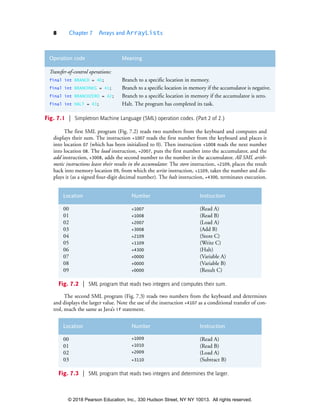
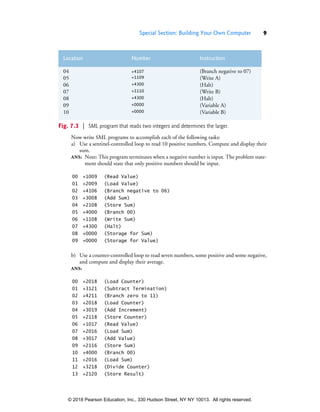
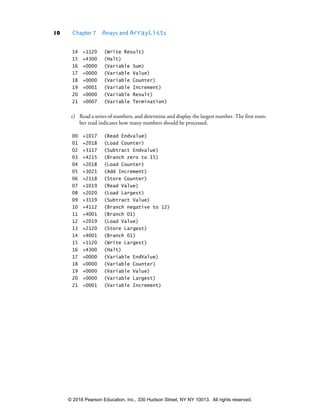
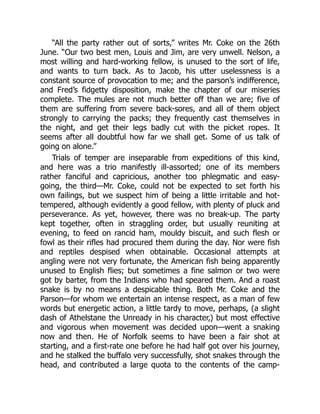
![2 Chapter 7 Arrays and ArrayLists
Self-Review Exercises
7.1 Fill in the blank(s) in each of the following statements:
a) Lists and tables of values can be stored in and .
ANS: arrays, collections.
b) An array is a group of (called elements or components) containing values that
all have the same .
ANS: variables, type.
c) The allows you to iterate through an array’s elements without using a counter.
ANS: enhanced for statement.
d) The number used to refer to a particular array element is called the element’s .
ANS: index (or subscript or position number).
e) An array that uses two indices is referred to as a(n) array.
ANS: two-dimensional.
f) Use the enhanced for statement to walk through double array numbers.
ANS: for (double d : numbers).
g) Command-line arguments are stored in .
ANS: an array of Strings, called args by convention.
h) Use the expression to receive the total number of arguments in a command
line. Assume that command-line arguments are stored in String[] args.
ANS: args.length.
i) Given the command java MyClass test, the first command-line argument is .
ANS: test.
j) A(n) in the parameter list of a method indicates that the method can receive
a variable number of arguments.
ANS: ellipsis (...).
7.2 Determine whether each of the following is true or false. If false, explain why.
a) An array can store many different types of values.
ANS: False. An array can store only values of the same type.
b) An array index should normally be of type float.
ANS: False. An array index must be an integer or an integer expression.
c) An individual array element that’s passed to a method and modified in that method will
contain the modified value when the called method completes execution.
ANS: For individual primitive-type elements of an array: False. A called method receives
and manipulates a copy of the value of such an element, so modifications do not af-
fect the original value. If the reference of an array is passed to a method, however,
modifications to the array elements made in the called method are indeed reflected
in the original. For individual elements of a reference type: True. A called method
receives a copy of the reference of such an element, and changes to the referenced ob-
ject will be reflected in the original array element.
d) Command-line arguments are separated by commas.
ANS: False. Command-line arguments are separated by white space.
7.3 Perform the following tasks for an array called fractions:
a) Declare a constant ARRAY_SIZE that’s initialized to 10.
ANS: final int ARRAY_SIZE = 10;
b) Declare an array with ARRAY_SIZE elements of type double, and initialize the elements
to 0.
ANS: double[] fractions = new double[ARRAY_SIZE];
c) Refer to array element 4.
ANS: fractions[4]
© 2018 Pearson Education, Inc., 330 Hudson Street, NY NY 10013. All rights reserved.](https://image.slidesharecdn.com/8449-250712192221-7b7ca664/85/Java-How-to-Program-Early-Objects-11th-Edition-Deitel-Solutions-Manual-6-320.jpg)
![Self-Review Exercises 3
d) Assign the value 1.667 to array element 9.
ANS: fractions[9] = 1.667;
e) Assign the value 3.333 to array element 6.
ANS: fractions[6] = 3.333;
f) Sum all the elements of the array, using a for statement. Declare the integer variable x
as a control variable for the loop.
ANS:
7.4 Perform the following tasks for an array called table:
a) Declare and create the array as an integer array that has three rows and three columns.
Assume that the constant ARRAY_SIZE has been declared to be 3.
ANS: int[][] table = new int[ARRAY_SIZE][ARRAY_SIZE];
b) How many elements does the array contain?
ANS: Nine.
c) Use a for statement to initialize each element of the array to the sum of its indices. As-
sume that the integer variables x and y are declared as control variables.
ANS:
7.5 Find and correct the error in each of the following program segments:
a)
ANS: Error: Assigning a value to a constant after it has been initialized.
Correction: Assign the correct value to the constant in a final int ARRAY_SIZE
declaration or declare another variable.
b)
ANS: Error: Referencing an array element outside the bounds of the array (b[10]).
Correction: Change the <= operator to <.
c)
ANS: Error: Array indexing is performed incorrectly.
Correction: Change the statement to a[1][1] = 5;.
1 double total = 0.0;
2 for (int x = 0; x < fractions.length; x++)
3 total += fractions[x];
1 for (int x = 0; x < table.length; x++)
2 for (int y = 0; y < table[x].length; y++)
3 table[x][y] = x + y;
1 final int ARRAY_SIZE = 5;
2 ARRAY_SIZE = 10;
1 int[] b = new int[10];
2 for (int i = 0; i <= b.length; i++)
3 b[i] = 1;
1 int[][] a = {{1, 2}, {3, 4}};
2 a[1, 1] = 5;
© 2018 Pearson Education, Inc., 330 Hudson Street, NY NY 10013. All rights reserved.](https://image.slidesharecdn.com/8449-250712192221-7b7ca664/85/Java-How-to-Program-Early-Objects-11th-Edition-Deitel-Solutions-Manual-7-320.jpg)
![4 Chapter 7 Arrays and ArrayLists
Exercises
NOTE: Solutions to the programming exercises are located in the ch07solutions folder.
Each exercise has its own folder named ex07_## where ## is a two-digit number represent-
ing the exercise number. For example, exercise 7.10’s solution is located in the folder ex-
07_10.
7.6 Fill in the blanks in each of the following statements:
a) One-dimensional array p contains four elements. The names of those elements are
, , and .
ANS: p[0], p[1], p[2], and p[3]
b) Naming an array, stating its type and specifying the number of dimensions in the array
is called the array.
ANS: declaring
c) In a two-dimensional array, the first index identifies the of an element and the
second index identifies the of an element.
ANS: row, column
d) An m-by-n array contains rows, columns and elements.
ANS: m, n, m times n
e) The name of the element in row 3 and column 5 of array d is .
ANS: d[3][5]
7.7 Determine whether each of the following is true or false. If false, explain why.
a) To refer to a particular location or element within an array, we specify the name of the
array and the value of the particular element.
ANS: False. The name of the array and the index are specified.
b) An array declaration reserves space for the array.
ANS: False. Arrays must be dynamically allocated with new in Java.
c) To indicate that 100 locations should be reserved for integer array p, you write the dec-
laration
p[100];
ANS: False. The correct declaration is int p[] = new int[100];
d) An application that initializes the elements of a 15-element array to zero must contain
at least one for statement.
ANS: False. Numeric arrays are automatically initialized to zero. Also, a member initializer
list can be used.
e) An application that totals the elements of a two-dimensional array must contain nested
for statements.
ANS: False. It is possible to total the elements of a two-dimensional array with nested while
statements, nested do…while statements or even individual totaling statements.
7.8 Write Java statements to accomplish each of the following tasks:
a) Display the value of element 6 of array f.
ANS: System.out.print(f[6]);
b) Initialize each of the five elements of one-dimensional integer array g to 8.
ANS: int g[] = {8, 8, 8, 8, 8};
c) Total the 100 elements of floating-point array c.
ANS: for (int k = 0; k < c.length; k++)
total += c[k];
d) Copy 11-element array a into the first portion of array b, which contains 34 elements.
ANS: for ( int j = 0; j < a.length; j++ )
b[ j ] = a[ j ];
© 2018 Pearson Education, Inc., 330 Hudson Street, NY NY 10013. All rights reserved.](https://image.slidesharecdn.com/8449-250712192221-7b7ca664/85/Java-How-to-Program-Early-Objects-11th-Edition-Deitel-Solutions-Manual-8-320.jpg)
![Exercises 5
e) Determine and display the smallest and largest values contained in 99-element floating-
point array w.
ANS: double small = w[0];
double large = w[0];
for (int i = 0; i < w.length; i++)
if (w[i] < small)
small = w[i];
else if (w[i] > large)
large = w[i];
System.out.printf("%f %f%n", small, large);
7.9 Consider a two-by-three integer array t.
a) Write a statement that declares and creates t.
ANS: int t[][] = new int[2][3];
b) How many rows does t have?
ANS: two
c) How many columns does t have?
ANS: three
d) How many elements does t have?
ANS: six
e) Write access expressions for all the elements in row 1 of t.
ANS: t[1][0], t[1][1], t[1][2]
f) Write access expressions for all the elements in column 2 of t.
ANS: t[0][2], t[1][2]
g) Write a single statement that sets the element of t in row 0 and column 1 to zero.
ANS: t[0][1] = 0;
h) Write individual statements to initialize each element of t to zero.
ANS: t[0][0] = 0;
t[0][1] = 0;
t[0][2] = 0;
t[1][0] = 0;
t[1][1] = 0;
t[1][2] = 0;
i) Write a nested for statement that initializes each element of t to zero.
ANS: for (int j = 0; j < t.length; j++) {
for (int k = 0; k < t[j].length; k++) {
t[j][k] = 0;
}
}
j) Write a nested for statement that inputs the values for the elements of t from the user.
ANS: for (int j = 0; j < t.length; j++) {
for (int k = 0; k < t[j].length; k++) {
t[j][k] = input.nextInt();
}
}
k) Write a series of statements that determines and displays the smallest value in t.
ANS: int smallest = t[0][0];
for (int j = 0; j < t.length; j++) {
for (int k = 0; k < t[j].length; k++) {
if (t[x][y] < smallest) {
smallest = t[x][y];
}
}
}
System.out.println( smallest );
© 2018 Pearson Education, Inc., 330 Hudson Street, NY NY 10013. All rights reserved.](https://image.slidesharecdn.com/8449-250712192221-7b7ca664/85/Java-How-to-Program-Early-Objects-11th-Edition-Deitel-Solutions-Manual-9-320.jpg)
![6 Chapter 7 Arrays and ArrayLists
l) Write a single printf statement that displays the elements of the first row of t.
ANS: System.out.printf("%d %d %dn", t[0][0], t[0][1], t[0][2]);
m) Write a statement that totals the elements of the third column of t. Do not use iteration.
ANS: int total = t[0][2] + t[1][2];
n) Write a series of statements that displays the contents of t in tabular format. List the
column indices as headings across the top, and list the row indices at the left of each row.
ANS: System.out.printf("t0t1t2%n%n");
for (int e = 0; e < t.length; e++) {
System.out.print(e);
for (int r = 0; r < t[e].length; r++)
System.out.printf("t%d", t[e][r]);
System.out.println();
} // end for
7.10 (Sales Commissions) Use a one-dimensional array to solve the following problem: A com-
pany pays its salespeople on a commission basis. The salespeople receive $200 per week plus 9% of
their gross sales for that week. For example, a salesperson who grosses $5,000 in sales in a week re-
ceives $200 plus 9% of $5,000, or a total of $650. Write an application (using an array of counters)
that determines how many of the salespeople earned salaries in each of the following ranges (assume
that each salesperson’s salary is truncated to an integer amount):
a) $200–299
b) $300–399
c) $400–499
d) $500–599
e) $600–699
f) $700–799
g) $800–899
h) $900–999
i) $1,000 and over
Summarize the results in tabular format.
7.11 Write statements that perform the following one-dimensional-array operations:
a) Set the 10 elements of integer array counts to zero.
ANS: for (int u = 0; u < counts.length; u++)
counts[u] = 0;
b) Add one to each of the 15 elements of integer array bonus.
ANS: for (int v = 0; v < bonus.length; v++)
bonus[v]++;
c) Display the five values of integer array bestScores in column format.
ANS: for (int w = 0; w < bestScores.length; w++)
System.out.println(bestScores[w]);
7.13 Label the elements of three-by-five two-dimensional array sales to indicate the order in
which they’re set to zero by the following program segment:
for (int row = 0; row < sales.length; row++) {
for (int col = 0; col < sales[row].length; col++) {
sales[row][col] = 0;
}
}
ANS: sales[0][0], sales[0][1], sales[0][2], sales[0][3],
sales[0][4], sales[1][0], sales[1][1], sales[1][2],
sales[1][3], sales[1][4], sales[2][0], sales[2][1],
sales[2][2], sales[2][3], sales[2][4]
© 2018 Pearson Education, Inc., 330 Hudson Street, NY NY 10013. All rights reserved.](https://image.slidesharecdn.com/8449-250712192221-7b7ca664/85/Java-How-to-Program-Early-Objects-11th-Edition-Deitel-Solutions-Manual-10-320.jpg)






![As matter of mere amusement, Mr. Coke’s last chapter is his best.
It is crammed with diverting stories of “smart” Yankees and other
originals whom he encountered in California. The whole book,
although in parts a little drawn out, does him credit, and will
doubtless be extensively read and well liked. For various classes it
has features of attractive interest. The emigrant, the gold-seeker, the
sportsman, the mining speculator, the lover of adventure for mere
adventure’s sake, will all derive pleasure from its pages, and
occasionally glean from them a hint worth remembering.
[2] A Ride over the Rocky Mountains to Oregon and
California. By the Hon. Henry J. Coke. London:
1852.](https://image.slidesharecdn.com/8449-250712192221-7b7ca664/85/Java-How-to-Program-Early-Objects-11th-Edition-Deitel-Solutions-Manual-24-320.jpg)


![THE PAMPAS FIRED BY THE INDIANS.[3]
The sun had yet scarce tinged the horizon with the first dawn of
light, when, with a body hot and unrefreshed, I issued from the door
of the hacienda of San Jacinto, to enjoy the cool air of morning, and
soothe my limbs with the clear, pure water of a rivulet that coursed
past the rear of my last night’s resting-place.
All was yet still around—none seemed to be stirring—and as I
glanced over the extensive plains that extended on one side as far
as the eye could reach, I could only discern by the misty light a herd
of wild horses, as they swept along through the tall, wiry grass that
arose above their shoulders. Buckling my pistol-belt around me, I
threw my short rifle carelessly across my back, where it hung by its
own strap, and rapidly proceeded to descend the steep gully, at the
bottom of which the stream, one of the many that descend from the
Andes, ran bubbling and boiling, as it glanced over its rocky bed.
Uneven and stony, with the footing concealed beneath thick matted
grass and small stunted brushwood, I found my task any thing but
an easy one, and almost regretted that I had not gone round by the
path used by the people of the hacienda. Yet, as I swung from rock
to rock by aid of the rank herbage, I felt that the course I had
chosen was most in consonance with that wild, reckless spirit that
had conducted me over so many lands.
As I reached the bed of the gully, the sun showed itself above
the horizon, and the misty haze that filled the deep valley was riven
and dispersed in eddying vapor before the warm breath of day. The
curtain risen, there lay before me a wide level space of the finest
alluvial soil, over which, it would appear, the stream at times
extended, when swollen with the melting snows of the Andes; but it
was now confined to narrow limits in the centre, now and then
extending into large water-holes, where the softer soil had been](https://image.slidesharecdn.com/8449-250712192221-7b7ca664/85/Java-How-to-Program-Early-Objects-11th-Edition-Deitel-Solutions-Manual-28-320.jpg)