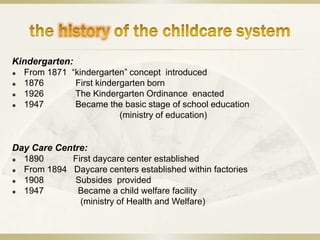
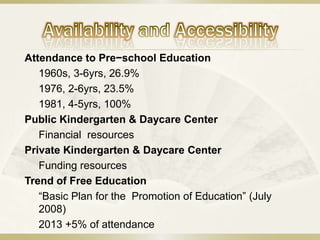
The document summarizes the history and development of kindergarten and daycare centers in Japan. It notes that the first kindergarten was established in 1876, and kindergarten became part of the basic school education system in 1947 under the Ministry of Education. The first daycare center opened in 1890, and they were set up in factories starting in 1894, receiving subsidies beginning in 1908 and becoming classified as child welfare facilities in 1947 under the Ministry of Health and Welfare. Attendance rates for preschool education increased over time, reaching 100% for 4-5 year olds by 1981. Public and private kindergartens and daycares receive different levels of financial support. A basic plan from 2008 aimed to increase



![16 12 11_-_sdm_project[1] [modo de compatibilidade]](https://cdn.slidesharecdn.com/ss_thumbnails/161211-sdmproject1mododecompatibilidade-120313152143-phpapp01-thumbnail.jpg?width=640&height=640&fit=bounds)


![Chapter06[1]](https://cdn.slidesharecdn.com/ss_thumbnails/chapter061-101217224410-phpapp02-thumbnail.jpg?width=640&height=640&fit=bounds)
