Labour migration in the Baltic Sea countries
Dealing with the consequences: integration and citizenship
Jan Niessen
Migration Policy Group
What is MPG?
• An independent policy ‘think-and-do-tank’ with over 15 years of experience
• Mission: to contribute to lasting and positive change resulting in open and
inclusive societies by stimulating well-informed European debate and action
on migration, equality and diversity, and enhancing European co-operation
between and amongst governmental agencies, civil society organisations
and the private sector.
• Four primary activities:
• Gathering, analysing and sharing information
• Creating opportunities for dialogue and mutual learning
• Mobilising and engaging stakeholders in policy debates
• Establishing, inspiring and managing expert networks
Some MPG products:
portals
European Web Site on Integration
www.integration.eu
European Immigration Portal
ec.europa.eu/immigration/
Some MPG products:
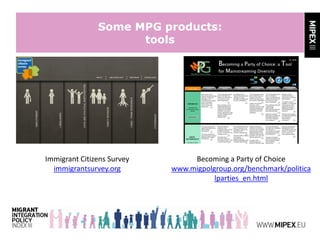
tools
Immigrant Citizens Survey
immigrantsurvey.org
Becoming a Party of Choice
www.migpolgroup.org/benchmark/politica
lparties_en.html
Some MPG products:
publications
Anti-discrimination Law Review, Comparative Analyses and Thematic Reports
available on www.migpolgroup.com
Integration
• Integration is a process by which
All residents irrespective of their background contributing to and benefiting from well-being
• Policies can hinder or facilitate Integration
Equal opportunities, rights and obligations enhance convergence of societal outcomes
Who are the immigrants
• Legally residing third-country nationals (20 out of 30 million)
• Refugees but not asylum-seekers
• All non-nationals to some degree and some strands
• Non-documented only for access to education
MIPEX Objectives
Legal integration as first step in long path to societal integration
 Transparency and knowledge of national policies, changes and trends
 Benchmark policies according to European and international standards for
equal treatment to identify national policy strengths and weaknesses
 Informing and improving policies
Tool for actors
Governmental and non-governmental actors
Academics and media
In
Immigration countries
Countries of origin
Integration policy areas
Seven policy areas for immigrants to participate in society:
Labour market
mobility
Family reunion Education Political
Participation
Long-term
residence
Access to
nationality
Anti-
discrimination
7 strands- 4 dimensions totalling 148 indicators
• Access, eligibility and concepts
• Conditions, requirements and needs
• Security of status, opportunities
• Rights associated
An overview
Average @ ≈50%:
• Political will counts
more than tradition
• Similarities
traditional and
recent countries of
immigration
• Policy change comes
slowly
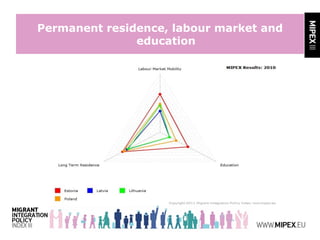
Permanent residence, labour market and
education
Access to Labour market
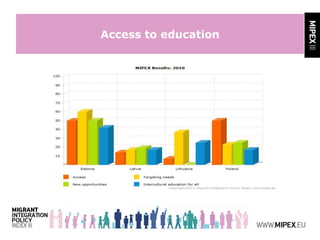
Access to education
Labour market and education
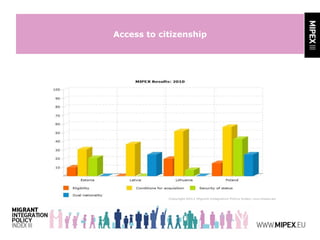
Access to citizenship
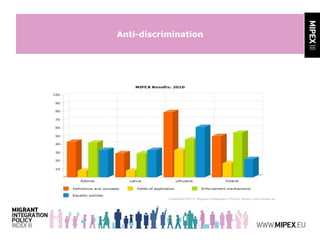
Anti-discrimination
Access to citizenship and anti-discrimination
Jan Niessen - Labour migration in the Baltic Sea countries Dealing with the consequences: integration and citizenship

Jan Niessen - Labour migration in the Baltic Sea countries Dealing with the consequences: integration and citizenship

  • 1.
    Labour migration inthe Baltic Sea countries Dealing with the consequences: integration and citizenship Jan Niessen Migration Policy Group
  • 2.
    What is MPG? •An independent policy ‘think-and-do-tank’ with over 15 years of experience • Mission: to contribute to lasting and positive change resulting in open and inclusive societies by stimulating well-informed European debate and action on migration, equality and diversity, and enhancing European co-operation between and amongst governmental agencies, civil society organisations and the private sector. • Four primary activities: • Gathering, analysing and sharing information • Creating opportunities for dialogue and mutual learning • Mobilising and engaging stakeholders in policy debates • Establishing, inspiring and managing expert networks
  • 3.
    Some MPG products: portals EuropeanWeb Site on Integration www.integration.eu European Immigration Portal ec.europa.eu/immigration/
  • 4.
    Some MPG products: tools ImmigrantCitizens Survey immigrantsurvey.org Becoming a Party of Choice www.migpolgroup.org/benchmark/politica lparties_en.html
  • 5.
    Some MPG products: publications Anti-discriminationLaw Review, Comparative Analyses and Thematic Reports available on www.migpolgroup.com
  • 6.
    Integration • Integration isa process by which All residents irrespective of their background contributing to and benefiting from well-being • Policies can hinder or facilitate Integration Equal opportunities, rights and obligations enhance convergence of societal outcomes
  • 7.
    Who are theimmigrants • Legally residing third-country nationals (20 out of 30 million) • Refugees but not asylum-seekers • All non-nationals to some degree and some strands • Non-documented only for access to education
  • 8.
    MIPEX Objectives Legal integrationas first step in long path to societal integration  Transparency and knowledge of national policies, changes and trends  Benchmark policies according to European and international standards for equal treatment to identify national policy strengths and weaknesses  Informing and improving policies
  • 9.
    Tool for actors Governmentaland non-governmental actors Academics and media In Immigration countries Countries of origin
  • 10.
    Integration policy areas Sevenpolicy areas for immigrants to participate in society: Labour market mobility Family reunion Education Political Participation Long-term residence Access to nationality Anti- discrimination
  • 11.
    7 strands- 4dimensions totalling 148 indicators • Access, eligibility and concepts • Conditions, requirements and needs • Security of status, opportunities • Rights associated
  • 12.
    An overview Average @≈50%: • Political will counts more than tradition • Similarities traditional and recent countries of immigration • Policy change comes slowly
  • 13.
    Permanent residence, labourmarket and education
  • 14.
  • 15.
  • 16.
  • 17.
  • 18.
  • 19.
    Access to citizenshipand anti-discrimination