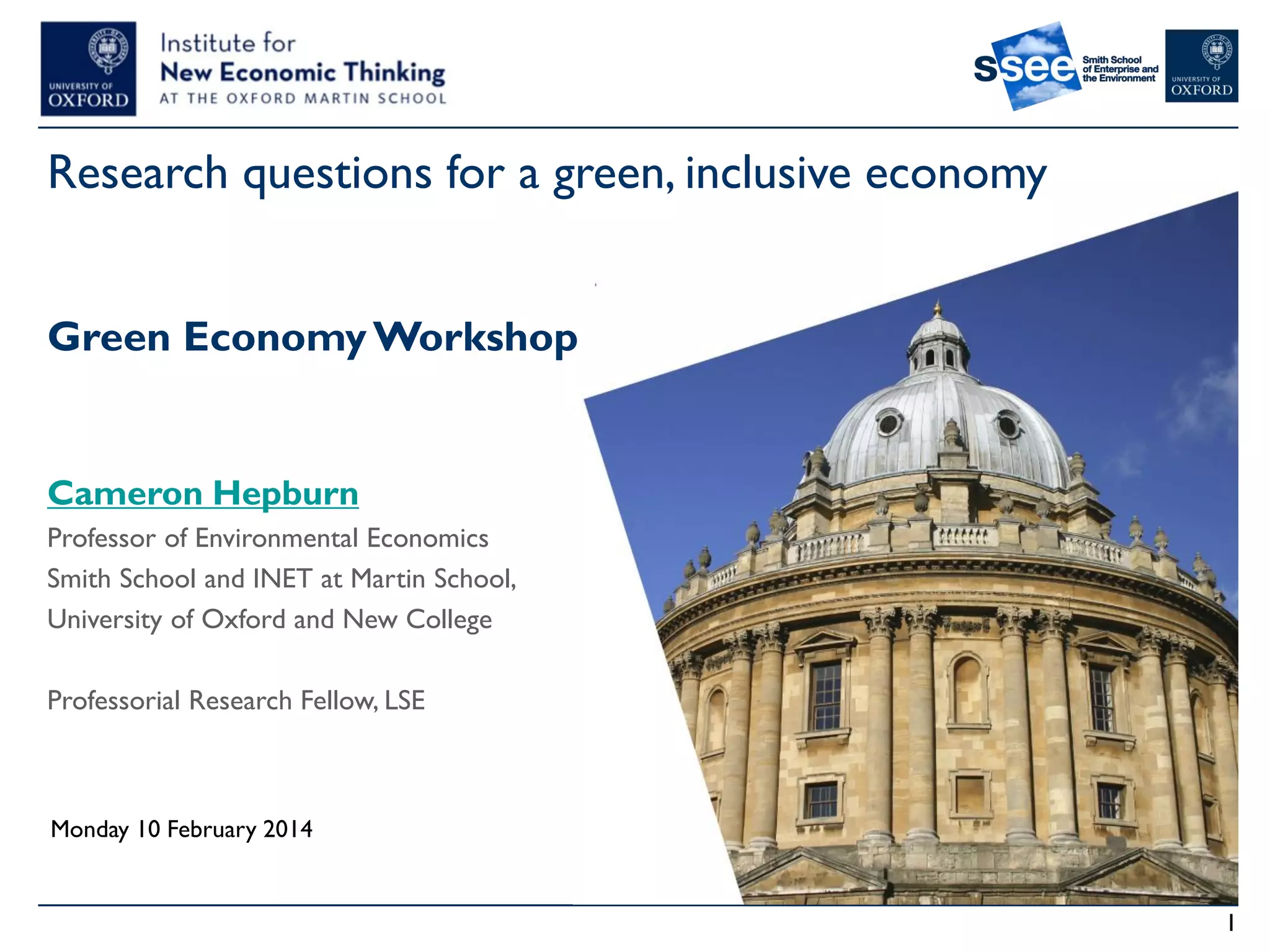
Research questions for a green, inclusive economy
Green Economy Workshop

Cameron Hepburn
Professor of Environmental Economics
Smith School and INET at Martin School,
University of Oxford and New College
Professorial Research Fellow, LSE

Monday 10 February 2014

1
Agenda
1.
2.
3.

Metrics
Vision
Transition

2
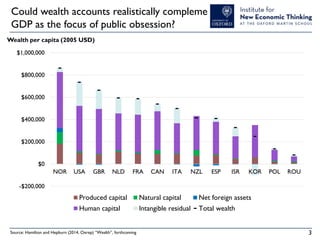
Could wealth accounts realistically complement
GDP as the focus of public obsession?
Wealth per capita (2005 USD)
$1,000,000
$800,000
$600,000
$400,000

$200,000
$0
NOR

USA

GBR

NLD

FRA

CAN

ITA

NZL

ESP

ISR

KOR

POL

ROU

-$200,000

Produced capital

Natural capital

Net foreign assets

Human capital

Intangible residual

Total wealth

Source: Hamilton and Hepburn (2014, Oxrep) “Wealth”, forthcoming

3
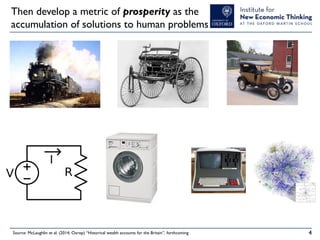
Then develop a metric of prosperity as the
accumulation of solutions to human problems?

Source: McLaughlin et al. (2014, Oxrep) “Historical wealth accounts for the Britain”, forthcoming

4
Agenda
1.
2.
3.

Metrics
Vision
Transition

5
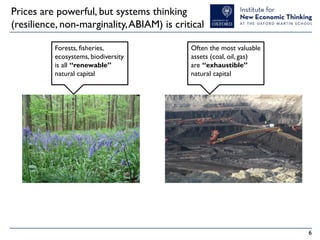
Prices are powerful, but systems thinking
(resilience, non-marginality, ABIAM) is critical
Forests, fisheries,
ecosystems, biodiversity
is all “renewable”
natural capital

Often the most valuable
assets (coal, oil, gas)
are “exhaustible”
natural capital

6
The politics of the transition are critical
– can we better use leverage points?

Rest of
the World

25

China

As likely as not, CO2 only

30

Land
use

Likely, CO2 only

35

Likely

Aggregate Fossil Fuel CO2 extraction [GtCO2]

40

Atmospheric space
Fossil carbon
reserves by country

20
Saudi Arabia
Canada

15

Russia

10

USA

5

9th – 20th countries
by reserves
Iran

0
0

Australia
India

50

100

Source: Otto, Allen and Hepburn (2014) based on Aurora Energy Research (2014)

150

200

Years of
extraction at
current rates
7
Agenda
1.
2.
3.

Metrics
Vision
Transition

8
Key research questions on the transition
relate to politics and innovation
•
•
•
•

What drives down costs of clean energy?
How have governance mechanisms for the commons emerge?
How can we create the institutions that we need for the transition?
How can firms use behavioural economics to develop the profitable
business models that respect planetary boundaries?

9
Agenda
1.
2.
3.
4.

Metrics
Vision
Transition
More broadly….

10
Brilliant young economists now see career
prospects in working on these questions….

11
What is needed is mutual understanding,
even love, between disciplines….

12
Thank you

13
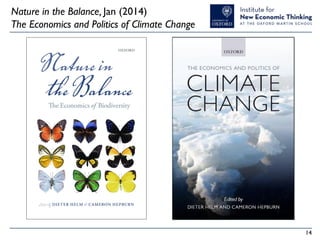
Nature in the Balance, Jan (2014)
The Economics and Politics of Climate Change

14

Research questions for a green, inclusive economy

  • 1.
    Research questions fora green, inclusive economy Green Economy Workshop Cameron Hepburn Professor of Environmental Economics Smith School and INET at Martin School, University of Oxford and New College Professorial Research Fellow, LSE Monday 10 February 2014 1
  • 2.
  • 3.
    Could wealth accountsrealistically complement GDP as the focus of public obsession? Wealth per capita (2005 USD) $1,000,000 $800,000 $600,000 $400,000 $200,000 $0 NOR USA GBR NLD FRA CAN ITA NZL ESP ISR KOR POL ROU -$200,000 Produced capital Natural capital Net foreign assets Human capital Intangible residual Total wealth Source: Hamilton and Hepburn (2014, Oxrep) “Wealth”, forthcoming 3
  • 4.
    Then develop ametric of prosperity as the accumulation of solutions to human problems? Source: McLaughlin et al. (2014, Oxrep) “Historical wealth accounts for the Britain”, forthcoming 4
  • 5.
  • 6.
    Prices are powerful,but systems thinking (resilience, non-marginality, ABIAM) is critical Forests, fisheries, ecosystems, biodiversity is all “renewable” natural capital Often the most valuable assets (coal, oil, gas) are “exhaustible” natural capital 6
  • 7.
    The politics ofthe transition are critical – can we better use leverage points? Rest of the World 25 China As likely as not, CO2 only 30 Land use Likely, CO2 only 35 Likely Aggregate Fossil Fuel CO2 extraction [GtCO2] 40 Atmospheric space Fossil carbon reserves by country 20 Saudi Arabia Canada 15 Russia 10 USA 5 9th – 20th countries by reserves Iran 0 0 Australia India 50 100 Source: Otto, Allen and Hepburn (2014) based on Aurora Energy Research (2014) 150 200 Years of extraction at current rates 7
  • 8.
  • 9.
    Key research questionson the transition relate to politics and innovation • • • • What drives down costs of clean energy? How have governance mechanisms for the commons emerge? How can we create the institutions that we need for the transition? How can firms use behavioural economics to develop the profitable business models that respect planetary boundaries? 9
  • 10.
  • 11.
    Brilliant young economistsnow see career prospects in working on these questions…. 11
  • 12.
    What is neededis mutual understanding, even love, between disciplines…. 12
  • 13.
  • 14.
    Nature in theBalance, Jan (2014) The Economics and Politics of Climate Change 14