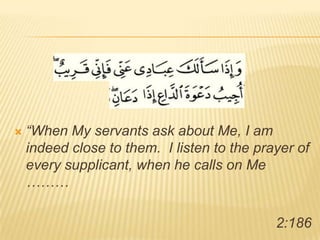
“When My servants ask about Me, I am indeed close to them.  I listen to the prayer of every supplicant, when he calls on Me ………2:186
The Holy month of Ramadan is where Allah (SWT) is the HOST and we are his GUESTS For us, it will be what we make of it.  Be month introspection and supplications.OR A month of mechanical fast during the day and feast at night. Indeed this is a month of feast  … not of noise, but silent contemplation; not of banquets but restraint; not of forgetfulness but remembrance.
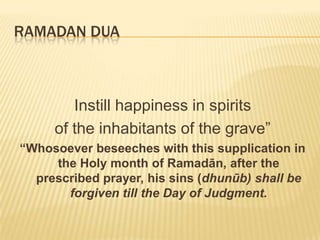
Ramadan DuaأَللٌّهُمَّأَدْخِلْعَلىأَهلِالقُبُورِالسُّرُورَInstill happiness in spirits of the inhabitants of the grave”“Whosoever beseeches with this supplication in the Holy month of Ramadān, after the prescribed prayer, his sins (dhunūb) shall be forgiven till the Day of Judgment.
أَللٌّهُمَّاشْفِكُلَّمَرِيْضٍYaAllāh, Cure Every Sick Person
Prophet (PBUH)  in Wasā’il al-Shī‘a, v. 2, pg. 417O My servant, what hampered you from visiting Me when I fell sick.’You are the Lord of the people, neither do You sense any pain, nor do You fall sick.’Your mu’min brother fell sick, and you did not visit him; I swear by my Invincibility and Majesty, were you to visit him, you would have found Me near him, and I would have taken the responsibility of attending to your needs
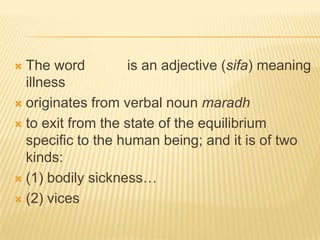
The word مَرِيْض is an adjective (sifa) meaning illnessoriginates from verbal noun maradhto exit from the state of the equilibrium specific to the human being; and it is of two kinds: (1) bodily sickness… (2) vices
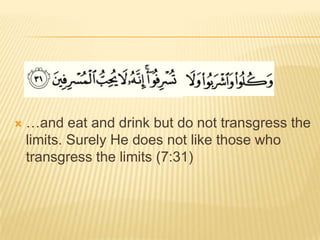
…and eat and drink but do not transgress the limits. Surely He does not like those who transgress the limits (7:31)
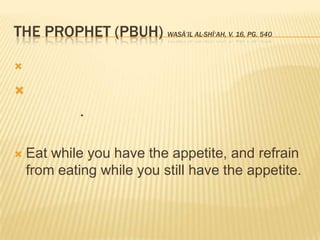
The Prophet (PBUH) Wasā’il al-Shī‘ah, v. 16, pg. 540 كُلْوَاَنْتَتَشْتَهِيوَاَمْسِكْوَاَنْتَتَشْتَهِي.Eat while you have the appetite, and refrain from eating while you still have the appetite.
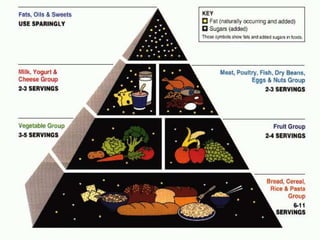
“Eat of the good and wholesome things that We have provided for your sustenance, but indulge in no excess therein.” Taha , verse 81Food has a great significance in Islam. Associatedwith one’s relationship with God. The body is a gift from God; it is given to humans as an amanah (in trust) to take care of for a fixed period.
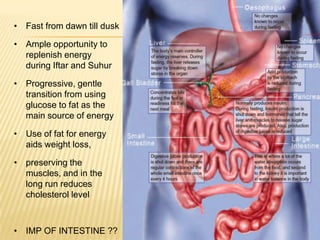
Fast from dawn till dusk
Ample opportunity to replenish energy  during Iftar and Suhur
Progressive, gentle transition from using glucose to fat as the main source of energy
Use of fat for energy aids weight loss,
preserving the muscles, and in the long run reduces cholesterol level
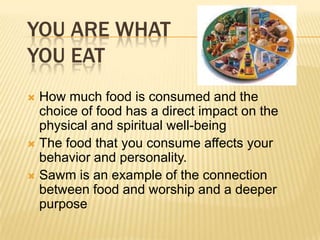
IMP OF INTESTINE ??You are what you Eat How much food is consumed and the choice of food has a direct impact on the physical and spiritual well-being
The food that you consume affects your behaviorand personality.
Sawm is an example of the connection between food and worship and a deeper purpose
Healthy Eating during Ramadan Long hours of fasting
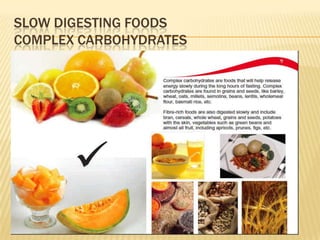
consume slow digesting foods including fiber containing-foods rather than fast-digesting foods.
Slow digesting foods last up to 8 hours
Foods that contain grains and seeds like barley,
wheat, oats, millet, semolina, beans, lentils, whole meal flour,
fast-digesting foods last for only 3 to 4 hours
contain sugar, white flour, etc. (called  refined carbohydrates).Slow digesting foodsCompleX Carbohydrates
SUHOOR  a wholesome, moderate meal that is filling and provides enough energy for many hours. important to include slowly-digesting foods in the suhoor.Haleem is an excellent source of protein and is a slow-burning food.Dates are excellent source of sugar, fiber, carbohydrates, potassium and magnesium. Almonds are rich in protein and fiber with less fat. Bananas are a good source of potassium, magnesium and carbohydrates.
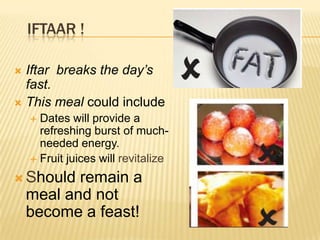
IFTAAR ! Iftar  breaks the day’s fast. This meal could includeDates will provide a refreshing burst of much-needed energy. Fruit juices will revitalizeShould remain a meal and not become a feast!

Dua/Diet Presentation

  • 1.
    “When My servantsask about Me, I am indeed close to them. I listen to the prayer of every supplicant, when he calls on Me ………2:186
  • 2.
    The Holy monthof Ramadan is where Allah (SWT) is the HOST and we are his GUESTS For us, it will be what we make of it. Be month introspection and supplications.OR A month of mechanical fast during the day and feast at night. Indeed this is a month of feast … not of noise, but silent contemplation; not of banquets but restraint; not of forgetfulness but remembrance.
  • 3.
    Ramadan DuaأَللٌّهُمَّأَدْخِلْعَلىأَهلِالقُبُورِالسُّرُورَInstill happinessin spirits of the inhabitants of the grave”“Whosoever beseeches with this supplication in the Holy month of Ramadān, after the prescribed prayer, his sins (dhunūb) shall be forgiven till the Day of Judgment.
  • 4.
  • 5.
    Prophet (PBUH) in Wasā’il al-Shī‘a, v. 2, pg. 417O My servant, what hampered you from visiting Me when I fell sick.’You are the Lord of the people, neither do You sense any pain, nor do You fall sick.’Your mu’min brother fell sick, and you did not visit him; I swear by my Invincibility and Majesty, were you to visit him, you would have found Me near him, and I would have taken the responsibility of attending to your needs
  • 6.
    The word مَرِيْضis an adjective (sifa) meaning illnessoriginates from verbal noun maradhto exit from the state of the equilibrium specific to the human being; and it is of two kinds: (1) bodily sickness… (2) vices
  • 7.
    …and eat anddrink but do not transgress the limits. Surely He does not like those who transgress the limits (7:31)
  • 8.
    The Prophet (PBUH)Wasā’il al-Shī‘ah, v. 16, pg. 540 كُلْوَاَنْتَتَشْتَهِيوَاَمْسِكْوَاَنْتَتَشْتَهِي.Eat while you have the appetite, and refrain from eating while you still have the appetite.
  • 9.
    “Eat of thegood and wholesome things that We have provided for your sustenance, but indulge in no excess therein.” Taha , verse 81Food has a great significance in Islam. Associatedwith one’s relationship with God. The body is a gift from God; it is given to humans as an amanah (in trust) to take care of for a fixed period.
  • 10.
  • 11.
    Ample opportunity toreplenish energy during Iftar and Suhur
  • 12.
    Progressive, gentle transitionfrom using glucose to fat as the main source of energy
  • 13.
    Use of fatfor energy aids weight loss,
  • 14.
    preserving the muscles,and in the long run reduces cholesterol level
  • 15.
    IMP OF INTESTINE??You are what you Eat How much food is consumed and the choice of food has a direct impact on the physical and spiritual well-being
  • 16.
    The food thatyou consume affects your behaviorand personality.
  • 17.
    Sawm is anexample of the connection between food and worship and a deeper purpose
  • 18.
    Healthy Eating duringRamadan Long hours of fasting
  • 19.
    consume slow digestingfoods including fiber containing-foods rather than fast-digesting foods.
  • 20.
    Slow digesting foodslast up to 8 hours
  • 21.
    Foods that containgrains and seeds like barley,
  • 22.
    wheat, oats, millet,semolina, beans, lentils, whole meal flour,
  • 23.
    fast-digesting foods lastfor only 3 to 4 hours
  • 24.
    contain sugar, whiteflour, etc. (called refined carbohydrates).Slow digesting foodsCompleX Carbohydrates
  • 25.
    SUHOOR awholesome, moderate meal that is filling and provides enough energy for many hours. important to include slowly-digesting foods in the suhoor.Haleem is an excellent source of protein and is a slow-burning food.Dates are excellent source of sugar, fiber, carbohydrates, potassium and magnesium. Almonds are rich in protein and fiber with less fat. Bananas are a good source of potassium, magnesium and carbohydrates.
  • 26.
    IFTAAR ! Iftar breaks the day’s fast. This meal could includeDates will provide a refreshing burst of much-needed energy. Fruit juices will revitalizeShould remain a meal and not become a feast!

Editor's Notes

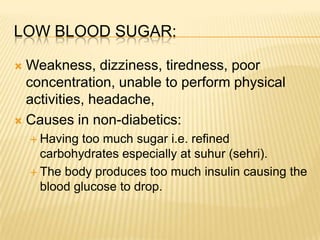
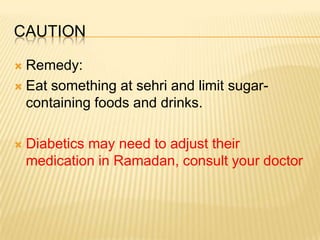
  • #23 Remedy: Eat something at sehri and limit sugar-containing foods and drinks.Caution: Diabetics may need to adjust their medication in Ramadan, consult your doctor.