PARIS Demonstrators
Yucheng Jin, Joris Klerkx, Erik Duval
Augment group
HCI @ KU Leuven
16 November 2015
Outline
• 2nd demonstrator
o Design and implementation
o Evaluation
o Limitations
• Final demonstrator
o Design
o Related work
o Technical requirements
o Implementation plan
2nd demonstrator -
offline adaptation
Design
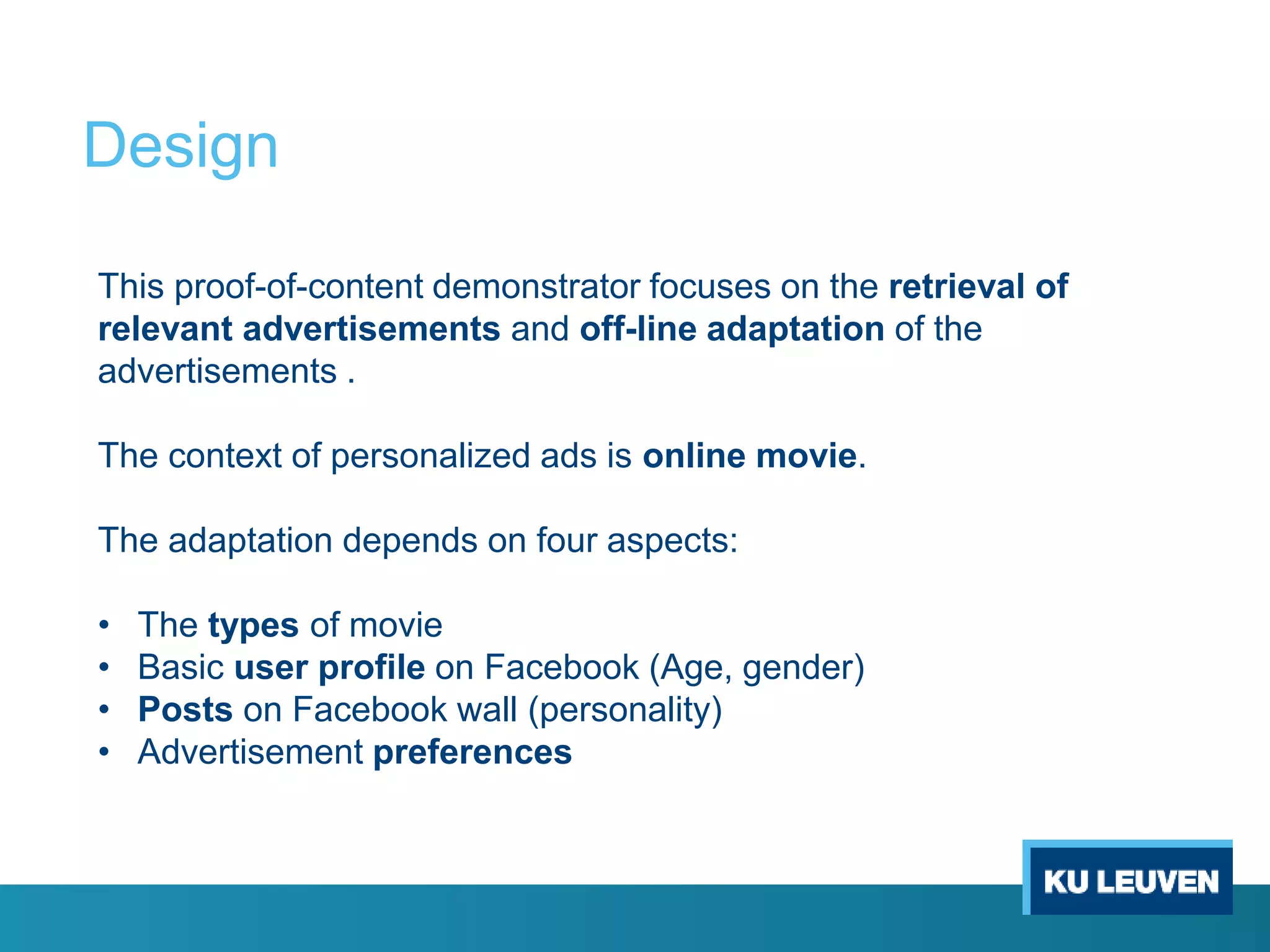
This proof-of-content demonstrator focuses on the retrieval of
relevant advertisements and off-line adaptation of the
advertisements .
The context of personalized ads is online movie.
The adaptation depends on four aspects:
• The types of movie
• Basic user profile on Facebook (Age, gender)
• Posts on Facebook wall (personality)
• Advertisement preferences
Advertiser: value presented by user data
User: value realized through personalization
What should we do toward such a trade-off?
Trade-off
Research hypothesis
We hypothesize that quality and effectiveness of personalized ads
can be increased by empowering users to explore and steer the
selection process.
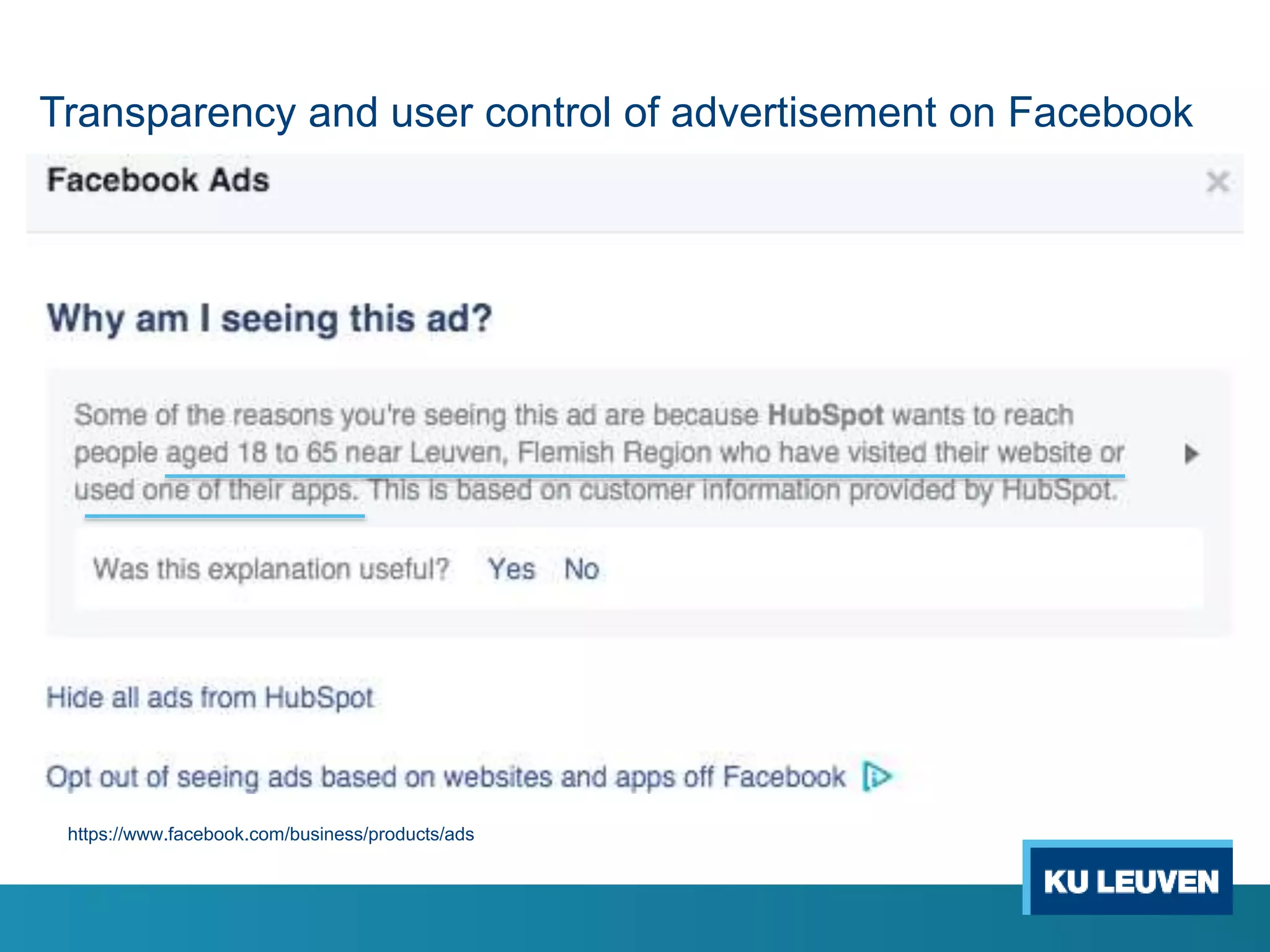
To verify our assumption, we investigate the impact of Transparency
(T) and User control (UC) on four key aspects:
• Quality: interest match, context match, attractiveness and
annoyance?
• Behavioral intention: willingness to click, purchase, and use?
• Understanding: understand why and how a particular ad is
selected?
• Attitude: satisfaction, confidence and trust of ads?
https://www.facebook.com/business/products/ads
Transparency and user control of advertisement on Facebook
https://www.facebook.com/business/products/ads
Research methodology
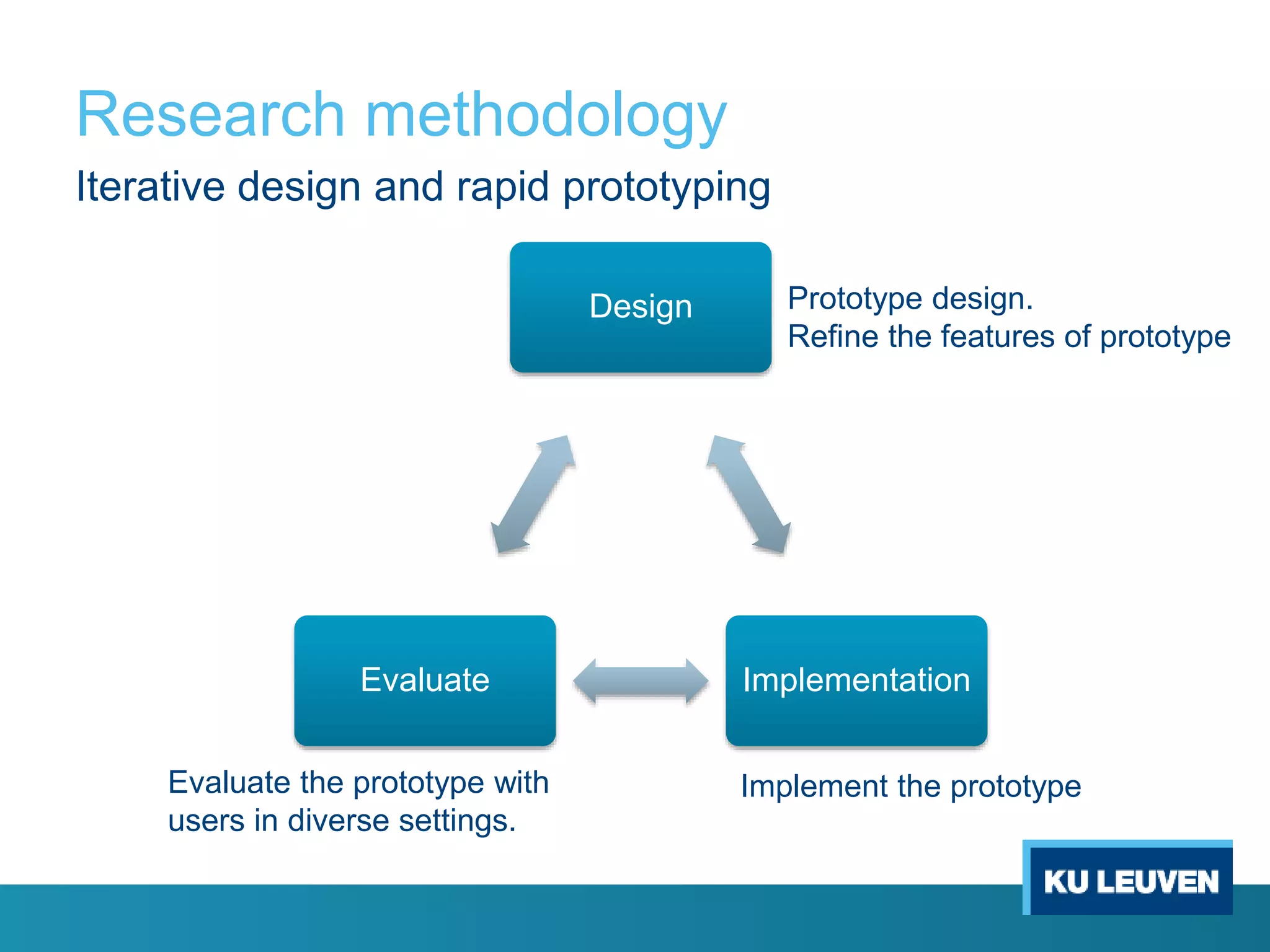
Iterative design and rapid prototyping
Design
ImplementationEvaluate
Prototype design.
Refine the features of prototype
Implement the prototypeEvaluate the prototype with
users in diverse settings.
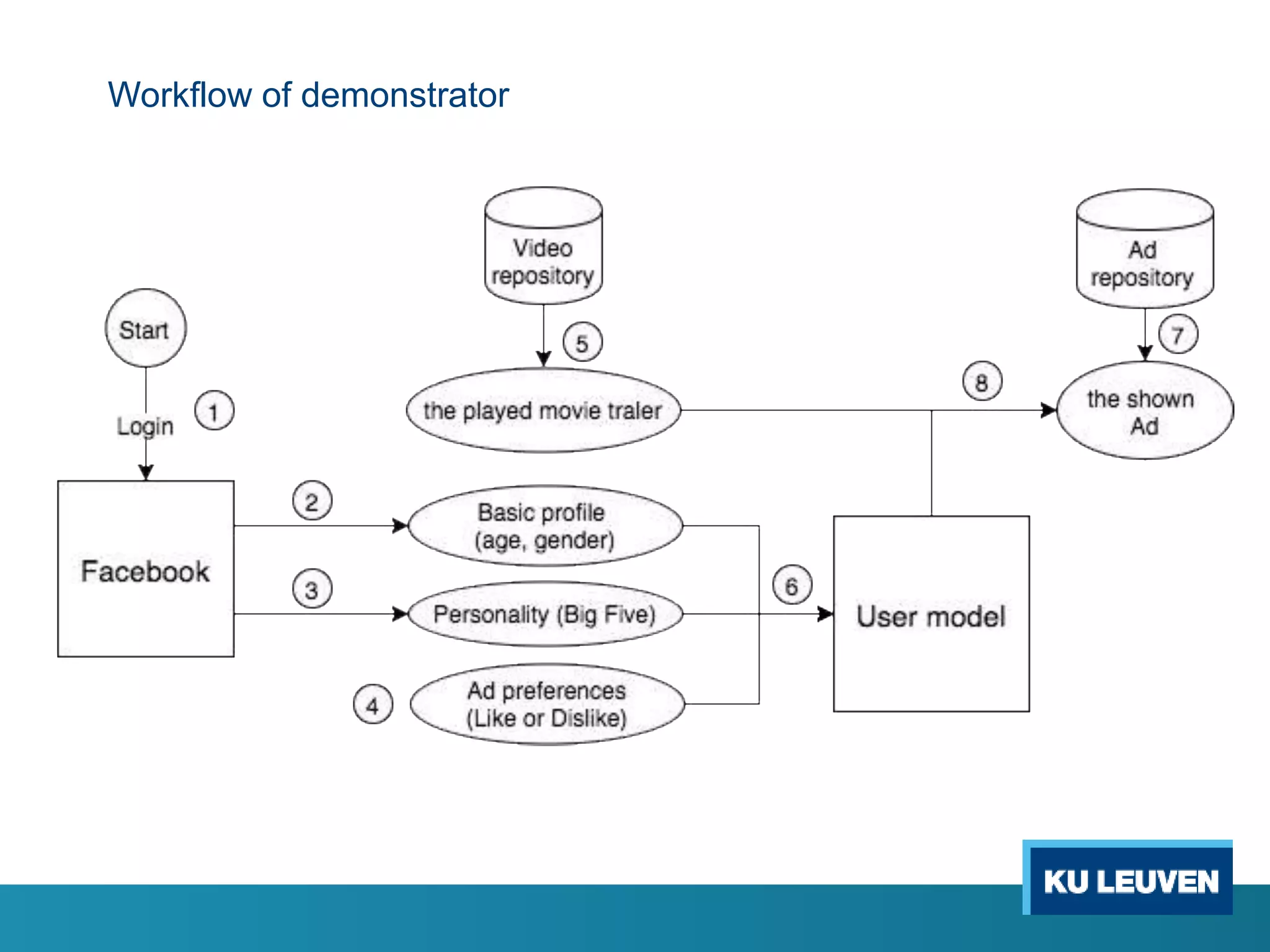
Workflow of demonstrator
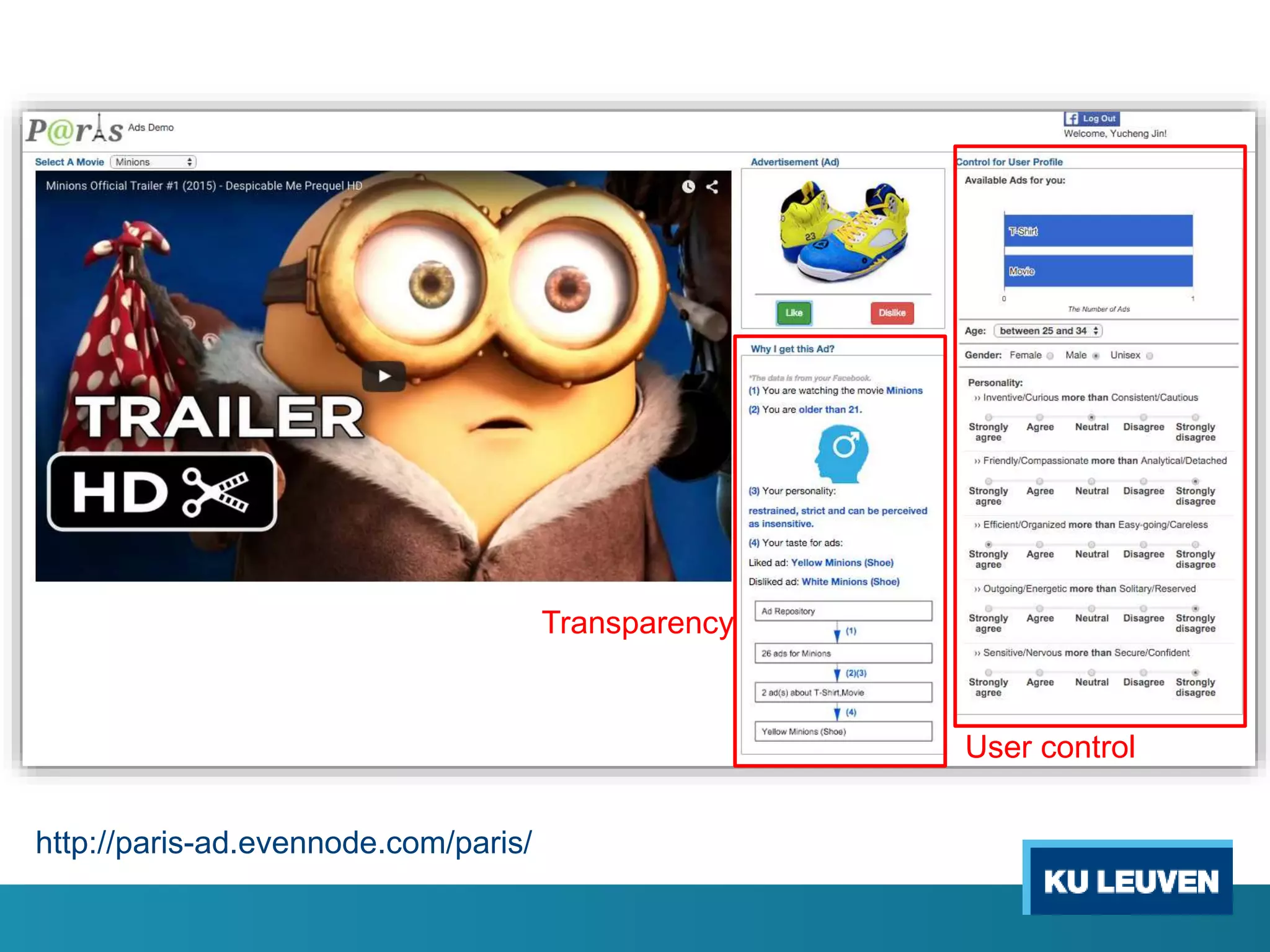
http://paris-ad.evennode.com/paris/
Transparency
User control
Implementation
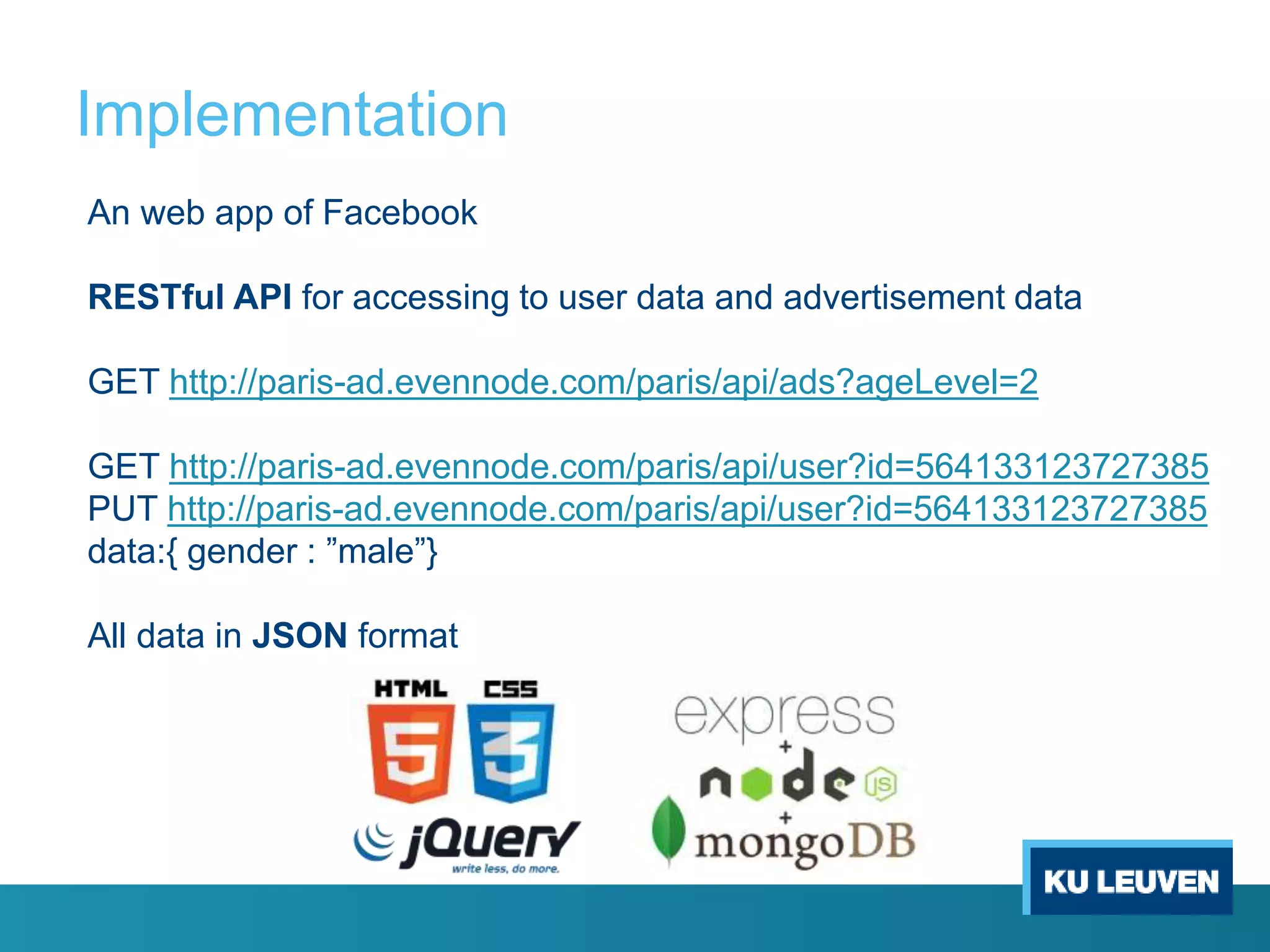
An web app of Facebook
RESTful API for accessing to user data and advertisement data
GET http://paris-ad.evennode.com/paris/api/ads?ageLevel=2
GET http://paris-ad.evennode.com/paris/api/user?id=564133123727385
PUT http://paris-ad.evennode.com/paris/api/user?id=564133123727385
data:{ gender : ”male”}
All data in JSON format
Schema of user data Schema of ad data
Filtering by
Evaluation
We conducted a between-subjects study on Amazon Mechanical Turk
(MTurk) where we recruited 200 subjects who have above 80% lifetime
approval rate for HITs.
Compensation was $1 for each study and average study completion time
was around 11 minutes.
We created four experimental conditions:
• Condition 1 (C1): (No-T & No-UC) base condition.
• Condition 2 (C2): (T & No-UC).
• Condition 3 (C3): (No-T & UC).
• Condition 4 (C4): (T & UC)
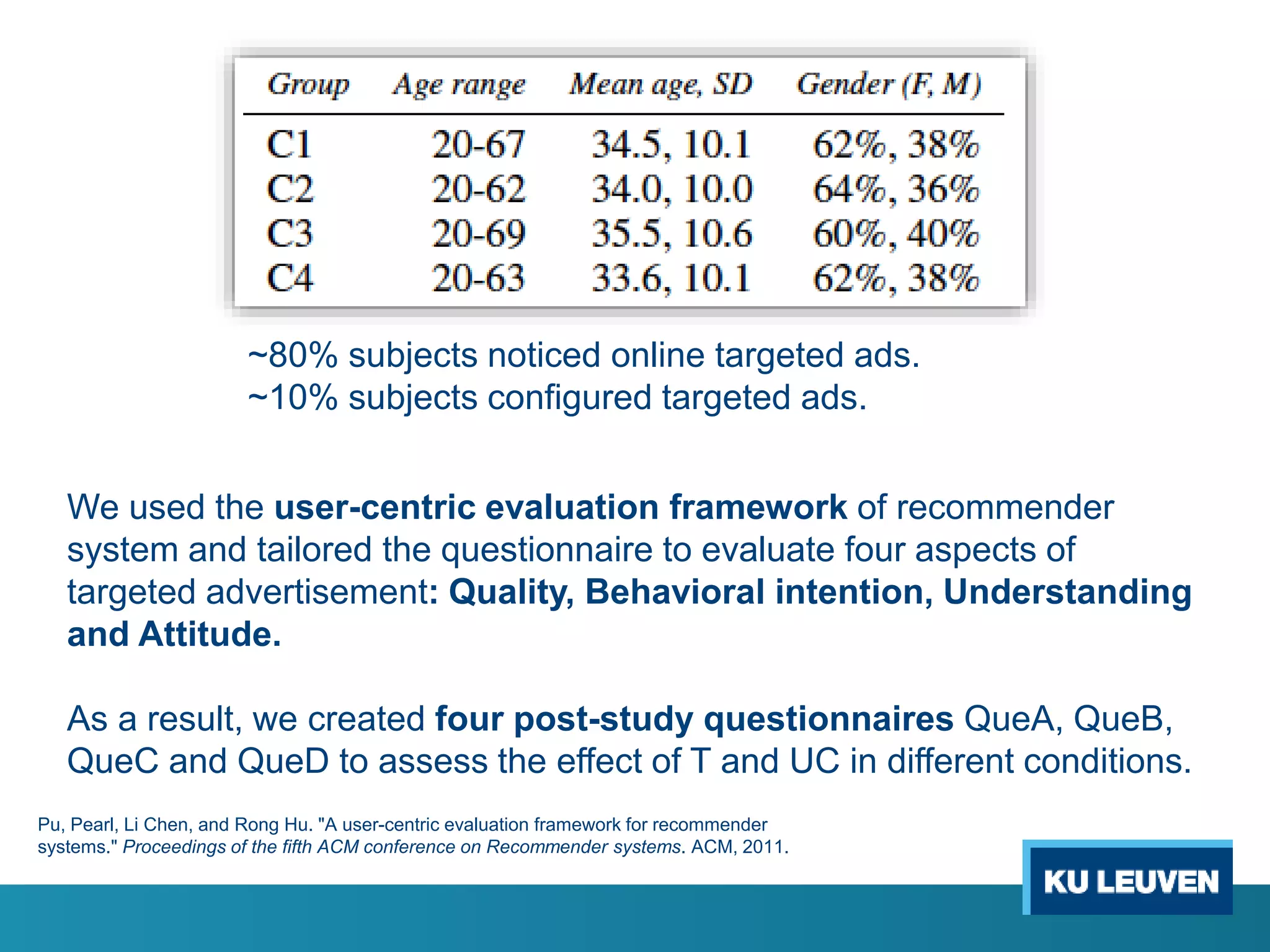
We used the user-centric evaluation framework of recommender
system and tailored the questionnaire to evaluate four aspects of
targeted advertisement: Quality, Behavioral intention, Understanding
and Attitude.
As a result, we created four post-study questionnaires QueA, QueB,
QueC and QueD to assess the effect of T and UC in different conditions.
~80% subjects noticed online targeted ads.
~10% subjects configured targeted ads.
Pu, Pearl, Li Chen, and Rong Hu. "A user-centric evaluation framework for recommender
systems." Proceedings of the fifth ACM conference on Recommender systems. ACM, 2011.
Common statements shown in four questionnaires.
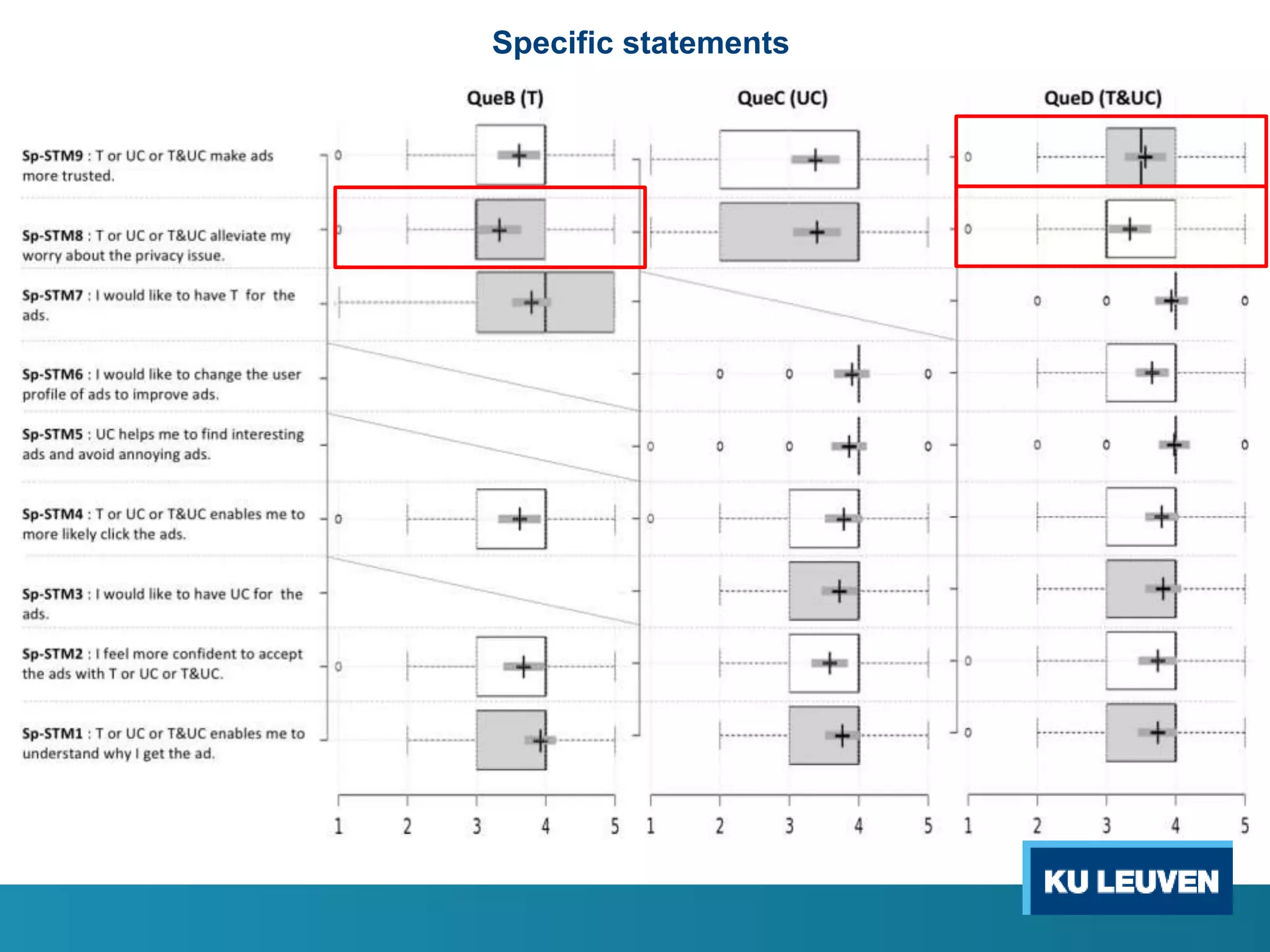
Specific statements and optional questions regarding users’
perception of T (QueB), UC (QueC) and T & UC (QueD).
5-point Likert scale, Strongly agree - Strongly disagree
Evaluation steps
1. Introduce web app to subjects
2. Log in to the app with their Facebook accounts.
3. Play movie trailer and show ads.
4. During the trailer, subjects could rate the ads and configure ads.
5. After watching the trailer, subjects were asked to complete the
questionnaire.
What is the result ?
Common statements
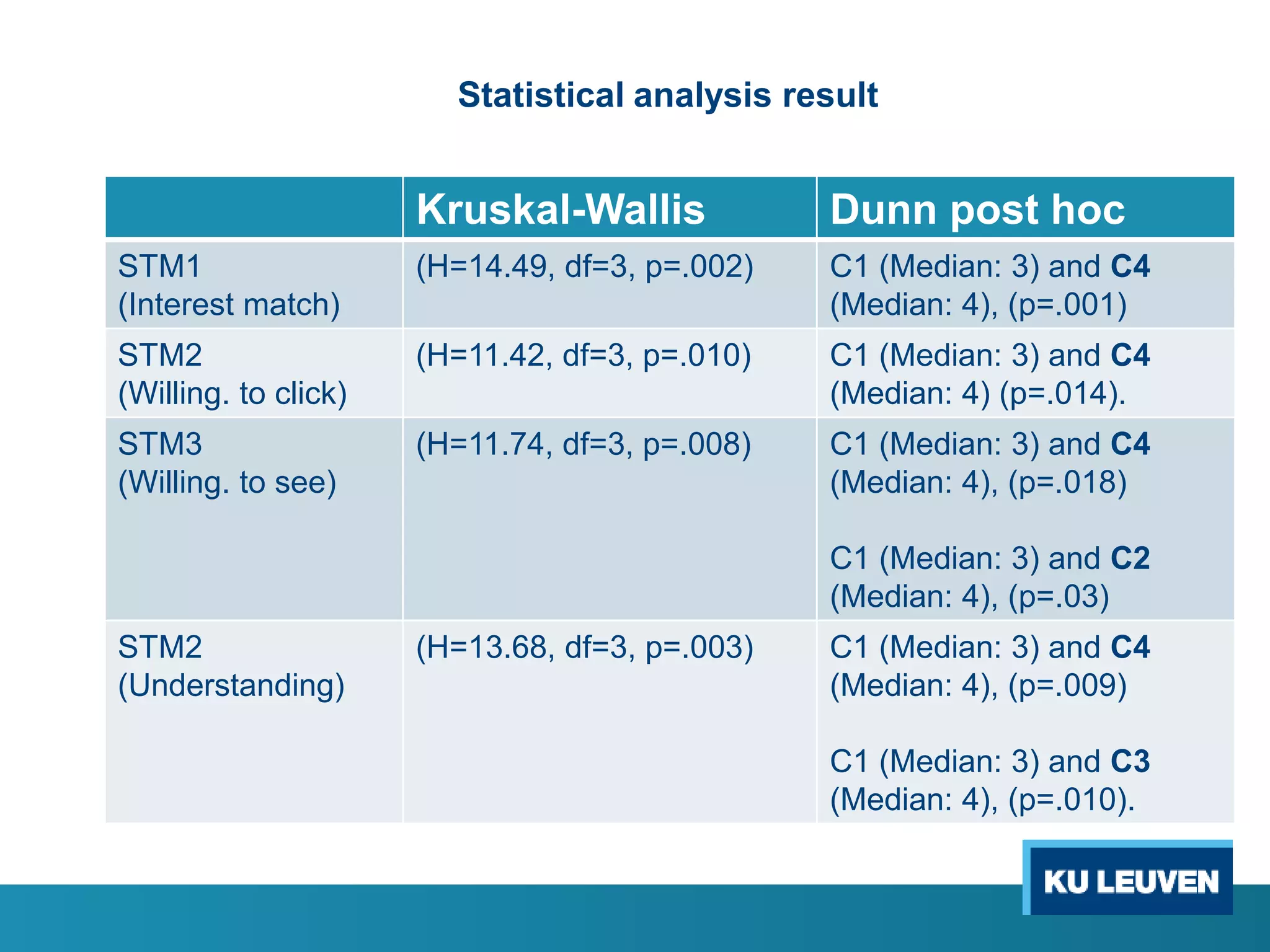
Kruskal-Wallis Dunn post hoc
STM1
(Interest match)
(H=14.49, df=3, p=.002) C1 (Median: 3) and C4
(Median: 4), (p=.001)
STM2
(Willing. to click)
(H=11.42, df=3, p=.010) C1 (Median: 3) and C4
(Median: 4) (p=.014).
STM3
(Willing. to see)
(H=11.74, df=3, p=.008) C1 (Median: 3) and C4
(Median: 4), (p=.018)
C1 (Median: 3) and C2
(Median: 4), (p=.03)
STM2
(Understanding)
(H=13.68, df=3, p=.003) C1 (Median: 3) and C4
(Median: 4), (p=.009)
C1 (Median: 3) and C3
(Median: 4), (p=.010).
Statistical analysis result
Specific statements
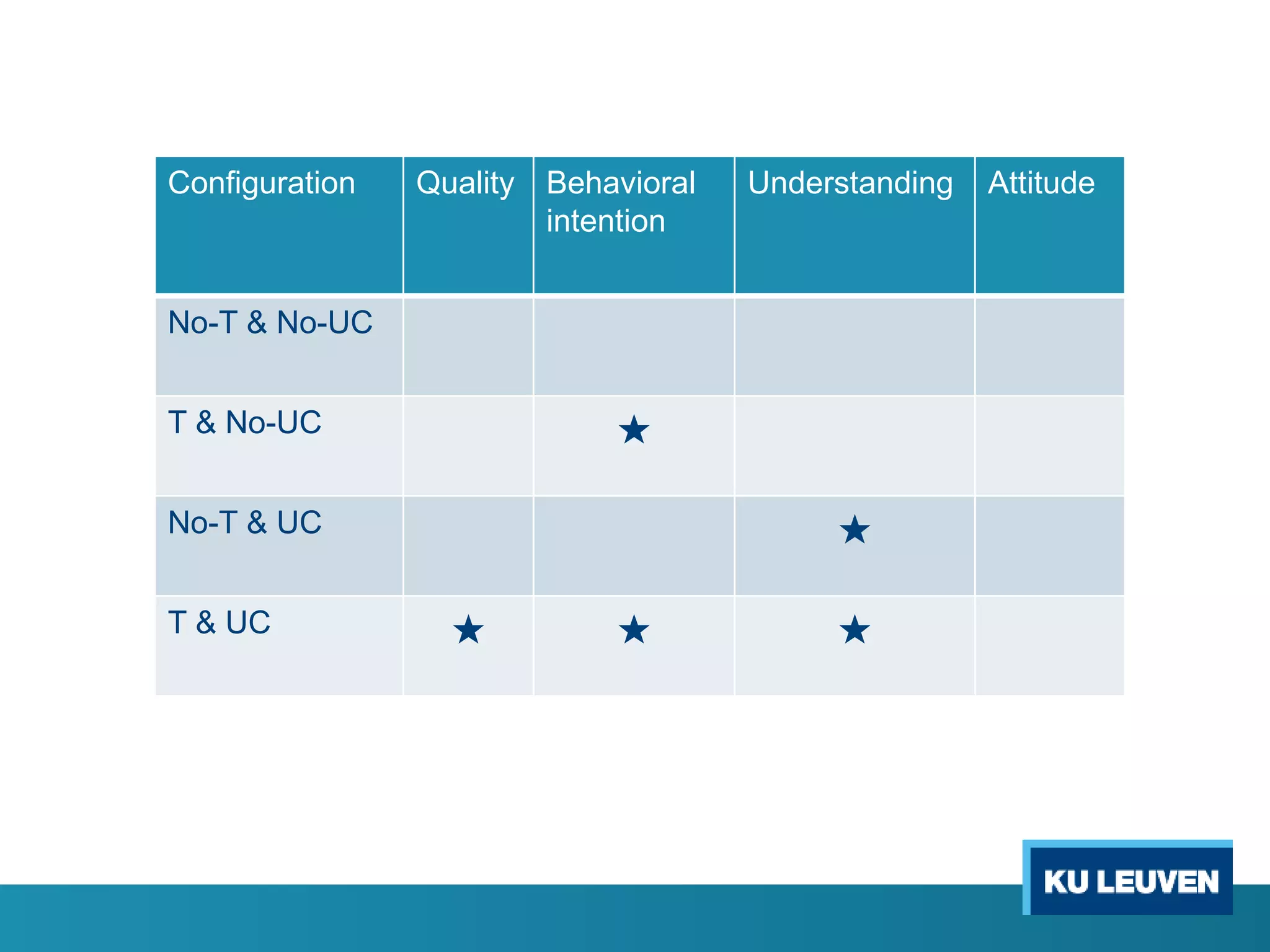
Configuration Quality Behavioral
intention
Understanding Attitude
No-T & No-UC
T & No-UC ★
No-T & UC ★
T & UC ★ ★ ★
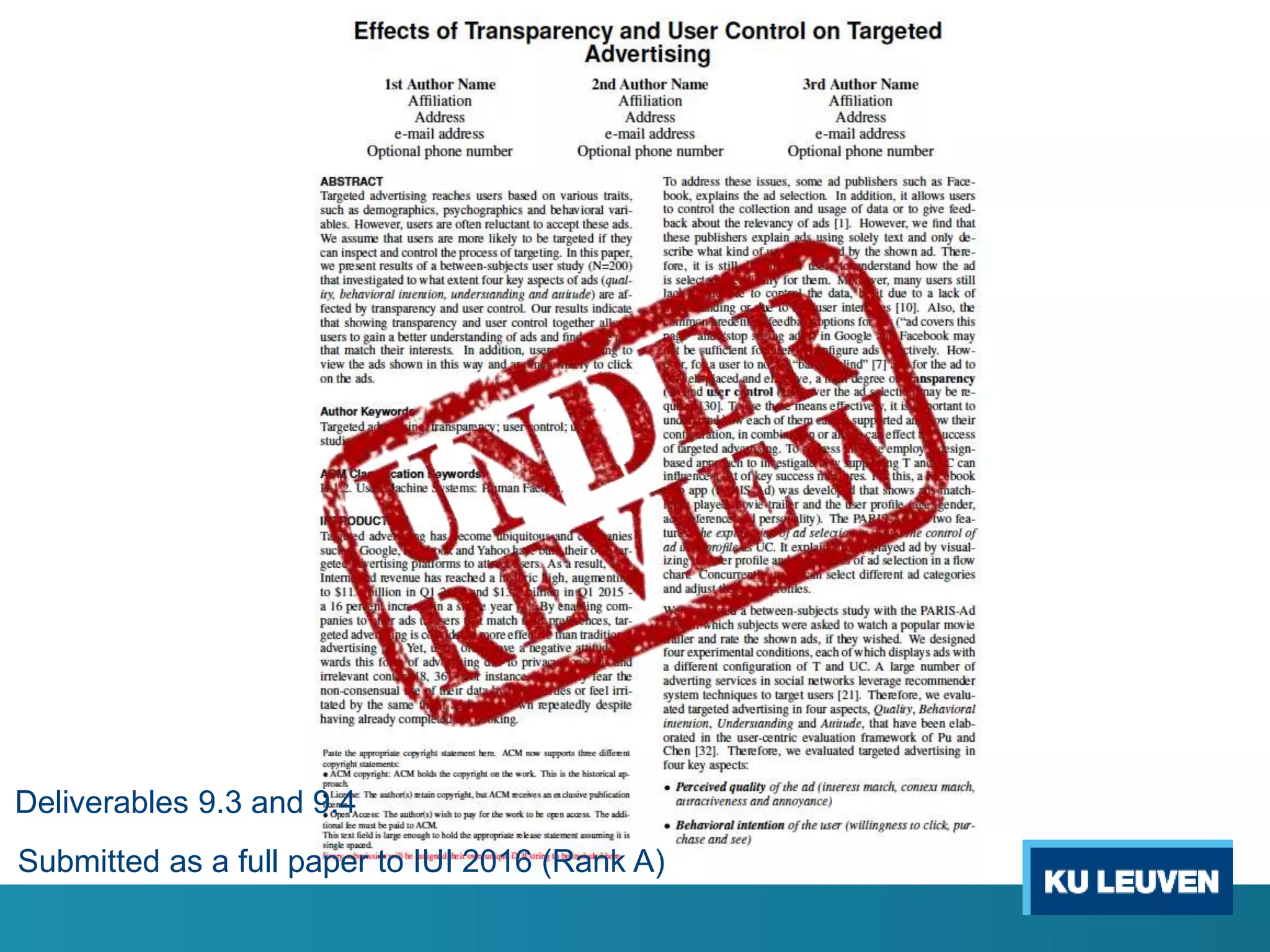
Submitted as a full paper to IUI 2016 (Rank A)
Deliverables 9.3 and 9.4
Limitations
• 70 elements of seven ad categories. Not a real data set of
ads.
• The algorithm for selecting appropriate ads is not validated.
• More advanced adaptive features based on vision
technology are not implemented.
• Not building directly on PARIS technology (yet).
Final demonstrator –
online adaptation
Design
This demonstrator will online analyze, adapt, and integrate content
and advertisements.
The same objects and attributes as used in the first two demonstrators
will be targeted, but now the linguistic or/and visual processing should
be very efficient timewise to ensure effective interaction.
A database of templates is queried and the advertisement template
is created in real-time adapted to the preferences of its user.
Scenario
Furniture advertisements
https://thetake.com/
Related work
Technical requirements
1
2
3
4
Object recognition
Ad retrieval
Advertisement adaptation
$349Buy
Link to webshops
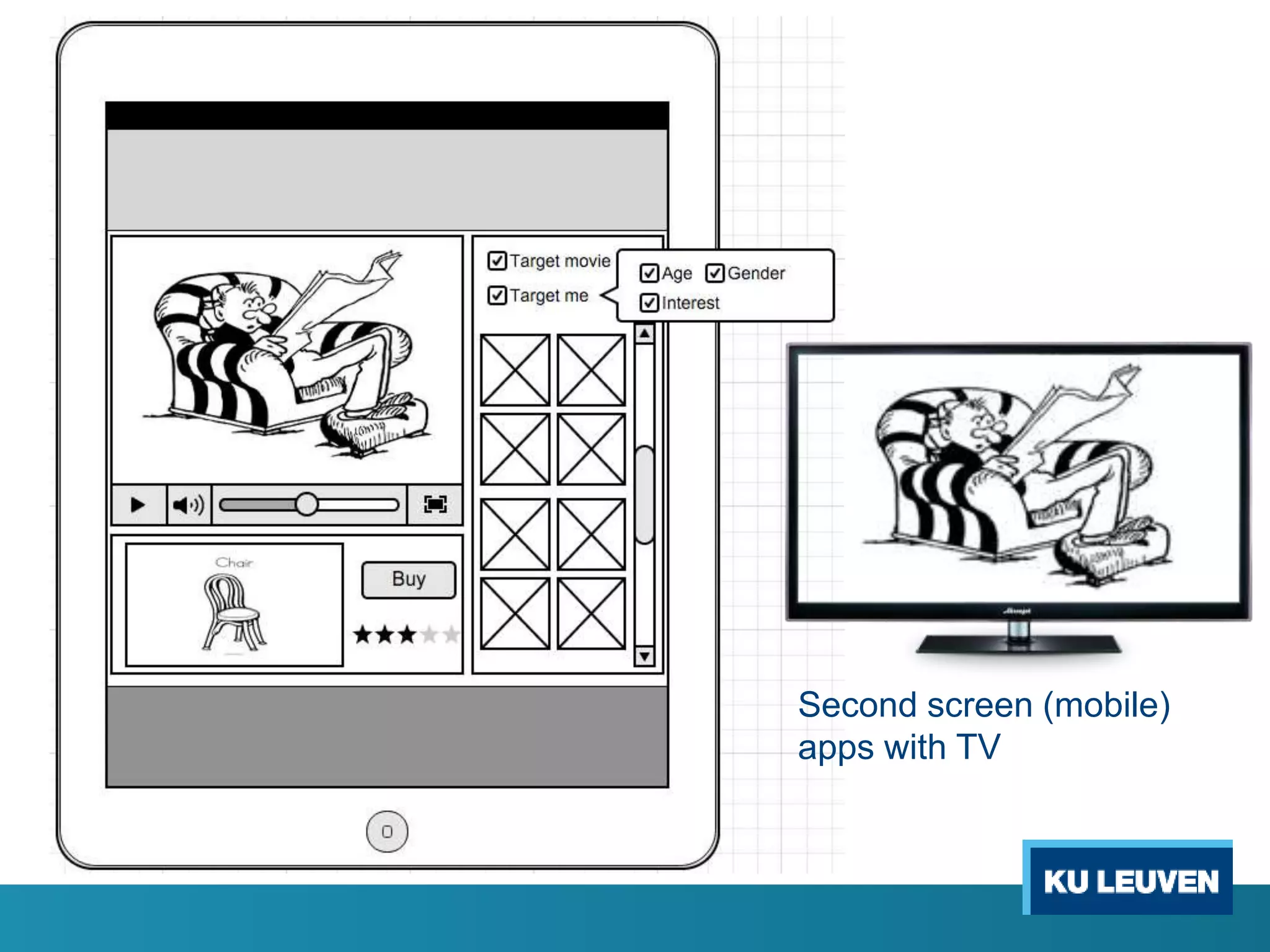
Second screen (mobile)
apps with TV
1. Object recognition
We need to recognize objects that appeared in a frame when the user
pauses the video.
• (The time when a particular object appears in a movie)
• The position where the recognized object appear in a key frame.
(Recognized objects should be labelled such as a rectangles)
• The description (query terms to webshops) of recognized object
(what is it? (chair, table), color, brand, etc.)
Discussed with VISICS
2. Advertisement retrieval
• A valid data set of ads, each ad contains meaningful annotation such
as brand, color, category
o VLERICK, LIIR
• A defined user model for advertising (age, gender, personality …)
o CWI -> API
• An model for selecting advertisement for a targeted user
o CWI, LIIR
• A set of valid adaptive rules for showing personalized ads
o VLERICK
3. Advertisement adaptation
• Modify a particular object according to the user profile.
o the object color
o the object orientation
o the object position
o the background of object
-> VISICS
• Maybe show these adaptations by using AR
4. Link to webshops
• Issue query terms to webshops to find related furniture to the
identified object in the video (e.g., “EKTORP, Chair, Idemo red”)
https://developer.sears.com
http://docs.72lux.com/product-api-v1.html
Amazon Product Advertising API
Etc.
• Exact matching difficult
• Not too many products of furniture in these shopping APIs
Implementation plan
Iterative design and rapid prototyping
• Time:
~ January 2016 (1st version)
~ February 2016 (Evaluation for the 1st version)
~ March 2016 (2nd version with integrating other PARIS technology)
• Performance:
Online adaptation, (almost in) real time.
Might build on external APIs for some modules to speed up development
until PARIS technology is ready
Technical support PARIS partner Proposed date
Obj. recognition VISICS D4.4 Software for robust
recognition of object
classes in video (M30)
Data set of ads VLERICK, LIIR
User modelling for ads CWI D6.1 Software for inferring
demographic profile (M18)
D6.3 Software for learning
product preferences from
user generated content
(M24)
Model for selecting ads CWI, LIIR D7.1 Software for ad
selection model (M45)
Adaptive rules VLERICK D8.1 Report on the design
of personalized
advertisements (M24)
Obj. replacement VISICS D8.2 Software for object
replacement in images
and video (M42)
Thank you for your
attention.
Yucheng Jin
yucheng.jin@cs.kuleuven.be
Questions?

IWT PARIS project 16 Nov.

  • 1.
    PARIS Demonstrators Yucheng Jin,Joris Klerkx, Erik Duval Augment group HCI @ KU Leuven 16 November 2015
  • 2.
    Outline • 2nd demonstrator oDesign and implementation o Evaluation o Limitations • Final demonstrator o Design o Related work o Technical requirements o Implementation plan
  • 3.
  • 4.
    Design This proof-of-content demonstratorfocuses on the retrieval of relevant advertisements and off-line adaptation of the advertisements . The context of personalized ads is online movie. The adaptation depends on four aspects: • The types of movie • Basic user profile on Facebook (Age, gender) • Posts on Facebook wall (personality) • Advertisement preferences
  • 6.
    Advertiser: value presentedby user data User: value realized through personalization What should we do toward such a trade-off? Trade-off
  • 7.
    Research hypothesis We hypothesizethat quality and effectiveness of personalized ads can be increased by empowering users to explore and steer the selection process. To verify our assumption, we investigate the impact of Transparency (T) and User control (UC) on four key aspects: • Quality: interest match, context match, attractiveness and annoyance? • Behavioral intention: willingness to click, purchase, and use? • Understanding: understand why and how a particular ad is selected? • Attitude: satisfaction, confidence and trust of ads?
  • 8.
  • 9.
  • 10.
    Research methodology Iterative designand rapid prototyping Design ImplementationEvaluate Prototype design. Refine the features of prototype Implement the prototypeEvaluate the prototype with users in diverse settings.
  • 11.
  • 12.
  • 13.
    Implementation An web appof Facebook RESTful API for accessing to user data and advertisement data GET http://paris-ad.evennode.com/paris/api/ads?ageLevel=2 GET http://paris-ad.evennode.com/paris/api/user?id=564133123727385 PUT http://paris-ad.evennode.com/paris/api/user?id=564133123727385 data:{ gender : ”male”} All data in JSON format
  • 14.
    Schema of userdata Schema of ad data Filtering by
  • 15.
    Evaluation We conducted abetween-subjects study on Amazon Mechanical Turk (MTurk) where we recruited 200 subjects who have above 80% lifetime approval rate for HITs. Compensation was $1 for each study and average study completion time was around 11 minutes. We created four experimental conditions: • Condition 1 (C1): (No-T & No-UC) base condition. • Condition 2 (C2): (T & No-UC). • Condition 3 (C3): (No-T & UC). • Condition 4 (C4): (T & UC)
  • 16.
    We used theuser-centric evaluation framework of recommender system and tailored the questionnaire to evaluate four aspects of targeted advertisement: Quality, Behavioral intention, Understanding and Attitude. As a result, we created four post-study questionnaires QueA, QueB, QueC and QueD to assess the effect of T and UC in different conditions. ~80% subjects noticed online targeted ads. ~10% subjects configured targeted ads. Pu, Pearl, Li Chen, and Rong Hu. "A user-centric evaluation framework for recommender systems." Proceedings of the fifth ACM conference on Recommender systems. ACM, 2011.
  • 17.
    Common statements shownin four questionnaires. Specific statements and optional questions regarding users’ perception of T (QueB), UC (QueC) and T & UC (QueD). 5-point Likert scale, Strongly agree - Strongly disagree
  • 18.
    Evaluation steps 1. Introduceweb app to subjects 2. Log in to the app with their Facebook accounts. 3. Play movie trailer and show ads. 4. During the trailer, subjects could rate the ads and configure ads. 5. After watching the trailer, subjects were asked to complete the questionnaire. What is the result ?
  • 19.
  • 20.
    Kruskal-Wallis Dunn posthoc STM1 (Interest match) (H=14.49, df=3, p=.002) C1 (Median: 3) and C4 (Median: 4), (p=.001) STM2 (Willing. to click) (H=11.42, df=3, p=.010) C1 (Median: 3) and C4 (Median: 4) (p=.014). STM3 (Willing. to see) (H=11.74, df=3, p=.008) C1 (Median: 3) and C4 (Median: 4), (p=.018) C1 (Median: 3) and C2 (Median: 4), (p=.03) STM2 (Understanding) (H=13.68, df=3, p=.003) C1 (Median: 3) and C4 (Median: 4), (p=.009) C1 (Median: 3) and C3 (Median: 4), (p=.010). Statistical analysis result
  • 21.
  • 22.
    Configuration Quality Behavioral intention UnderstandingAttitude No-T & No-UC T & No-UC ★ No-T & UC ★ T & UC ★ ★ ★
  • 23.
    Submitted as afull paper to IUI 2016 (Rank A) Deliverables 9.3 and 9.4
  • 24.
    Limitations • 70 elementsof seven ad categories. Not a real data set of ads. • The algorithm for selecting appropriate ads is not validated. • More advanced adaptive features based on vision technology are not implemented. • Not building directly on PARIS technology (yet).
  • 25.
  • 26.
    Design This demonstrator willonline analyze, adapt, and integrate content and advertisements. The same objects and attributes as used in the first two demonstrators will be targeted, but now the linguistic or/and visual processing should be very efficient timewise to ensure effective interaction. A database of templates is queried and the advertisement template is created in real-time adapted to the preferences of its user.
  • 27.
  • 28.
  • 30.
    Technical requirements 1 2 3 4 Object recognition Adretrieval Advertisement adaptation $349Buy Link to webshops
  • 31.
  • 32.
    1. Object recognition Weneed to recognize objects that appeared in a frame when the user pauses the video. • (The time when a particular object appears in a movie) • The position where the recognized object appear in a key frame. (Recognized objects should be labelled such as a rectangles) • The description (query terms to webshops) of recognized object (what is it? (chair, table), color, brand, etc.) Discussed with VISICS
  • 33.
    2. Advertisement retrieval •A valid data set of ads, each ad contains meaningful annotation such as brand, color, category o VLERICK, LIIR • A defined user model for advertising (age, gender, personality …) o CWI -> API • An model for selecting advertisement for a targeted user o CWI, LIIR • A set of valid adaptive rules for showing personalized ads o VLERICK
  • 34.
    3. Advertisement adaptation •Modify a particular object according to the user profile. o the object color o the object orientation o the object position o the background of object -> VISICS • Maybe show these adaptations by using AR
  • 35.
    4. Link towebshops • Issue query terms to webshops to find related furniture to the identified object in the video (e.g., “EKTORP, Chair, Idemo red”) https://developer.sears.com http://docs.72lux.com/product-api-v1.html Amazon Product Advertising API Etc. • Exact matching difficult • Not too many products of furniture in these shopping APIs
  • 36.
    Implementation plan Iterative designand rapid prototyping • Time: ~ January 2016 (1st version) ~ February 2016 (Evaluation for the 1st version) ~ March 2016 (2nd version with integrating other PARIS technology) • Performance: Online adaptation, (almost in) real time. Might build on external APIs for some modules to speed up development until PARIS technology is ready
  • 37.
    Technical support PARISpartner Proposed date Obj. recognition VISICS D4.4 Software for robust recognition of object classes in video (M30) Data set of ads VLERICK, LIIR User modelling for ads CWI D6.1 Software for inferring demographic profile (M18) D6.3 Software for learning product preferences from user generated content (M24) Model for selecting ads CWI, LIIR D7.1 Software for ad selection model (M45) Adaptive rules VLERICK D8.1 Report on the design of personalized advertisements (M24) Obj. replacement VISICS D8.2 Software for object replacement in images and video (M42)
  • 38.
    Thank you foryour attention. Yucheng Jin yucheng.jin@cs.kuleuven.be Questions?

Editor's Notes

  • #7 How can we represent the trade-off between value presented by user data (for instance for the advertiser) and value realized through personalization (for instance of relevant advertisements for the user)? How can we make this representation meaningful for the user? A first application domain will be advertisements, where we can make use of an ongoing R&D project. The aim in that context is to select or generate advertisements that are not a nuisance for the consumer, for instance by making the advertisements more relevant.
  • #19 This was only displayed after the trailer had finished playing. Playback controls were disabled to ensure that subjects were exposed to ads for a minimum of four minutes before answering the questionnaire.
  • #28 A family is watching a movie together. and mother likes a chair appeared in the movie “Matrix”. She touches the chair in the movie on her tablet. The corresponding chair will be highlighted in the TV. Then it shows an ad related to the chair. (ads related to other recognized objects in the movie could be shown as well.) Users have options to obtain more personalized ads after logging with their Facebook accounts. E.g., the product in the ad adapts to user age, gender and preferences. In addition, family members can discuss this personalized ad by sharing it on TV.