ITIKI’s Gennaker
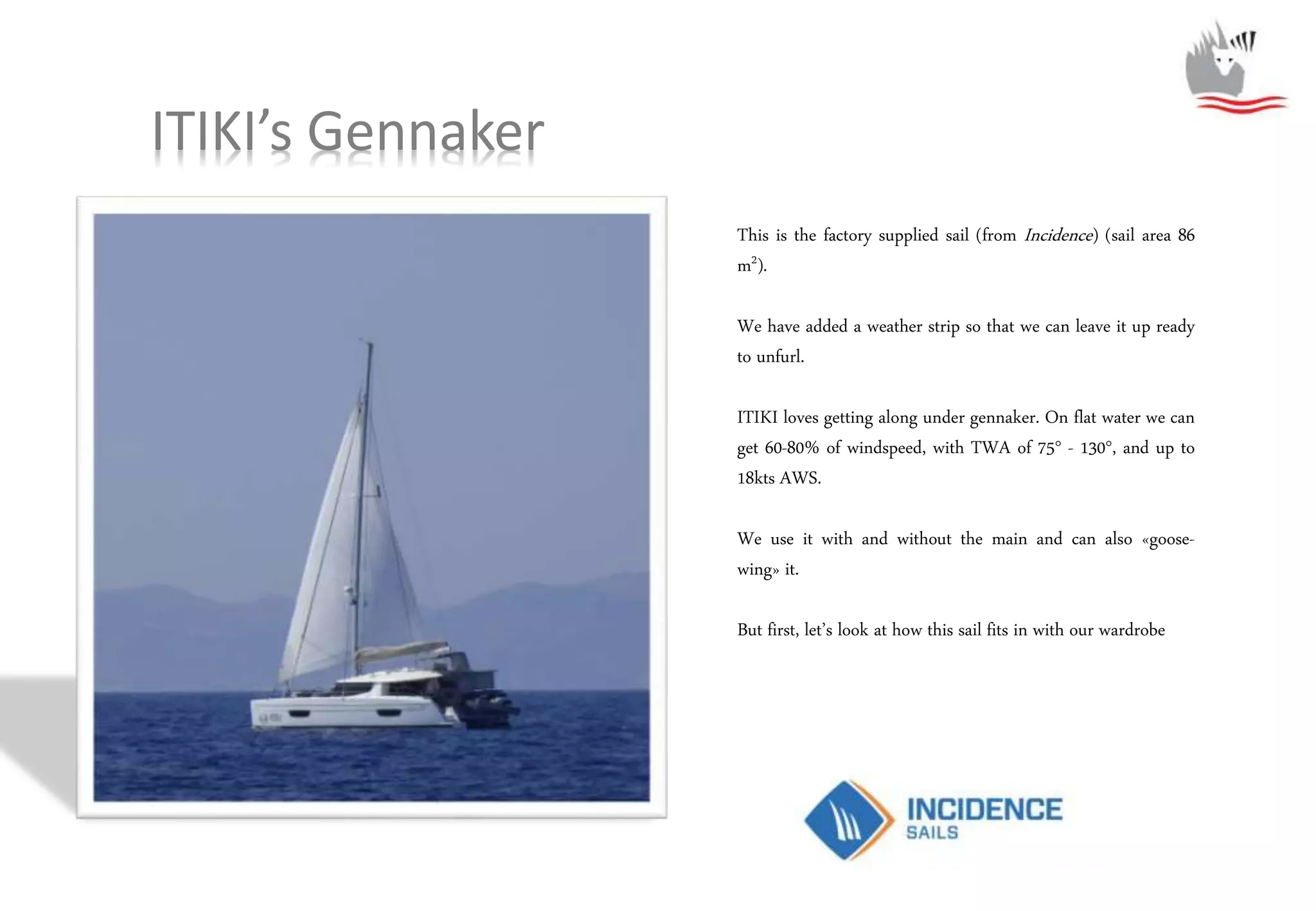
This is the factory supplied sail (from Incidence) (sail area 86
m2).
We have added a weather strip so that we can leave it up ready
to unfurl.
ITIKI loves getting along under gennaker. On flat water we can
get 60-80% of windspeed, with TWA of 75° - 130°, and up to
18kts AWS.
We use it with and without the main and can also «goose-
wing» it.
But first, let’s look at how this sail fits in with our wardrobe
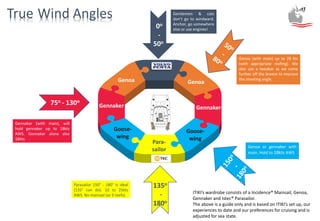
True Wind Angles Gentlemen & cats
don’t go to windward.
Anchor, go somewhere
else or use engines!
Genoa (with main) up to 28 kts
(with appropriate reefing). We
also use a tweaker as we come
further off the breeze to improve
the sheeting angle.
Gennaker (with main), will
hold gennaker up to 18kts
AWS. Gennaker alone also
18kts
Para-
sailor
Goose-
wing
Gennaker
0o
-
50o
GenoaGenoa
Gennaker
75o - 130o
Goose-
wing
Genoa or gennaker with
main. Hold to 18kts AWS
135o
-
180o
Parasailor 150° - 180° is ideal
(135° can do). 10 to 25kts
AWS. No mainsail (or 3 reefs)
ITIKI’s wardrobe consists of a Incidence® Mainsail, Genoa,
Gennaker and Istec® Parasailor.
The above is a guide only and is based on ITIKI’s set up, our
experiences to date and our preferences for cruising and is
adjusted for sea state.
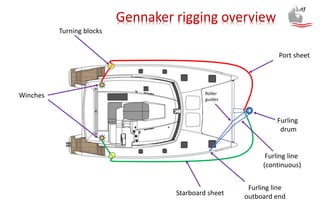
Turning blocks
Furling line
(continuous)
Winches
Gennaker rigging overview
Furling
drum
Furling line
outboard end
Port sheet
Starboard sheet
Roller
guides
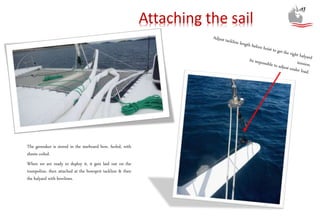
The gennaker is stored in the starboard bow, furled, with
sheets coiled.
When we are ready to deploy it, it gets laid out on the
trampoline, then attached at the bowsprit tackline & then
the halyard with bowlines.
Attaching the sail
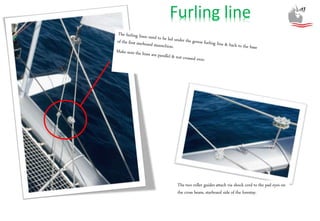
The two roller guides attach via shock cord to the pad eyes on
the cross beam, starboard side of the forestay.
Furling line
Furling line
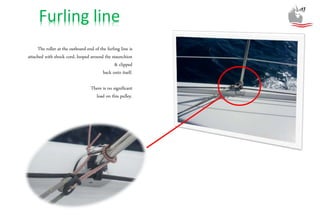
The roller at the outboard end of the furling line is
attached with shock cord, looped around the staunchion
& clipped
back onto itself.
There is no significant
load on this pulley.
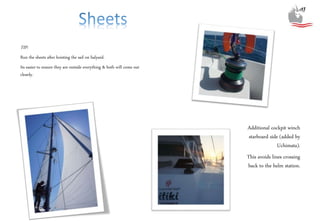
Additional cockpit winch
starboard side (added by
Uchimata).
This avoids lines crossing
back to the helm station.
TIP:
Run the sheets after hoisting the sail on halyard.
Its easier to ensure they are outside everything & both will come out
cleanly.
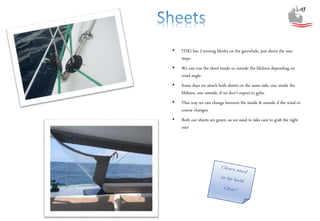
• ITIKI has 2 turning blocks on the gunwhale, just above the rear
steps.
• We can run the sheet inside or outside the lifelines depending on
wind angle.
• Some days we attach both sheets on the same side, one inside the
lifelines, one outside, if we don’t expect to gybe.
• That way we can change between the inside & outside if the wind or
course changes.
• Both our sheets are green, so we need to take care to grab the right
one!
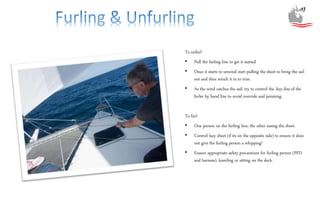
To unfurl
• Pull the furling line to get it started
• Once it starts to unwind start pulling the sheet to bring the sail
out and then winch it in to trim
• As the wind catches the sail, try to control the lazy-line of the
furler by hand line to avoid override and jamming
To furl
• One person on the furling line, the other easing the sheet.
• Control lazy sheet (if its on the opposite side) to ensure it does
not give the furling person a whipping!
• Ensure appropriate safety precautions for furling person (PFD
and harness), kneeling or sitting on the deck.
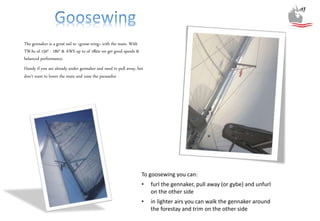
The gennaker is a great sail to «goose-wing» with the main. With
TWAs of 150° - 180o & AWS up to of 18kts we get good speeds &
balanced performance.
Handy if you are already under gennaker and need to pull away, but
don’t want to lower the main and raise the parasailor
To goosewing you can:
• furl the gennaker, pull away (or gybe) and unfurl
on the other side
• in lighter airs you can walk the gennaker around
the forestay and trim on the other side
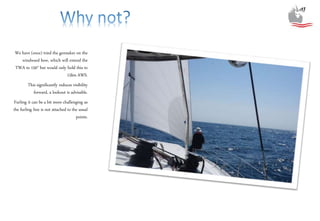
We have (once) tried the gennaker on the
windward bow, which will extend the
TWA to 150° but would only hold this to
15kts AWS.
This significantly reduces visibility
forward, a lookout is advisable.
Furling it can be a bit more challenging as
the furling line is not attached to the usual
points.
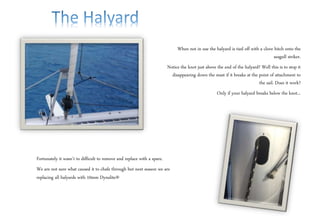
When not in use the halyard is tied off with a clove hitch onto the
seagull striker.
Notice the knot just above the end of the halyard? Well this is to stop it
disappearing down the mast if it breaks at the point of attachment to
the sail. Does it work?
Only if your halyard breaks below the knot...
Fortunately it wasn’t to difficult to remove and replace with a spare.
We are not sure what caused it to chafe through but next season we are
replacing all halyards with 10mm Dynalite®
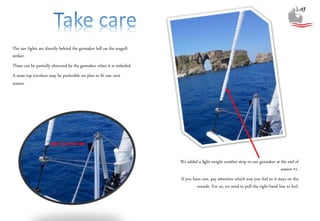
The nav lights are directly behind the gennaker luff on the seagull-
striker.
These can be partially obscured by the gennaker when it is unfurled.
A mast-top tricolour may be preferable we plan to fit one next
season.
We added a light-weight weather strip to our gennaker at the end of
season #1.
If you have one, pay attention which way you furl so it stays on the
outside. For us, we need to pull the right-hand line to furl.
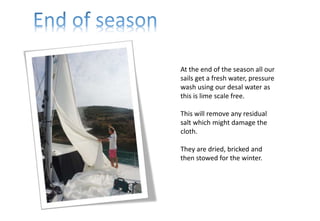
At the end of the season all our
sails get a fresh water, pressure
wash using our desal water as
this is lime scale free.
This will remove any residual
salt which might damage the
cloth.
They are dried, bricked and
then stowed for the winter.
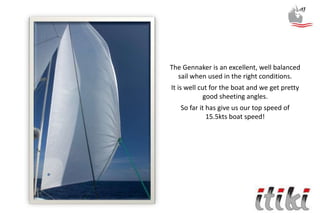
The Gennaker is an excellent, well balanced
sail when used in the right conditions.
It is well cut for the boat and we get pretty
good sheeting angles.
So far it has give us our top speed of
15.5kts boat speed!

Itiki gennaker

  • 1.
    ITIKI’s Gennaker This isthe factory supplied sail (from Incidence) (sail area 86 m2). We have added a weather strip so that we can leave it up ready to unfurl. ITIKI loves getting along under gennaker. On flat water we can get 60-80% of windspeed, with TWA of 75° - 130°, and up to 18kts AWS. We use it with and without the main and can also «goose- wing» it. But first, let’s look at how this sail fits in with our wardrobe
  • 2.
    True Wind AnglesGentlemen & cats don’t go to windward. Anchor, go somewhere else or use engines! Genoa (with main) up to 28 kts (with appropriate reefing). We also use a tweaker as we come further off the breeze to improve the sheeting angle. Gennaker (with main), will hold gennaker up to 18kts AWS. Gennaker alone also 18kts Para- sailor Goose- wing Gennaker 0o - 50o GenoaGenoa Gennaker 75o - 130o Goose- wing Genoa or gennaker with main. Hold to 18kts AWS 135o - 180o Parasailor 150° - 180° is ideal (135° can do). 10 to 25kts AWS. No mainsail (or 3 reefs) ITIKI’s wardrobe consists of a Incidence® Mainsail, Genoa, Gennaker and Istec® Parasailor. The above is a guide only and is based on ITIKI’s set up, our experiences to date and our preferences for cruising and is adjusted for sea state.
  • 3.
    Turning blocks Furling line (continuous) Winches Gennakerrigging overview Furling drum Furling line outboard end Port sheet Starboard sheet Roller guides
  • 4.
    The gennaker isstored in the starboard bow, furled, with sheets coiled. When we are ready to deploy it, it gets laid out on the trampoline, then attached at the bowsprit tackline & then the halyard with bowlines. Attaching the sail
  • 5.
    The two rollerguides attach via shock cord to the pad eyes on the cross beam, starboard side of the forestay. Furling line
  • 6.
    Furling line The rollerat the outboard end of the furling line is attached with shock cord, looped around the staunchion & clipped back onto itself. There is no significant load on this pulley.
  • 7.
    Additional cockpit winch starboardside (added by Uchimata). This avoids lines crossing back to the helm station. TIP: Run the sheets after hoisting the sail on halyard. Its easier to ensure they are outside everything & both will come out cleanly.
  • 8.
    • ITIKI has2 turning blocks on the gunwhale, just above the rear steps. • We can run the sheet inside or outside the lifelines depending on wind angle. • Some days we attach both sheets on the same side, one inside the lifelines, one outside, if we don’t expect to gybe. • That way we can change between the inside & outside if the wind or course changes. • Both our sheets are green, so we need to take care to grab the right one!
  • 9.
    To unfurl • Pullthe furling line to get it started • Once it starts to unwind start pulling the sheet to bring the sail out and then winch it in to trim • As the wind catches the sail, try to control the lazy-line of the furler by hand line to avoid override and jamming To furl • One person on the furling line, the other easing the sheet. • Control lazy sheet (if its on the opposite side) to ensure it does not give the furling person a whipping! • Ensure appropriate safety precautions for furling person (PFD and harness), kneeling or sitting on the deck.
  • 10.
    The gennaker isa great sail to «goose-wing» with the main. With TWAs of 150° - 180o & AWS up to of 18kts we get good speeds & balanced performance. Handy if you are already under gennaker and need to pull away, but don’t want to lower the main and raise the parasailor To goosewing you can: • furl the gennaker, pull away (or gybe) and unfurl on the other side • in lighter airs you can walk the gennaker around the forestay and trim on the other side
  • 11.
    We have (once)tried the gennaker on the windward bow, which will extend the TWA to 150° but would only hold this to 15kts AWS. This significantly reduces visibility forward, a lookout is advisable. Furling it can be a bit more challenging as the furling line is not attached to the usual points.
  • 12.
    When not inuse the halyard is tied off with a clove hitch onto the seagull striker. Notice the knot just above the end of the halyard? Well this is to stop it disappearing down the mast if it breaks at the point of attachment to the sail. Does it work? Only if your halyard breaks below the knot... Fortunately it wasn’t to difficult to remove and replace with a spare. We are not sure what caused it to chafe through but next season we are replacing all halyards with 10mm Dynalite®
  • 13.
    The nav lightsare directly behind the gennaker luff on the seagull- striker. These can be partially obscured by the gennaker when it is unfurled. A mast-top tricolour may be preferable we plan to fit one next season. We added a light-weight weather strip to our gennaker at the end of season #1. If you have one, pay attention which way you furl so it stays on the outside. For us, we need to pull the right-hand line to furl.
  • 14.
    At the endof the season all our sails get a fresh water, pressure wash using our desal water as this is lime scale free. This will remove any residual salt which might damage the cloth. They are dried, bricked and then stowed for the winter.
  • 15.
    The Gennaker isan excellent, well balanced sail when used in the right conditions. It is well cut for the boat and we get pretty good sheeting angles. So far it has give us our top speed of 15.5kts boat speed!

Editor's Notes

  • #3 © Copyright PresentationGO.com – The free PowerPoint and Google Slides template library