IN SUPPLY CHAIN MANAGEMENT
IT APPLICATIONS
IT APPLICATIONS
Tanmay Lalwani BMS/21/61
Garv Mittal BMS/21/63
What is Supply Chain
The inter-relationships:
with suppliers, customers, distributors, and other
businesses
required to design, build and sell a product
Each supply chain process should add value to
products or services a company produces
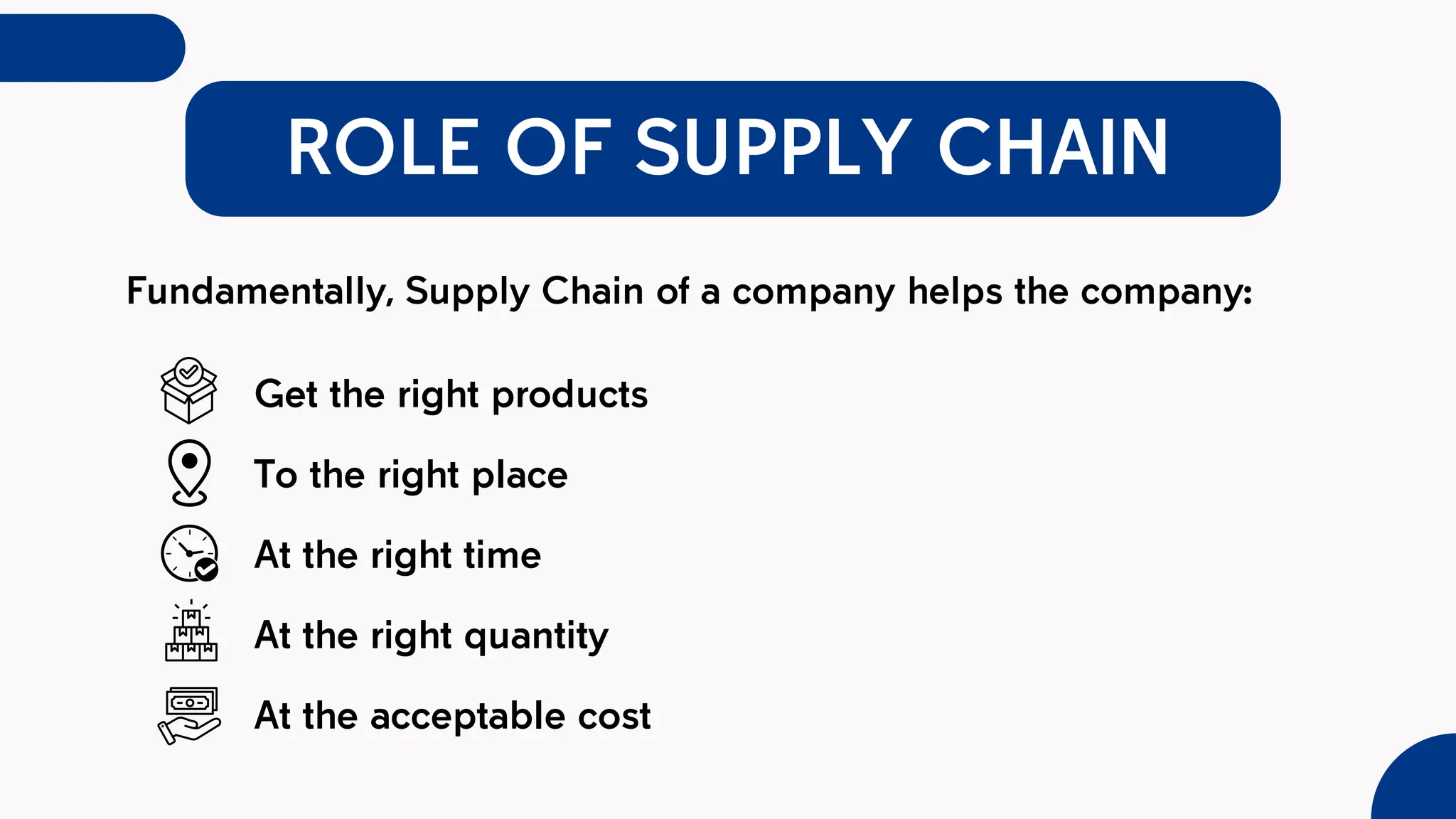
Get the right products
To the right place
At the right time
At the right quantity
At the acceptable cost
ROLE OF SUPPLY CHAIN
Fundamentally, Supply Chain of a company helps the company:
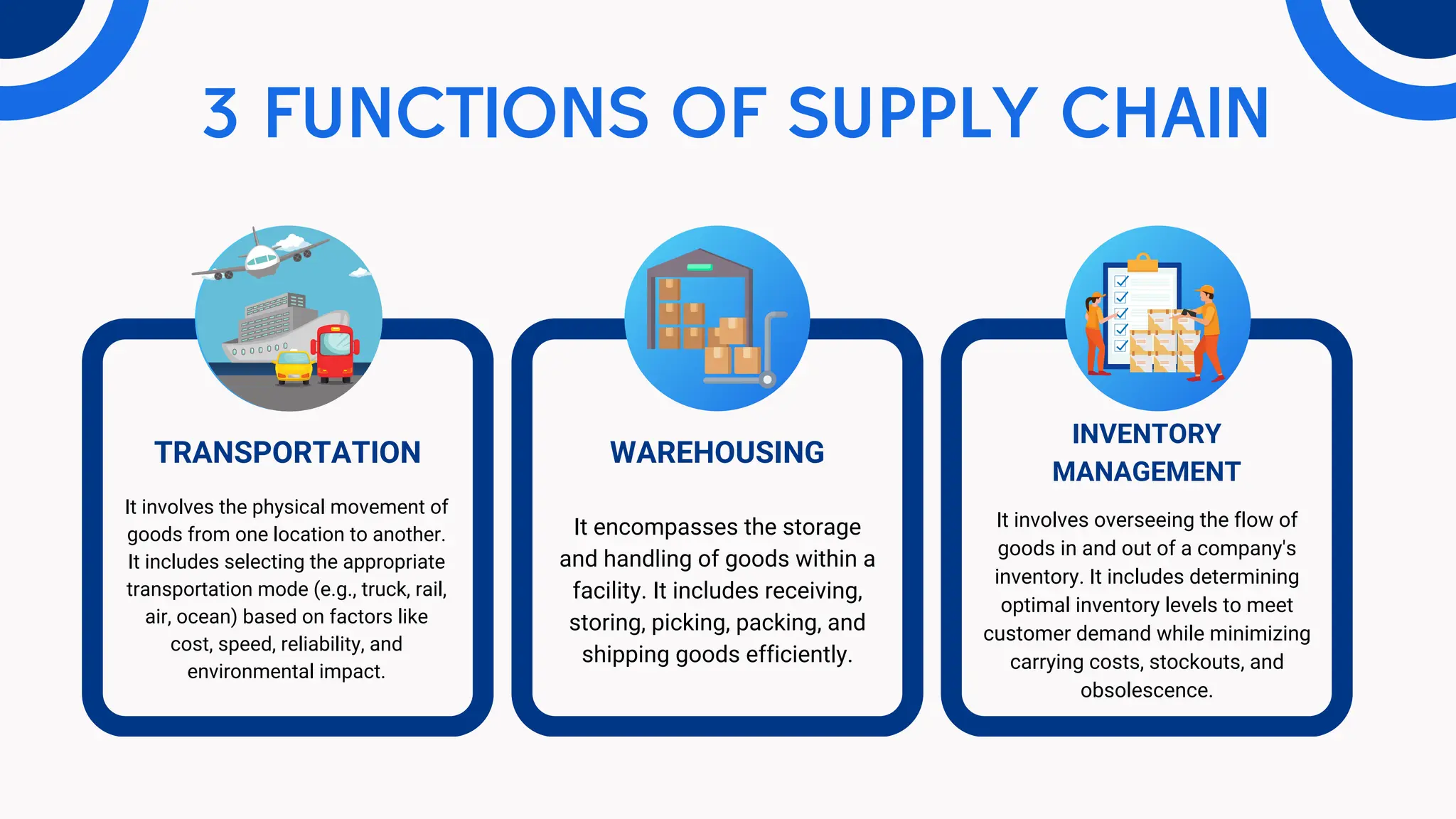
TRANSPORTATION WAREHOUSING
INVENTORY
MANAGEMENT
It involves the physical movement of
goods from one location to another.
It includes selecting the appropriate
transportation mode (e.g., truck, rail,
air, ocean) based on factors like
cost, speed, reliability, and
environmental impact.
It encompasses the storage
and handling of goods within a
facility. It includes receiving,
storing, picking, packing, and
shipping goods efficiently.
It involves overseeing the flow of
goods in and out of a company's
inventory. It includes determining
optimal inventory levels to meet
customer demand while minimizing
carrying costs, stockouts, and
obsolescence.
3 FUNCTIONS OF SUPPLY CHAIN
Data Management and Analysis
Inventory Management
Supply Chain Planning and Optimization
Communication and Collaboration
Customer Relationship Management
ROLE OF IT IN SUPPLY CHAIN
Information Technology (IT) plays a crucial role in modern supply chains, enabling
organizations to streamline operations, enhance efficiency, and improve decision-
making processes.
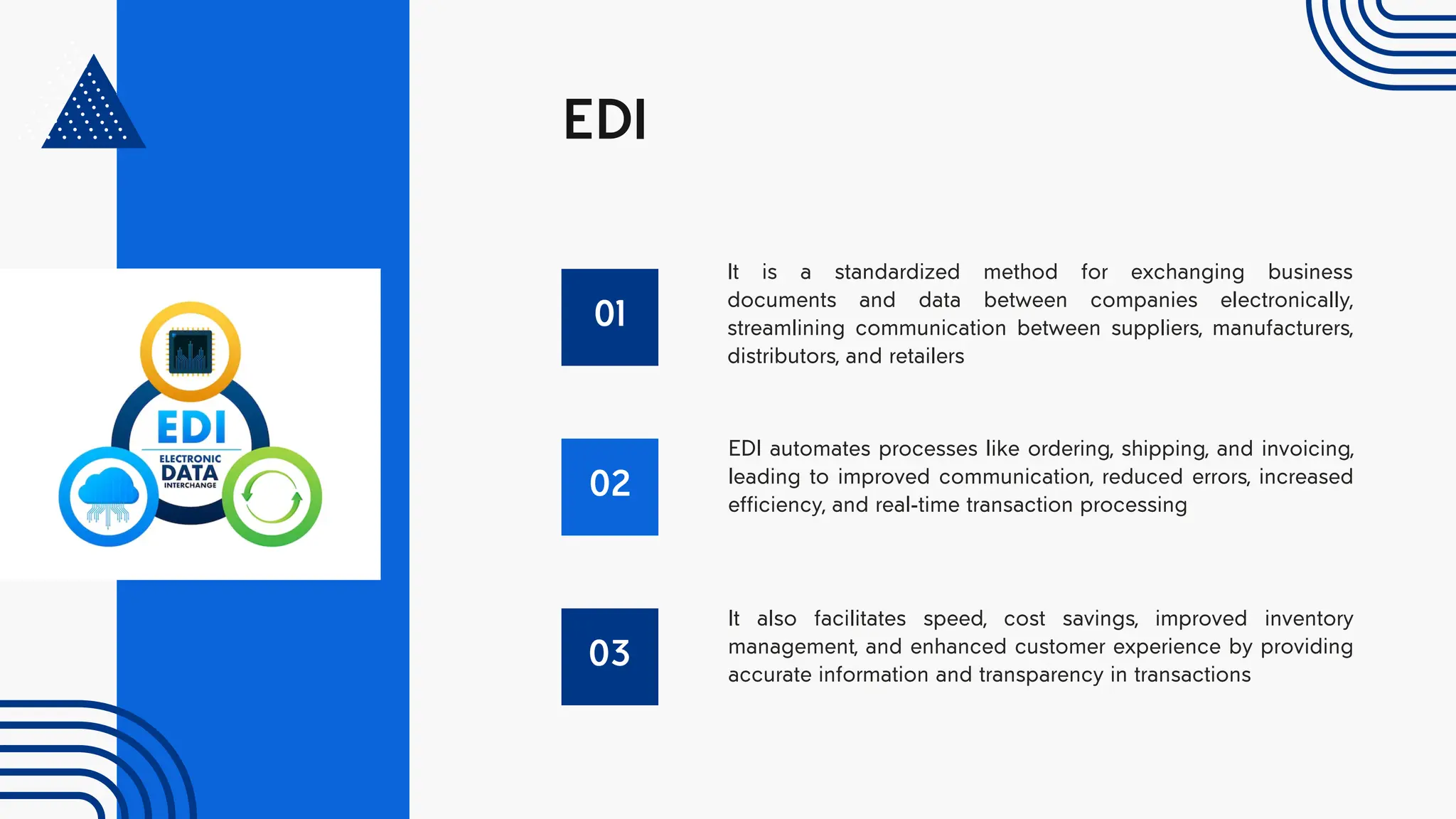
EDI
01
It is a standardized method for exchanging business
documents and data between companies electronically,
streamlining communication between suppliers, manufacturers,
distributors, and retailers
02
EDI automates processes like ordering, shipping, and invoicing,
leading to improved communication, reduced errors, increased
efficiency, and real-time transaction processing
03
It also facilitates speed, cost savings, improved inventory
management, and enhanced customer experience by providing
accurate information and transparency in transactions
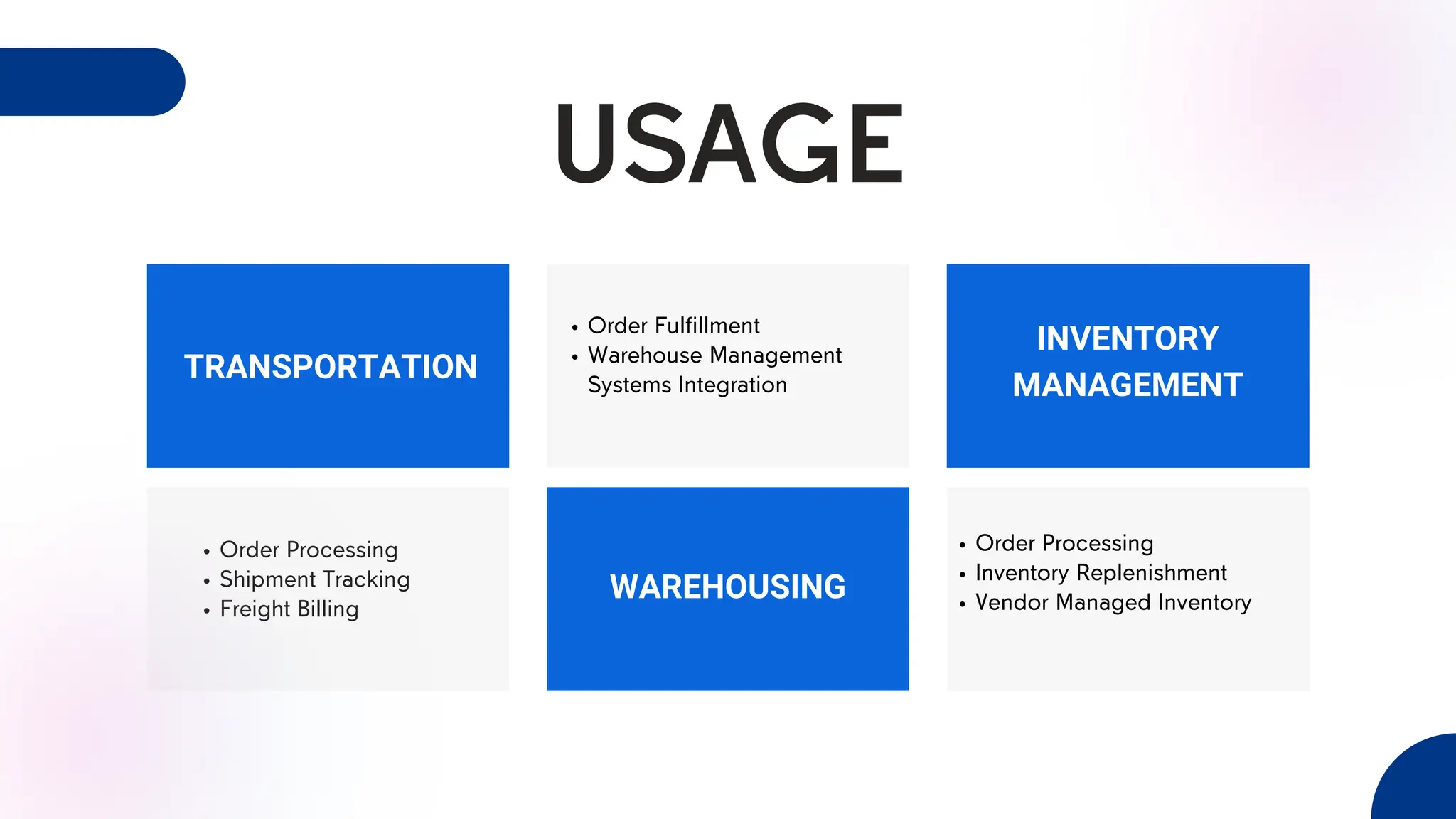
INVENTORY
MANAGEMENT
Order Processing
Shipment Tracking
Freight Billing
USAGE
WAREHOUSING
TRANSPORTATION
Order Fulfillment
Warehouse Management
Systems Integration
Order Processing
Inventory Replenishment
Vendor Managed Inventory
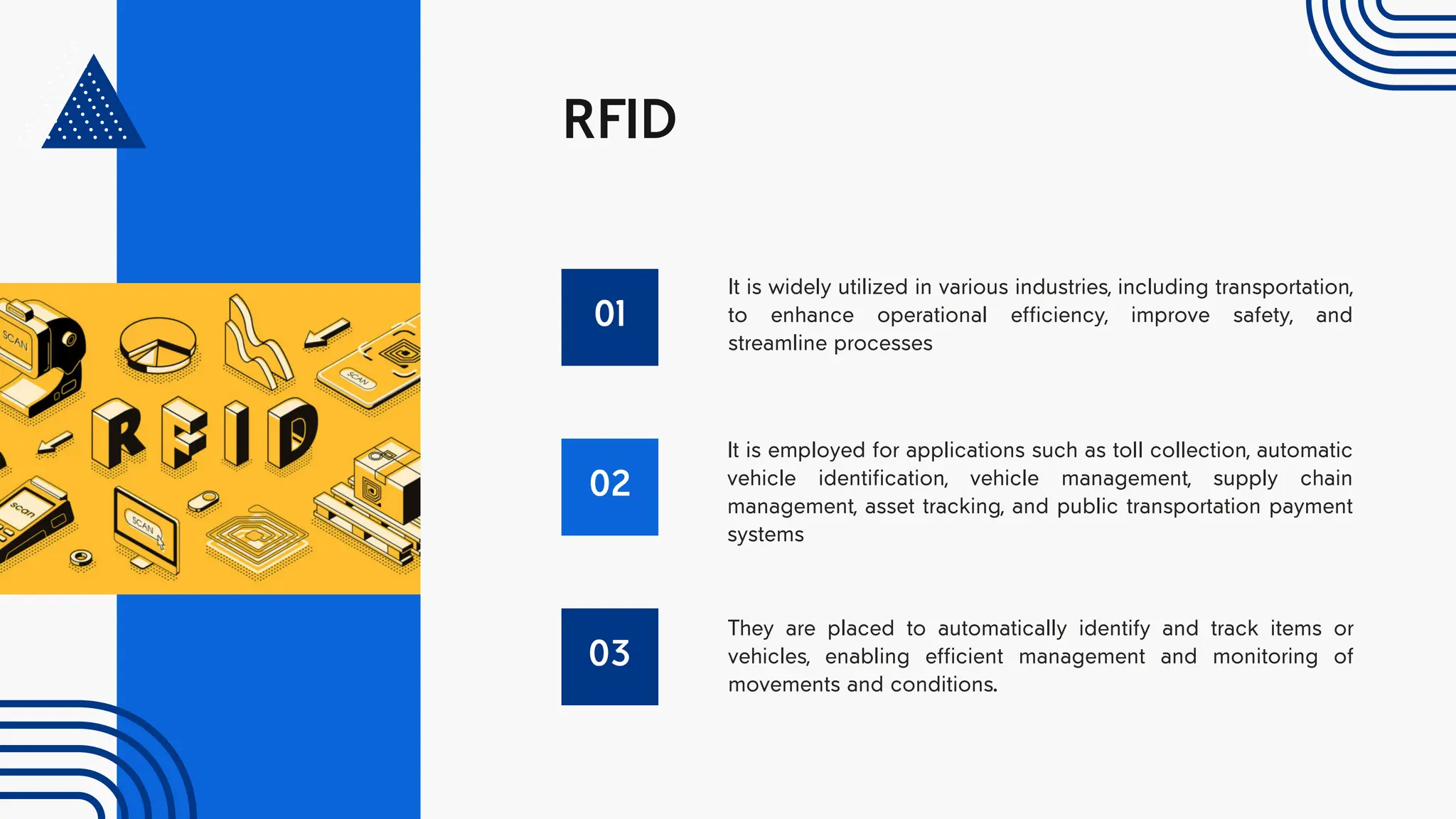
RFID
01
It is widely utilized in various industries, including transportation,
to enhance operational efficiency, improve safety, and
streamline processes
02
It is employed for applications such as toll collection, automatic
vehicle identification, vehicle management, supply chain
management, asset tracking, and public transportation payment
systems
03
They are placed to automatically identify and track items or
vehicles, enabling efficient management and monitoring of
movements and conditions.
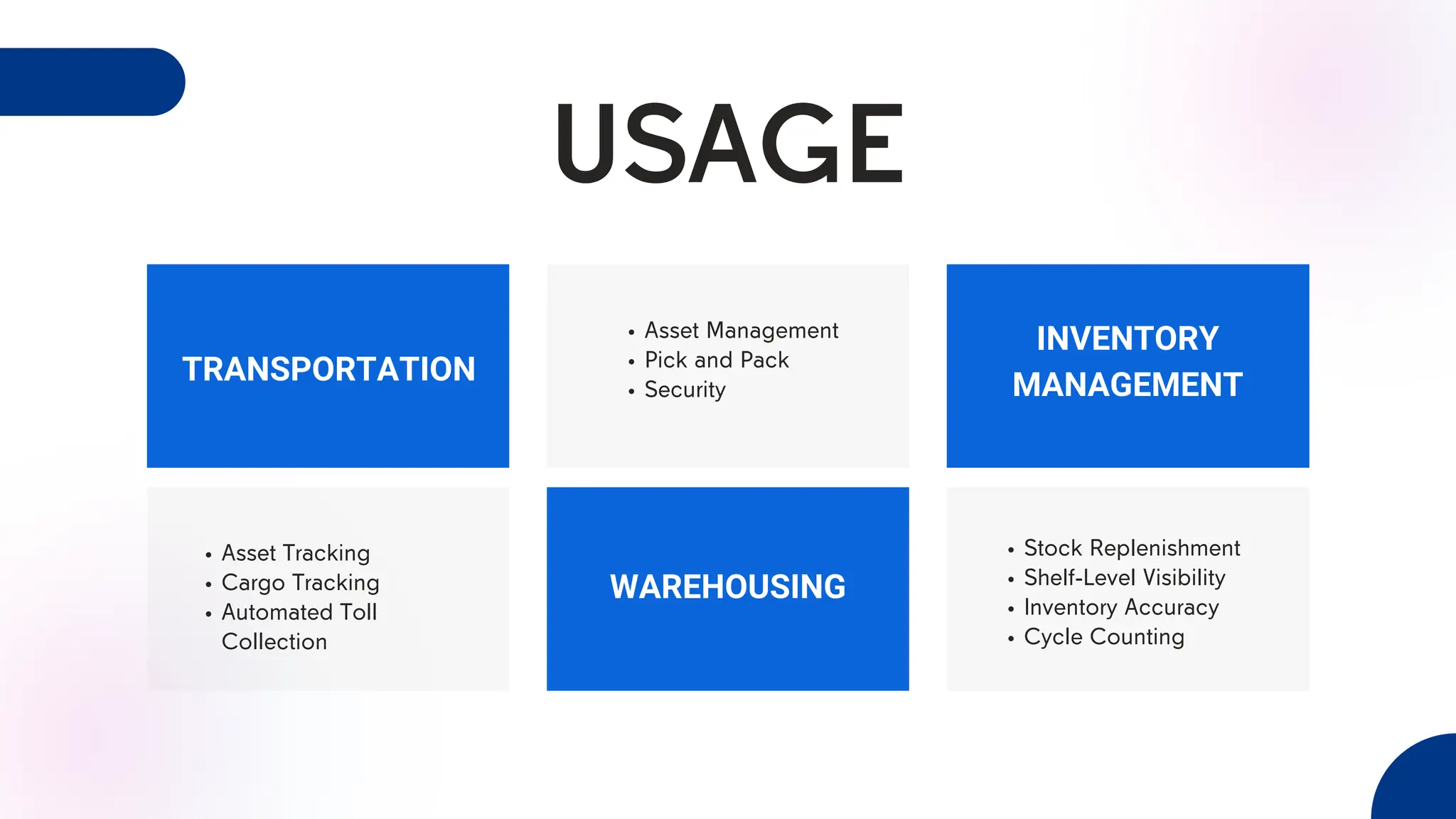
Asset Management
Pick and Pack
Security
INVENTORY
MANAGEMENT
Asset Tracking
Cargo Tracking
Automated Toll
Collection
Stock Replenishment
Shelf-Level Visibility
Inventory Accuracy
Cycle Counting
USAGE
WAREHOUSING
TRANSPORTATION
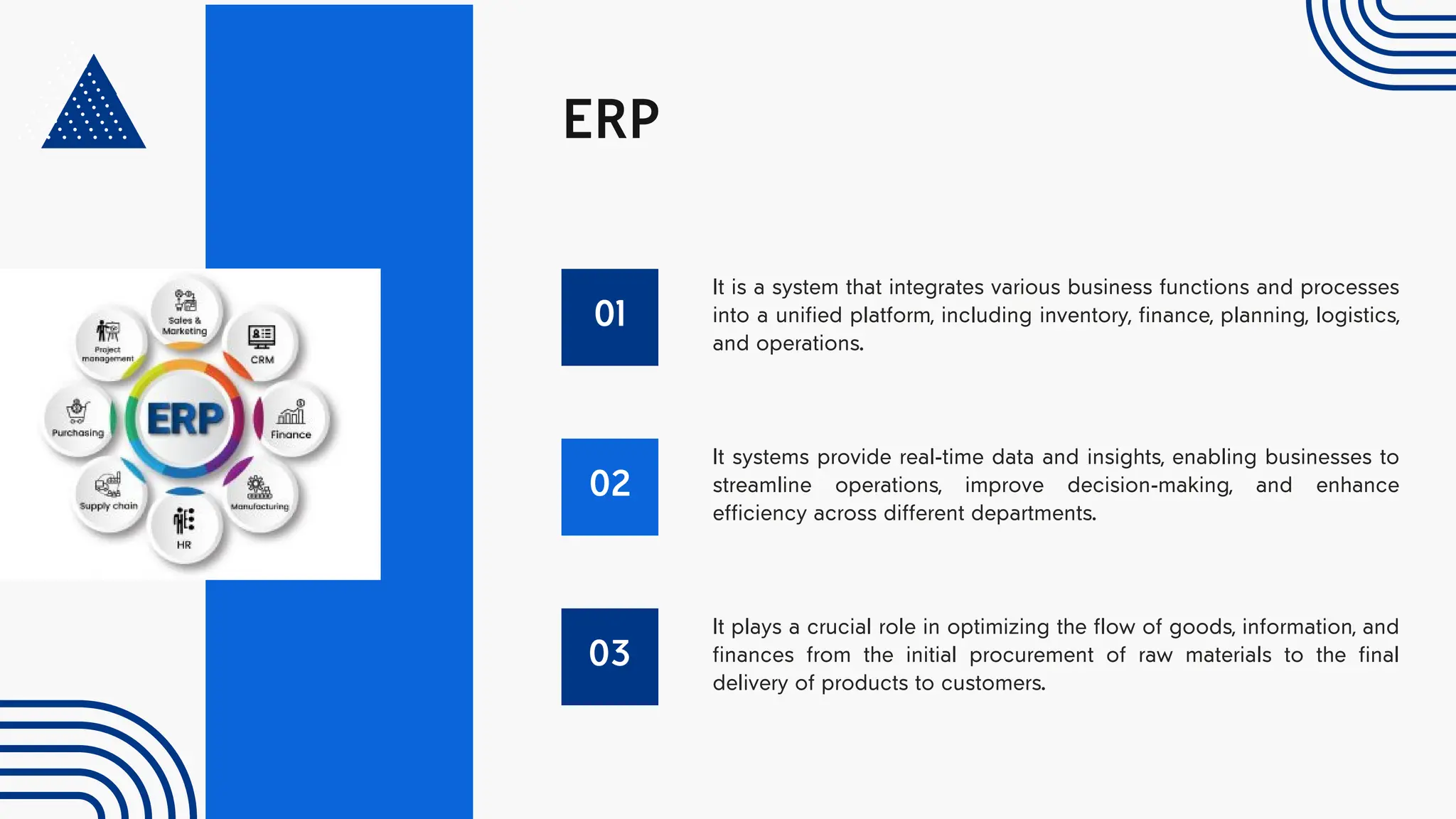
ERP
01
It is a system that integrates various business functions and processes
into a unified platform, including inventory, finance, planning, logistics,
and operations.
02
It systems provide real-time data and insights, enabling businesses to
streamline operations, improve decision-making, and enhance
efficiency across different departments.
03
It plays a crucial role in optimizing the flow of goods, information, and
finances from the initial procurement of raw materials to the final
delivery of products to customers.
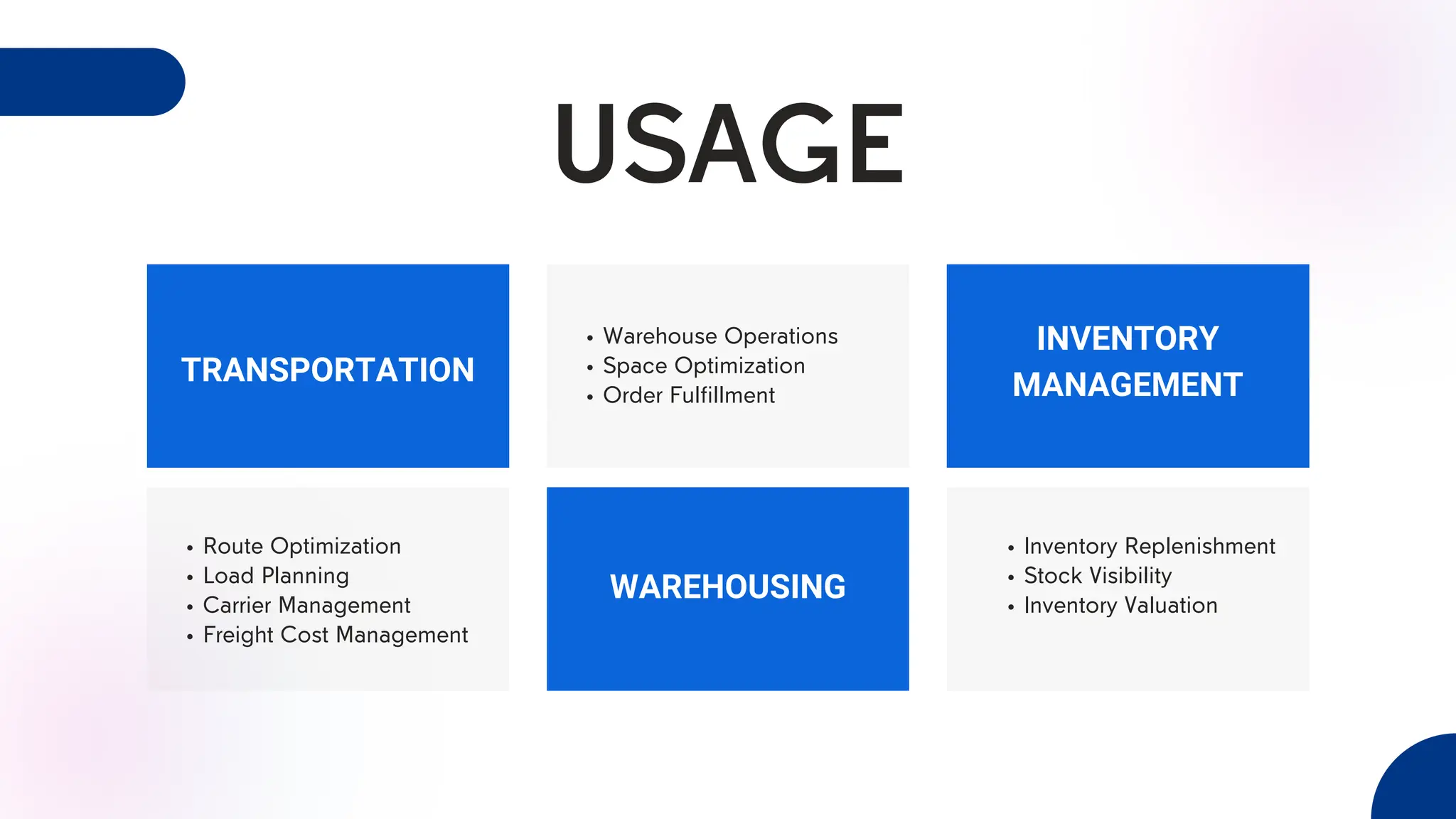
Warehouse Operations
Space Optimization
Order Fulfillment
INVENTORY
MANAGEMENT
Route Optimization
Load Planning
Carrier Management
Freight Cost Management
Inventory Replenishment
Stock Visibility
Inventory Valuation
USAGE
WAREHOUSING
TRANSPORTATION
OTHER COMMON TECHNOLOGIES
AND SOFTWARES
TRANSPORTATION WAREHOUSING
INVENTORY
MANAGEMENT
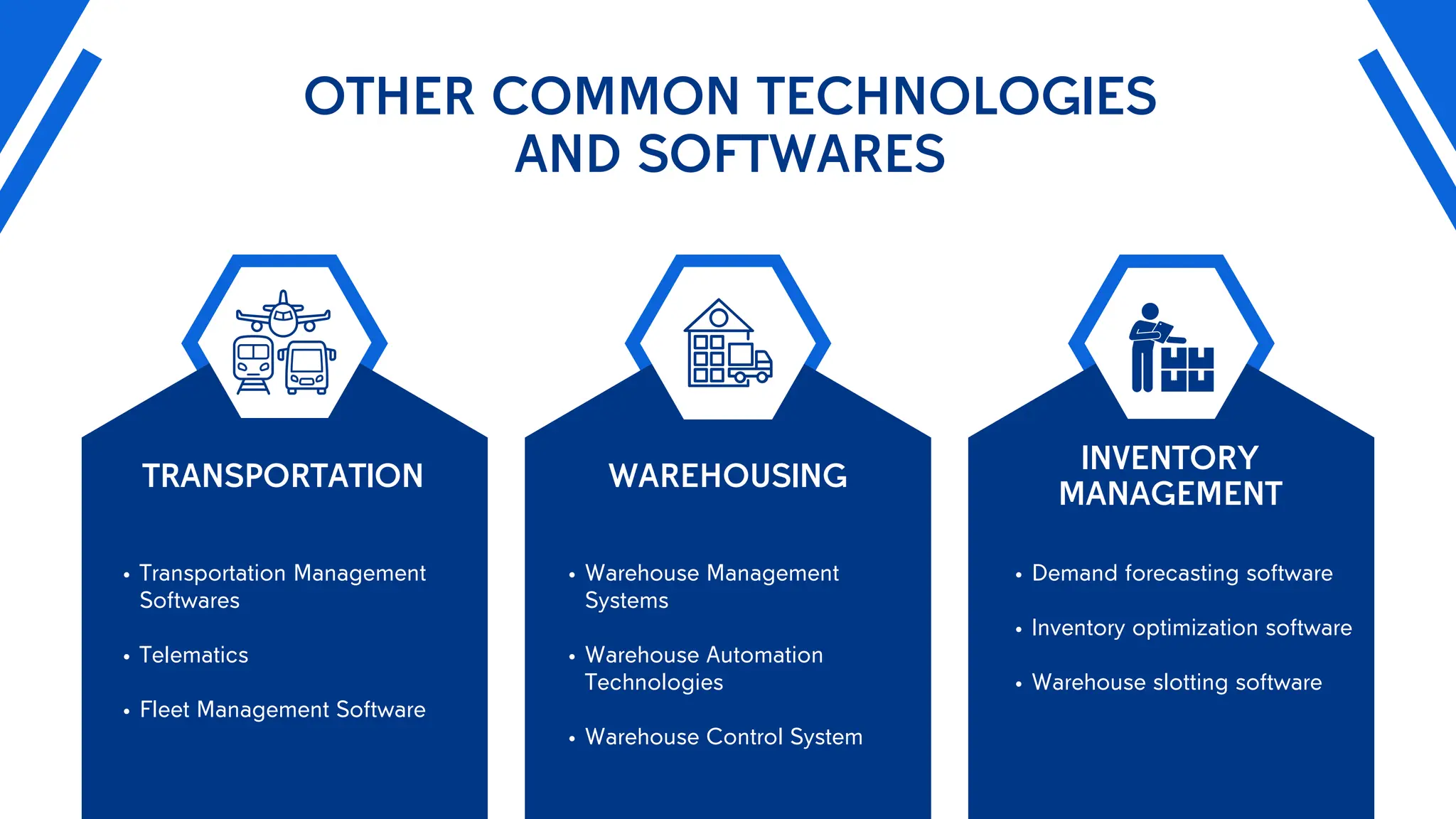
Warehouse Management
Systems
Warehouse Automation
Technologies
Warehouse Control System
Transportation Management
Softwares
Telematics
Fleet Management Software
Demand forecasting software
Inventory optimization software
Warehouse slotting software
OTHER COMMON TECHNOLOGIES
AND SOFTWARES
Barcode Technology
AI and Machine Learning
Cloud Computing
Blockchain Technology
ADVANTAGES OF IT
APPLICATIONS IN SUPPLY CHAIN
Improved Efficiency
Cost Reduction
Faster Response to Market Changes
Better Decision-Making
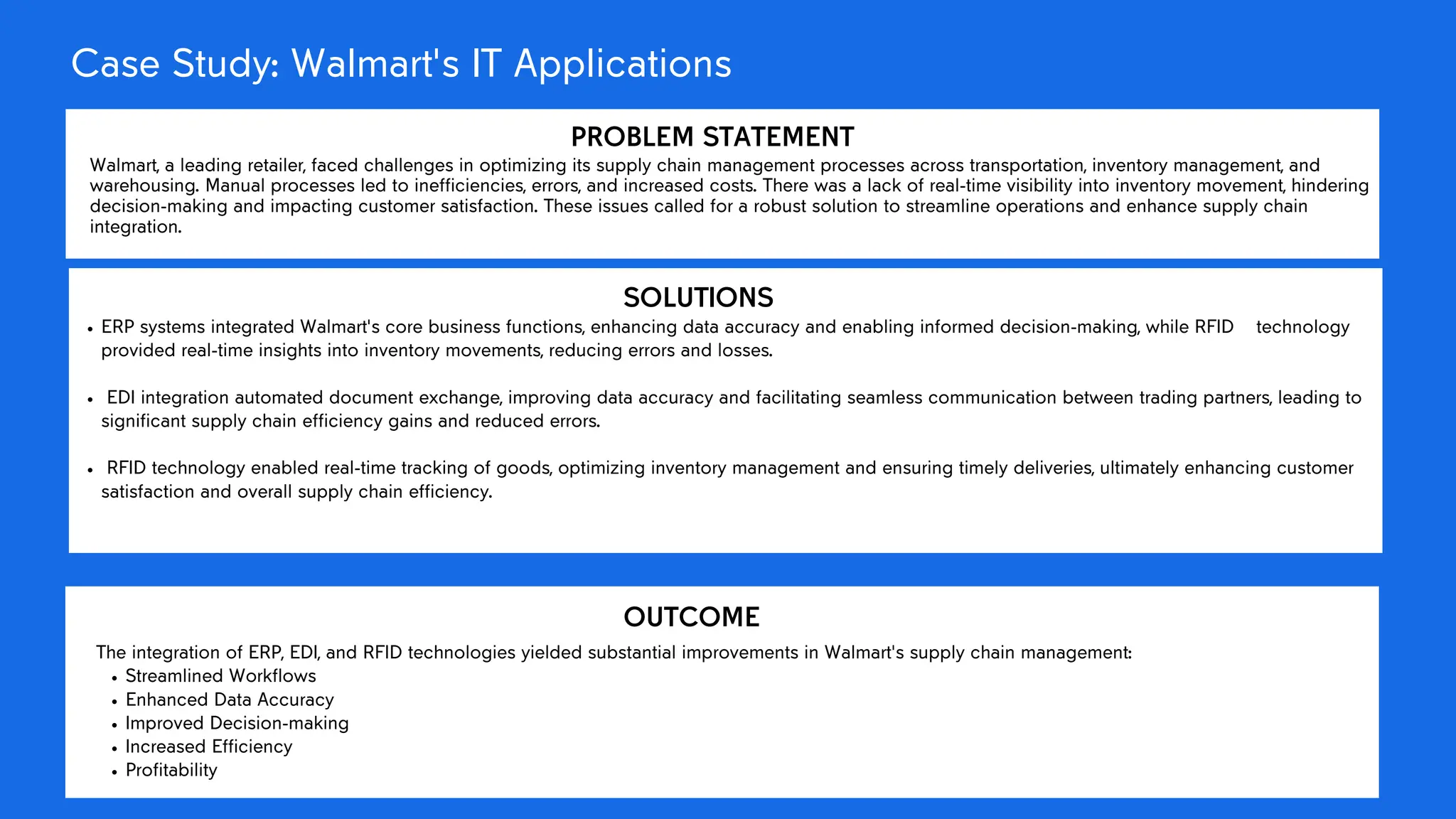
PROBLEM STATEMENT
Walmart, a leading retailer, faced challenges in optimizing its supply chain management processes across transportation, inventory management, and
warehousing. Manual processes led to inefficiencies, errors, and increased costs. There was a lack of real-time visibility into inventory movement, hindering
decision-making and impacting customer satisfaction. These issues called for a robust solution to streamline operations and enhance supply chain
integration.
The integration of ERP, EDI, and RFID technologies yielded substantial improvements in Walmart's supply chain management:
Streamlined Workflows
Enhanced Data Accuracy
Improved Decision-making
Increased Efficiency
Profitability
OUTCOME
Case Study: Walmart's IT Applications
ERP systems integrated Walmart's core business functions, enhancing data accuracy and enabling informed decision-making, while RFID technology
provided real-time insights into inventory movements, reducing errors and losses.
EDI integration automated document exchange, improving data accuracy and facilitating seamless communication between trading partners, leading to
significant supply chain efficiency gains and reduced errors.
RFID technology enabled real-time tracking of goods, optimizing inventory management and ensuring timely deliveries, ultimately enhancing customer
satisfaction and overall supply chain efficiency.
SOLUTIONS
_IT APPLICATIONS IN SUPPLY CHAIN MANAGEMENT.pdf

_IT APPLICATIONS IN SUPPLY CHAIN MANAGEMENT.pdf

  • 1.
    IN SUPPLY CHAINMANAGEMENT IN SUPPLY CHAIN MANAGEMENT IT APPLICATIONS IT APPLICATIONS Tanmay Lalwani BMS/21/61 Garv Mittal BMS/21/63
  • 2.
    What is SupplyChain The inter-relationships: with suppliers, customers, distributors, and other businesses required to design, build and sell a product Each supply chain process should add value to products or services a company produces
  • 3.
    Get the rightproducts To the right place At the right time At the right quantity At the acceptable cost ROLE OF SUPPLY CHAIN Fundamentally, Supply Chain of a company helps the company:
  • 4.
    TRANSPORTATION WAREHOUSING INVENTORY MANAGEMENT It involvesthe physical movement of goods from one location to another. It includes selecting the appropriate transportation mode (e.g., truck, rail, air, ocean) based on factors like cost, speed, reliability, and environmental impact. It encompasses the storage and handling of goods within a facility. It includes receiving, storing, picking, packing, and shipping goods efficiently. It involves overseeing the flow of goods in and out of a company's inventory. It includes determining optimal inventory levels to meet customer demand while minimizing carrying costs, stockouts, and obsolescence. 3 FUNCTIONS OF SUPPLY CHAIN
  • 5.
    Data Management andAnalysis Inventory Management Supply Chain Planning and Optimization Communication and Collaboration Customer Relationship Management ROLE OF IT IN SUPPLY CHAIN Information Technology (IT) plays a crucial role in modern supply chains, enabling organizations to streamline operations, enhance efficiency, and improve decision- making processes.
  • 6.
    EDI 01 It is astandardized method for exchanging business documents and data between companies electronically, streamlining communication between suppliers, manufacturers, distributors, and retailers 02 EDI automates processes like ordering, shipping, and invoicing, leading to improved communication, reduced errors, increased efficiency, and real-time transaction processing 03 It also facilitates speed, cost savings, improved inventory management, and enhanced customer experience by providing accurate information and transparency in transactions
  • 7.
    INVENTORY MANAGEMENT Order Processing Shipment Tracking FreightBilling USAGE WAREHOUSING TRANSPORTATION Order Fulfillment Warehouse Management Systems Integration Order Processing Inventory Replenishment Vendor Managed Inventory
  • 8.
    RFID 01 It is widelyutilized in various industries, including transportation, to enhance operational efficiency, improve safety, and streamline processes 02 It is employed for applications such as toll collection, automatic vehicle identification, vehicle management, supply chain management, asset tracking, and public transportation payment systems 03 They are placed to automatically identify and track items or vehicles, enabling efficient management and monitoring of movements and conditions.
  • 9.
    Asset Management Pick andPack Security INVENTORY MANAGEMENT Asset Tracking Cargo Tracking Automated Toll Collection Stock Replenishment Shelf-Level Visibility Inventory Accuracy Cycle Counting USAGE WAREHOUSING TRANSPORTATION
  • 10.
    ERP 01 It is asystem that integrates various business functions and processes into a unified platform, including inventory, finance, planning, logistics, and operations. 02 It systems provide real-time data and insights, enabling businesses to streamline operations, improve decision-making, and enhance efficiency across different departments. 03 It plays a crucial role in optimizing the flow of goods, information, and finances from the initial procurement of raw materials to the final delivery of products to customers.
  • 11.
    Warehouse Operations Space Optimization OrderFulfillment INVENTORY MANAGEMENT Route Optimization Load Planning Carrier Management Freight Cost Management Inventory Replenishment Stock Visibility Inventory Valuation USAGE WAREHOUSING TRANSPORTATION
  • 12.
    OTHER COMMON TECHNOLOGIES ANDSOFTWARES TRANSPORTATION WAREHOUSING INVENTORY MANAGEMENT Warehouse Management Systems Warehouse Automation Technologies Warehouse Control System Transportation Management Softwares Telematics Fleet Management Software Demand forecasting software Inventory optimization software Warehouse slotting software
  • 13.
    OTHER COMMON TECHNOLOGIES ANDSOFTWARES Barcode Technology AI and Machine Learning Cloud Computing Blockchain Technology
  • 14.
    ADVANTAGES OF IT APPLICATIONSIN SUPPLY CHAIN Improved Efficiency Cost Reduction Faster Response to Market Changes Better Decision-Making
  • 15.
    PROBLEM STATEMENT Walmart, aleading retailer, faced challenges in optimizing its supply chain management processes across transportation, inventory management, and warehousing. Manual processes led to inefficiencies, errors, and increased costs. There was a lack of real-time visibility into inventory movement, hindering decision-making and impacting customer satisfaction. These issues called for a robust solution to streamline operations and enhance supply chain integration. The integration of ERP, EDI, and RFID technologies yielded substantial improvements in Walmart's supply chain management: Streamlined Workflows Enhanced Data Accuracy Improved Decision-making Increased Efficiency Profitability OUTCOME Case Study: Walmart's IT Applications ERP systems integrated Walmart's core business functions, enhancing data accuracy and enabling informed decision-making, while RFID technology provided real-time insights into inventory movements, reducing errors and losses. EDI integration automated document exchange, improving data accuracy and facilitating seamless communication between trading partners, leading to significant supply chain efficiency gains and reduced errors. RFID technology enabled real-time tracking of goods, optimizing inventory management and ensuring timely deliveries, ultimately enhancing customer satisfaction and overall supply chain efficiency. SOLUTIONS