 ISO stands for International organization of Standardization.
 This is called a model for Open System Interconnection (OSI)
and is commonly known as OSI model.
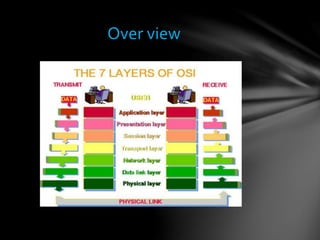
 The ISO-OSI model is a seven layer architecture.
 It defines seven layers or levels in a complete communication
system.
Introduction
1. Application Layer
2. Presentation Layer
3. Session Layer
4. Transport Layer
5. Network Layer
6. Data link Layer
7. Physical Layer
Layers
 physical Layer is the lowest layer of the OSI Model.
 It activates, maintains and deactivates the physical
connection.
 It is responsible for transmission and reception of the
unstructured raw data over network.
 Voltages and data rates needed for transmission is
defined in the physical layer.
Physical Layer
 Data link layer is synchronizes the information which is
to be transmitted over the physical layer.
 The main function of this layer is to make sure data
transfer is error free from one node to another, over the
physical layer.
 Transmitting and receiving data frames sequentially is
managed by this layer.
Data Link Layer
 Network Layer routes the signal through different
channels from one node to other.
 It acts as a network controller. It manages the Subnet
traffic.
 It decides by which route data should take.
 It divides the outgoing messages into packets and
assembles the incoming packets into messages for
higher levels.
Network Layer
 Transport layer decides if data transmission should be
on parallel path or single path.
 Functions such as Multiplexing, Segmenting or Splitting
on the data are done by this layer
 It receives messages from the Session layer above it,
convert the message into smaller units and passes it on
to the Network layer.
 Transport layer can be very complex, depending upon
the network requirements.
Transport layer
 Session layer manages and synchronize the
conversation between two different applications.
 Transfer of data from source to destination session layer
streams of data are marked and are resynchronized
properly, so that the ends of the messages are not cut
prematurely and data loss is avoided.
Session Layer
 Presentation layer takes care that the data is sent in such
a way that the receiver will understand the information
(data) and will be able to use the data.
 While receiving the data, presentation layer transforms
the data to be ready for the application layer.
 Languages(syntax) can be different of the two
communicating systems. Under this condition
presentation layer plays a role of translator.
presentation layer
 Application layer is the topmost layer.
 Transferring of files disturbing the results to the user is
also done in this layer. Mail services, directory services,
network resource etc.. are services provided by
application layer.
 This layer mainly holds application programs to act
upon the received and to be sent data.
Application layer
Over view
Thank you

Iso model

  • 2.
     ISO standsfor International organization of Standardization.  This is called a model for Open System Interconnection (OSI) and is commonly known as OSI model.  The ISO-OSI model is a seven layer architecture.  It defines seven layers or levels in a complete communication system. Introduction
  • 3.
    1. Application Layer 2.Presentation Layer 3. Session Layer 4. Transport Layer 5. Network Layer 6. Data link Layer 7. Physical Layer Layers
  • 4.
     physical Layeris the lowest layer of the OSI Model.  It activates, maintains and deactivates the physical connection.  It is responsible for transmission and reception of the unstructured raw data over network.  Voltages and data rates needed for transmission is defined in the physical layer. Physical Layer
  • 5.
     Data linklayer is synchronizes the information which is to be transmitted over the physical layer.  The main function of this layer is to make sure data transfer is error free from one node to another, over the physical layer.  Transmitting and receiving data frames sequentially is managed by this layer. Data Link Layer
  • 6.
     Network Layerroutes the signal through different channels from one node to other.  It acts as a network controller. It manages the Subnet traffic.  It decides by which route data should take.  It divides the outgoing messages into packets and assembles the incoming packets into messages for higher levels. Network Layer
  • 7.
     Transport layerdecides if data transmission should be on parallel path or single path.  Functions such as Multiplexing, Segmenting or Splitting on the data are done by this layer  It receives messages from the Session layer above it, convert the message into smaller units and passes it on to the Network layer.  Transport layer can be very complex, depending upon the network requirements. Transport layer
  • 8.
     Session layermanages and synchronize the conversation between two different applications.  Transfer of data from source to destination session layer streams of data are marked and are resynchronized properly, so that the ends of the messages are not cut prematurely and data loss is avoided. Session Layer
  • 9.
     Presentation layertakes care that the data is sent in such a way that the receiver will understand the information (data) and will be able to use the data.  While receiving the data, presentation layer transforms the data to be ready for the application layer.  Languages(syntax) can be different of the two communicating systems. Under this condition presentation layer plays a role of translator. presentation layer
  • 10.
     Application layeris the topmost layer.  Transferring of files disturbing the results to the user is also done in this layer. Mail services, directory services, network resource etc.. are services provided by application layer.  This layer mainly holds application programs to act upon the received and to be sent data. Application layer
  • 11.
  • 12.