+91-9999385617
www.rajstartup.com
D-104/1, Mukund Vihar,
Karawal Nagar, Delhi, 110090
ISO 14001
Certification
Environmental management
systems
Contents
ISO 14001 in Brief
Why is ISO 14001
Key Elements of ISO 14001
Key Benefits
Certification Process
Time Duration
Manual Process
SOP's
Do & Don'ts
ISO 14001 in Brief
ISO 14001 is an international standard that specifies
the requirements for an environmental management
system (EMS). It provides a framework for
organizations to establish and implement policies and
procedures to manage their environmental aspects
and impacts. The standard is designed to help
organizations improve their environmental
performance, comply with applicable legal and
regulatory requirements, and demonstrate a
commitment to sustainability.
For More info read this article- ISO 14001 Certification
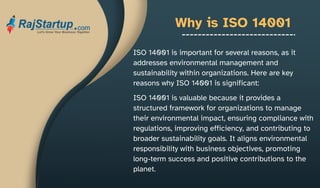
Why is ISO 14001
ISO 14001 is valuable because it provides a
structured framework for organizations to manage
their environmental impact, ensuring compliance with
regulations, improving efficiency, and contributing to
broader sustainability goals. It aligns environmental
responsibility with business objectives, promoting
long-term success and positive contributions to the
planet.
ISO 14001 is important for several reasons, as it
addresses environmental management and
sustainability within organizations. Here are key
reasons why ISO 14001 is significant:
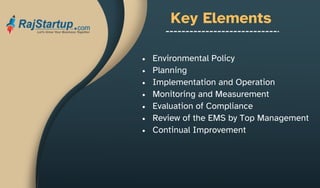
Key Elements
Environmental Policy
Planning
Implementation and Operation
Monitoring and Measurement
Evaluation of Compliance
Review of the EMS by Top Management
Continual Improvement
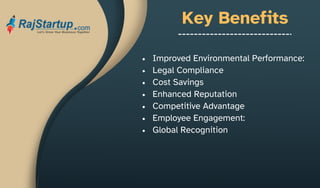
Key Benefits
Improved Environmental Performance:
Legal Compliance
Cost Savings
Enhanced Reputation
Competitive Advantage
Employee Engagement:
Global Recognition
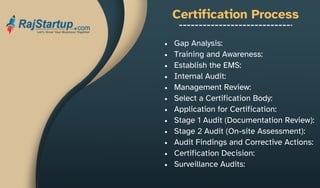
Certification Process
Gap Analysis:
Training and Awareness:
Establish the EMS:
Internal Audit:
Management Review:
Select a Certification Body:
Application for Certification:
Stage 1 Audit (Documentation Review):
Stage 2 Audit (On-site Assessment):
Audit Findings and Corrective Actions:
Certification Decision:
Surveillance Audits:
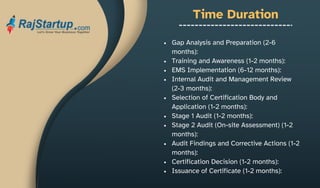
Time Duration
Gap Analysis and Preparation (2-6
months):
Training and Awareness (1-2 months):
EMS Implementation (6-12 months):
Internal Audit and Management Review
(2-3 months):
Selection of Certification Body and
Application (1-2 months):
Stage 1 Audit (1-2 months):
Stage 2 Audit (On-site Assessment) (1-2
months):
Audit Findings and Corrective Actions (1-2
months):
Certification Decision (1-2 months):
Issuance of Certificate (1-2 months):
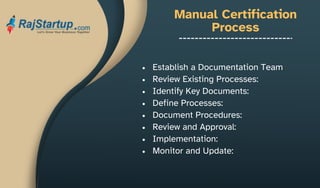
Manual Certification
Process
Establish a Documentation Team
Review Existing Processes:
Identify Key Documents:
Define Processes:
Document Procedures:
Review and Approval:
Implementation:
Monitor and Update:
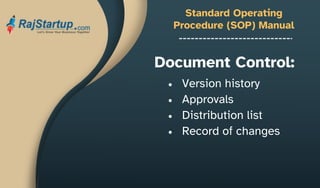
Standard Operating
Procedure (SOP) Manual
Version history
Approvals
Distribution list
Record of changes
Document Control:
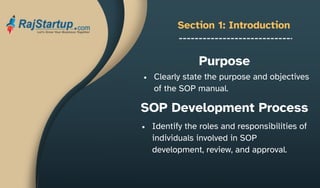
Section 1: Introduction
Clearly state the purpose and objectives
of the SOP manual.
Purpose
SOP Development Process
Identify the roles and responsibilities of
individuals involved in SOP
development, review, and approval.
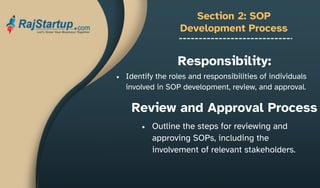
Section 2: SOP
Development Process
Identify the roles and responsibilities of individuals
involved in SOP development, review, and approval.
Responsibility:
Review and Approval Process
Outline the steps for reviewing and
approving SOPs, including the
involvement of relevant stakeholders.
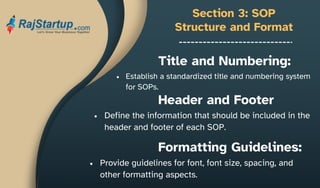
Section 3: SOP
Structure and Format
Establish a standardized title and numbering system
for SOPs.
Title and Numbering:
Header and Footer
Define the information that should be included in the
header and footer of each SOP.
Formatting Guidelines:
Provide guidelines for font, font size, spacing, and
other formatting aspects.
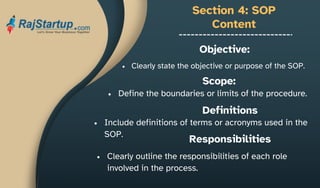
Section 4: SOP
Content
Clearly state the objective or purpose of the SOP.
Objective:
Scope:
Define the boundaries or limits of the procedure.
Definitions
Include definitions of terms or acronyms used in the
SOP.
Responsibilities
Clearly outline the responsibilities of each role
involved in the process.
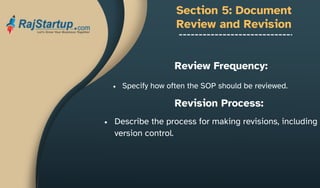
Section 5: Document
Review and Revision
Specify how often the SOP should be reviewed.
Review Frequency:
Revision Process:
Describe the process for making revisions, including
version control.
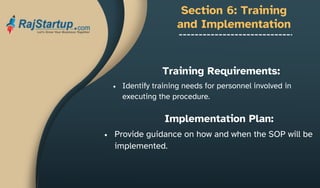
Section 6: Training
and Implementation
Identify training needs for personnel involved in
executing the procedure.
Training Requirements:
Implementation Plan:
Provide guidance on how and when the SOP will be
implemented.
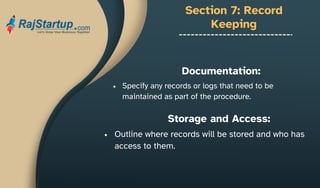
Section 7: Record
Keeping
Specify any records or logs that need to be
maintained as part of the procedure.
Documentation:
Storage and Access:
Outline where records will be stored and who has
access to them.
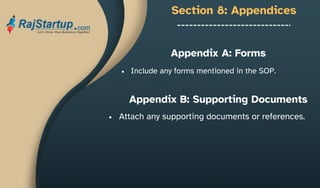
Section 8: Appendices
Include any forms mentioned in the SOP.
Appendix A: Forms
Appendix B: Supporting Documents
Attach any supporting documents or references.
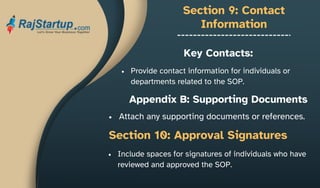
Section 9: Contact
Information
Provide contact information for individuals or
departments related to the SOP.
Key Contacts:
Appendix B: Supporting Documents
Attach any supporting documents or references.
Section 10: Approval Signatures
Include spaces for signatures of individuals who have
reviewed and approved the SOP.
Review and Update
Process:
Describe how and when SOPs will be regularly
reviewed and updated.
Remember that SOPs should be clear, concise, and easily
understandable by the individuals who will be using
them. Regular reviews and updates are crucial to ensure
that SOPs remain relevant and effective in supporting
organizational processes and objectives.
Do & Don'ts
Implementing and maintaining an Environmental
Management System (EMS) based on ISO 14001
involves specific considerations.
Here are some "Do's and Don'ts" for ISO 14001:
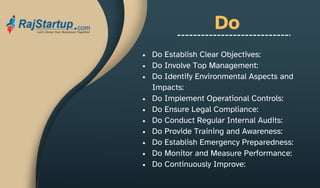
Do
Do Establish Clear Objectives:
Do Involve Top Management:
Do Identify Environmental Aspects and
Impacts:
Do Implement Operational Controls:
Do Ensure Legal Compliance:
Do Conduct Regular Internal Audits:
Do Provide Training and Awareness:
Do Establish Emergency Preparedness:
Do Monitor and Measure Performance:
Do Continuously Improve:
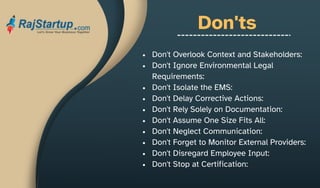
Don'ts
Don't Overlook Context and Stakeholders:
Don't Ignore Environmental Legal
Requirements:
Don't Isolate the EMS:
Don't Delay Corrective Actions:
Don't Rely Solely on Documentation:
Don't Assume One Size Fits All:
Don't Neglect Communication:
Don't Forget to Monitor External Providers:
Don't Disregard Employee Input:
Don't Stop at Certification:
For More info contact us
www.rajstartup.com
info.rajstartup.com +91-9999385617

ISO Certification 14001 Manual process PDF

  • 1.
    +91-9999385617 www.rajstartup.com D-104/1, Mukund Vihar, KarawalNagar, Delhi, 110090 ISO 14001 Certification Environmental management systems
  • 2.
    Contents ISO 14001 inBrief Why is ISO 14001 Key Elements of ISO 14001 Key Benefits Certification Process Time Duration Manual Process SOP's Do & Don'ts
  • 3.
    ISO 14001 inBrief ISO 14001 is an international standard that specifies the requirements for an environmental management system (EMS). It provides a framework for organizations to establish and implement policies and procedures to manage their environmental aspects and impacts. The standard is designed to help organizations improve their environmental performance, comply with applicable legal and regulatory requirements, and demonstrate a commitment to sustainability. For More info read this article- ISO 14001 Certification
  • 4.
    Why is ISO14001 ISO 14001 is valuable because it provides a structured framework for organizations to manage their environmental impact, ensuring compliance with regulations, improving efficiency, and contributing to broader sustainability goals. It aligns environmental responsibility with business objectives, promoting long-term success and positive contributions to the planet. ISO 14001 is important for several reasons, as it addresses environmental management and sustainability within organizations. Here are key reasons why ISO 14001 is significant:
  • 5.
    Key Elements Environmental Policy Planning Implementationand Operation Monitoring and Measurement Evaluation of Compliance Review of the EMS by Top Management Continual Improvement
  • 6.
    Key Benefits Improved EnvironmentalPerformance: Legal Compliance Cost Savings Enhanced Reputation Competitive Advantage Employee Engagement: Global Recognition
  • 7.
    Certification Process Gap Analysis: Trainingand Awareness: Establish the EMS: Internal Audit: Management Review: Select a Certification Body: Application for Certification: Stage 1 Audit (Documentation Review): Stage 2 Audit (On-site Assessment): Audit Findings and Corrective Actions: Certification Decision: Surveillance Audits:
  • 8.
    Time Duration Gap Analysisand Preparation (2-6 months): Training and Awareness (1-2 months): EMS Implementation (6-12 months): Internal Audit and Management Review (2-3 months): Selection of Certification Body and Application (1-2 months): Stage 1 Audit (1-2 months): Stage 2 Audit (On-site Assessment) (1-2 months): Audit Findings and Corrective Actions (1-2 months): Certification Decision (1-2 months): Issuance of Certificate (1-2 months):
  • 9.
    Manual Certification Process Establish aDocumentation Team Review Existing Processes: Identify Key Documents: Define Processes: Document Procedures: Review and Approval: Implementation: Monitor and Update:
  • 10.
    Standard Operating Procedure (SOP)Manual Version history Approvals Distribution list Record of changes Document Control:
  • 11.
    Section 1: Introduction Clearlystate the purpose and objectives of the SOP manual. Purpose SOP Development Process Identify the roles and responsibilities of individuals involved in SOP development, review, and approval.
  • 12.
    Section 2: SOP DevelopmentProcess Identify the roles and responsibilities of individuals involved in SOP development, review, and approval. Responsibility: Review and Approval Process Outline the steps for reviewing and approving SOPs, including the involvement of relevant stakeholders.
  • 13.
    Section 3: SOP Structureand Format Establish a standardized title and numbering system for SOPs. Title and Numbering: Header and Footer Define the information that should be included in the header and footer of each SOP. Formatting Guidelines: Provide guidelines for font, font size, spacing, and other formatting aspects.
  • 14.
    Section 4: SOP Content Clearlystate the objective or purpose of the SOP. Objective: Scope: Define the boundaries or limits of the procedure. Definitions Include definitions of terms or acronyms used in the SOP. Responsibilities Clearly outline the responsibilities of each role involved in the process.
  • 15.
    Section 5: Document Reviewand Revision Specify how often the SOP should be reviewed. Review Frequency: Revision Process: Describe the process for making revisions, including version control.
  • 16.
    Section 6: Training andImplementation Identify training needs for personnel involved in executing the procedure. Training Requirements: Implementation Plan: Provide guidance on how and when the SOP will be implemented.
  • 17.
    Section 7: Record Keeping Specifyany records or logs that need to be maintained as part of the procedure. Documentation: Storage and Access: Outline where records will be stored and who has access to them.
  • 18.
    Section 8: Appendices Includeany forms mentioned in the SOP. Appendix A: Forms Appendix B: Supporting Documents Attach any supporting documents or references.
  • 19.
    Section 9: Contact Information Providecontact information for individuals or departments related to the SOP. Key Contacts: Appendix B: Supporting Documents Attach any supporting documents or references. Section 10: Approval Signatures Include spaces for signatures of individuals who have reviewed and approved the SOP.
  • 20.
    Review and Update Process: Describehow and when SOPs will be regularly reviewed and updated. Remember that SOPs should be clear, concise, and easily understandable by the individuals who will be using them. Regular reviews and updates are crucial to ensure that SOPs remain relevant and effective in supporting organizational processes and objectives.
  • 21.
    Do & Don'ts Implementingand maintaining an Environmental Management System (EMS) based on ISO 14001 involves specific considerations. Here are some "Do's and Don'ts" for ISO 14001:
  • 22.
    Do Do Establish ClearObjectives: Do Involve Top Management: Do Identify Environmental Aspects and Impacts: Do Implement Operational Controls: Do Ensure Legal Compliance: Do Conduct Regular Internal Audits: Do Provide Training and Awareness: Do Establish Emergency Preparedness: Do Monitor and Measure Performance: Do Continuously Improve:
  • 23.
    Don'ts Don't Overlook Contextand Stakeholders: Don't Ignore Environmental Legal Requirements: Don't Isolate the EMS: Don't Delay Corrective Actions: Don't Rely Solely on Documentation: Don't Assume One Size Fits All: Don't Neglect Communication: Don't Forget to Monitor External Providers: Don't Disregard Employee Input: Don't Stop at Certification:
  • 24.
    For More infocontact us www.rajstartup.com info.rajstartup.com +91-9999385617