• ISO 9001:2015 / ISO 9001:2008 Standards Comparison
• Key Terminology Changes
• Major Differences between ISO 9001:2015 and ISO 9001:2008
• ISO 9001:2015 Changes & Additions – by Clause / Elements
Copyright©2016, QMS Consulting LLC
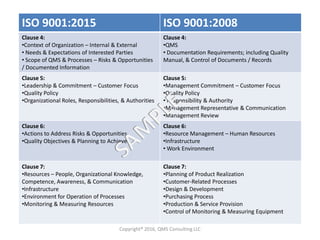
ISO 9001:2015 ISO 9001:2008
Clause 4:
•Context of Organization – Internal & External
• Needs & Expectations of Interested Parties
• Scope of QMS & Processes – Risks & Opportunities
/ Documented Information
Clause 4:
•QMS
• Documentation Requirements; including Quality
Manual, & Control of Documents / Records
Clause 5:
•Leadership & Commitment – Customer Focus
•Quality Policy
•Organizational Roles, Responsibilities, & Authorities
Clause 5:
•Management Commitment – Customer Focus
•Quality Policy
• Responsibility & Authority
•Management Representative & Communication
•Management Review
Clause 6:
•Actions to Address Risks & Opportunities
•Quality Objectives & Planning to Achieve
Clause 6:
•Resource Management – Human Resources
•Infrastructure
• Work Environment
Clause 7:
•Resources – People, Organizational Knowledge,
Competence, Awareness, & Communication
•Infrastructure
•Environment for Operation of Processes
•Monitoring & Measuring Resources
Clause 7:
•Planning of Product Realization
•Customer-Related Processes
•Design & Development
•Purchasing Process
•Production & Service Provision
•Control of Monitoring & Measuring Equipment
Copyright® 2016, QMS Consulting LLC
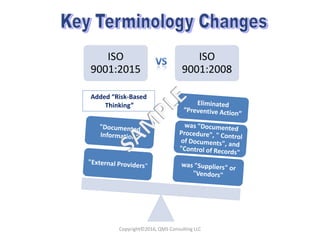
ISO
9001:2015
ISO
9001:2008
Added “Risk-Based
Thinking”
Copyright©2016, QMS Consulting LLC
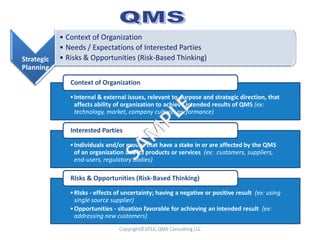
Strategic
Planning
• Context of Organization
• Needs / Expectations of Interested Parties
• Risks & Opportunities (Risk-Based Thinking)
•Internal & external issues, relevant to purpose and strategic direction, that
affects ability of organization to achieve intended results of QMS (ex:
technology, market, company culture, performance)
Context of Organization
•Individuals and/or groups that have a stake in or are affected by the QMS
of an organization and its products or services (ex: customers, suppliers,
end-users, regulatory bodies)
Interested Parties
•RIsks - effects of uncertainty; having a negative or positive result (ex: using
single source supplier)
•Opportunities - situation favorable for achieving an intended result (ex:
addressing new customers)
Risks & Opportunities (Risk-Based Thinking)
Copyright©2016, QMS Consulting LLC
Reduce / eliminate
undesirable
Enhance desirable / Achieve
Copyright© 2016, QMS Consulting LLC
Infrastructure & Environment
Buildings,
Utilities,
Workspace /
Environment
Suitable to
Operations
(human &
physical
factors)
Monitoring &
Measuring
Resources /
Equipment
People &
Communication
Competency
Requirements
/ Needs
Communication
& Awareness of
QMS
Organizational Knowledge
Company-specific
information, product / trade
relative, or tribal knowledge
which may result from
lessons learned or previously
undocumented
Information necessary for
operation of processes /
achieving conformity of
products & services
Copyright©2016, QMS Consulting LLC
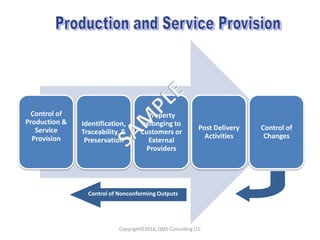
Control of
Production &
Service
Provision
Identification,
Traceability, &
Preservation
Property
belonging to
Customers or
External
Providers
Post Delivery
Activities
Control of
Changes
Control of Nonconforming Outputs
Copyright©2016, QMS Consulting LLC
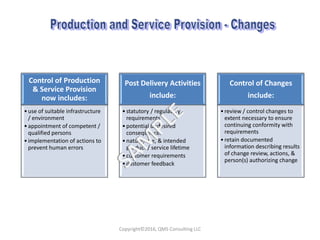
Control of Production
& Service Provision
now includes:
•use of suitable infrastructure
/ environment
•appointment of competent /
qualified persons
•implementation of actions to
prevent human errors
Post Delivery Activities
include:
•statutory / regulatory
requirements
•potential undesired
consequences
•nature, use, & intended
product / service lifetime
•customer requirements
•customer feedback
Control of Changes
include:
•review / control changes to
extent necessary to ensure
continuing conformity with
requirements
•retain documented
information describing results
of change review, actions, &
person(s) authorizing change
Copyright©2016, QMS Consulting LLC
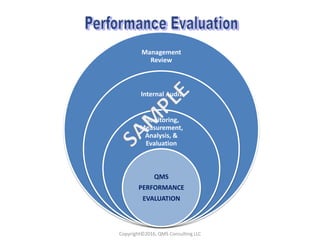
Management
Review
Internal Audit
Monitoring,
Measurement,
Analysis, &
Evaluation
QMS
PERFORMANCE
EVALUATION
Copyright©2016, QMS Consulting LLC
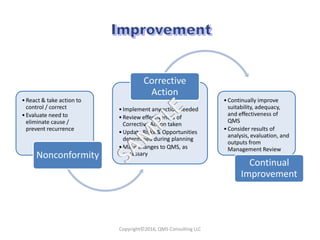
•React & take action to
control / correct
•Evaluate need to
eliminate cause /
prevent recurrence
Nonconformity
•Implement any action needed
•Review effectiveness of
Corrective Action taken
•Update Risks & Opportunities
determined during planning
•Make changes to QMS, as
necessary
Corrective
Action
•Continually improve
suitability, adequacy,
and effectiveness of
QMS
•Consider results of
analysis, evaluation, and
outputs from
Management Review
Continual
Improvement
Copyright©2016, QMS Consulting LLC

ISO 9001.2015 Transition (Sample)

  • 1.
    • ISO 9001:2015/ ISO 9001:2008 Standards Comparison • Key Terminology Changes • Major Differences between ISO 9001:2015 and ISO 9001:2008 • ISO 9001:2015 Changes & Additions – by Clause / Elements Copyright©2016, QMS Consulting LLC
  • 2.
    ISO 9001:2015 ISO9001:2008 Clause 4: •Context of Organization – Internal & External • Needs & Expectations of Interested Parties • Scope of QMS & Processes – Risks & Opportunities / Documented Information Clause 4: •QMS • Documentation Requirements; including Quality Manual, & Control of Documents / Records Clause 5: •Leadership & Commitment – Customer Focus •Quality Policy •Organizational Roles, Responsibilities, & Authorities Clause 5: •Management Commitment – Customer Focus •Quality Policy • Responsibility & Authority •Management Representative & Communication •Management Review Clause 6: •Actions to Address Risks & Opportunities •Quality Objectives & Planning to Achieve Clause 6: •Resource Management – Human Resources •Infrastructure • Work Environment Clause 7: •Resources – People, Organizational Knowledge, Competence, Awareness, & Communication •Infrastructure •Environment for Operation of Processes •Monitoring & Measuring Resources Clause 7: •Planning of Product Realization •Customer-Related Processes •Design & Development •Purchasing Process •Production & Service Provision •Control of Monitoring & Measuring Equipment Copyright® 2016, QMS Consulting LLC
  • 3.
  • 4.
    Strategic Planning • Context ofOrganization • Needs / Expectations of Interested Parties • Risks & Opportunities (Risk-Based Thinking) •Internal & external issues, relevant to purpose and strategic direction, that affects ability of organization to achieve intended results of QMS (ex: technology, market, company culture, performance) Context of Organization •Individuals and/or groups that have a stake in or are affected by the QMS of an organization and its products or services (ex: customers, suppliers, end-users, regulatory bodies) Interested Parties •RIsks - effects of uncertainty; having a negative or positive result (ex: using single source supplier) •Opportunities - situation favorable for achieving an intended result (ex: addressing new customers) Risks & Opportunities (Risk-Based Thinking) Copyright©2016, QMS Consulting LLC
  • 5.
    Reduce / eliminate undesirable Enhancedesirable / Achieve Copyright© 2016, QMS Consulting LLC
  • 6.
    Infrastructure & Environment Buildings, Utilities, Workspace/ Environment Suitable to Operations (human & physical factors) Monitoring & Measuring Resources / Equipment People & Communication Competency Requirements / Needs Communication & Awareness of QMS Organizational Knowledge Company-specific information, product / trade relative, or tribal knowledge which may result from lessons learned or previously undocumented Information necessary for operation of processes / achieving conformity of products & services Copyright©2016, QMS Consulting LLC
  • 7.
    Control of Production & Service Provision Identification, Traceability,& Preservation Property belonging to Customers or External Providers Post Delivery Activities Control of Changes Control of Nonconforming Outputs Copyright©2016, QMS Consulting LLC
  • 8.
    Control of Production &Service Provision now includes: •use of suitable infrastructure / environment •appointment of competent / qualified persons •implementation of actions to prevent human errors Post Delivery Activities include: •statutory / regulatory requirements •potential undesired consequences •nature, use, & intended product / service lifetime •customer requirements •customer feedback Control of Changes include: •review / control changes to extent necessary to ensure continuing conformity with requirements •retain documented information describing results of change review, actions, & person(s) authorizing change Copyright©2016, QMS Consulting LLC
  • 9.
  • 10.
    •React & takeaction to control / correct •Evaluate need to eliminate cause / prevent recurrence Nonconformity •Implement any action needed •Review effectiveness of Corrective Action taken •Update Risks & Opportunities determined during planning •Make changes to QMS, as necessary Corrective Action •Continually improve suitability, adequacy, and effectiveness of QMS •Consider results of analysis, evaluation, and outputs from Management Review Continual Improvement Copyright©2016, QMS Consulting LLC