ARC8027 | Ambience and Atmospheres (Part 2)


Newcastle University
02//2011
1 | UPDATE AND HOUSEKEEPING

2 | BEN SALEM: ACTIVE FORMS

3 | AMBIENCE AND ATMOSPHERES PART 2

4 | PROJECT: SITE ANALYSIS
UPDATE | HOUSEKEEPING
BLOG
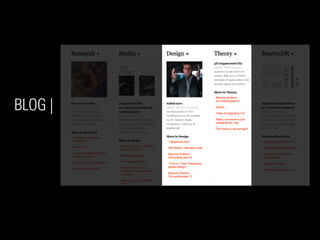
BLOG | Remember to Use Categories
BLOG |
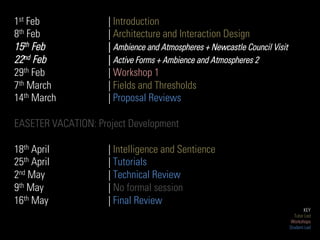
1st Feb              | Introduction
8th Feb              | Architecture and Interaction Design
15th Feb             | Ambience and Atmospheres + Newcastle Council Visit
22nd Feb             | Active Forms + Ambience and Atmospheres 2
29th Feb             | Workshop 1
7th March            | Fields and Thresholds
14th March           | Proposal Reviews

EASETER VACATION: Project Development

18th April           | Intelligence and Sentience
25th April           | Tutorials
2nd May              | Technical Review
9th May              | No formal session
16th May             | Final Review
                                                                                   KEY
                                                                              Tutor Led
                                                                             Workshops
                                                                            Student Led
BEN SALEM |
Senior Lecturer in Experience Prototyping at
Northumbria University School of Design
HOMEWORK | BEYOND AMBIENT COMPUTING
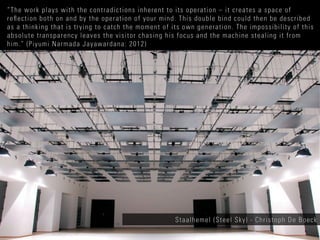
THEME 1 | SURFACE IN CONTEXT
THEME 2 | BEYOND THE VISUAL
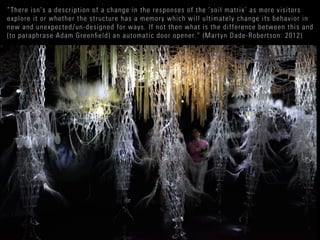
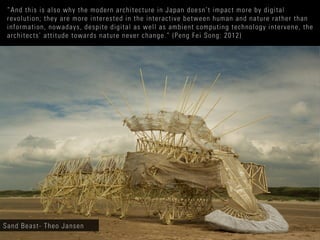
THEME 3 | EMERGENT INTERACTIVITY
PROJECT | Site Analysis
GROUPS OF THREE
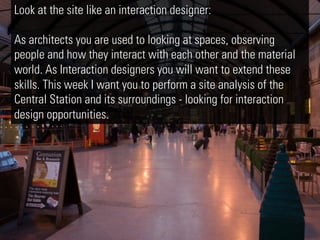
Look at the site like an interaction designer:

As architects you are used to looking at spaces, observing
people and how they interact with each other and the material
world. As Interaction designers you will want to extend these
skills. This week I want you to perform a site analysis of the
Central Station and its surroundings - looking for interaction
design opportunities.
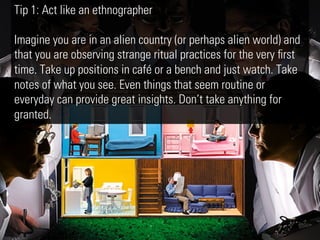
Tip 1: Act like an ethnographer

Imagine you are in an alien country (or perhaps alien world) and
that you are observing strange ritual practices for the very first
time. Take up positions in café or a bench and just watch. Take
notes of what you see. Even things that seem routine or
everyday can provide great insights. Don’t take anything for
granted.
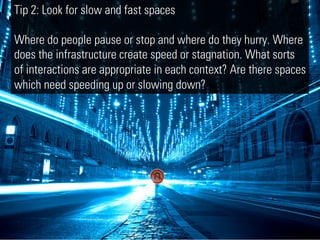
Tip 2: Look for slow and fast spaces

Where do people pause or stop and where do they hurry. Where
does the infrastructure create speed or stagnation. What sorts
of interactions are appropriate in each context? Are there spaces
which need speeding up or slowing down?
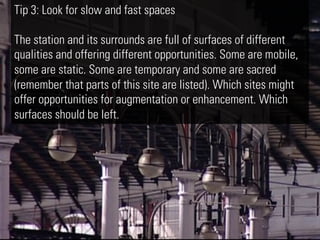
Tip 3: Look for slow and fast spaces

The station and its surrounds are full of surfaces of different
qualities and offering different opportunities. Some are mobile,
some are static. Some are temporary and some are sacred
(remember that parts of this site are listed). Which sites might
offer opportunities for augmentation or enhancement. Which
surfaces should be left.
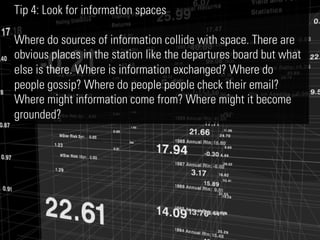
Tip 4: Look for information spaces

Where do sources of information collide with space. There are
obvious places in the station like the departures board but what
else is there. Where is information exchanged? Where do
people gossip? Where do people people check their email?
Where might information come from? Where might it become
grounded?
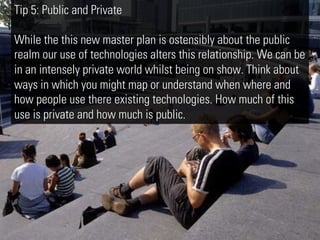
Tip 5: Public and Private

While the this new master plan is ostensibly about the public
realm our use of technologies alters this relationship. We can be
in an intensely private world whilst being on show. Think about
ways in which you might map or understand when where and
how people use there existing technologies. How much of this
use is private and how much is public.
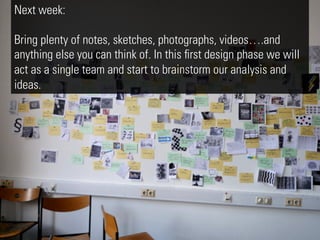
Next week:

Bring plenty of notes, sketches, photographs, videos….and
anything else you can think of. In this first design phase we will
act as a single team and start to brainstorm our analysis and
ideas.
THE END

martyn.dade-robertson@ncl.ac.uk

Isd ambience and atmosphere part 2

  • 1.
    ARC8027 | Ambienceand Atmospheres (Part 2) Newcastle University 02//2011
  • 2.
    1 | UPDATEAND HOUSEKEEPING 2 | BEN SALEM: ACTIVE FORMS 3 | AMBIENCE AND ATMOSPHERES PART 2 4 | PROJECT: SITE ANALYSIS
  • 3.
  • 4.
  • 5.
    BLOG | Rememberto Use Categories
  • 6.
  • 7.
    1st Feb | Introduction 8th Feb | Architecture and Interaction Design 15th Feb | Ambience and Atmospheres + Newcastle Council Visit 22nd Feb | Active Forms + Ambience and Atmospheres 2 29th Feb | Workshop 1 7th March | Fields and Thresholds 14th March | Proposal Reviews EASETER VACATION: Project Development 18th April | Intelligence and Sentience 25th April | Tutorials 2nd May | Technical Review 9th May | No formal session 16th May | Final Review KEY Tutor Led Workshops Student Led
  • 8.
    BEN SALEM | SeniorLecturer in Experience Prototyping at Northumbria University School of Design
  • 9.
    HOMEWORK | BEYONDAMBIENT COMPUTING
  • 10.
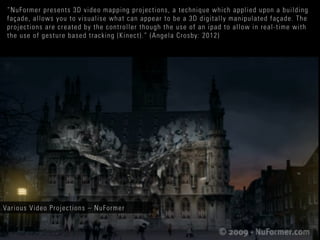
    THEME 1 |SURFACE IN CONTEXT
  • 14.
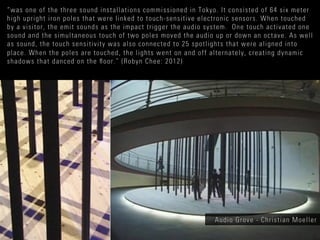
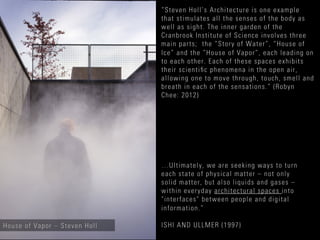
    THEME 2 |BEYOND THE VISUAL
  • 18.
    THEME 3 |EMERGENT INTERACTIVITY
  • 23.
  • 24.
  • 25.
    Look at thesite like an interaction designer: As architects you are used to looking at spaces, observing people and how they interact with each other and the material world. As Interaction designers you will want to extend these skills. This week I want you to perform a site analysis of the Central Station and its surroundings - looking for interaction design opportunities.
  • 26.
    Tip 1: Actlike an ethnographer Imagine you are in an alien country (or perhaps alien world) and that you are observing strange ritual practices for the very first time. Take up positions in café or a bench and just watch. Take notes of what you see. Even things that seem routine or everyday can provide great insights. Don’t take anything for granted.
  • 27.
    Tip 2: Lookfor slow and fast spaces Where do people pause or stop and where do they hurry. Where does the infrastructure create speed or stagnation. What sorts of interactions are appropriate in each context? Are there spaces which need speeding up or slowing down?
  • 28.
    Tip 3: Lookfor slow and fast spaces The station and its surrounds are full of surfaces of different qualities and offering different opportunities. Some are mobile, some are static. Some are temporary and some are sacred (remember that parts of this site are listed). Which sites might offer opportunities for augmentation or enhancement. Which surfaces should be left.
  • 29.
    Tip 4: Lookfor information spaces Where do sources of information collide with space. There are obvious places in the station like the departures board but what else is there. Where is information exchanged? Where do people gossip? Where do people people check their email? Where might information come from? Where might it become grounded?
  • 30.
    Tip 5: Publicand Private While the this new master plan is ostensibly about the public realm our use of technologies alters this relationship. We can be in an intensely private world whilst being on show. Think about ways in which you might map or understand when where and how people use there existing technologies. How much of this use is private and how much is public.
  • 31.
    Next week: Bring plentyof notes, sketches, photographs, videos….and anything else you can think of. In this first design phase we will act as a single team and start to brainstorm our analysis and ideas.
  • 32.