Ministry of Primary and Secondary Education
Harare Province
IPSAS IMPLEMENTATION TRAINING
2024
Presentation of
Financial Statements
IPSAS 1
OBJECTIVES
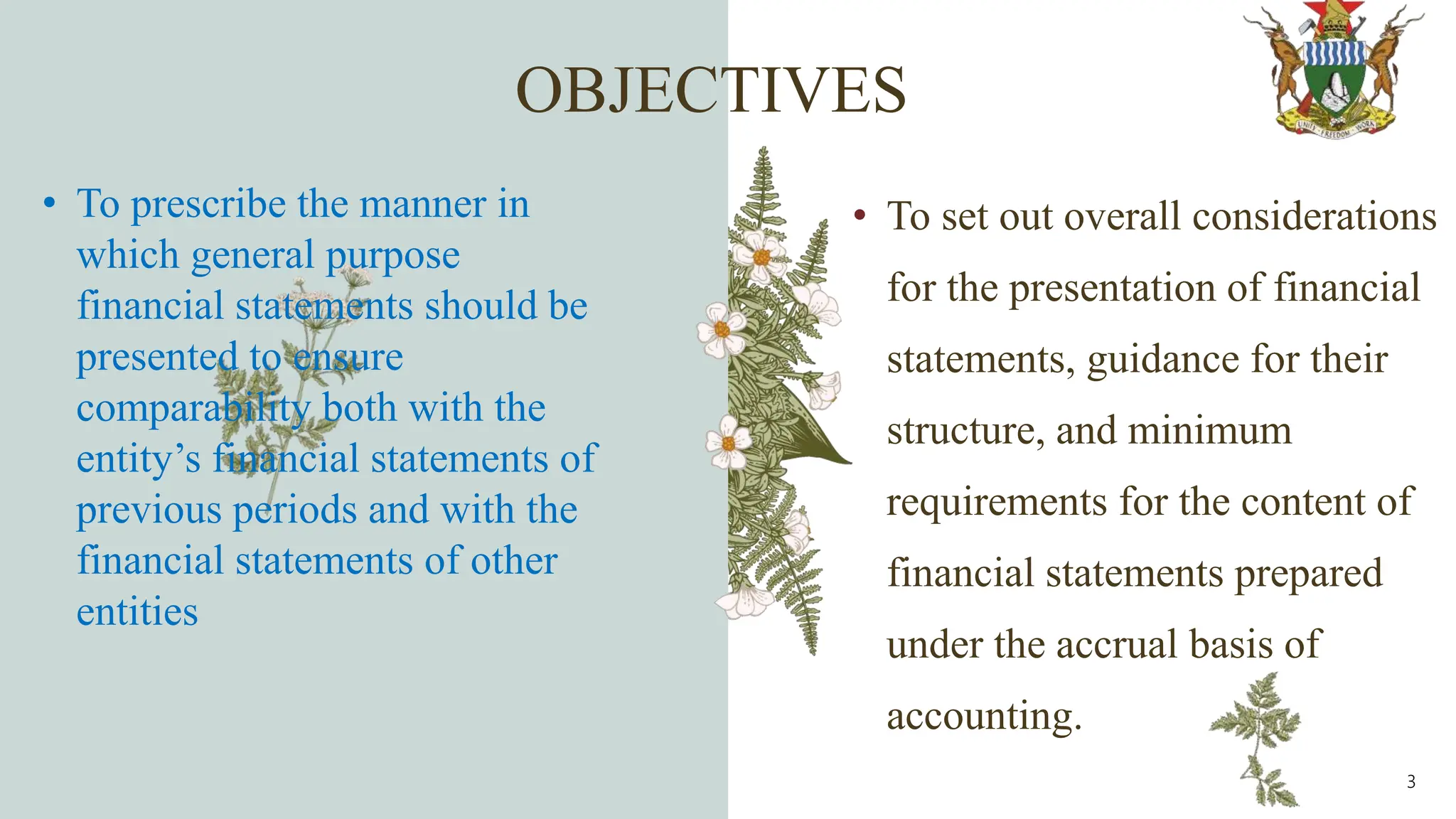
• To set out overall considerations
for the presentation of financial
statements, guidance for their
structure, and minimum
requirements for the content of
financial statements prepared
under the accrual basis of
accounting.
3
• To prescribe the manner in
which general purpose
financial statements should be
presented to ensure
comparability both with the
entity’s financial statements of
previous periods and with the
financial statements of other
entities
SCOPE
Standard sets out overall considerations for the presentation
of financial statements, guidance for their structure, and
minimum requirements for the content of financial statements
prepared under the accrual basis of accounting
4
DEFINITIONS
1. Accrual basis
A basis of accounting under which transactions and other events are recognized when they
occur (and not only when cash or its equivalent is received or paid).
2. Expenses
Decreases in economic benefits or service potential during the reporting period in the form
of outflows or consumption of assets or incurrences of liabilities that result in decreases in
net assets/equity, other than those relating to distributions to owners
DEFINITIONS CONT…….
3. Material
 Omissions or misstatements of items are material if they could, individually or
collectively, influence the decisions or assessments of users made on the basis of the
financial statements.
 Materiality depends on the nature and size of the omission or misstatement judged in the
surrounding circumstances.
 The nature or size of the item, or a combination of both, could be the determining actor.
6
DEFINITIONS CONT….
4. Revenue
Gross inflow of economic benefits or service potential during the reporting period when those inflows
result in an increase in net assets/equity, other than increases relating to contributions from owners.
5. Notes
 Contain information in addition to that presented in the statement of financial position, statement of
financial performance, statement of changes in net assets/equity and cash flow statement.
 Notes provide narrative descriptions or disaggregation of items disclosed in those statements and
information about items that do not qualify for recognition in those statements.
7
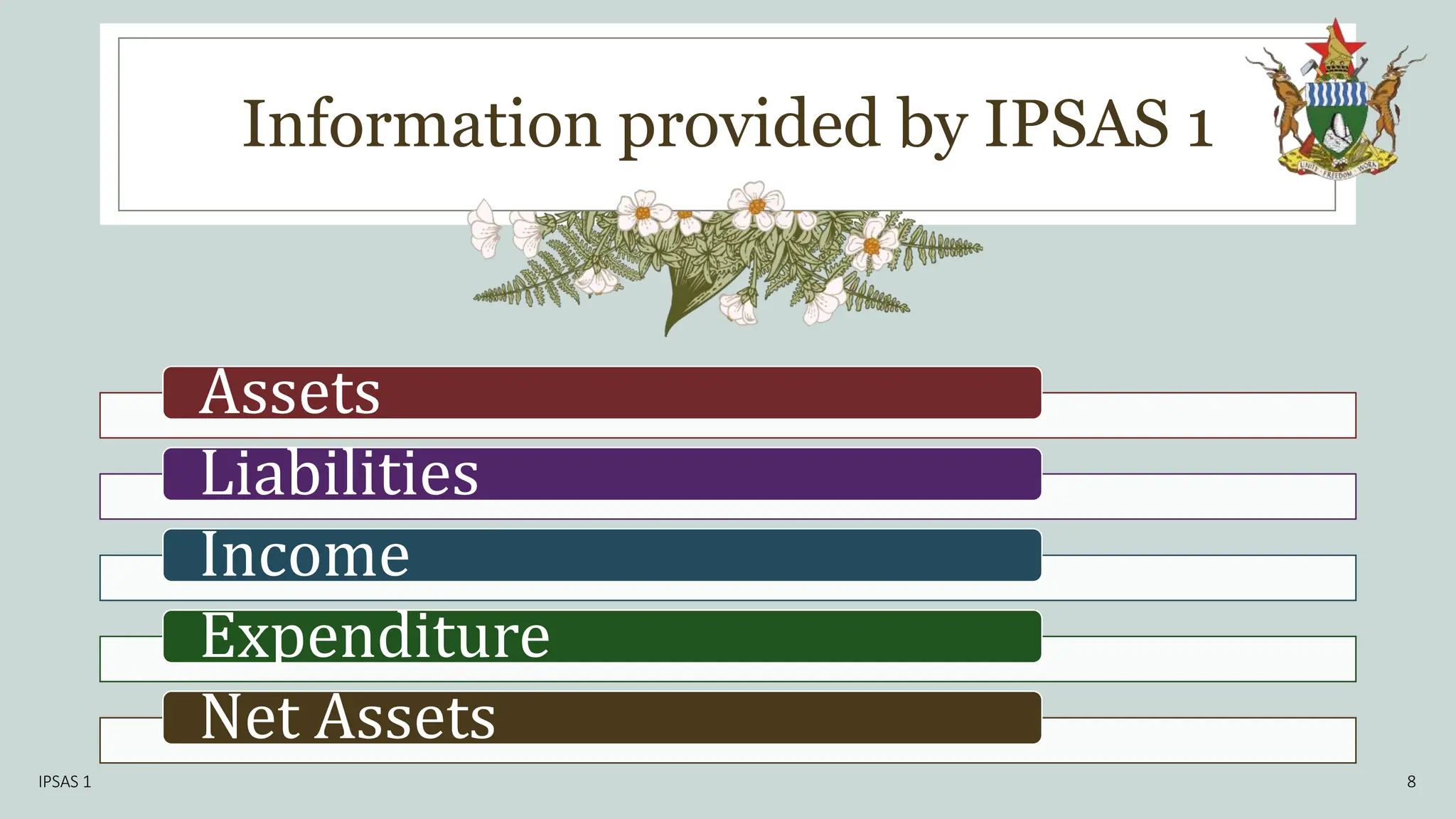
Information provided by IPSAS 1
Assets
Liabilities
Income
Expenditure
Net Assets
IPSAS 1 8
Purpose of Financial Statements
 To provide information about the financial position, financial performance, and cash flows of an entity that
is useful to a wide range of users in making and evaluating decisions about the allocation of resources.
 Providing information about the sources, allocation, and uses of financial resources;
 Providing information about how the entity financed its activities and met its cash requirements;
 Providing information that is useful in evaluating the entity’s ability to
 finance its activities and to meet its liabilities and commitments;
IPSAS 1 9
Principles
10
Consistency
• There must be Consistency of presentation and classification of items
from one period to the next and can only be changed when it is a
result of;
• a) a significant change in the nature of the undertaking’s operations;
• b) identification of a more appropriate presentation; or
• c) the requirements of a new IPSAS.
Materiality
Each material class of similar items must be presented separately in the
financial statements
Aggregation
Dissimilar items may be aggregated only if they are individually
immaterial.
11
Offsetting
Assets and liabilities, and income and expenses, shall not be offset unless
required (or permitted) by a Standard.
Comparative Information
• Required for previous period for all amounts reported
• Included for narrative and descriptive information when relevant to
understanding
Going Concern
When preparing financial statements, management must make an
assessment of an undertaking’s ability to continue as a going concern
Timeliness
The usefulness of financial statements is impaired if they are not made
available to users within a reasonable period after the reporting date
12
Components of Financial Statements
• (a) A statement of financial position;
• (b) A statement of financial performance;
• (c) A statement of changes in net assets/equity;
• (d) A cash flow statement;
• (e) When the entity makes publicly available its approved budget, a comparison of budget and actual amounts
either as a separate additional financial statement or as a budget column in the financial statements; and
• (f) Notes, comprising a summary of significant accounting policies and other explanatory notes.
• (g) Comparative information in respect of the preceeding period as specified in paragraph 53
13
Accounting Concepts
When preparing financial statements it’s important to follow accounting concepts.
Reporting Period
Presentation title 15
• The financial reporting period for all reporting entities shall be 1 January to 31 December of each year
• Financial statements shall be presented at least annually. The reporting entity shall present financial
statements within the timelines the Public Financial Management Act(22:19).
Disclosure
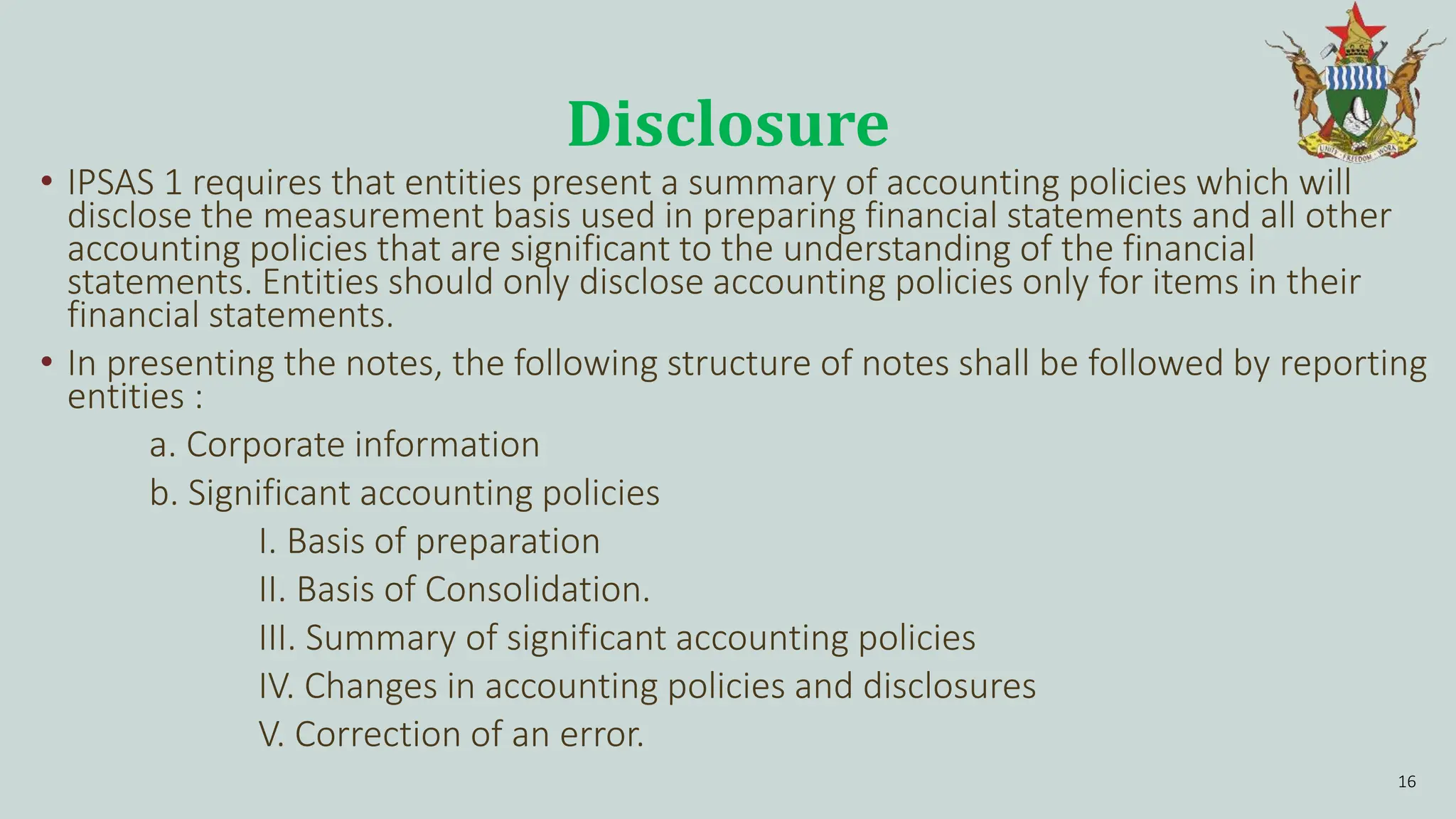
• IPSAS 1 requires that entities present a summary of accounting policies which will
disclose the measurement basis used in preparing financial statements and all other
accounting policies that are significant to the understanding of the financial
statements. Entities should only disclose accounting policies only for items in their
financial statements.
• In presenting the notes, the following structure of notes shall be followed by reporting
entities :
a. Corporate information
b. Significant accounting policies
I. Basis of preparation
II. Basis of Consolidation.
III. Summary of significant accounting policies
IV. Changes in accounting policies and disclosures
V. Correction of an error.
16
Thank you
Presenter:
Sir Dikaz

IPSAS 1 Presentation of financial stmnts.pptx

  • 1.
    Ministry of Primaryand Secondary Education Harare Province IPSAS IMPLEMENTATION TRAINING 2024
  • 2.
  • 3.
    OBJECTIVES • To setout overall considerations for the presentation of financial statements, guidance for their structure, and minimum requirements for the content of financial statements prepared under the accrual basis of accounting. 3 • To prescribe the manner in which general purpose financial statements should be presented to ensure comparability both with the entity’s financial statements of previous periods and with the financial statements of other entities
  • 4.
    SCOPE Standard sets outoverall considerations for the presentation of financial statements, guidance for their structure, and minimum requirements for the content of financial statements prepared under the accrual basis of accounting 4
  • 5.
    DEFINITIONS 1. Accrual basis Abasis of accounting under which transactions and other events are recognized when they occur (and not only when cash or its equivalent is received or paid). 2. Expenses Decreases in economic benefits or service potential during the reporting period in the form of outflows or consumption of assets or incurrences of liabilities that result in decreases in net assets/equity, other than those relating to distributions to owners
  • 6.
    DEFINITIONS CONT……. 3. Material Omissions or misstatements of items are material if they could, individually or collectively, influence the decisions or assessments of users made on the basis of the financial statements.  Materiality depends on the nature and size of the omission or misstatement judged in the surrounding circumstances.  The nature or size of the item, or a combination of both, could be the determining actor. 6
  • 7.
    DEFINITIONS CONT…. 4. Revenue Grossinflow of economic benefits or service potential during the reporting period when those inflows result in an increase in net assets/equity, other than increases relating to contributions from owners. 5. Notes  Contain information in addition to that presented in the statement of financial position, statement of financial performance, statement of changes in net assets/equity and cash flow statement.  Notes provide narrative descriptions or disaggregation of items disclosed in those statements and information about items that do not qualify for recognition in those statements. 7
  • 8.
    Information provided byIPSAS 1 Assets Liabilities Income Expenditure Net Assets IPSAS 1 8
  • 9.
    Purpose of FinancialStatements  To provide information about the financial position, financial performance, and cash flows of an entity that is useful to a wide range of users in making and evaluating decisions about the allocation of resources.  Providing information about the sources, allocation, and uses of financial resources;  Providing information about how the entity financed its activities and met its cash requirements;  Providing information that is useful in evaluating the entity’s ability to  finance its activities and to meet its liabilities and commitments; IPSAS 1 9
  • 10.
  • 11.
    Consistency • There mustbe Consistency of presentation and classification of items from one period to the next and can only be changed when it is a result of; • a) a significant change in the nature of the undertaking’s operations; • b) identification of a more appropriate presentation; or • c) the requirements of a new IPSAS. Materiality Each material class of similar items must be presented separately in the financial statements Aggregation Dissimilar items may be aggregated only if they are individually immaterial. 11
  • 12.
    Offsetting Assets and liabilities,and income and expenses, shall not be offset unless required (or permitted) by a Standard. Comparative Information • Required for previous period for all amounts reported • Included for narrative and descriptive information when relevant to understanding Going Concern When preparing financial statements, management must make an assessment of an undertaking’s ability to continue as a going concern Timeliness The usefulness of financial statements is impaired if they are not made available to users within a reasonable period after the reporting date 12
  • 13.
    Components of FinancialStatements • (a) A statement of financial position; • (b) A statement of financial performance; • (c) A statement of changes in net assets/equity; • (d) A cash flow statement; • (e) When the entity makes publicly available its approved budget, a comparison of budget and actual amounts either as a separate additional financial statement or as a budget column in the financial statements; and • (f) Notes, comprising a summary of significant accounting policies and other explanatory notes. • (g) Comparative information in respect of the preceeding period as specified in paragraph 53 13
  • 14.
    Accounting Concepts When preparingfinancial statements it’s important to follow accounting concepts.
  • 15.
    Reporting Period Presentation title15 • The financial reporting period for all reporting entities shall be 1 January to 31 December of each year • Financial statements shall be presented at least annually. The reporting entity shall present financial statements within the timelines the Public Financial Management Act(22:19).
  • 16.
    Disclosure • IPSAS 1requires that entities present a summary of accounting policies which will disclose the measurement basis used in preparing financial statements and all other accounting policies that are significant to the understanding of the financial statements. Entities should only disclose accounting policies only for items in their financial statements. • In presenting the notes, the following structure of notes shall be followed by reporting entities : a. Corporate information b. Significant accounting policies I. Basis of preparation II. Basis of Consolidation. III. Summary of significant accounting policies IV. Changes in accounting policies and disclosures V. Correction of an error. 16
  • 17.