RADIATIONIn physics, radiation describes a process in which energetic particles or waves travel through a medium or space.
RADIATION AND  ITS EFFECTSWhat could happen if you exposure to radiation?Radiation poisoning, radiation sickness or a creeping dose, is a form of damage to organ tissue caused by excessive exposure to ionizing radiation.
The term is generally used to refer to acute problems caused by a large dosage of radiation in a short period, though this also has occurred with long term exposure. The clinical name for radiation sickness is acute radiation syndrome (ARS).IF YOU EXPOSURETO RADIATIONCOULD  SOME THESE SYNDROMES
A short exposure can result in acute radiation syndrome; chronic radiation syndrome requires a prolonged high level of exposure.Radiation exposure can also increase the probability of developing some other diseases, mainly cancer, tumours, and genetic damage. IF YOU EXPOSURETO RADIATIONCOULD HAVE DEFORMATIONSOR TUMOURS
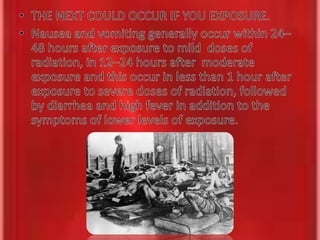
THE NEXT COULD OCCUR IF YOU EXPOSURE.Nausea and vomiting generally occur within 24–48 hours after exposure to mild  doses of radiation, in 12–24 hours after  moderate exposure and this occur in less than 1 hour after exposure to severe doses of radiation, followed by diarrhea and high fever in addition to the symptoms of lower levels of exposure.
Headache, fatigue, and weakness are also seen with mild exposure. In addition to the symptoms of mild exposure, fever, hair loss, infections, bloody vomit and stools, and poor wound healing are seen with moderate exposure.IF YOU THINK THIS IS PAINFUL THEN YOU SHOULD BE FAR AWAY  THE RADIATION SOURCES.
Very severe  exposure is followed by the onset of nausea and vomiting in less than 30 minutes followed by the appearance of dizziness, disorientation, and low blood pressure in addition to the symptoms of lower levels of exposure. Severe exposure is fatal about 50% of the time.IF YOU EXPOSURETO RADIATION IN DIFFERENTS  DEGREES COULDHAVE SOME THOSESYMPTOMS
Longer term exposure to radiation, at doses less than that which produces serious radiation sickness, can induce cancer as cell-cycle genes are mutated.Since tumors grow by abnormally rapid cell division, the ability of radiation to disturb cell division is also used to treat cancer , and low levels of ionizing radiation have been claimed to lower one's risk of cancer .IF YOU EXPOSURETO RADIATION COULD  INCREASETHE PROBABILITYHAVE CANCER
If you want to prevent the exposure to the radiation, you should do  the following:The best prevention for radiation sickness is to minimize the dose suffered by the human, or to reduce the dose rate.Increasing distance from the radiation source .
THANK YOU SO MUCH

Ionizing radiation

  • 1.
    RADIATIONIn physics, radiationdescribes a process in which energetic particles or waves travel through a medium or space.
  • 2.
    RADIATION AND ITS EFFECTSWhat could happen if you exposure to radiation?Radiation poisoning, radiation sickness or a creeping dose, is a form of damage to organ tissue caused by excessive exposure to ionizing radiation.
  • 3.
    The term isgenerally used to refer to acute problems caused by a large dosage of radiation in a short period, though this also has occurred with long term exposure. The clinical name for radiation sickness is acute radiation syndrome (ARS).IF YOU EXPOSURETO RADIATIONCOULD SOME THESE SYNDROMES
  • 4.
    A short exposurecan result in acute radiation syndrome; chronic radiation syndrome requires a prolonged high level of exposure.Radiation exposure can also increase the probability of developing some other diseases, mainly cancer, tumours, and genetic damage. IF YOU EXPOSURETO RADIATIONCOULD HAVE DEFORMATIONSOR TUMOURS
  • 5.
    THE NEXT COULDOCCUR IF YOU EXPOSURE.Nausea and vomiting generally occur within 24–48 hours after exposure to mild doses of radiation, in 12–24 hours after moderate exposure and this occur in less than 1 hour after exposure to severe doses of radiation, followed by diarrhea and high fever in addition to the symptoms of lower levels of exposure.
  • 6.
    Headache, fatigue, andweakness are also seen with mild exposure. In addition to the symptoms of mild exposure, fever, hair loss, infections, bloody vomit and stools, and poor wound healing are seen with moderate exposure.IF YOU THINK THIS IS PAINFUL THEN YOU SHOULD BE FAR AWAY THE RADIATION SOURCES.
  • 7.
    Very severe exposure is followed by the onset of nausea and vomiting in less than 30 minutes followed by the appearance of dizziness, disorientation, and low blood pressure in addition to the symptoms of lower levels of exposure. Severe exposure is fatal about 50% of the time.IF YOU EXPOSURETO RADIATION IN DIFFERENTS DEGREES COULDHAVE SOME THOSESYMPTOMS
  • 8.
    Longer term exposureto radiation, at doses less than that which produces serious radiation sickness, can induce cancer as cell-cycle genes are mutated.Since tumors grow by abnormally rapid cell division, the ability of radiation to disturb cell division is also used to treat cancer , and low levels of ionizing radiation have been claimed to lower one's risk of cancer .IF YOU EXPOSURETO RADIATION COULD INCREASETHE PROBABILITYHAVE CANCER
  • 9.
    If you wantto prevent the exposure to the radiation, you should do the following:The best prevention for radiation sickness is to minimize the dose suffered by the human, or to reduce the dose rate.Increasing distance from the radiation source .
  • 10.