Introduction to Ground
Penetrating Radar
(GPR)
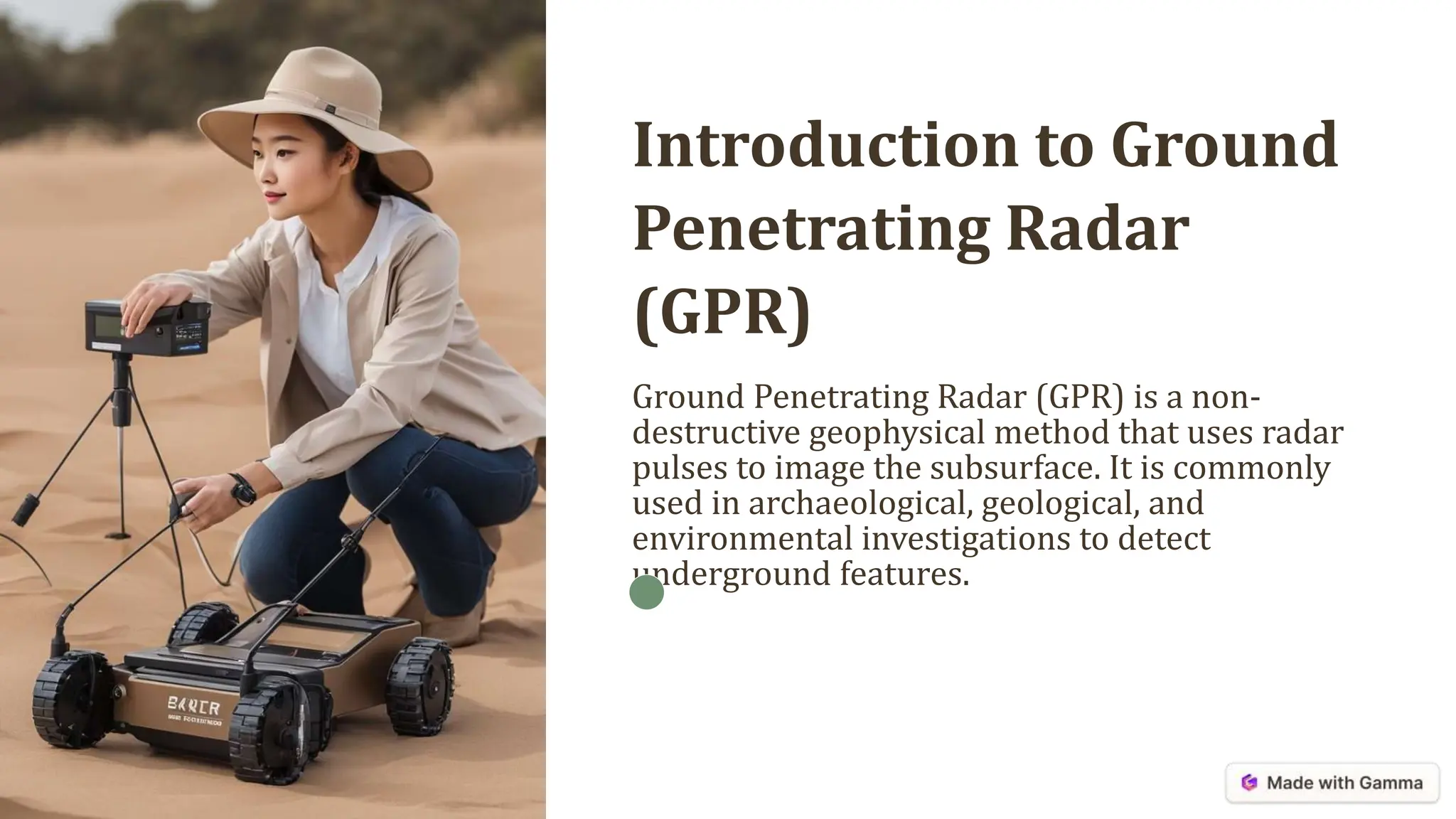
Ground Penetrating Radar (GPR) is a non-
destructive geophysical method that uses radar
pulses to image the subsurface. It is commonly
used in archaeological, geological, and
environmental investigations to detect
underground features.
How GPR Works
Transmitting Pulses
GPR systems transmit
electromagnetic pulses into
the ground.
Reflecting Signals
Signals are reflected back to
the surface when they
encounter subsurface
features.
Data Interpretation
Interpreting the signals helps
to create images of the
subsurface features.
Applications of GPR
1 Archeology
Used to discover ancient artifacts and
structural remains.
2 Utility Mapping
Identifies underground pipes, cables, and
other utilities.
3 Concrete Inspection
Detects rebar, post-tension cables, and
voids in concrete structures.
4 Environmental Studies
Locates underground storage tanks,
contaminants, and geological formations.
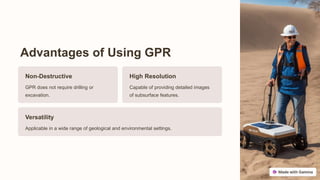
Advantages of Using GPR
Non-Destructive
GPR does not require drilling or
excavation.
High Resolution
Capable of providing detailed images
of subsurface features.
Versatility
Applicable in a wide range of geological and environmental settings.
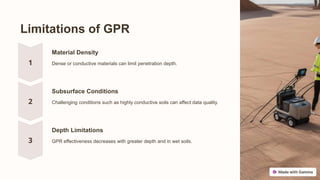
Limitations of GPR
Material Density
Dense or conductive materials can limit penetration depth.
Subsurface Conditions
Challenging conditions such as highly conductive soils can affect data quality.
Depth Limitations
GPR effectiveness decreases with greater depth and in wet soils.
Instrument of GPR
Radar Technology
Utilizes advanced radar
technology for subsurface
imaging.
Geophysical Method
Adopts a geophysical approach
for non-destructive
investigations.
Survey Equipment
Designed for efficient and
accurate surveying of
subsurface features.
GPR Equipment and Technology
Antennas Diverse antenna configurations for different
applications.
Data Processing Advanced software for processing and
interpreting GPR data.
Integrated Systems Integration with GPS and mapping
technologies for accurate positioning.
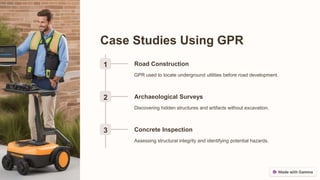
Case Studies Using GPR
1 Road Construction
GPR used to locate underground utilities before road development.
2 Archaeological Surveys
Discovering hidden structures and artifacts without excavation.
3 Concrete Inspection
Assessing structural integrity and identifying potential hazards.
Conclusion and Future Developments
Continuous Advancements
Ongoing research and development to enhance GPR capabilities and applications.
Integration with AI
Exploring AI integration for automated data processing and interpretation.
Emerging Applications
Expanding into domains such as urban planning, disaster management, and precision agriculture.

Introduction-to-Ground-Penetrating-Radar-GPR.pptx

  • 1.
    Introduction to Ground PenetratingRadar (GPR) Ground Penetrating Radar (GPR) is a non- destructive geophysical method that uses radar pulses to image the subsurface. It is commonly used in archaeological, geological, and environmental investigations to detect underground features.
  • 2.
    How GPR Works TransmittingPulses GPR systems transmit electromagnetic pulses into the ground. Reflecting Signals Signals are reflected back to the surface when they encounter subsurface features. Data Interpretation Interpreting the signals helps to create images of the subsurface features.
  • 3.
    Applications of GPR 1Archeology Used to discover ancient artifacts and structural remains. 2 Utility Mapping Identifies underground pipes, cables, and other utilities. 3 Concrete Inspection Detects rebar, post-tension cables, and voids in concrete structures. 4 Environmental Studies Locates underground storage tanks, contaminants, and geological formations.
  • 4.
    Advantages of UsingGPR Non-Destructive GPR does not require drilling or excavation. High Resolution Capable of providing detailed images of subsurface features. Versatility Applicable in a wide range of geological and environmental settings.
  • 5.
    Limitations of GPR MaterialDensity Dense or conductive materials can limit penetration depth. Subsurface Conditions Challenging conditions such as highly conductive soils can affect data quality. Depth Limitations GPR effectiveness decreases with greater depth and in wet soils.
  • 6.
    Instrument of GPR RadarTechnology Utilizes advanced radar technology for subsurface imaging. Geophysical Method Adopts a geophysical approach for non-destructive investigations. Survey Equipment Designed for efficient and accurate surveying of subsurface features.
  • 7.
    GPR Equipment andTechnology Antennas Diverse antenna configurations for different applications. Data Processing Advanced software for processing and interpreting GPR data. Integrated Systems Integration with GPS and mapping technologies for accurate positioning.
  • 8.
    Case Studies UsingGPR 1 Road Construction GPR used to locate underground utilities before road development. 2 Archaeological Surveys Discovering hidden structures and artifacts without excavation. 3 Concrete Inspection Assessing structural integrity and identifying potential hazards.
  • 9.
    Conclusion and FutureDevelopments Continuous Advancements Ongoing research and development to enhance GPR capabilities and applications. Integration with AI Exploring AI integration for automated data processing and interpretation. Emerging Applications Expanding into domains such as urban planning, disaster management, and precision agriculture.