Introduction to
Discussion Texts
A discussion text, in the context of English for Vocational High Schools
(SMK), is a written composition aimed at presenting various viewpoints on
a specific topic. It aims to inform, persuade, and provide a comprehensive
understanding of a particular issue.
by Rizki Rosyida
Definition and Characteristics of a
Discussion Text
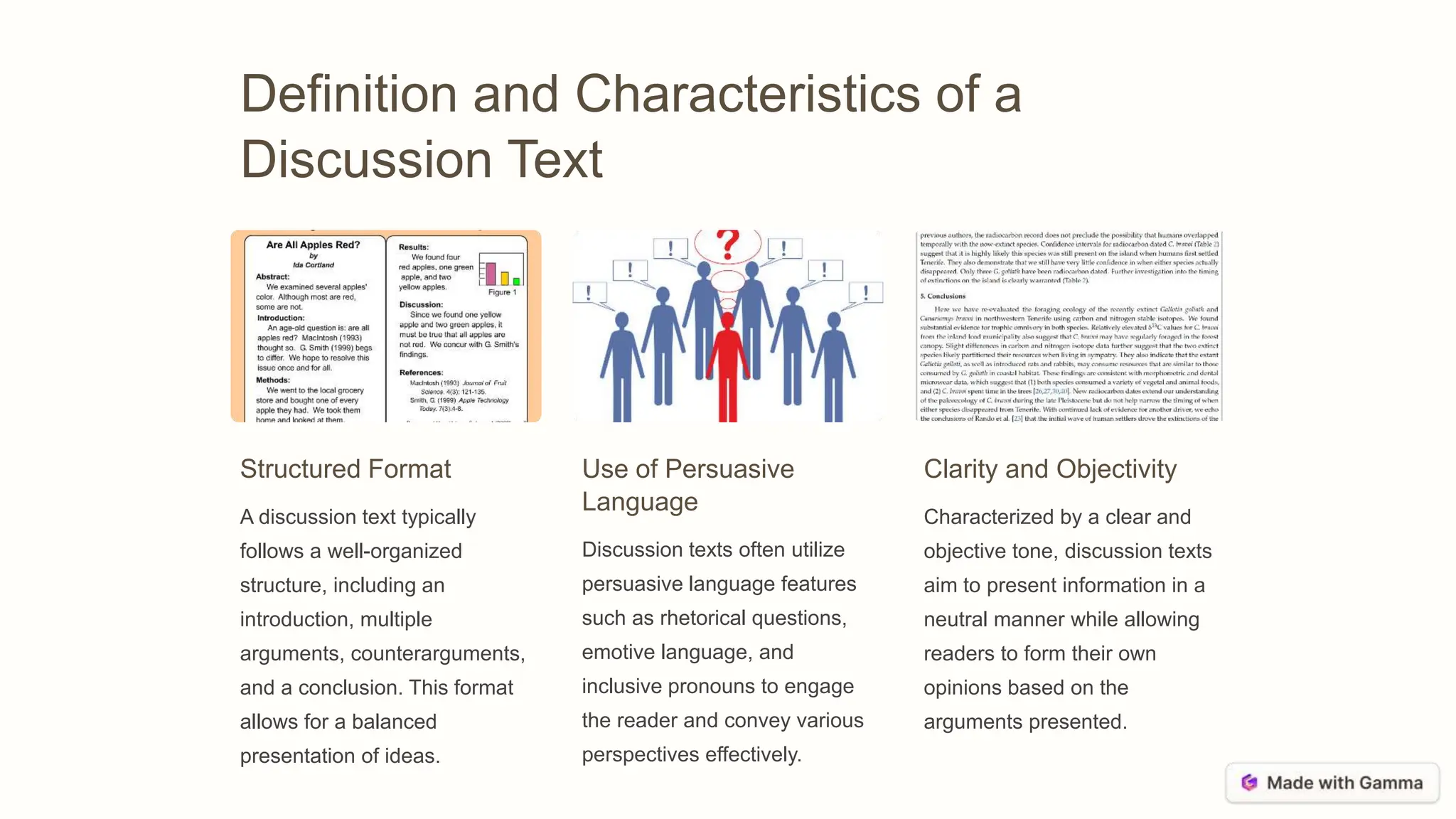
Structured Format
A discussion text typically
follows a well-organized
structure, including an
introduction, multiple
arguments, counterarguments,
and a conclusion. This format
allows for a balanced
presentation of ideas.
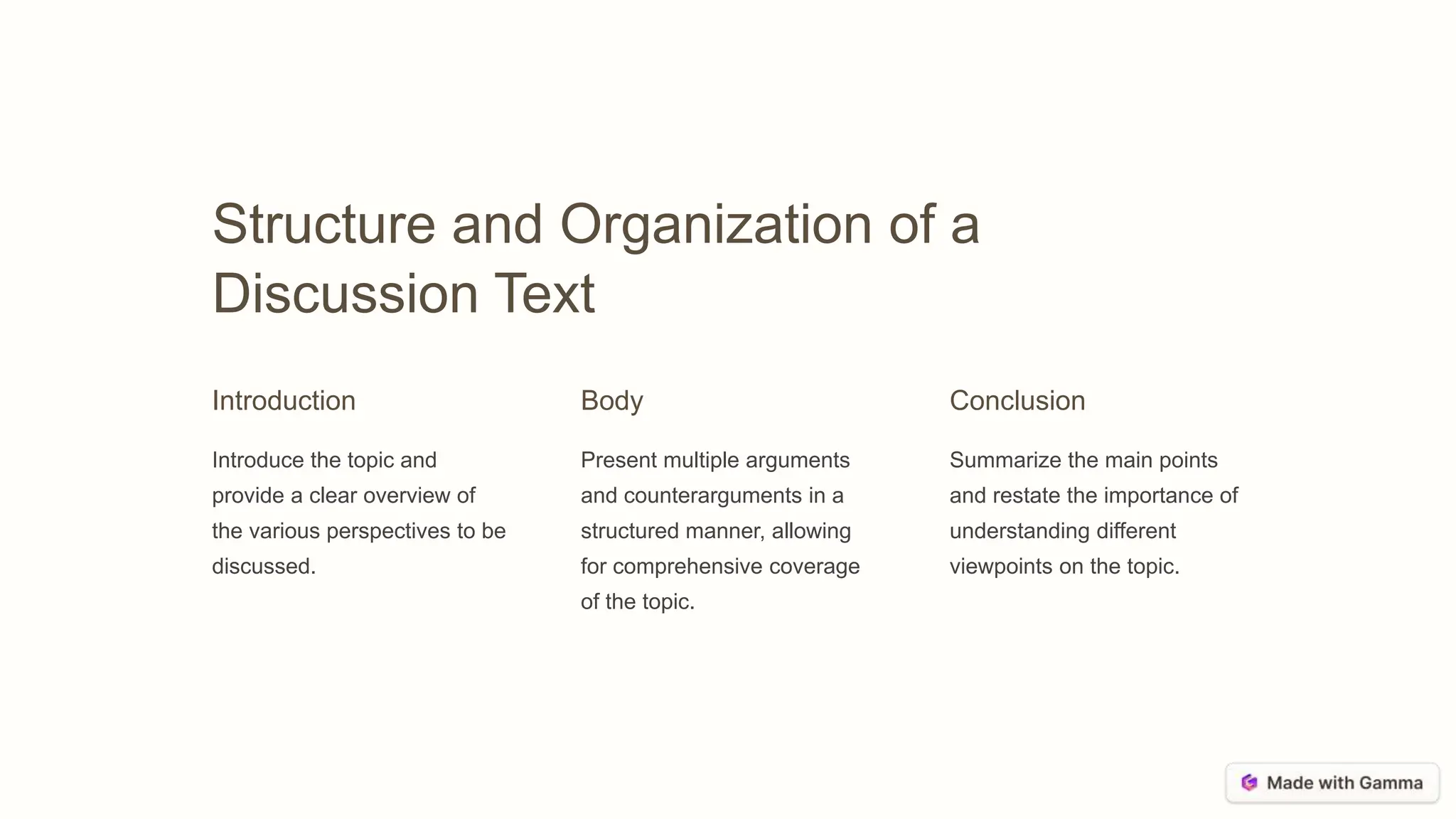
Use of Persuasive
Language
Discussion texts often utilize
persuasive language features
such as rhetorical questions,
emotive language, and
inclusive pronouns to engage
the reader and convey various
perspectives effectively.
Clarity and Objectivity
Characterized by a clear and
objective tone, discussion texts
aim to present information in a
neutral manner while allowing
readers to form their own
opinions based on the
arguments presented.
Structure and Organization of a
Discussion Text
Introduction
Introduce the topic and
provide a clear overview of
the various perspectives to be
discussed.
Body
Present multiple arguments
and counterarguments in a
structured manner, allowing
for comprehensive coverage
of the topic.
Conclusion
Summarize the main points
and restate the importance of
understanding different
viewpoints on the topic.
Language Features and Techniques Used
in a Discussion Text
1 Rhetorical
Questions
Engage readers by
posing thought-
provoking questions
aimed at stimulating
critical thinking.
2 Emotive Language
Utilize emotive
vocabulary to evoke an
emotional response and
reinforce persuasive
arguments.
3 Comparative
Adjectives
Employ comparative
adjectives to highlight
differences and
similarities between
contrasting viewpoints
within the text.
Examples of Discussion Texts
Topic Selection
Choosing a relevant and debatable topic is crucial to creating an effective
discussion text.
Argument Presentation
Demonstrating logical progression and coherence in presenting arguments is
essential in examples of discussion texts.
Conclusive Closure
The conclusion should summarize the key points discussed and leave the
reader with a clear and comprehensive understanding of the topic.
Tips for Writing an Effective Discussion
Text
Thorough Research
Conduct comprehensive
research to gather
evidence for various
viewpoints and ensure a
well-informed discussion.
Clear Organization
Organize arguments and
counterarguments
systematically to maintain
coherence and flow within
the text.
Engaging Language
Use persuasive language
and rhetorical devices to
captivate the reader and
effectively convey different
perspectives.
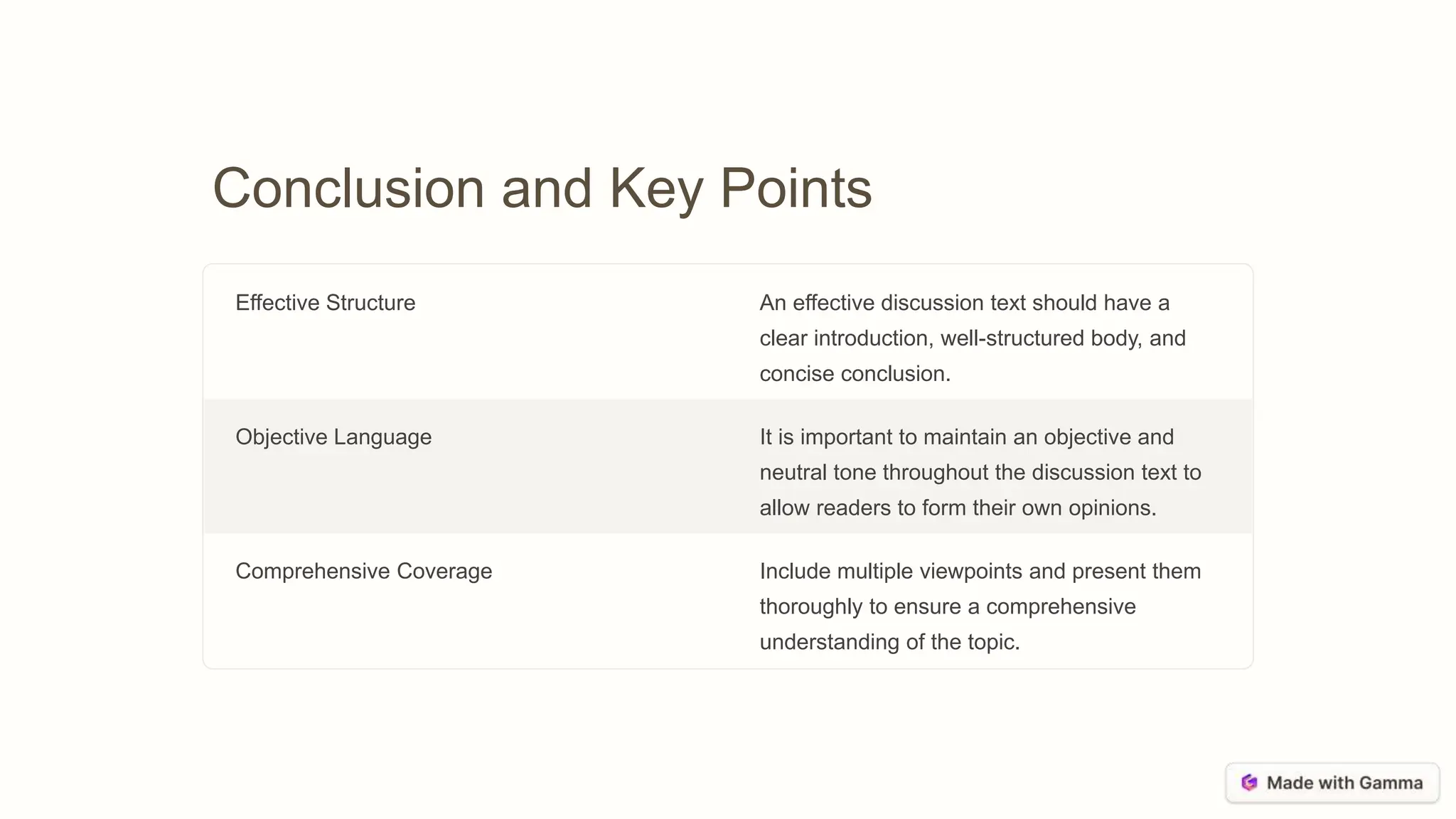
Conclusion and Key Points
Effective Structure An effective discussion text should have a
clear introduction, well-structured body, and
concise conclusion.
Objective Language It is important to maintain an objective and
neutral tone throughout the discussion text to
allow readers to form their own opinions.
Comprehensive Coverage Include multiple viewpoints and present them
thoroughly to ensure a comprehensive
understanding of the topic.

Introduction-to-Discussion-Texts.pptx

  • 1.
    Introduction to Discussion Texts Adiscussion text, in the context of English for Vocational High Schools (SMK), is a written composition aimed at presenting various viewpoints on a specific topic. It aims to inform, persuade, and provide a comprehensive understanding of a particular issue. by Rizki Rosyida
  • 2.
    Definition and Characteristicsof a Discussion Text Structured Format A discussion text typically follows a well-organized structure, including an introduction, multiple arguments, counterarguments, and a conclusion. This format allows for a balanced presentation of ideas. Use of Persuasive Language Discussion texts often utilize persuasive language features such as rhetorical questions, emotive language, and inclusive pronouns to engage the reader and convey various perspectives effectively. Clarity and Objectivity Characterized by a clear and objective tone, discussion texts aim to present information in a neutral manner while allowing readers to form their own opinions based on the arguments presented.
  • 3.
    Structure and Organizationof a Discussion Text Introduction Introduce the topic and provide a clear overview of the various perspectives to be discussed. Body Present multiple arguments and counterarguments in a structured manner, allowing for comprehensive coverage of the topic. Conclusion Summarize the main points and restate the importance of understanding different viewpoints on the topic.
  • 4.
    Language Features andTechniques Used in a Discussion Text 1 Rhetorical Questions Engage readers by posing thought- provoking questions aimed at stimulating critical thinking. 2 Emotive Language Utilize emotive vocabulary to evoke an emotional response and reinforce persuasive arguments. 3 Comparative Adjectives Employ comparative adjectives to highlight differences and similarities between contrasting viewpoints within the text.
  • 5.
    Examples of DiscussionTexts Topic Selection Choosing a relevant and debatable topic is crucial to creating an effective discussion text. Argument Presentation Demonstrating logical progression and coherence in presenting arguments is essential in examples of discussion texts. Conclusive Closure The conclusion should summarize the key points discussed and leave the reader with a clear and comprehensive understanding of the topic.
  • 6.
    Tips for Writingan Effective Discussion Text Thorough Research Conduct comprehensive research to gather evidence for various viewpoints and ensure a well-informed discussion. Clear Organization Organize arguments and counterarguments systematically to maintain coherence and flow within the text. Engaging Language Use persuasive language and rhetorical devices to captivate the reader and effectively convey different perspectives.
  • 7.
    Conclusion and KeyPoints Effective Structure An effective discussion text should have a clear introduction, well-structured body, and concise conclusion. Objective Language It is important to maintain an objective and neutral tone throughout the discussion text to allow readers to form their own opinions. Comprehensive Coverage Include multiple viewpoints and present them thoroughly to ensure a comprehensive understanding of the topic.