Introduction to Philosophyand
Ethics
• Definition, Nature, Scope
• Origin of Ethics
• Theories & Applications
• Freedom in Ethical Discourse
2.
Introduction to Philosophy
•Philosophy: Love of wisdom (philo = love, sophia = wisdom)
• Systematic study of fundamental questions about existence, knowledge, values, reason, and language
• Encourages critical thinking, reasoning, and self-reflection
3.
Definition of Philosophy
•Broad definition: Rational inquiry into the nature of reality, morality, and human thought
• Key aspects:
• • Search for truth
• • Analysis of concepts
• • Logical reasoning
4.
Nature of Philosophy
•Speculative – explores possibilities of reality
• Critical – questions assumptions
• Comprehensive – covers wide areas of knowledge
• Practical – guides action and decision-making
5.
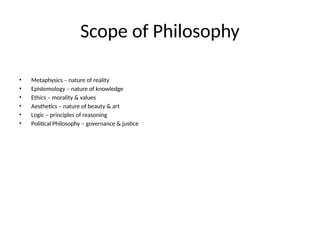
Scope of Philosophy
•Metaphysics – nature of reality
• Epistemology – nature of knowledge
• Ethics – morality & values
• Aesthetics – nature of beauty & art
• Logic – principles of reasoning
• Political Philosophy – governance & justice
6.
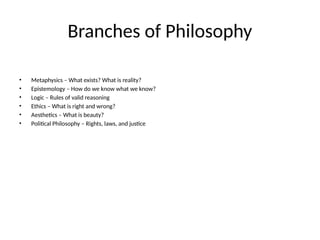
Branches of Philosophy
•Metaphysics – What exists? What is reality?
• Epistemology – How do we know what we know?
• Logic – Rules of valid reasoning
• Ethics – What is right and wrong?
• Aesthetics – What is beauty?
• Political Philosophy – Rights, laws, and justice
7.
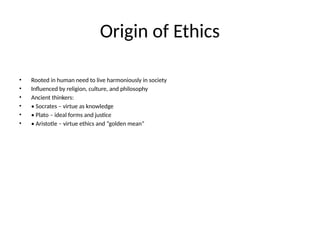
Origin of Ethics
•Rooted in human need to live harmoniously in society
• Influenced by religion, culture, and philosophy
• Ancient thinkers:
• • Socrates – virtue as knowledge
• • Plato – ideal forms and justice
• • Aristotle – virtue ethics and “golden mean”
8.
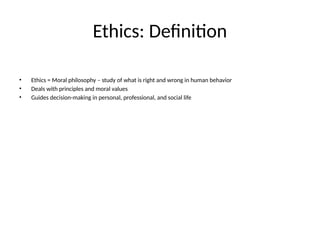
Ethics: Definition
• Ethics= Moral philosophy – study of what is right and wrong in human behavior
• Deals with principles and moral values
• Guides decision-making in personal, professional, and social life
9.
Nature of MoralJudgments
• Normative – prescribes how one ought to act
• Universalizable – applies to similar situations
• Impartial – considers all affected parties fairly
• Reasoned – based on logical justification
10.
Moral Reactions
• Approvalor disapproval based on moral standards
• Influenced by cultural norms, personal values, and ethical reasoning
11.
Theories of Ethics
•Utilitarian Theory – greatest good for the greatest number (Bentham, Mill)
• Right Theory – focus on individual rights and their protection
• Casuist Theory – case-based reasoning; applies moral principles to specific situations
12.
Benefits of Ethics
•Builds trust & credibility
• Promotes fairness & justice
• Guides decision-making
• Enhances professional reputation
• Contributes to personal growth
13.
Freedom in EthicalDiscourse
• Freedom = ability to choose between alternatives
• Ethics requires autonomy to make moral decisions
• Responsibility comes with freedom
• Debates on free will vs. determinism in moral actions
14.
Conclusion
• Philosophy encouragescritical reflection on life’s big questions
• Ethics provides the framework for moral decision-making
• Understanding theories & principles helps navigate complex moral issues