Introduction to Water
Water is a fundamental substance essential to life. It covers over 70% of the
Earth's surface and plays a crucial role in all living organisms. This
PowerPoint presentation explores the fascinating world of water.
AA by Ahmed Asus
The Water Cycle
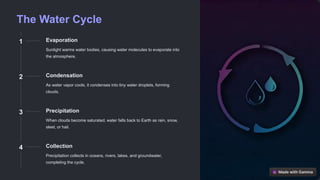
1 Evaporation
Sunlight warms water bodies, causing water molecules to evaporate into
the atmosphere.
2 Condensation
As water vapor cools, it condenses into tiny water droplets, forming
clouds.
3 Precipitation
When clouds become saturated, water falls back to Earth as rain, snow,
sleet, or hail.
4 Collection
Precipitation collects in oceans, rivers, lakes, and groundwater,
completing the cycle.
Properties of Water
1 Polarity
Water molecules are polar,
with a positive and negative
end, allowing them to form
hydrogen bonds.
2 Cohesion & Adhesion
Water molecules stick
together (cohesion) and to
other surfaces (adhesion),
creating surface tension.
3 High Specific Heat
Water has a high specific
heat, meaning it takes a lot
of energy to change its
temperature.
4 Density Anomaly
Water is less dense as a
solid (ice) than as a liquid,
allowing ice to float on water.
Importance of Water for Life
Metabolic Processes
Water is a vital component of cellular
processes, including photosynthesis
and respiration.
Habitat
Water provides a habitat for a wide
range of aquatic organisms, from
microscopic plankton to whales.
Transportation
Water transports nutrients and waste
products throughout living organisms
and within the environment.
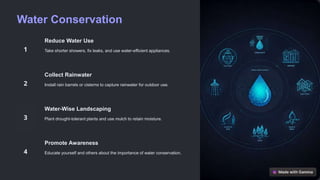
Water Conservation
Reduce Water Use
Take shorter showers, fix leaks, and use water-efficient appliances.
Collect Rainwater
Install rain barrels or cisterns to capture rainwater for outdoor use.
Water-Wise Landscaping
Plant drought-tolerant plants and use mulch to retain moisture.
Promote Awareness
Educate yourself and others about the importance of water conservation.
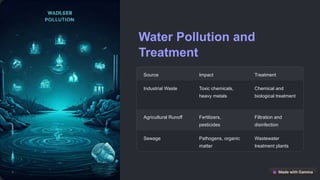
Water Pollution and
Treatment
Source Impact Treatment
Industrial Waste Toxic chemicals,
heavy metals
Chemical and
biological treatment
Agricultural Runoff Fertilizers,
pesticides
Filtration and
disinfection
Sewage Pathogens, organic
matter
Wastewater
treatment plants
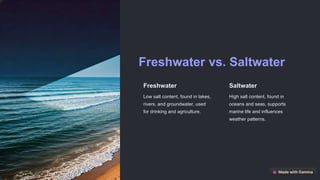
Freshwater vs. Saltwater
Freshwater
Low salt content, found in lakes,
rivers, and groundwater, used
for drinking and agriculture.
Saltwater
High salt content, found in
oceans and seas, supports
marine life and influences
weather patterns.
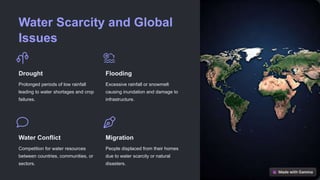
Water Scarcity and Global
Issues
Drought
Prolonged periods of low rainfall
leading to water shortages and crop
failures.
Flooding
Excessive rainfall or snowmelt
causing inundation and damage to
infrastructure.
Water Conflict
Competition for water resources
between countries, communities, or
sectors.
Migration
People displaced from their homes
due to water scarcity or natural
disasters.
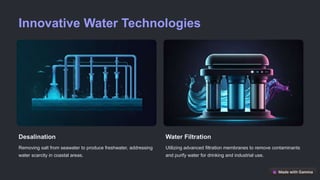
Innovative Water Technologies
Desalination
Removing salt from seawater to produce freshwater, addressing
water scarcity in coastal areas.
Water Filtration
Utilizing advanced filtration membranes to remove contaminants
and purify water for drinking and industrial use.
Conclusion: The Future of
Water
Water is a precious resource that requires responsible management. By
embracing sustainable practices, innovative technologies, and global
cooperation, we can ensure a secure and healthy water future for generations
to come.

Introduction to Water | PowerPoint presentation.pptx

  • 1.
    Introduction to Water Wateris a fundamental substance essential to life. It covers over 70% of the Earth's surface and plays a crucial role in all living organisms. This PowerPoint presentation explores the fascinating world of water. AA by Ahmed Asus
  • 2.
    The Water Cycle 1Evaporation Sunlight warms water bodies, causing water molecules to evaporate into the atmosphere. 2 Condensation As water vapor cools, it condenses into tiny water droplets, forming clouds. 3 Precipitation When clouds become saturated, water falls back to Earth as rain, snow, sleet, or hail. 4 Collection Precipitation collects in oceans, rivers, lakes, and groundwater, completing the cycle.
  • 3.
    Properties of Water 1Polarity Water molecules are polar, with a positive and negative end, allowing them to form hydrogen bonds. 2 Cohesion & Adhesion Water molecules stick together (cohesion) and to other surfaces (adhesion), creating surface tension. 3 High Specific Heat Water has a high specific heat, meaning it takes a lot of energy to change its temperature. 4 Density Anomaly Water is less dense as a solid (ice) than as a liquid, allowing ice to float on water.
  • 4.
    Importance of Waterfor Life Metabolic Processes Water is a vital component of cellular processes, including photosynthesis and respiration. Habitat Water provides a habitat for a wide range of aquatic organisms, from microscopic plankton to whales. Transportation Water transports nutrients and waste products throughout living organisms and within the environment.
  • 5.
    Water Conservation Reduce WaterUse Take shorter showers, fix leaks, and use water-efficient appliances. Collect Rainwater Install rain barrels or cisterns to capture rainwater for outdoor use. Water-Wise Landscaping Plant drought-tolerant plants and use mulch to retain moisture. Promote Awareness Educate yourself and others about the importance of water conservation.
  • 6.
    Water Pollution and Treatment SourceImpact Treatment Industrial Waste Toxic chemicals, heavy metals Chemical and biological treatment Agricultural Runoff Fertilizers, pesticides Filtration and disinfection Sewage Pathogens, organic matter Wastewater treatment plants
  • 7.
    Freshwater vs. Saltwater Freshwater Lowsalt content, found in lakes, rivers, and groundwater, used for drinking and agriculture. Saltwater High salt content, found in oceans and seas, supports marine life and influences weather patterns.
  • 8.
    Water Scarcity andGlobal Issues Drought Prolonged periods of low rainfall leading to water shortages and crop failures. Flooding Excessive rainfall or snowmelt causing inundation and damage to infrastructure. Water Conflict Competition for water resources between countries, communities, or sectors. Migration People displaced from their homes due to water scarcity or natural disasters.
  • 9.
    Innovative Water Technologies Desalination Removingsalt from seawater to produce freshwater, addressing water scarcity in coastal areas. Water Filtration Utilizing advanced filtration membranes to remove contaminants and purify water for drinking and industrial use.
  • 10.
    Conclusion: The Futureof Water Water is a precious resource that requires responsible management. By embracing sustainable practices, innovative technologies, and global cooperation, we can ensure a secure and healthy water future for generations to come.