Service Oriented Architecture
Prepared By
Sundeep Challa|Meenal|Haleema Bushra|K. Ramesh
Introduction, Case Study Backgrounds
Unit - 1
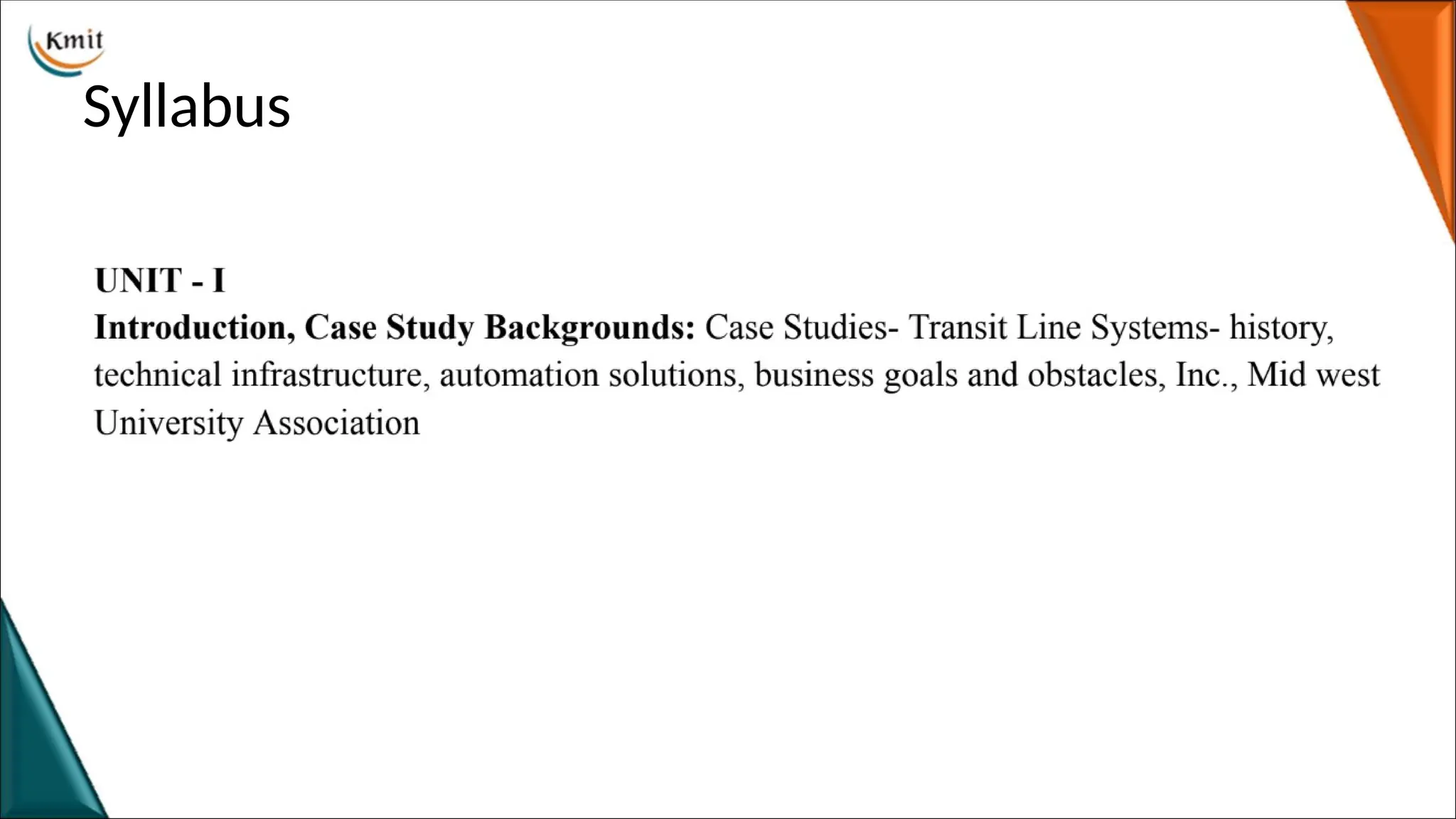
Syllabus
Objectives
➔ Introduction
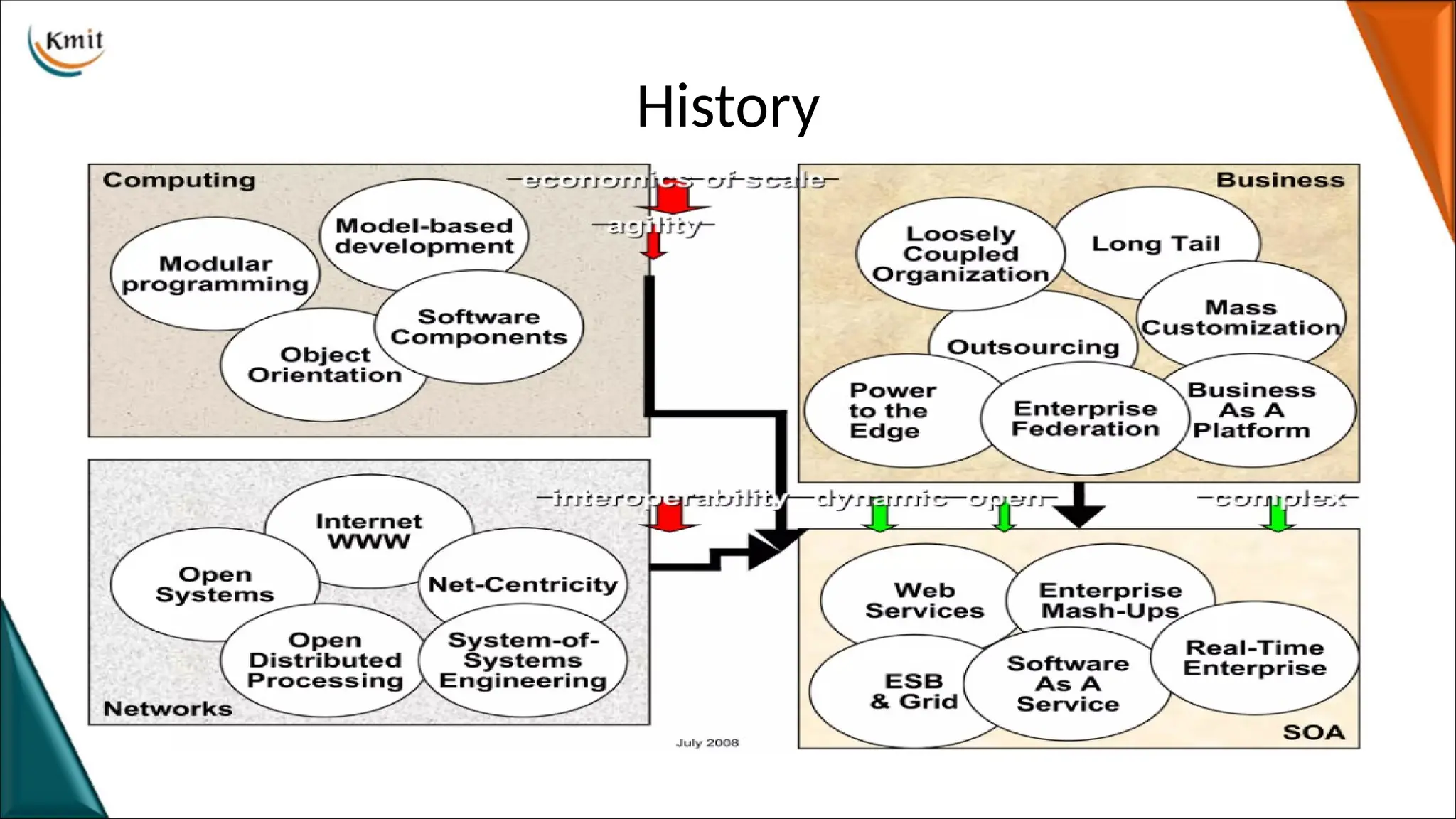
➔ History
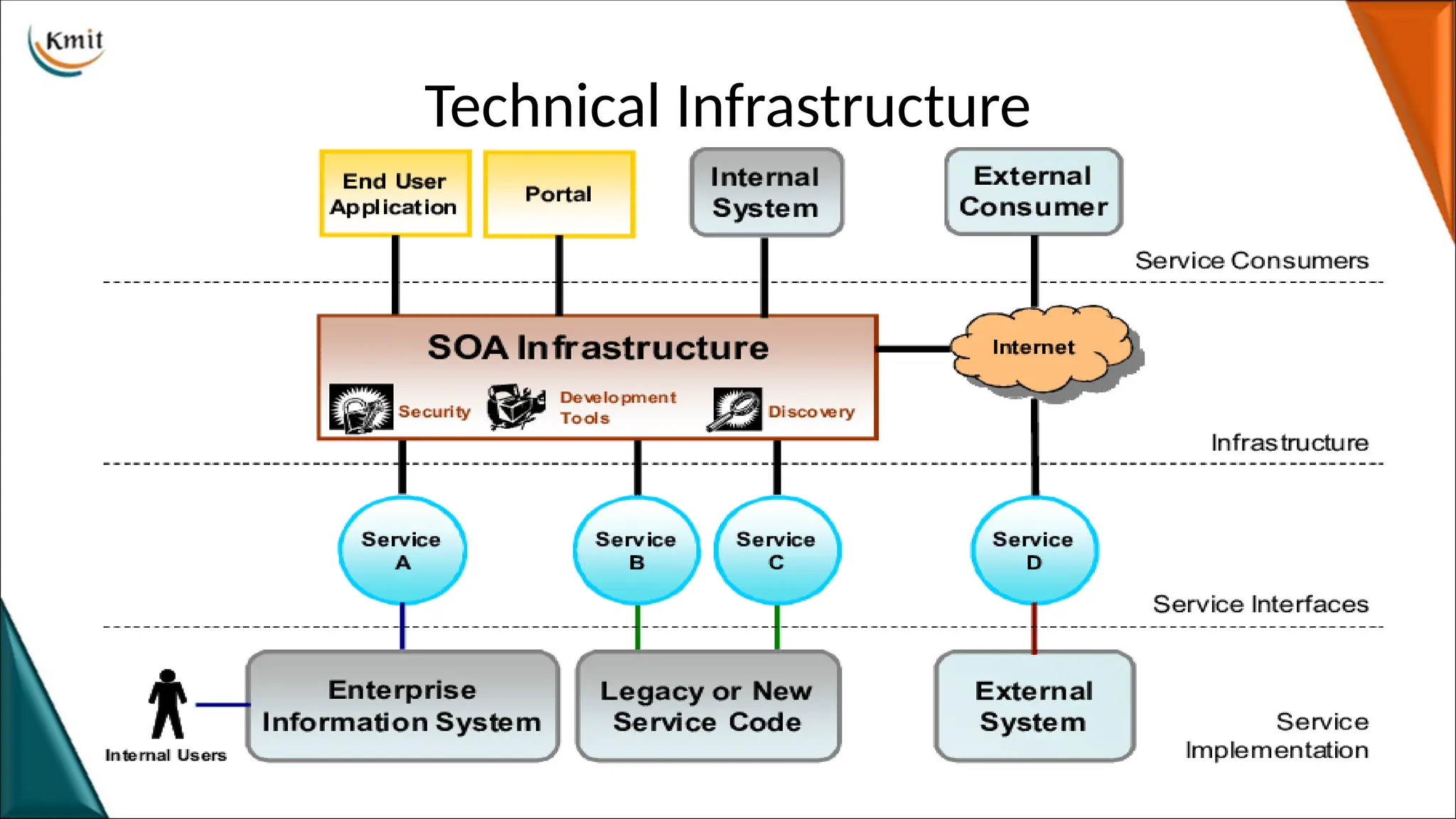
➔ Technical Infrastructure
➔ Automation solutions
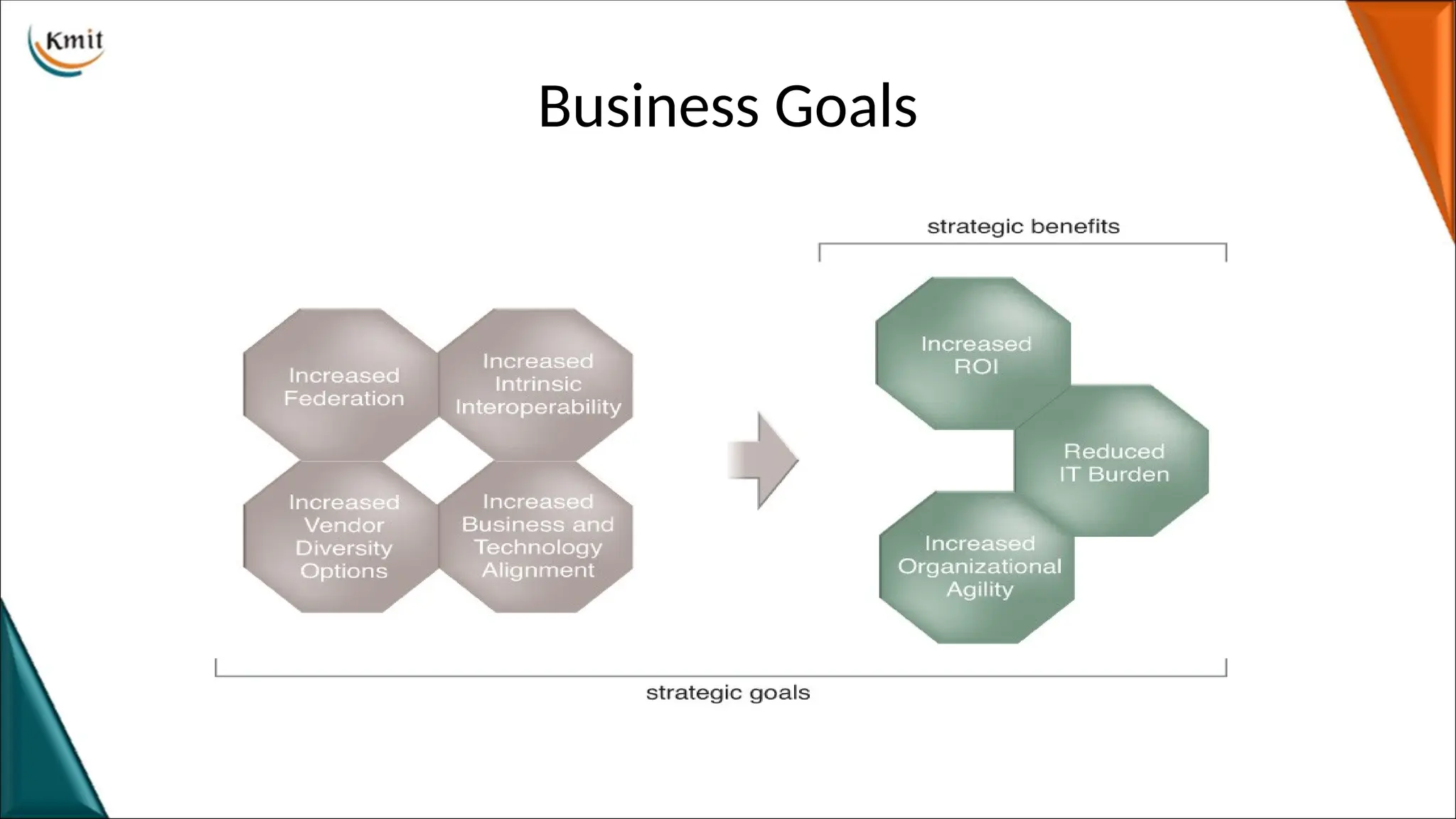
➔ Business Goals & Obstacles
➔ Case Studies
➔ Summary
➔ References
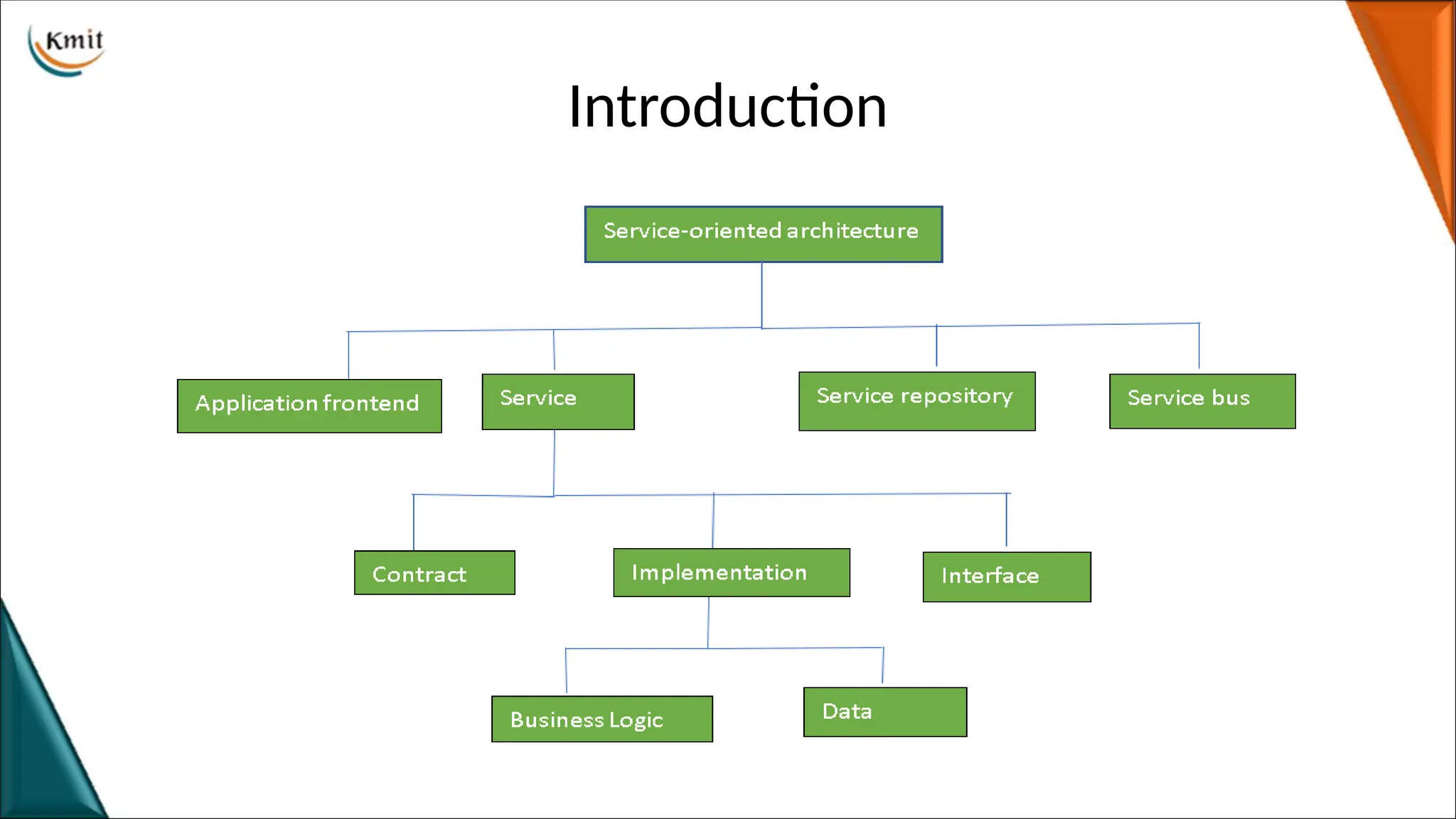
Introduction
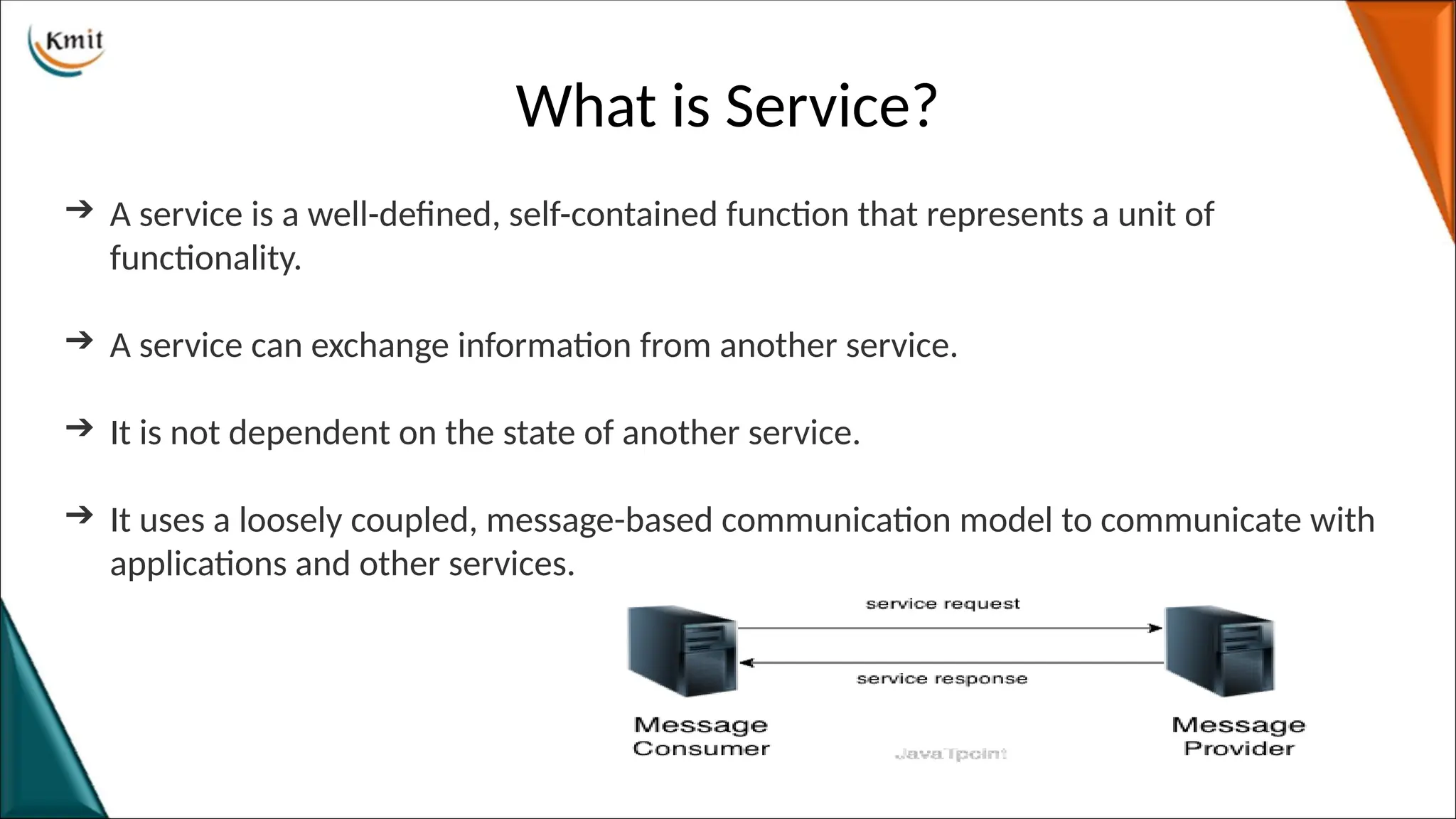
What is Service?
➔ A service is a well-defined, self-contained function that represents a unit of
functionality.
➔ A service can exchange information from another service.
➔ It is not dependent on the state of another service.
➔ It uses a loosely coupled, message-based communication model to communicate with
applications and other services.
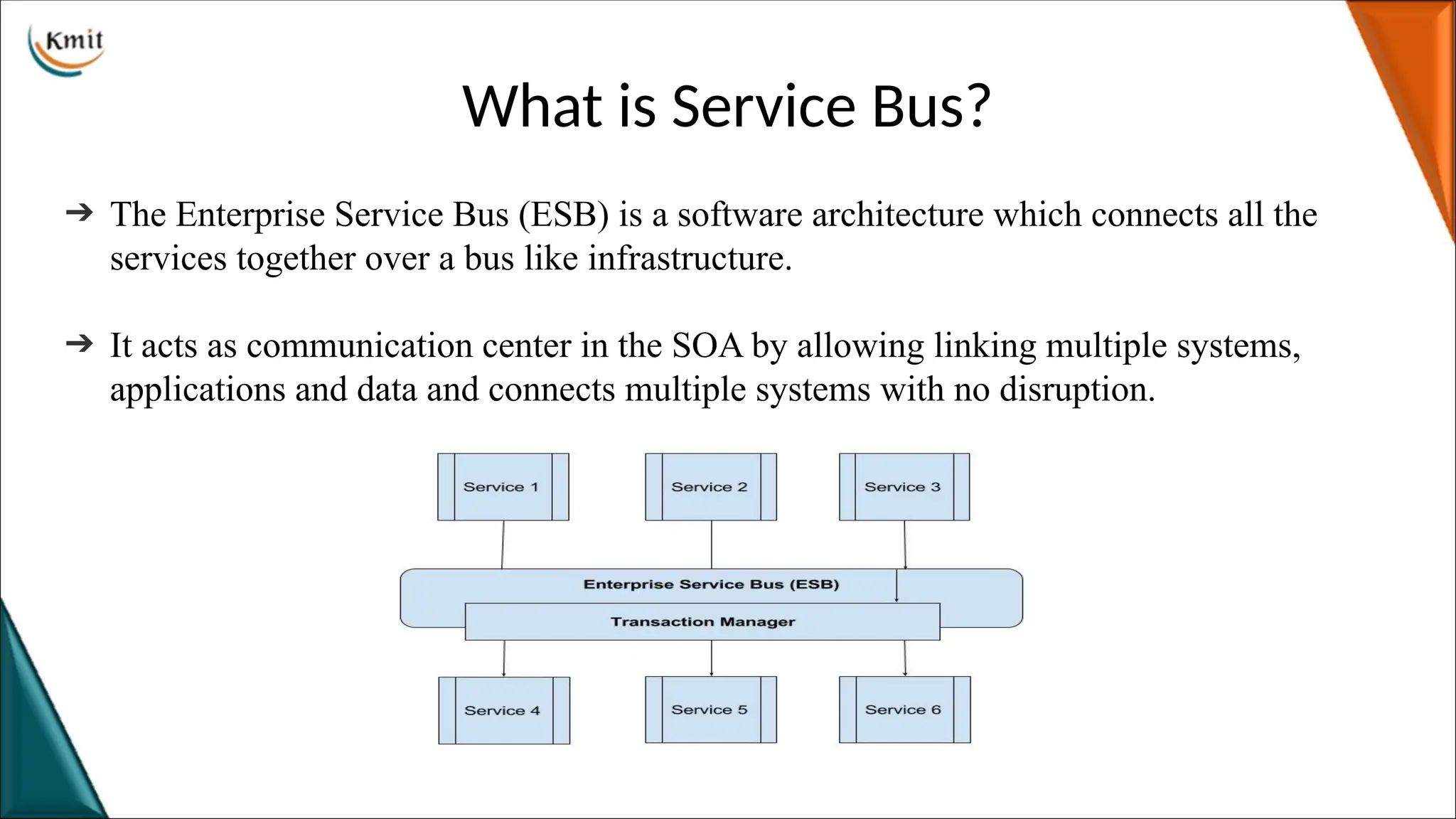
What is Service Bus?
➔ The Enterprise Service Bus (ESB) is a software architecture which connects all the
services together over a bus like infrastructure.
➔ It acts as communication center in the SOA by allowing linking multiple systems,
applications and data and connects multiple systems with no disruption.
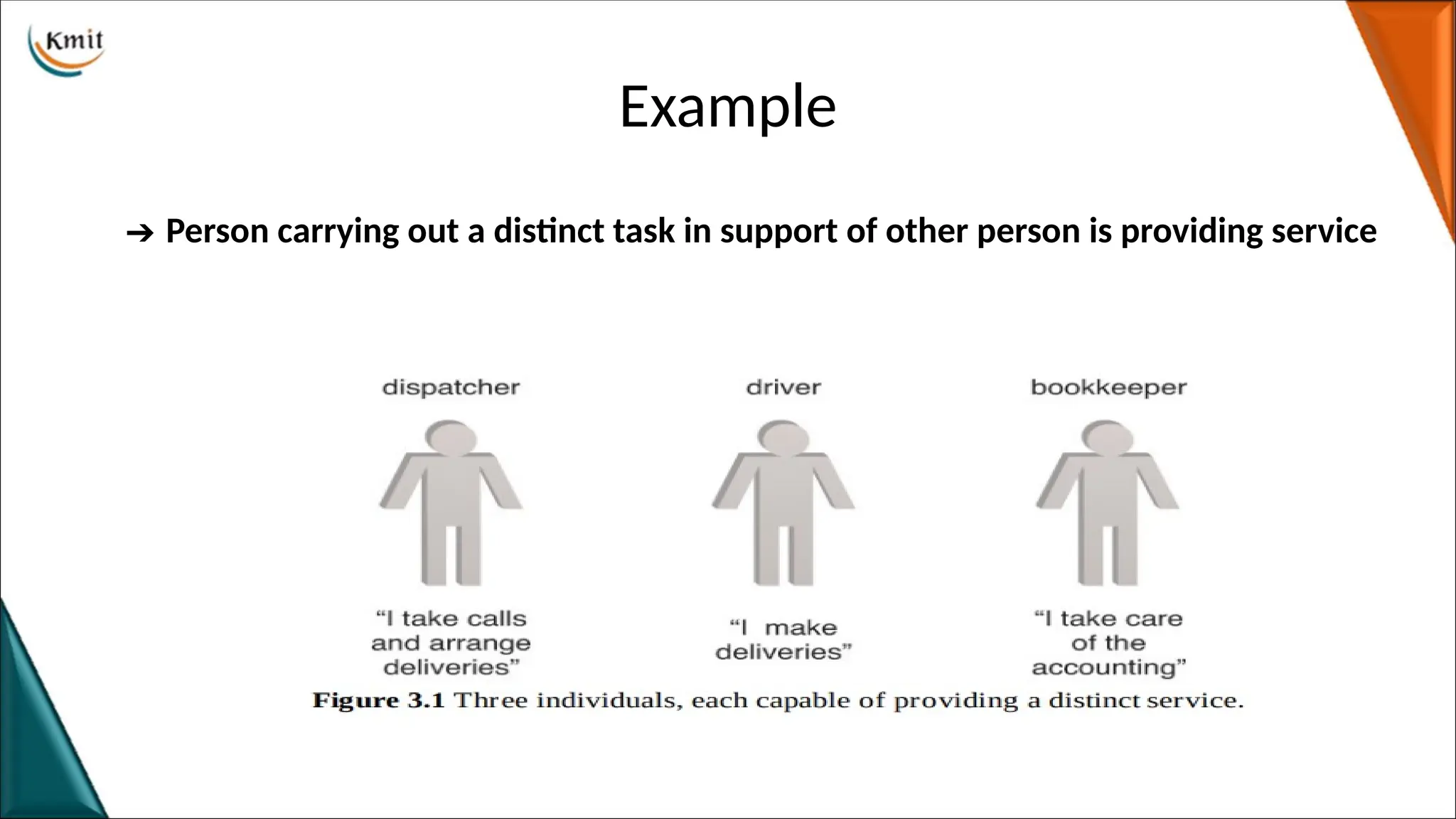
Example
➔ Person carrying out a distinct task in support of other person is providing service
History
Technical Infrastructure
Automation solutions
Business Goals
Business Obstacles
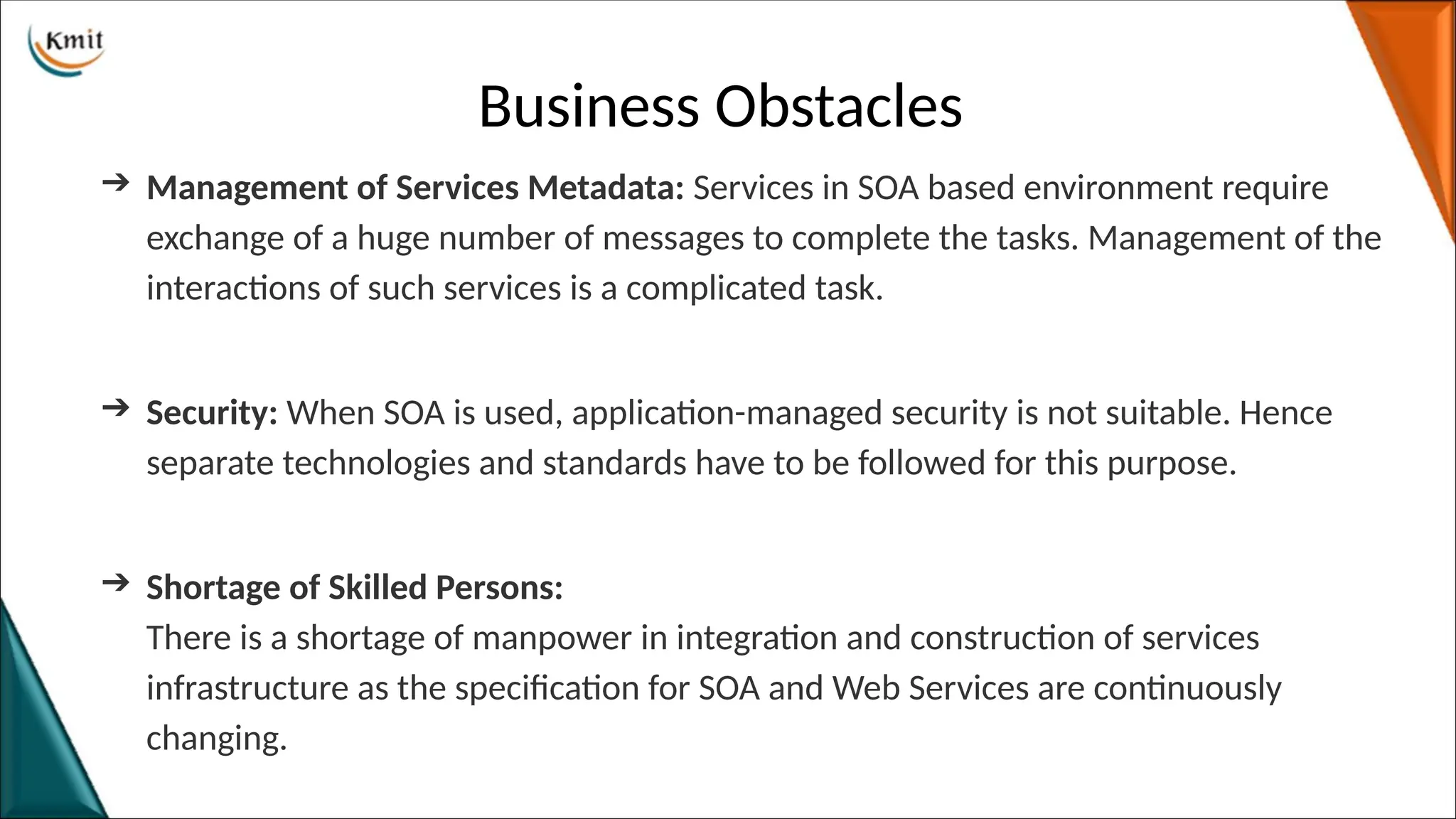
➔ Management of Services Metadata: Services in SOA based environment require
exchange of a huge number of messages to complete the tasks. Management of the
interactions of such services is a complicated task.
➔ Security: When SOA is used, application-managed security is not suitable. Hence
separate technologies and standards have to be followed for this purpose.
➔ Shortage of Skilled Persons:
There is a shortage of manpower in integration and construction of services
infrastructure as the specification for SOA and Web Services are continuously
changing.
Business Obstacles
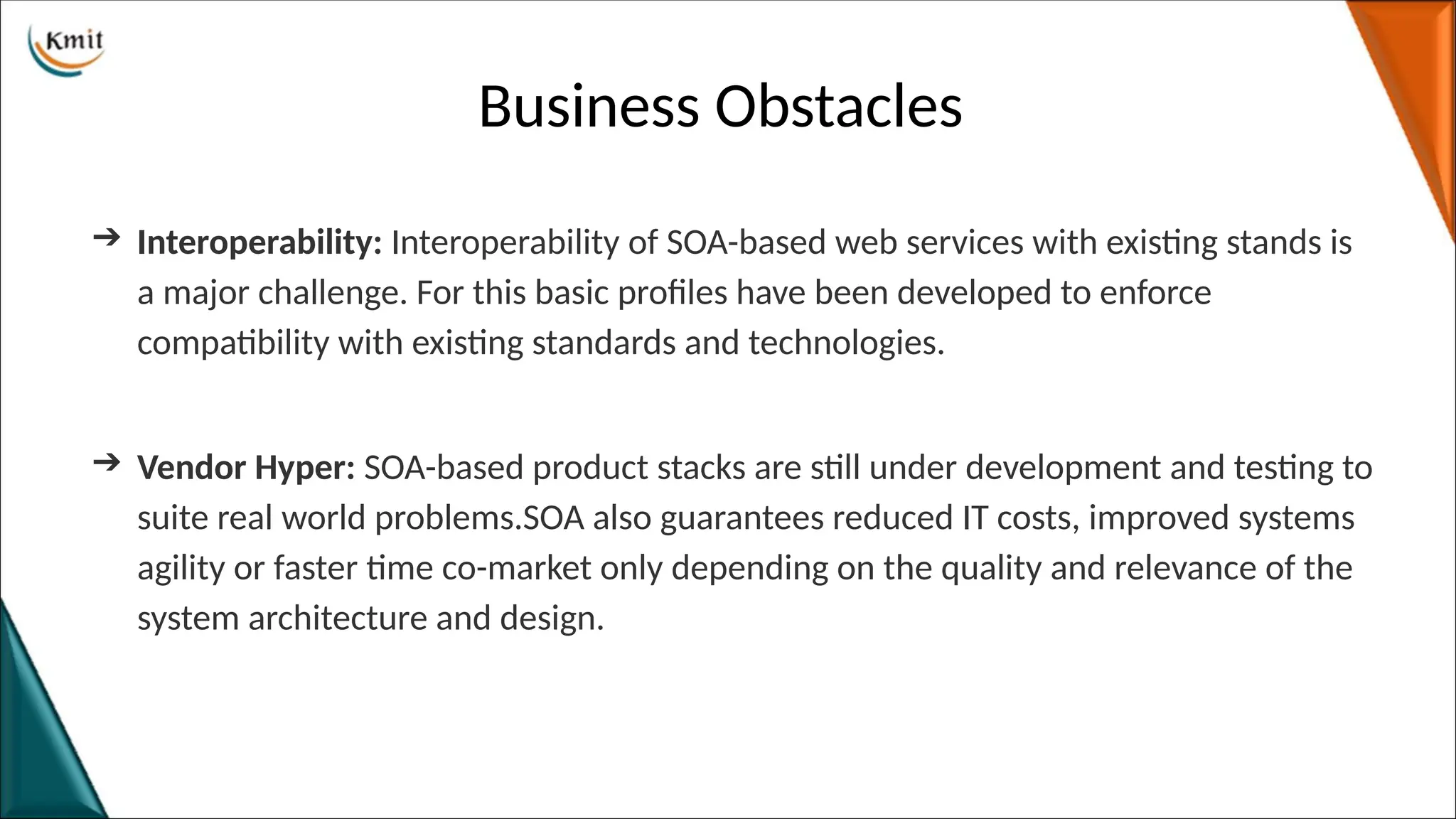
➔ Interoperability: Interoperability of SOA-based web services with existing stands is
a major challenge. For this basic profiles have been developed to enforce
compatibility with existing standards and technologies.
➔ Vendor Hyper: SOA-based product stacks are still under development and testing to
suite real world problems.SOA also guarantees reduced IT costs, improved systems
agility or faster time co-market only depending on the quality and relevance of the
system architecture and design.
Business Obstacles
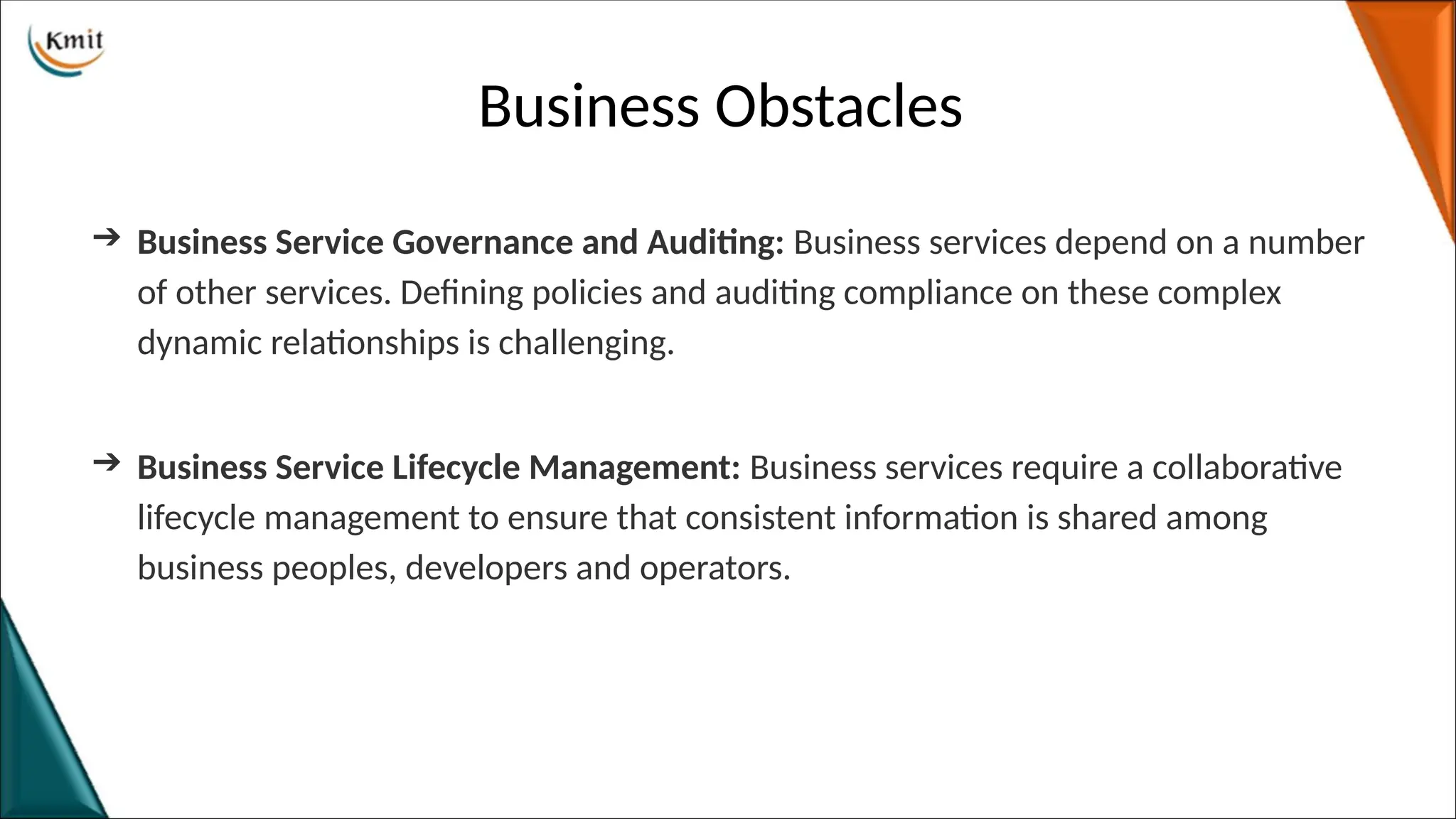
➔ Business Service Governance and Auditing: Business services depend on a number
of other services. Defining policies and auditing compliance on these complex
dynamic relationships is challenging.
➔ Business Service Lifecycle Management: Business services require a collaborative
lifecycle management to ensure that consistent information is shared among
business peoples, developers and operators.
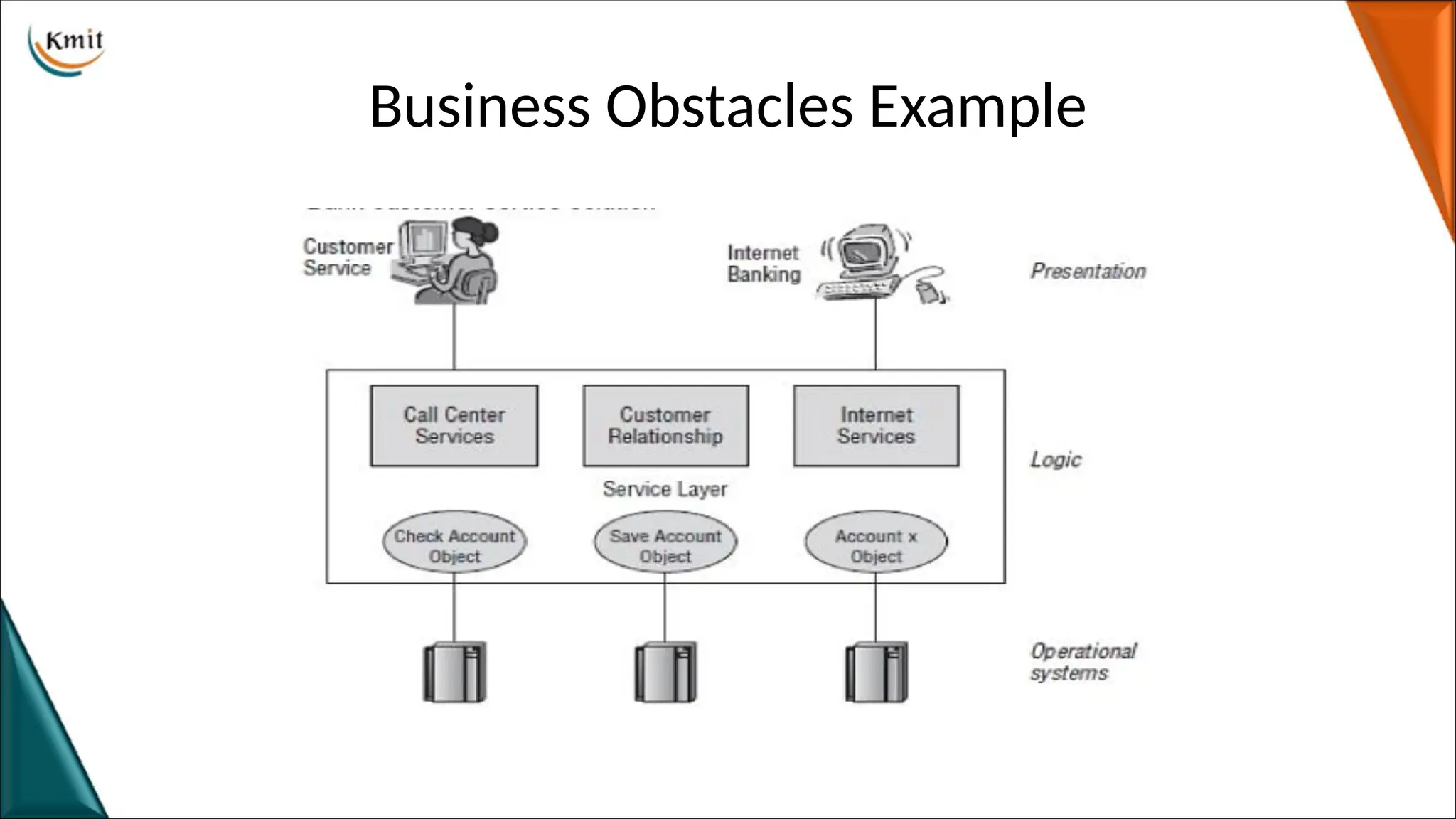
Business Obstacles Example
Case Studies
➔ Transit Line Systems
➔ Mid west University Association
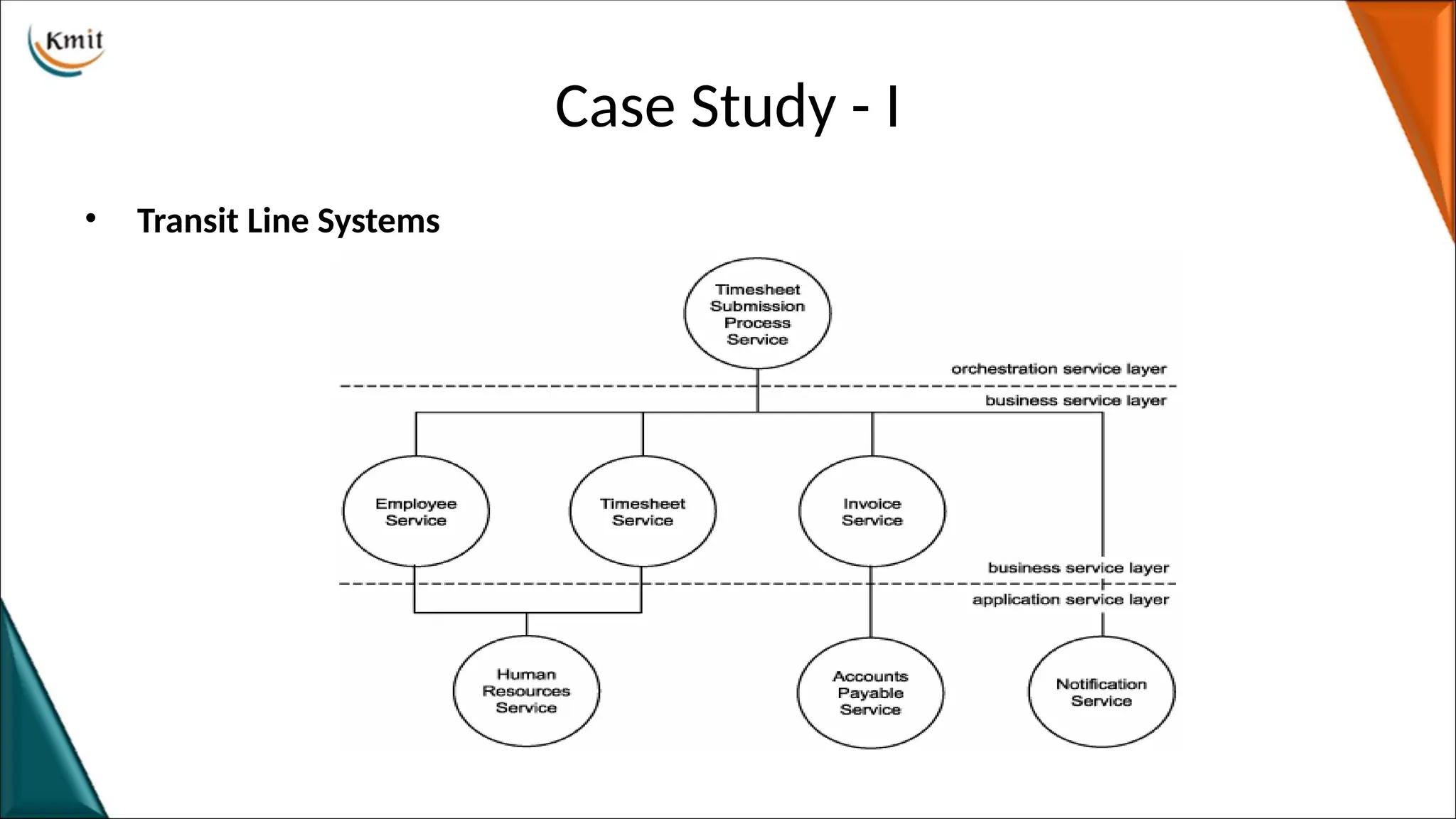
Case Study - I
• Transit Line Systems
Case Study - II
• Mid west University Association
Summary
References
Introduction to Service Orientation (SO) and Principles of SOA

Introduction to Service Orientation (SO) and Principles of SOA

  • 1.
    Service Oriented Architecture PreparedBy Sundeep Challa|Meenal|Haleema Bushra|K. Ramesh
  • 2.
    Introduction, Case StudyBackgrounds Unit - 1
  • 3.
  • 4.
    Objectives ➔ Introduction ➔ History ➔Technical Infrastructure ➔ Automation solutions ➔ Business Goals & Obstacles ➔ Case Studies ➔ Summary ➔ References
  • 5.
  • 6.
    What is Service? ➔A service is a well-defined, self-contained function that represents a unit of functionality. ➔ A service can exchange information from another service. ➔ It is not dependent on the state of another service. ➔ It uses a loosely coupled, message-based communication model to communicate with applications and other services.
  • 7.
    What is ServiceBus? ➔ The Enterprise Service Bus (ESB) is a software architecture which connects all the services together over a bus like infrastructure. ➔ It acts as communication center in the SOA by allowing linking multiple systems, applications and data and connects multiple systems with no disruption.
  • 8.
    Example ➔ Person carryingout a distinct task in support of other person is providing service
  • 9.
  • 10.
  • 11.
  • 12.
  • 13.
    Business Obstacles ➔ Managementof Services Metadata: Services in SOA based environment require exchange of a huge number of messages to complete the tasks. Management of the interactions of such services is a complicated task. ➔ Security: When SOA is used, application-managed security is not suitable. Hence separate technologies and standards have to be followed for this purpose. ➔ Shortage of Skilled Persons: There is a shortage of manpower in integration and construction of services infrastructure as the specification for SOA and Web Services are continuously changing.
  • 14.
    Business Obstacles ➔ Interoperability:Interoperability of SOA-based web services with existing stands is a major challenge. For this basic profiles have been developed to enforce compatibility with existing standards and technologies. ➔ Vendor Hyper: SOA-based product stacks are still under development and testing to suite real world problems.SOA also guarantees reduced IT costs, improved systems agility or faster time co-market only depending on the quality and relevance of the system architecture and design.
  • 15.
    Business Obstacles ➔ BusinessService Governance and Auditing: Business services depend on a number of other services. Defining policies and auditing compliance on these complex dynamic relationships is challenging. ➔ Business Service Lifecycle Management: Business services require a collaborative lifecycle management to ensure that consistent information is shared among business peoples, developers and operators.
  • 16.
  • 17.
    Case Studies ➔ TransitLine Systems ➔ Mid west University Association
  • 18.
    Case Study -I • Transit Line Systems
  • 19.
    Case Study -II • Mid west University Association
  • 20.
  • 21.