Agenda for
Discussion
• Introductionto Rotating Machines
• Causes of Vibrations in Rotating
Machines
• Effects of Vibrations on Machine
Performance
• Detection and Measurement of
Vibrations
• Mitigation and Control Strategies
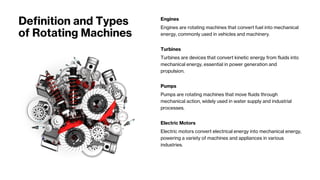
Definition and Types
ofRotating Machines
Engines
Engines are rotating machines that convert fuel into mechanical
energy, commonly used in vehicles and machinery.
Turbines
Turbines are devices that convert kinetic energy from fluids into
mechanical energy, essential in power generation and
propulsion.
Pumps
Pumps are rotating machines that move fluids through
mechanical action, widely used in water supply and industrial
processes.
Electric Motors
Electric motors convert electrical energy into mechanical energy,
powering a variety of machines and appliances in various
industries.
5.
Applications in Various
Industries
ManufacturingIndustry
Machines in the manufacturing industry enhance productivity and
precision, ensuring efficient production processes.
Energy Sector
In the energy sector, these machines are crucial for power
generation and distribution, ensuring energy reliability.
Transportation Systems
Machines in transportation facilitate the movement of goods and
people, improving infrastructure and efficiency.
6.
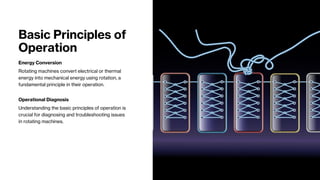
Basic Principles of
Operation
EnergyConversion
Rotating machines convert electrical or thermal
energy into mechanical energy using rotation, a
fundamental principle in their operation.
Operational Diagnosis
Understanding the basic principles of operation is
crucial for diagnosing and troubleshooting issues
in rotating machines.
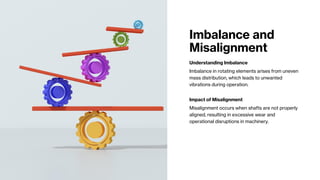
Imbalance and
Misalignment
Understanding Imbalance
Imbalancein rotating elements arises from uneven
mass distribution, which leads to unwanted
vibrations during operation.
Impact of Misalignment
Misalignment occurs when shafts are not properly
aligned, resulting in excessive wear and
operational disruptions in machinery.
9.
Bearing Issues andWear
Importance of Bearings
Bearings play a crucial role in reducing friction in machines, ensuring
smooth operation and efficiency.
Impact of Wear
Wear in bearings can lead to increased friction and vibrations,
negatively impacting machine performance and lifespan.
Preventing Bearing Failure
Regular maintenance and monitoring can help prevent bearing wear
and extend the life of machinery.
10.
Mechanical
Looseness and
Resonance
Understanding MechanicalLooseness
Mechanical looseness is a condition where components
are not properly fastened, leading to increased vibrations
and potential damage.
Impact of Resonance
Resonance occurs when external forces align with a
machine's natural frequency, causing amplified vibrations
that can affect performance and stability.
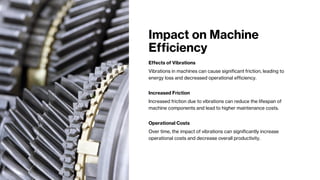
Impact on Machine
Efficiency
Effectsof Vibrations
Vibrations in machines can cause significant friction, leading to
energy loss and decreased operational efficiency.
Increased Friction
Increased friction due to vibrations can reduce the lifespan of
machine components and lead to higher maintenance costs.
Operational Costs
Over time, the impact of vibrations can significantly increase
operational costs and decrease overall productivity.
13.
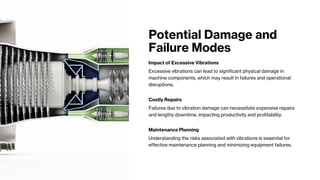
Potential Damage and
FailureModes
Impact of Excessive Vibrations
Excessive vibrations can lead to significant physical damage in
machine components, which may result in failures and operational
disruptions.
Costly Repairs
Failures due to vibration damage can necessitate expensive repairs
and lengthy downtime, impacting productivity and profitability.
Maintenance Planning
Understanding the risks associated with vibrations is essential for
effective maintenance planning and minimizing equipment failures.
14.
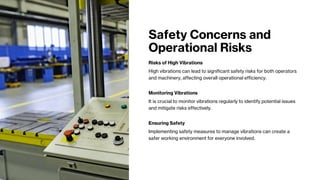
Safety Concerns and
OperationalRisks
Risks of High Vibrations
High vibrations can lead to significant safety risks for both operators
and machinery, affecting overall operational efficiency.
Monitoring Vibrations
It is crucial to monitor vibrations regularly to identify potential issues
and mitigate risks effectively.
Ensuring Safety
Implementing safety measures to manage vibrations can create a
safer working environment for everyone involved.
Vibration Monitoring
Techniques
Accelerometers
Accelerometers arecrucial tools that measure the acceleration forces
on machinery, helping detect vibration patterns.
Velocity Meters
Velocity meters measure the speed of vibrations, which is essential for
diagnosing issues in rotating machinery.
Displacement Sensors
Displacement sensors track the position changes of machine
components, providing insights into abnormal vibrations.
17.
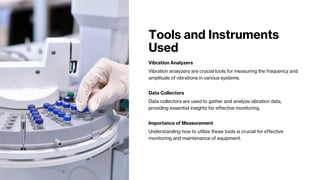
Tools and Instruments
Used
VibrationAnalyzers
Vibration analyzers are crucial tools for measuring the frequency and
amplitude of vibrations in various systems.
Data Collectors
Data collectors are used to gather and analyze vibration data,
providing essential insights for effective monitoring.
Importance of Measurement
Understanding how to utilize these tools is crucial for effective
monitoring and maintenance of equipment.
18.
Data Analysis and
Interpretation
FrequencyAnalysis
Frequency analysis is crucial for understanding the characteristics of
vibration data and identifying potential issues in machinery.
Time-Domain Analysis
Time-domain analysis provides insight into the vibration signal's
behavior over time, helping to detect anomalies and changes.
Overall Vibration Levels
Monitoring overall vibration levels is essential for assessing machine
health and determining maintenance needs effectively.
Balancing and Alignment
Solutions
Importanceof Balancing
Regular balancing of rotating components is crucial in minimizing
vibrations and enhancing machinery performance.
Proper Alignment Techniques
Proper alignment techniques, such as laser alignment, help ensure
optimal performance and reduce wear on machinery.
Reducing Vibrations
Implementing balancing and alignment solutions can significantly
reduce vibrations, leading to longer machinery lifespan.
21.
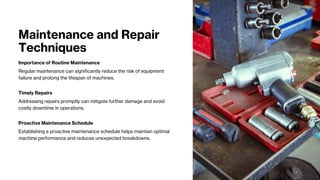
Maintenance and Repair
Techniques
Importanceof Routine Maintenance
Regular maintenance can significantly reduce the risk of equipment
failure and prolong the lifespan of machines.
Timely Repairs
Addressing repairs promptly can mitigate further damage and avoid
costly downtime in operations.
Proactive Maintenance Schedule
Establishing a proactive maintenance schedule helps maintain optimal
machine performance and reduces unexpected breakdowns.
22.
Advanced
Technologies
and Innovations
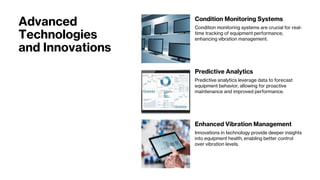
Condition MonitoringSystems
Condition monitoring systems are crucial for real-
time tracking of equipment performance,
enhancing vibration management.
Predictive Analytics
Predictive analytics leverage data to forecast
equipment behavior, allowing for proactive
maintenance and improved performance.
Enhanced Vibration Management
Innovations in technology provide deeper insights
into equipment health, enabling better control
over vibration levels.
23.
Conclusion
Importance of
Understanding Vibrations
Understandingvibrations is crucial for
the effective operation and
maintenance of rotating machines,
impacting overall performance.
Monitoring Strategies
Implementing monitoring strategies
allows for the early detection of issues
and ensures the longevity of
machinery.
Mitigation Techniques
Using effective mitigation techniques
can enhance machine safety and
operational efficiency, preventing
potential failures.