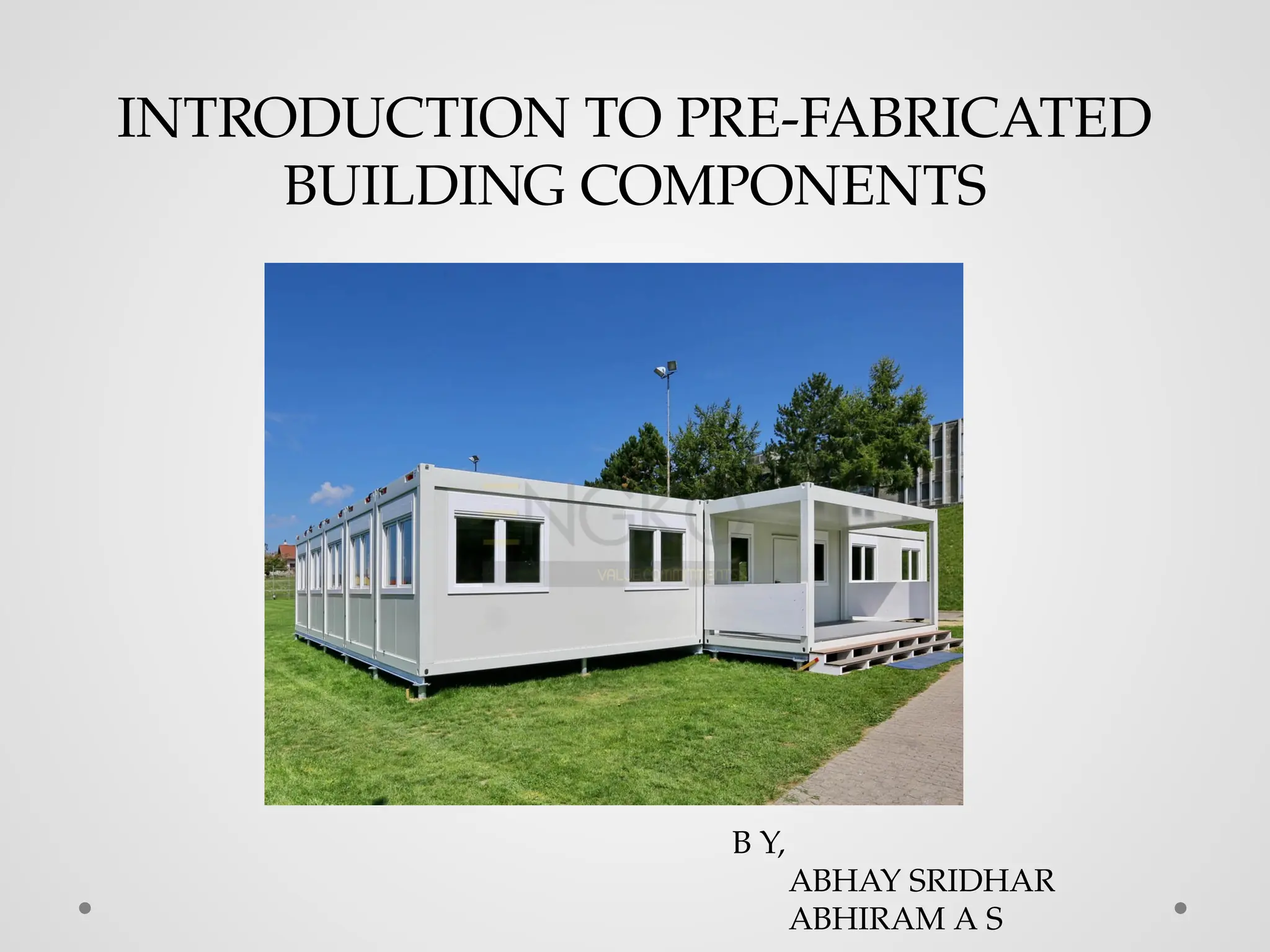
INTRODUCTION TO PRE-FABRICATED
BUILDING COMPONENTS
B Y,
ABHAY SRIDHAR
ABHIRAM A S
What are Prefabricated
Building Components?
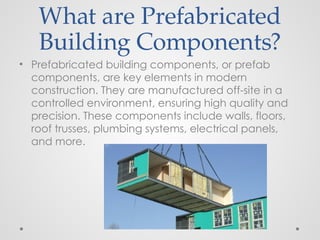
• Prefabricated building components, or prefab
components, are key elements in modern
construction. They are manufactured off-site in a
controlled environment, ensuring high quality and
precision. These components include walls, floors,
roof trusses, plumbing systems, electrical panels,
and more.
Prefab Wall Panels
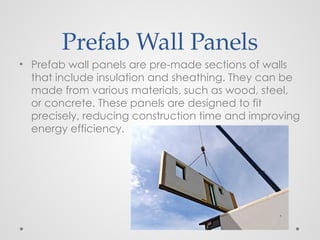
• Prefab wall panels are pre-made sections of walls
that include insulation and sheathing. They can be
made from various materials, such as wood, steel,
or concrete. These panels are designed to fit
precisely, reducing construction time and improving
energy efficiency.
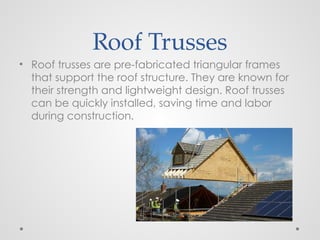
Roof Trusses
• Roof trusses are pre-fabricated triangular frames
that support the roof structure. They are known for
their strength and lightweight design. Roof trusses
can be quickly installed, saving time and labor
during construction.
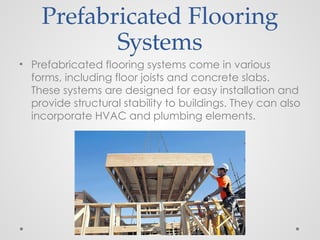
Prefabricated Flooring
Systems
• Prefabricated flooring systems come in various
forms, including floor joists and concrete slabs.
These systems are designed for easy installation and
provide structural stability to buildings. They can also
incorporate HVAC and plumbing elements.
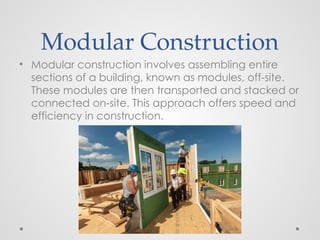
Modular Construction
• Modular construction involves assembling entire
sections of a building, known as modules, off-site.
These modules are then transported and stacked or
connected on-site. This approach offers speed and
efficiency in construction.
Benefits of Prefabrication
• Prefabricated components offer several benefits,
including reduced construction time, improved
quality control, cost savings, sustainability, and
design flexibility.
Challenges and
Considerations
• While prefab components offer advantages, there
are challenges to consider, such as transportation
costs, limited customization, and potential
coordination issues.
Future Trends
• The future of prefabrication in construction includes
advanced automation, sustainable materials, and
increased use of Building Information Modeling
(BIM) to streamline the process.
Conclusion
• Prefabricated building components have
revolutionized the construction industry, offering
efficient and sustainable solutions. As technology
advances, the role of prefabrication is likely to
grow, contributing to faster, more cost-effective,
and eco-friendly construction projects.

Introduction to Prefabricated Building Components (1).pptx

  • 1.
    INTRODUCTION TO PRE-FABRICATED BUILDINGCOMPONENTS B Y, ABHAY SRIDHAR ABHIRAM A S
  • 2.
    What are Prefabricated BuildingComponents? • Prefabricated building components, or prefab components, are key elements in modern construction. They are manufactured off-site in a controlled environment, ensuring high quality and precision. These components include walls, floors, roof trusses, plumbing systems, electrical panels, and more.
  • 3.
    Prefab Wall Panels •Prefab wall panels are pre-made sections of walls that include insulation and sheathing. They can be made from various materials, such as wood, steel, or concrete. These panels are designed to fit precisely, reducing construction time and improving energy efficiency.
  • 4.
    Roof Trusses • Rooftrusses are pre-fabricated triangular frames that support the roof structure. They are known for their strength and lightweight design. Roof trusses can be quickly installed, saving time and labor during construction.
  • 5.
    Prefabricated Flooring Systems • Prefabricatedflooring systems come in various forms, including floor joists and concrete slabs. These systems are designed for easy installation and provide structural stability to buildings. They can also incorporate HVAC and plumbing elements.
  • 6.
    Modular Construction • Modularconstruction involves assembling entire sections of a building, known as modules, off-site. These modules are then transported and stacked or connected on-site. This approach offers speed and efficiency in construction.
  • 7.
    Benefits of Prefabrication •Prefabricated components offer several benefits, including reduced construction time, improved quality control, cost savings, sustainability, and design flexibility.
  • 8.
    Challenges and Considerations • Whileprefab components offer advantages, there are challenges to consider, such as transportation costs, limited customization, and potential coordination issues.
  • 9.
    Future Trends • Thefuture of prefabrication in construction includes advanced automation, sustainable materials, and increased use of Building Information Modeling (BIM) to streamline the process.
  • 10.
    Conclusion • Prefabricated buildingcomponents have revolutionized the construction industry, offering efficient and sustainable solutions. As technology advances, the role of prefabrication is likely to grow, contributing to faster, more cost-effective, and eco-friendly construction projects.