Introduction to NAPRA
Model Standards for
Pharmacy Compounding
Brittany Sharkey, PhT
NAPRA has introduced 3 sets of Model
Standards for Pharmacy Compounding
• Model Standards for Pharmacy Compounding
of Hazardous Sterile Preparations –
November 2016
• Model Standards for Pharmacy Compounding
of Non-Hazardous Sterile Preparations –
November 2016
• Model Standards for Pharmacy Compounding
of Non-Sterile Preparations – March 2018
In December 2017, Council made
the decision to adopt all 3 Model
Standards for Pharmacy
Compounding.
Why?
Compounding Classifications
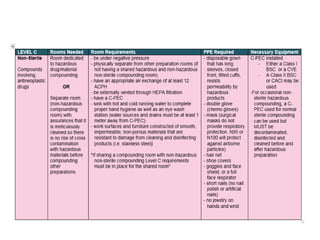
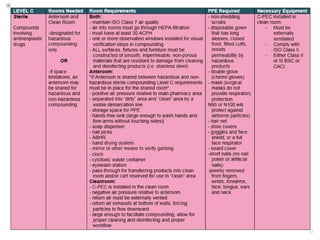
• Level C (Hazardous) Sterile &
Non-Sterile
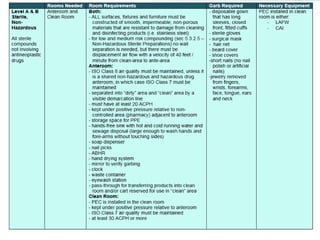
• Level A & B (Non-Hazardous)
Sterile
• Level B Non-Sterile
• Level A Non-Sterile
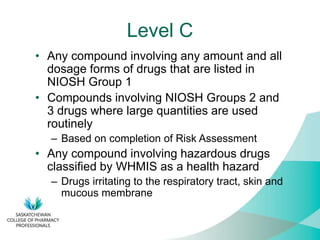
Level C
• Any compound involving any amount and all
dosage forms of drugs that are listed in
NIOSH Group 1
• Compounds involving NIOSH Groups 2 and
3 drugs where large quantities are used
routinely
– Based on completion of Risk Assessment
• Any compound involving hazardous drugs
classified by WHMIS as a health hazard
– Drugs irritating to the respiratory tract, skin and
mucous membrane
Level A & B (Non-Hazardous)
Sterile
• Any sterile compound that does not
involve hazardous drugs
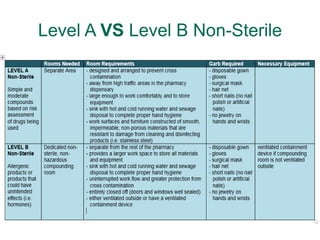
Level B Non-Sterile
• Compounds including drugs that are
considered allergenic products, or
hormones
Level A Non-Sterile
• Many simple and moderate non-sterile
preparations can be classified as Level A
– All based on risk assessment of the
preparation
• Mixing and reconstituting may not be
classified as compounding, it is recommended
that personnel complete these activities under
Level A conditions
Level A VS Level B Non-Sterile
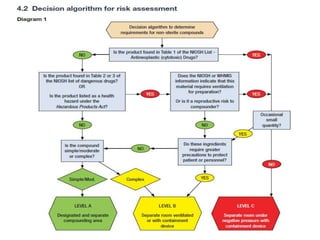
Risk Assessment
Not a “one size fits all” by drug
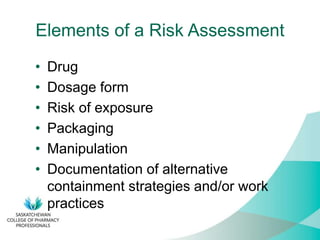
Elements of a Risk Assessment
• Drug
• Dosage form
• Risk of exposure
• Packaging
• Manipulation
• Documentation of alternative
containment strategies and/or work
practices
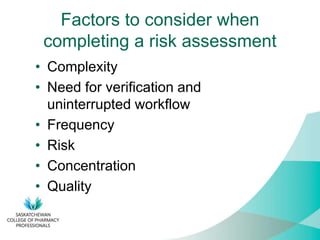
Factors to consider when
completing a risk assessment
• Complexity
• Need for verification and
uninterrupted workflow
• Frequency
• Risk
• Concentration
• Quality
Things to consider…
If it is necessary to compound a
preparation requiring procedures or
processes which are not currently in
place in the pharmacy, documentation
needs to include what the risks are, the
steps to be take to mitigate the risk and
references stating that the steps will
minimize the risk
Risk assessments must be
evidence & data based
Thank You
Questions?

Introduction to NAPRA Model Standards for Pharmacy Compounding

  • 1.
    Introduction to NAPRA ModelStandards for Pharmacy Compounding Brittany Sharkey, PhT
  • 2.
    NAPRA has introduced3 sets of Model Standards for Pharmacy Compounding • Model Standards for Pharmacy Compounding of Hazardous Sterile Preparations – November 2016 • Model Standards for Pharmacy Compounding of Non-Hazardous Sterile Preparations – November 2016 • Model Standards for Pharmacy Compounding of Non-Sterile Preparations – March 2018
  • 3.
    In December 2017,Council made the decision to adopt all 3 Model Standards for Pharmacy Compounding.
  • 4.
  • 5.
    Compounding Classifications • LevelC (Hazardous) Sterile & Non-Sterile • Level A & B (Non-Hazardous) Sterile • Level B Non-Sterile • Level A Non-Sterile
  • 6.
    Level C • Anycompound involving any amount and all dosage forms of drugs that are listed in NIOSH Group 1 • Compounds involving NIOSH Groups 2 and 3 drugs where large quantities are used routinely – Based on completion of Risk Assessment • Any compound involving hazardous drugs classified by WHMIS as a health hazard – Drugs irritating to the respiratory tract, skin and mucous membrane
  • 7.
    Level A &B (Non-Hazardous) Sterile • Any sterile compound that does not involve hazardous drugs
  • 8.
    Level B Non-Sterile •Compounds including drugs that are considered allergenic products, or hormones
  • 9.
    Level A Non-Sterile •Many simple and moderate non-sterile preparations can be classified as Level A – All based on risk assessment of the preparation • Mixing and reconstituting may not be classified as compounding, it is recommended that personnel complete these activities under Level A conditions
  • 10.
    Level A VSLevel B Non-Sterile
  • 14.
    Risk Assessment Not a“one size fits all” by drug
  • 15.
    Elements of aRisk Assessment • Drug • Dosage form • Risk of exposure • Packaging • Manipulation • Documentation of alternative containment strategies and/or work practices
  • 16.
    Factors to considerwhen completing a risk assessment • Complexity • Need for verification and uninterrupted workflow • Frequency • Risk • Concentration • Quality
  • 18.
    Things to consider… Ifit is necessary to compound a preparation requiring procedures or processes which are not currently in place in the pharmacy, documentation needs to include what the risks are, the steps to be take to mitigate the risk and references stating that the steps will minimize the risk
  • 19.
    Risk assessments mustbe evidence & data based
  • 20.