CHAPTER 1
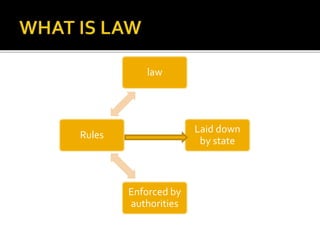
law
Laid down
by state
Enforced by
authorities
Rules
 It is formal social force, meaning that laws
come from the state and are usually written
down and accessible, so those who need to
understand and obey them they can.
 To maintain order in society there are
adequate enforcement institutions.

 Equally applied law is increasingly recognized
as a necessary foundation for strong
productive economies.
 Law secures the elements of trust and
certainty that are vital to economic
transactions among strangers .
 All nations with strong legal systems are
economically strong,
 In the modern nation, however the most
significant of social force is law because law
can glue together diverse peoples if different
background into large organized groups .
 Law tells every one in society what to do,
what not to
 For the peace in society
 To have justice
 To solve the problems
 Secure the rights of individuals
 Given the road map to follow
 Maintain uniformity in society
 Laws that are made are generally and equally
applicable.
 Without rule of law major economic
institutions such as corporations, banks ,labor
unions ,regulatory bodies would be unfair and
inefficient .
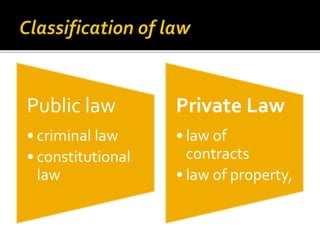
Public law
• criminal law
• constitutional
law
Private Law
• law of
contracts
• law of property,
 The aim of public law is
promotion of social objectives
and the protection of collective
interest of individuals
 Certain kinds of wrong doing pose such a
serious threat to the good order of society
that they are considered crimes against the
whole community.
 Constitutional law is concerned with the
workings of the British constitution. It covers
such matters as the position of the Crown,
the composition and procedures of
Parliament, the functioning of central and
local government, citizenship and the civil
liberties of individual citizen
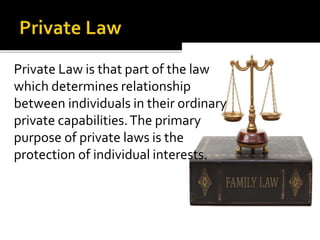
Private Law is that part of the law
which determines relationship
between individuals in their ordinary
private capabilities.The primary
purpose of private laws is the
protection of individual interests.
 That body of law which regulates the
enforcement of contracts
 Contract law is the basis of all commercial
dealings
 Property law is the area of law that governs
the various forms of ownership and tenancy
in real property (land as distinct from
personal or movable possessions ) and
in personal property within the common law
legal system.
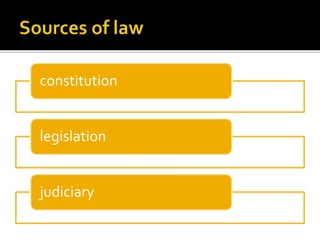
constitution
legislation
judiciary
 Sources of law means the origins of law
 A country's Constitution is a set of
fundamental ground rules setting out the
powers of the different branches of
government (i.e. executive, legislative and
judicial ) and how these entities operate and
interrelate.The Constitution may also set out
basic principles, such as fundamental
freedoms and rights. In Civil Law systems
these rules are usually embodied in "Codes.
 Legislation is the second key source of law
and usually takes priority over sources of law
other than the Constitution.There may be
more than one legislative body in a country -
central, provincial or state and municipal
authorities may each have separate power to
legislate. Rules will determine the extent to
which and in what areas one legislative body
has priority over another
 Legislation is the prime source of law. and
consists in the declaration of legal rules by a
competent authority. Legislation can have
many purposes: to regulate, to authorize, to
enable, to proscribe, to provide funds, to
sanction, to grant, to declare or to restrict. A
parliamentary legislature frames new laws,
such as Acts of Parliament and amends or
repeals old laws.
 Judicial decisions are authoritative and
develop into a source of law known as “case
law”. Case law may extend the application of
legislation and is deemed to form part of the
law
 Thank you…

Introduction to law cahpter 1

  • 1.
  • 2.
    law Laid down by state Enforcedby authorities Rules
  • 3.
     It isformal social force, meaning that laws come from the state and are usually written down and accessible, so those who need to understand and obey them they can.  To maintain order in society there are adequate enforcement institutions. 
  • 4.
     Equally appliedlaw is increasingly recognized as a necessary foundation for strong productive economies.  Law secures the elements of trust and certainty that are vital to economic transactions among strangers .
  • 5.
     All nationswith strong legal systems are economically strong,
  • 6.
     In themodern nation, however the most significant of social force is law because law can glue together diverse peoples if different background into large organized groups .  Law tells every one in society what to do, what not to
  • 7.
     For thepeace in society  To have justice  To solve the problems  Secure the rights of individuals  Given the road map to follow  Maintain uniformity in society
  • 8.
     Laws thatare made are generally and equally applicable.  Without rule of law major economic institutions such as corporations, banks ,labor unions ,regulatory bodies would be unfair and inefficient .
  • 9.
    Public law • criminallaw • constitutional law Private Law • law of contracts • law of property,
  • 10.
     The aimof public law is promotion of social objectives and the protection of collective interest of individuals
  • 11.
     Certain kindsof wrong doing pose such a serious threat to the good order of society that they are considered crimes against the whole community.
  • 12.
     Constitutional lawis concerned with the workings of the British constitution. It covers such matters as the position of the Crown, the composition and procedures of Parliament, the functioning of central and local government, citizenship and the civil liberties of individual citizen
  • 13.
    Private Law isthat part of the law which determines relationship between individuals in their ordinary private capabilities.The primary purpose of private laws is the protection of individual interests.
  • 14.
     That bodyof law which regulates the enforcement of contracts  Contract law is the basis of all commercial dealings
  • 15.
     Property lawis the area of law that governs the various forms of ownership and tenancy in real property (land as distinct from personal or movable possessions ) and in personal property within the common law legal system.
  • 16.
  • 17.
     Sources oflaw means the origins of law
  • 18.
     A country'sConstitution is a set of fundamental ground rules setting out the powers of the different branches of government (i.e. executive, legislative and judicial ) and how these entities operate and interrelate.The Constitution may also set out basic principles, such as fundamental freedoms and rights. In Civil Law systems these rules are usually embodied in "Codes.
  • 19.
     Legislation isthe second key source of law and usually takes priority over sources of law other than the Constitution.There may be more than one legislative body in a country - central, provincial or state and municipal authorities may each have separate power to legislate. Rules will determine the extent to which and in what areas one legislative body has priority over another
  • 20.
     Legislation isthe prime source of law. and consists in the declaration of legal rules by a competent authority. Legislation can have many purposes: to regulate, to authorize, to enable, to proscribe, to provide funds, to sanction, to grant, to declare or to restrict. A parliamentary legislature frames new laws, such as Acts of Parliament and amends or repeals old laws.
  • 21.
     Judicial decisionsare authoritative and develop into a source of law known as “case law”. Case law may extend the application of legislation and is deemed to form part of the law
  • 22.