Introduction to Human
Body Systems
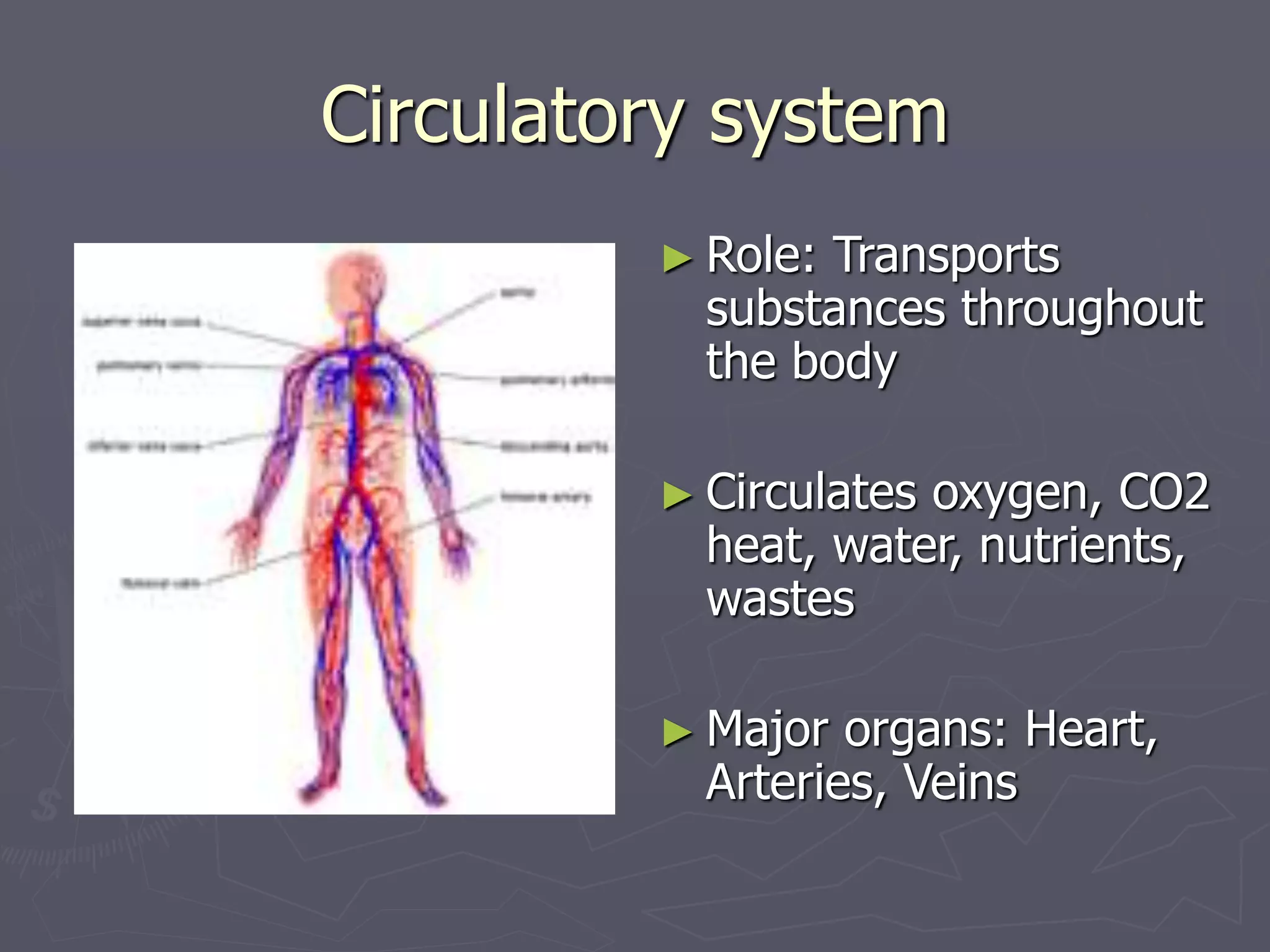
Circulatory system
► Role: Transports
substances throughout
the body
► Circulates oxygen, CO2
heat, water, nutrients,
wastes
► Major organs: Heart,
Arteries, Veins
Excretory System
► Role: Filters wastes
from blood; maintains
bodies internal nutrient
balances
► Also rids body of
wastes via urethra
► Major organs: Kidneys,
Urethra, Bladder
Digestive System
► Role: Breaks down
macromolecules and
absorbs necessary
nutrients
► Major organs:
Stomach, L.I., S.I.
► Liver serves multiple
functions for multiple
systems (but is
considered part of
DS)
Reproductive System
► Role: Producing
offspring; regulating
sexual characteristics
► Major organs: Testes,
Uterus, Ovaries
Skeletal System
► Provides body
structure and support
► Bone marrow creates
new blood cells for
circulation;also stores
lipids
► Major organs: bones,
cartilage
Muscular System
► Role: allows for
movement
► Major organs: skeletal
muscle
Nervous System
► Control system of body
► Major organs: Brain,
Spinal cord, nerves
► Stimulates heart rate
and controls blood
oxygen levels
Integumentary System
► Role: Protects body;
transfer of heat;
sensory reception
► Major organs: skin,
nails
► Releases sweat, and
heat from blood, to
help control body
temperature
Endocrine System
► Role: Circulates
hormones around the
body to control body
functions; maintains
homeostasis
► Major organs: Pituitary,
Thyroid, Adrenals,
Pancreas,hypothalmus
Lymphatic System
► Role: Works to help
maintain ciculatory
system as well as
housing cells
responsible for
immunity
► Major organs: Lymph
nodes
Respiratory System
► Ventilation system for
body
► Major organs: lungs,
diaphragm, trachea
► Takes in oxygen and
releases carbon
dioxide from blood

Introduction to Human Body Systems.ppt

  • 1.
  • 2.
    Circulatory system ► Role:Transports substances throughout the body ► Circulates oxygen, CO2 heat, water, nutrients, wastes ► Major organs: Heart, Arteries, Veins
  • 3.
    Excretory System ► Role:Filters wastes from blood; maintains bodies internal nutrient balances ► Also rids body of wastes via urethra ► Major organs: Kidneys, Urethra, Bladder
  • 4.
    Digestive System ► Role:Breaks down macromolecules and absorbs necessary nutrients ► Major organs: Stomach, L.I., S.I. ► Liver serves multiple functions for multiple systems (but is considered part of DS)
  • 5.
    Reproductive System ► Role:Producing offspring; regulating sexual characteristics ► Major organs: Testes, Uterus, Ovaries
  • 6.
    Skeletal System ► Providesbody structure and support ► Bone marrow creates new blood cells for circulation;also stores lipids ► Major organs: bones, cartilage
  • 7.
    Muscular System ► Role:allows for movement ► Major organs: skeletal muscle
  • 8.
    Nervous System ► Controlsystem of body ► Major organs: Brain, Spinal cord, nerves ► Stimulates heart rate and controls blood oxygen levels
  • 9.
    Integumentary System ► Role:Protects body; transfer of heat; sensory reception ► Major organs: skin, nails ► Releases sweat, and heat from blood, to help control body temperature
  • 10.
    Endocrine System ► Role:Circulates hormones around the body to control body functions; maintains homeostasis ► Major organs: Pituitary, Thyroid, Adrenals, Pancreas,hypothalmus
  • 11.
    Lymphatic System ► Role:Works to help maintain ciculatory system as well as housing cells responsible for immunity ► Major organs: Lymph nodes
  • 12.
    Respiratory System ► Ventilationsystem for body ► Major organs: lungs, diaphragm, trachea ► Takes in oxygen and releases carbon dioxide from blood